WILLIE WAGTAIL
Willie Wagtail
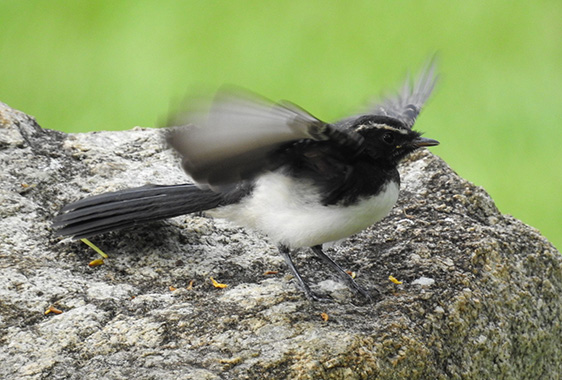
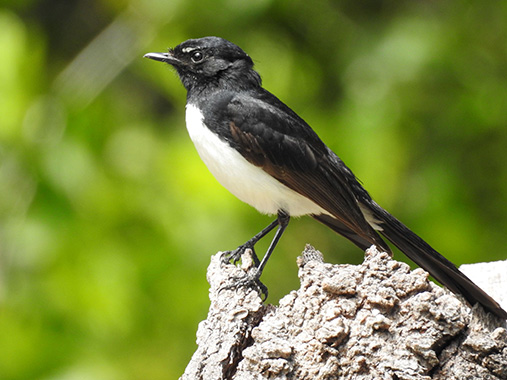
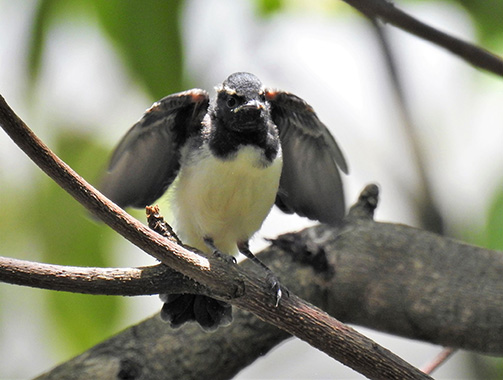
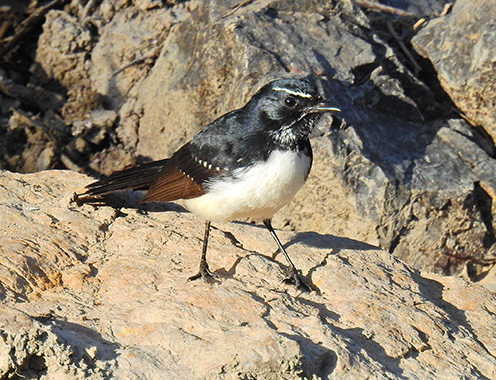
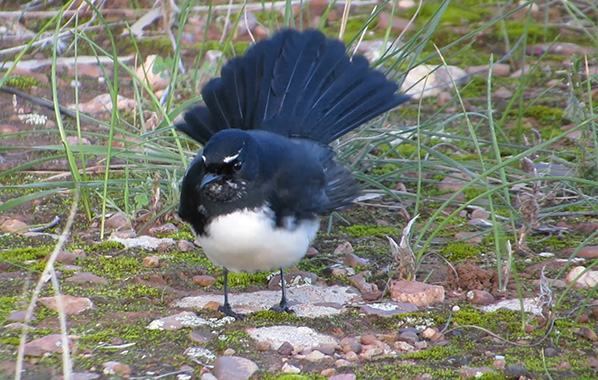
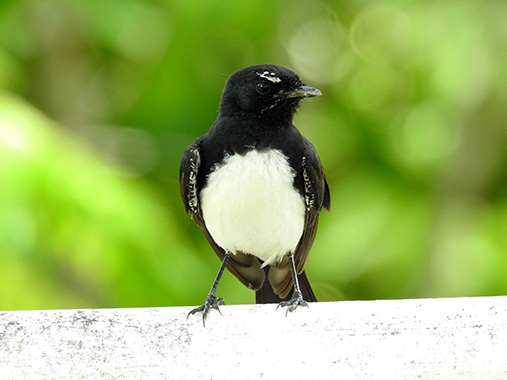
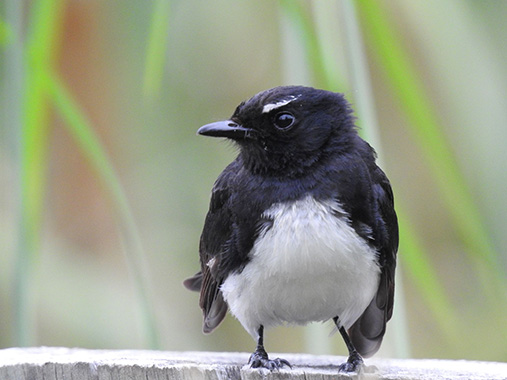
The Willie Wagtail is one of Australia’s most familiar and best-loved birds. Small, active and full of personality, it is often seen flicking and fanning its tail as it darts across lawns, paddocks, creek edges and suburban gardens. Its bold black-and-white plumage, lively chatter and fearless nature make it easy to recognise.
Although it is called a wagtail, the Willie Wagtail is not a true wagtail. It belongs to the fantail family, Rhipiduridae, not the wagtail and pipit family Motacillidae. It is a native Australian songbird and one of the most widespread birds in the country.
What Does the Willie Wagtail Look Like?
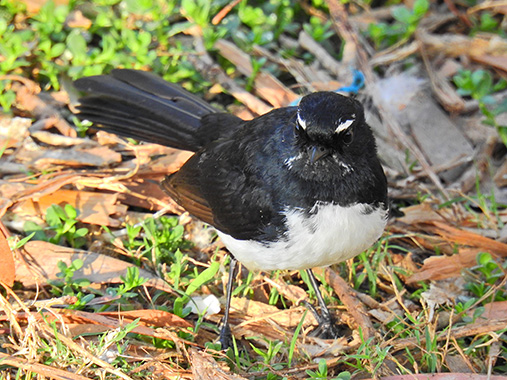
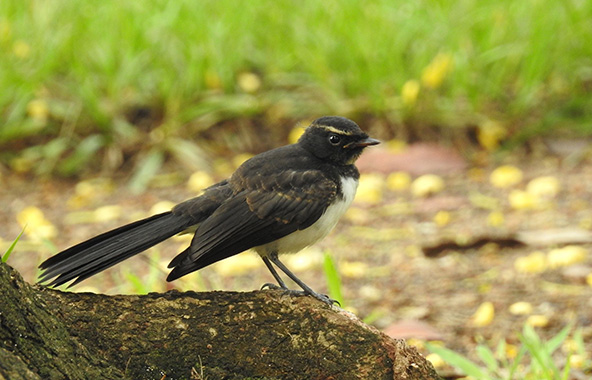
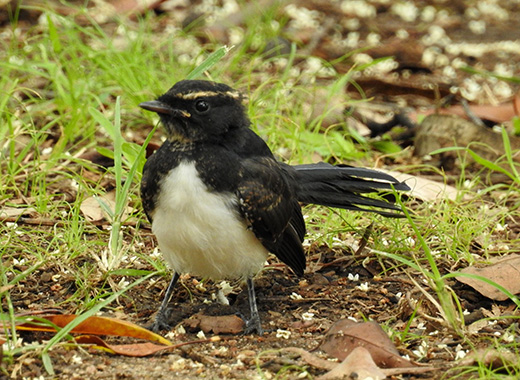
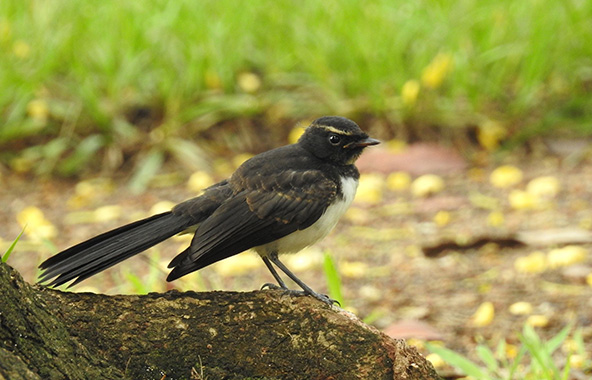
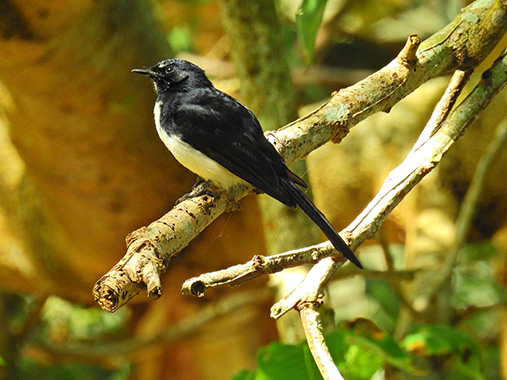
The Willie Wagtail is a slender, medium-small bird measuring about 19 to 21 centimetres long, with much of that length made up by its tail.
It has:
- glossy black upperparts
- a black head and throat
- a bold white eyebrow
- a crisp white belly and underparts
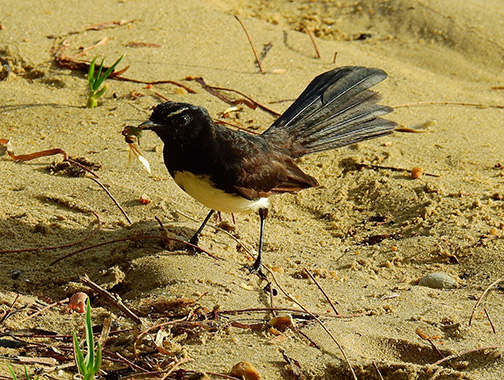
- a long black tail edged with white
- a habit of constantly wagging, flicking and fanning its tail
Males and females look very similar, so they are difficult to tell apart in the field.
What Does the Willie Wagtail Sound Like?
The Willie Wagtail is a very vocal bird. It gives a mix of:
- sharp chattering calls
- quick scolding notes
- sweet warbling song phrases
Its calls are often heard before the bird is noticed. It may sing from a fence, low branch, rooftop or powerline, and it is especially noisy when defending territory or warning other birds away from its nest.
Where Does the Willie Wagtail Live?
The Willie Wagtail is found across most of mainland Australia, Tasmania, New Guinea, the Solomon Islands and parts of eastern Indonesia.
In Australia, it lives in a wide range of habitats, especially open or lightly wooded country such as:
- woodland edges
- farmland
- grasslands
- riverbanks
- wetlands
- coastal areas
- parks and gardens
- suburbs and country towns
It usually prefers places with open ground for feeding and nearby perches such as branches, fences, wires or posts.
Willie Wagtail Habitat
Willie Wagtails adapt well to human-altered landscapes, which is why they are so common in rural and suburban areas. They are less common in dense rainforest, thick forest interior and the most barren treeless country, but they are highly successful in open habitats where insects are easy to catch.
What Does the Willie Wagtail Eat?
The Willie Wagtail mainly eats insects and other small invertebrates. Its diet includes:
- flies
- beetles
- moths
- butterflies
- ants
- grasshoppers
- bugs
- spiders
It hunts by:
- darting from a perch to catch insects in the air
- running quickly across the ground
- picking prey from foliage or the soil surface
- following livestock, people or machinery to catch insects disturbed by movement
This feeding behaviour makes the Willie Wagtail an important natural insect controller in gardens, farms and bushland.
Willie Wagtail Behaviour
The Willie Wagtail is famous for being bold, energetic and territorial. It is far more fearless than its size suggests and will often chase much larger birds away from its nesting area, including:
- magpies
- currawongs
- kookaburras
- crows and ravens
- birds of prey
This behaviour, known as mobbing, helps protect eggs and chicks from predators.
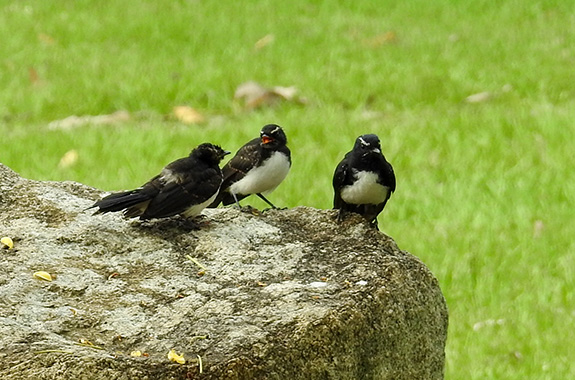
Willie Wagtails are usually seen alone or in pairs, although family groups may gather after breeding. They are active during the day and may also feed around outdoor lights at dusk where insects are attracted.
How Long Does the Willie Wagtail Live?
Like many small birds, young Willie Wagtails face many natural dangers, so not all survive for long. However, banding records show that some Willie Wagtails can live for more than 10 years in the wild.
Their lifespan depends on factors such as:
- food availability
- predation
- weather
- habitat quality
- success during the breeding season
Willie Wagtail Breeding
The breeding season varies with location and rainfall, but in many parts of Australia it takes place from late winter to summer.
Nest
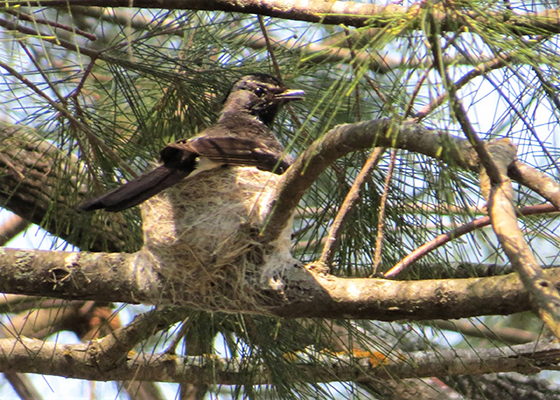
The nest is a small, neat cup made from fine grasses, bark, roots and plant fibres, all carefully bound together with spider web. It is often built on:
- a horizontal branch
- a fork in a tree
- a ledge
- a beam
- a garden structure
- a man-made platform
Eggs
A typical clutch contains 2 to 4 eggs. The eggs are usually pale with darker spots and blotches.
Parents and Young
Both adults may share nesting duties and feeding of the chicks. Willie Wagtails are extremely defensive when nesting and will vigorously chase away intruders. The chicks grow quickly and are fed mostly on insects.
Interesting Facts About the Willie Wagtail
- The Willie Wagtail is not a true wagtail. It is a fantail.
- It is one of Australia’s most recognisable native birds.
- Its constantly moving tail may help flush insects into the open.
- It often lives successfully close to people in gardens, parks and farms.
- Despite its small size, it will often attack birds many times larger than itself if a nest is nearby.
- The Willie Wagtail appears in the cultural knowledge and stories of many Aboriginal peoples, but these traditions differ between regions and language groups.
Willie Wagtail Conservation Status
The Willie Wagtail is listed as Least Concern on the IUCN Red List because it has a very large range and remains common across much of its distribution.
In Australia, the Willie Wagtail is not considered nationally threatened and is still widespread in suitable habitat.
Threats to the Willie Wagtail
Although the species is common overall, local Willie Wagtail populations can still be affected by:
- habitat clearing
- removal of trees, shrubs and nesting sites
- pesticide use that reduces insect prey
- predation by cats
- nest predation by larger birds and other animals
- window strikes
- severe storms and heat events during breeding
Because the Willie Wagtail depends heavily on insects, any decline in insect abundance can affect feeding success, especially during nesting.
How People Can Help Willie Wagtails
People can help Willie Wagtails by:
- planting native trees and shrubs
- avoiding unnecessary insecticides and pesticides
- keeping cats indoors or in secure outdoor enclosures
- protecting nesting birds from disturbance
- maintaining gardens that support insects and small wildlife
- leaving a mix of open space and natural vegetation for feeding and shelter
A wildlife-friendly garden can provide everything a Willie Wagtail needs, including perches, insect food and safe nesting places.
Why the Willie Wagtail Matters
The Willie Wagtail is more than just a familiar backyard bird. It is a skilled insect hunter, a strong defender of its nest and a vivid example of how native wildlife can survive alongside people when habitat remains healthy. Its confidence, voice and constant movement give life to Australian gardens and bushland alike.
Quick Facts
| Feature | Willie Wagtail |
|---|---|
| Common name | Willie Wagtail |
| Scientific name | Rhipidura leucophrys |
| Family | Rhipiduridae |
| Size | 19–21 cm |
| Diet | Insects and other small invertebrates |
| Habitat | Open woodland, farmland, wetlands, parks, gardens and suburbs |
| Range | Australia, Tasmania, New Guinea, Solomon Islands and nearby islands |
| Conservation status | Least Concern |
Reference Links
IUCN Red List
https://www.iucnredlist.org/BirdLife Australia
https://birdlife.org.au/Australian Museum
https://australian.museum/Atlas of Living Australia
https://www.ala.org.au/Australian Bird and Bat Banding Scheme
https://www.dcceew.gov.au/science-research/abrs/bird-and-bat-banding
Photo Gallery