AUSTRALIAN BRUSH-TURKEY
Alectura lathami
Australian Brush‑turkey
In the forests and suburban gardens of eastern Australia lives one of the country’s most unusual birds—the Australian Brush‑turkey. Large, prehistoric in appearance, and famous for building enormous compost mounds, this bird has evolved one of the most remarkable incubation strategies in the avian world.
Instead of sitting on their eggs, brush‑turkeys rely on heat generated by decomposing vegetation. The male carefully manages the temperature of his nest mound like a skilled engineer, ensuring the eggs develop safely beneath layers of soil and leaf litter.
Once confined mostly to rainforest and dense forest, these birds are now commonly seen in parks, gardens, and suburban bushland, particularly around cities such as Brisbane and Sydney.
Appearance
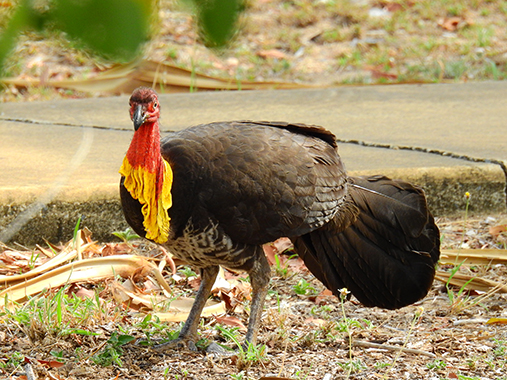
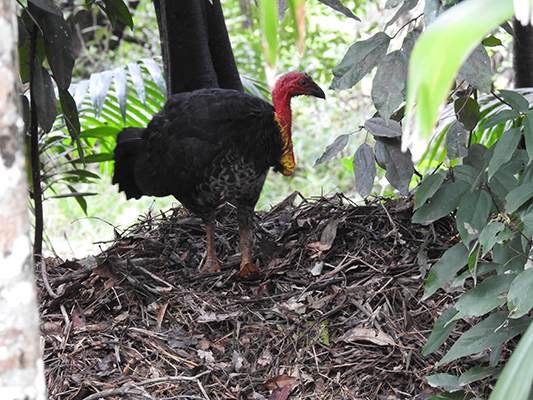
The Australian Brush‑turkey is a large ground‑dwelling bird, measuring 60–75 cm in length with a wingspan approaching 85 cm.
Key features include:
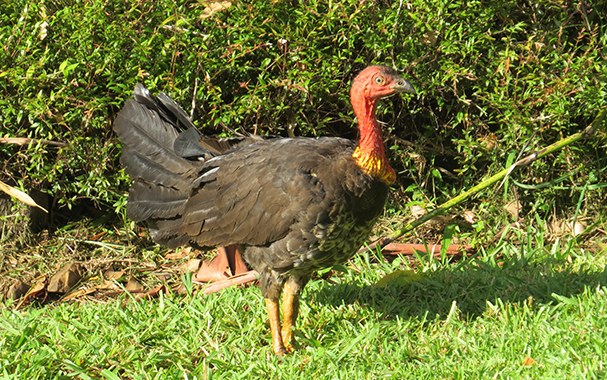
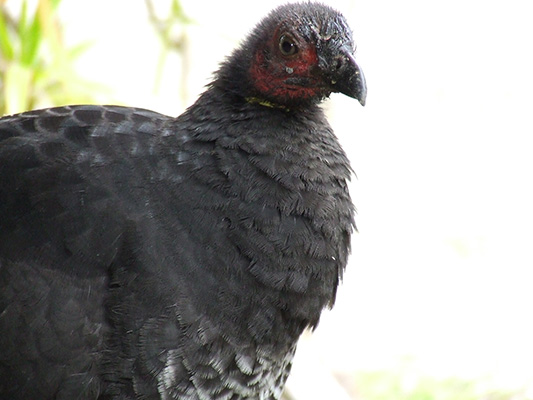
- Dark black to brown plumage
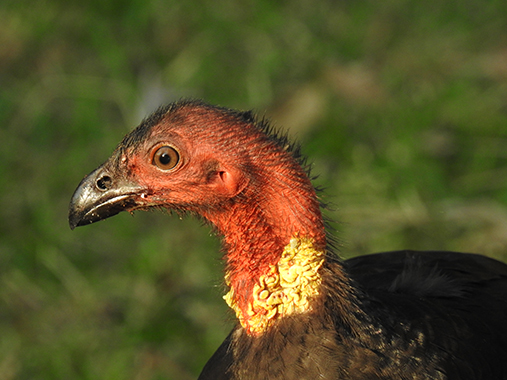
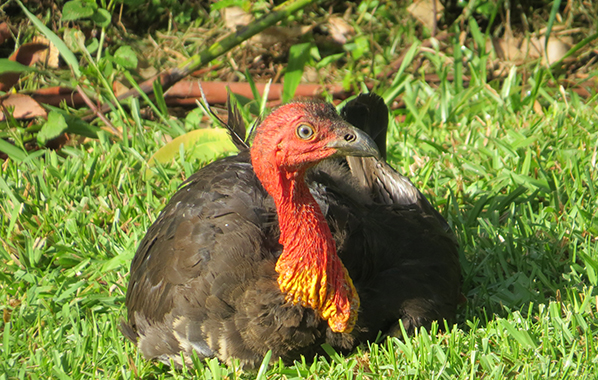
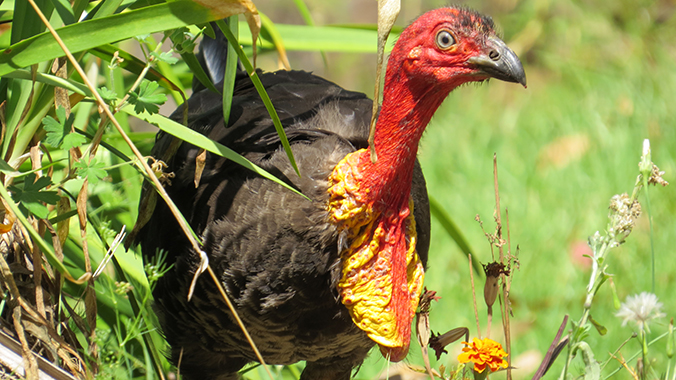
- Bare red head and neck
- Bright yellow throat wattle (larger in adult males)
- Strong grey legs with large claws
- Short rounded wings and long tail
Males are typically larger and more robust than females, though they look quite similar at a glance.
Sounds and Calls
Brush‑turkeys are generally quiet birds but can produce several distinctive sounds.
Common vocalisations include:
- Low booming or drumming calls from males during breeding season
- Grunts and clucks used during close interactions
- Sharp alarm calls when threatened
In suburban areas, people often hear them scratching noisily through leaf litter, which can be louder than their calls.
Habitat and Distribution
The Australian Brush‑turkey is found along eastern Australia, including:
- Northern Queensland
- Eastern Queensland
- New South Wales
- Small parts of Victoria
Preferred habitats include:
- Rainforests
- Wet sclerophyll forests
- Coastal woodlands
- Urban parks and gardens
Over recent decades the species has expanded into cities, where gardens provide abundant leaf litter and food.
Diet
Brush‑turkeys are omnivores and opportunistic feeders.
Their diet includes:
- Insects and larvae
- Earthworms
- Fallen fruits and seeds
- Fungi
- Small reptiles or amphibians
- Plant material
Using their powerful feet, they scratch vigorously through soil and leaf litter to uncover food.
Longevity
Australian Brush‑turkeys can live around 10–15 years in the wild, though some individuals in protected environments have lived longer.
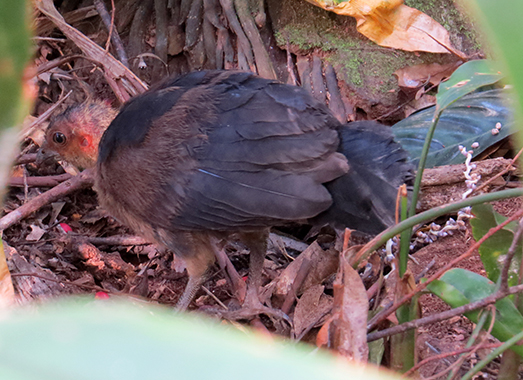
Young birds face high mortality because they must survive completely independently from the moment they hatch.
Breeding and the Famous Incubation Mound
The breeding behaviour of the brush‑turkey is among the most extraordinary of any bird.
Mound Construction
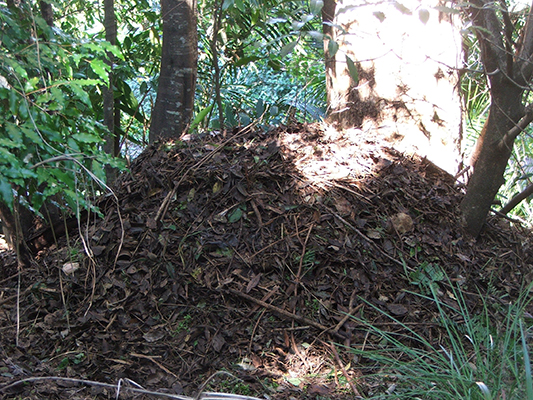
Male brush‑turkeys build a massive incubation mound made from:
- Leaves
- Soil
- Composting vegetation
- Twigs and forest debris
These mounds can reach:
- Up to 4 metres wide
- About 1 metre high
- Several tonnes in weight
The male spends months collecting material, constantly adjusting the mound.
Temperature Control
As vegetation decomposes, it generates heat. The male monitors the mound’s temperature by inserting his highly sensitive bill into the material.
If the mound becomes:
- Too hot – he removes material to cool it
- Too cold – he adds more vegetation to increase decomposition
The ideal temperature is about 33–35°C, perfect for egg development.
Eggs and Incubation
- Clutch size: females may lay 15–24 eggs across a season
- Egg size: very large, about twice the size of a chicken egg
- Incubation period: about 45–55 days
Multiple females may lay eggs in the same mound.
Independent Chicks
When chicks hatch, they dig their way out of the mound using strong legs and claws.
Within hours they can:
- Walk
- Run
- Fly short distances
- Feed themselves
The parents provide no care at all.
Interesting Facts
- The brush‑turkey belongs to an ancient bird group called megapodes, meaning “large foot”.
- It is one of the few birds that incubate eggs using environmental heat rather than body warmth.
- The male may turn several tonnes of soil and vegetation each year while maintaining his mound.
- Chicks hatch with fully developed flight feathers and can escape predators almost immediately.
- Despite their size, brush‑turkeys can fly surprisingly well, often roosting high in trees at night.
Conservation Status
According to the IUCN Red List, the Australian Brush‑turkey is classified as:
Least Concern
The species has actually recovered strongly in many areas after earlier declines caused by hunting and habitat loss.
Legal protection and adaptation to urban environments have helped populations grow.
Threats
Although relatively secure, brush‑turkeys still face several threats:
- Habitat loss from land clearing
- Road mortality in urban areas
- Predation by dogs, foxes, and cats
- Human conflict, particularly when birds dig in gardens
In some cities, frustration over garden disturbance leads to attempts to remove or harm the birds.
How We Can Help
Living alongside brush‑turkeys can be easier with a few practical steps.
Helpful actions include:
- Protect native vegetation and forest habitat
- Use wildlife‑friendly fencing around sensitive garden beds
- Avoid feeding them processed human food
- Keep dogs and cats under control
- Support conservation programs protecting urban wildlife
These birds play an important ecological role by turning over soil and recycling organic material, much like natural composters of the forest floor.
A Living Link to Ancient Australia
With their powerful feet, reptile‑like head, and mound‑building behaviour, Australian Brush‑turkeys offer a glimpse into the ancient evolutionary history of birds. Watching a male carefully maintain his mound is like observing a living ecological engineer at work.
As Australian cities continue to grow, learning to coexist with species like the brush‑turkey helps ensure that wildlife remains a vibrant part of the landscape.
References
BirdLife International
https://www.birdlife.orgIUCN Red List – Alectura lathami
https://www.iucnredlist.orgAustralian Museum – Australian Brush‑turkey
https://australian.museumBirdLife Australia Species Profile
https://birdlife.org.auAustralian Government Species Profile and Threats Database
https://www.environment.gov.auCornell Lab of Ornithology – Birds of the World
https://birdsoftheworld.org
Photo Gallery