BLACK NODDY
The Black Noddy – a Seabird of Coral Islands
The Black Noddy (Anous minutus) is a graceful, ocean-going seabird often seen gliding over tropical waters and resting in the trees of coral islands. It is common across much of the tropical Pacific and Indian Oceans, including parts of Australia.
Quick Facts
| Feature | Detail |
|---|---|
| Scientific name | Anous minutus |
| Common name | Black Noddy |
| Family | Laridae (gulls and terns) |
| Size | About 32–36 cm long |
| Wingspan | Around 60–70 cm |
| Conservation | Generally not threatened globally |
| Australian range | Great Barrier Reef, Coral Sea, offshore QLD & WA islands |
What It Looks Like
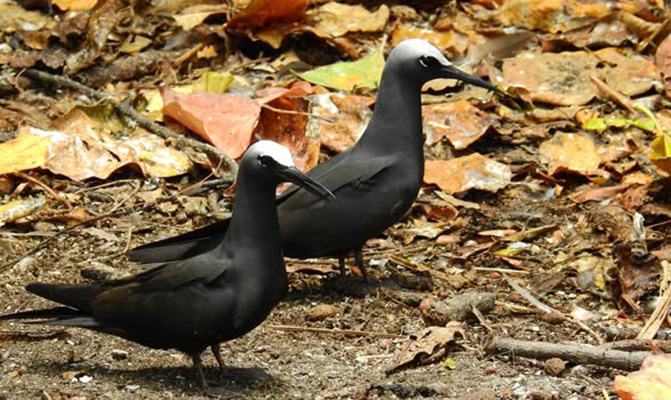
Imagine a slim, charcoal-coloured bird slicing through the air above clear tropical water.
Key features:
- Body colour:
Mostly dark brown-black, though in bright light you may notice a chocolate-brown rather than pure black. - Cap and forehead:
A pale grey to whitish cap that contrasts with the darker body. This “hood” is a useful way to tell it from the more uniformly dark Brown Noddy. - Bill:
Long, straight, and black – perfect for snatching small fish and squid from the surface. - Wings and tail:
Long, pointed wings give it a slender, elegant outline in flight. The tail is fairly long and wedge-shaped, not deeply forked like many terns. - Eyes:
Dark eyes set into the pale cap – at close range, this gives them a very gentle, soft expression.
In the air, they look sleek and purposeful, often flying steadily rather than with the erratic twists and turns of some other seabirds.
Where It Lives
Global Range
Black Noddies are tropical ocean specialists. They occur:
- Across much of the Pacific Ocean
- Through the Indian Ocean
- Around many coral atolls and small oceanic islands
They rarely come to large mainland coasts except when driven in by storms.
In Australia
In Australian waters, Black Noddies are strongly linked with offshore islands, especially:
- Great Barrier Reef islands (Queensland)
- Coral Sea islands
- Some offshore Western Australian islands (e.g. parts of the offshore reef and atoll systems)
They spend most of their lives at sea but return to land to breed on small, often low-lying islands, many with coral reefs.
Life at Sea – Behaviour and Feeding
How They Feed
Black Noddies are surface-feeding seabirds. They:
- Pick small fish, squid and crustaceans from or just below the water surface
- Often associate with schools of predatory fish or dolphins, which drive prey up towards the light
- Feed mainly by dipping – skimming the surface and picking food off, rather than diving deeply
If you were out on a calm tropical sea, you might see them:
- Flying low over the water in small groups
- Suddenly stalling in mid-air, wings beating fast, to pluck something from the surface
Their feeding style is relatively gentle and controlled compared with plunge-diving terns.
Nesting and Colonies
Nest Sites
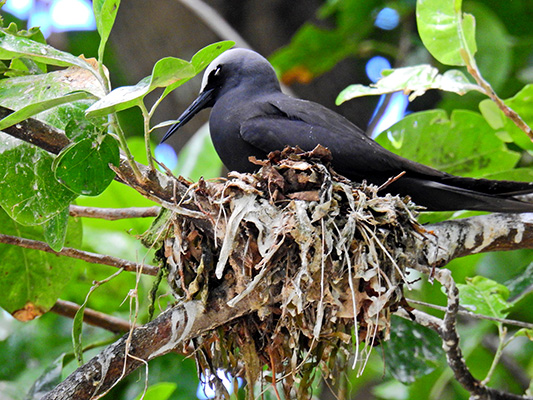
Unlike many seabirds that nest on the ground, Black Noddies often choose trees or shrubs on islands. They:
- Build small nests on branches
- Use twigs, leaves, and seaweed, glued together with droppings
- Sometimes nest in very large colonies, with many nests crowded together
On some tropical islands, the trees above the beach can be full of them – branches lined with dark birds and pale-topped heads, all calling softly.
Eggs and Chicks
- Usually one egg per nest, occasionally two
- Both parents share:
- Incubation (keeping the egg warm)
- Feeding the chick once it hatches
- Chicks are:
- Downy and speckled when small
- Initially remain in the nest, then become more adventurous as they grow
Colonies can be quite noisy: a constant background of soft calls, wingbeats, and the rustle of birds coming and going.
Why It’s Called a “Noddy”
The name “Noddy” is often said to come from their habit of bobbing or nodding their heads, particularly when interacting with each other or when on the nest. To early sailors, who relied on seabirds as signs of nearby land, these birds seemed surprisingly trusting and rather easy to approach.
Black Noddy vs Brown Noddy
The Brown Noddy (Anous stolidus) is a close relative and often shares the same general region. They can be confused, but there are differences:
| Feature | Black Noddy (A. minutus) | Brown Noddy (A. stolidus) |
|---|---|---|
| Size | Smaller | Larger |
| Body colour | Dark brown-black | Dark brown, often warmer chocolate |
| Cap | Pale grey/whitish cap | Dark cap, not clearly pale |
| Overall contrast | Distinct pale cap vs darker body | More uniformly brown |
On many islands, experienced observers can tell them apart at a glance by the pale cap of the Black Noddy.
Ecological Role
Black Noddies are part of the ocean’s nutrient cycle:
- They feed at sea and return to islands to roost and breed
- Their guano (droppings) is rich in nutrients and fertilises:
- Coastal vegetation
- Coral island soils (which are often very poor in nutrients without seabirds)
- This, in turn, supports:
- Healthier trees and shrubs
- More insect and invertebrate life
- A richer island ecosystem overall
They are also part of the food web:
- Adults and chicks may be taken by:
- Larger predatory birds (e.g. frigatebirds in some regions)
- Introduced predators such as rats and cats where these have established on islands
Conservation and Threats
Globally, the Black Noddy is not currently considered highly threatened. However, it is vulnerable to specific local pressures, particularly on breeding islands:
- Introduced predators
Rats, cats and other mammals can prey on eggs, chicks and even adults. - Habitat loss or degradation
Clearing of vegetation or damage to island forests reduces nesting opportunities. - Human disturbance
Excessive disturbance during breeding season can cause birds to abandon nests. - Climate change and sea-level rise
Many colonies occur on low-lying coral cays and atolls, which are at risk from:- Rising seas
- Increased storm damage
- Coastal erosion
Protecting island habitats is key to the long-term stability of Black Noddy populations.
Seeing Black Noddies in the Wild (Australia)
If you go to tropical offshore islands in Queensland or the Coral Sea, especially during the breeding season:
- Look for:
- Dark, slender seabirds with pala grey caps, flying low over the water
- Trees filled with nesting birds, often above sandy beaches or lagoon shores
- You may:
- Hear their soft, chattering calls
- Smell the sharp, salty scent of guano and seaweed beneath ocean-facing trees
- See adults bringing small, silvery fish to waiting chicks
Keeping a respectful distance, staying on marked paths, and avoiding loud noise near colonies helps ensure these birds can continue their nesting undisturbed.
Why They Matter
Black Noddies are a living link between the open ocean and the tiny islands that dot it. By carrying nutrients from sea to land, they help keep island ecosystems alive and thriving. Their presence often signals:
- Healthy fish populations offshore
- Relatively undisturbed island habitats
By protecting them, we are also protecting the coral reef systems and island forests that support a great variety of other wildlife.
Photo Gallery