AUSTRALIAN RAVEN
Australian Raven
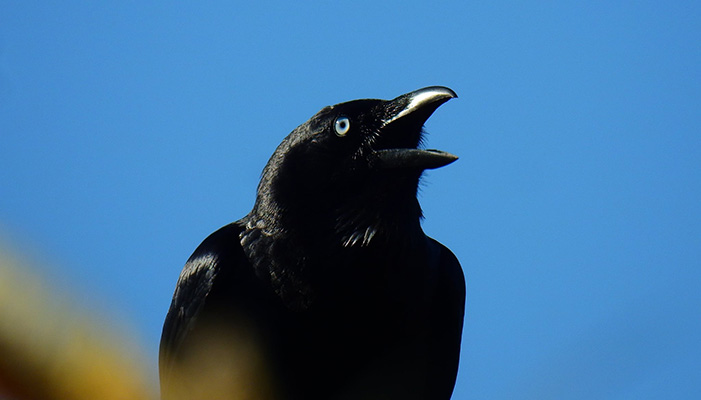
At dawn in many Australian cities and bushlands, a deep, rolling “ah-ah-ah-aaaah” carries through the air. It is a sound that seems to stretch across the landscape, echoing off trees, buildings and open paddocks. This unmistakable call belongs to the Australian Raven, one of the country’s most intelligent and adaptable birds.
What Does the Australian Raven Look Like?
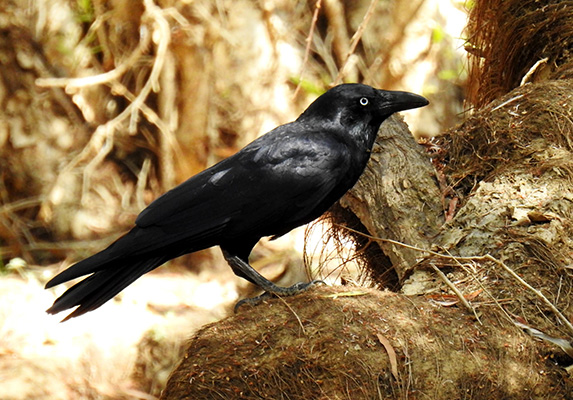
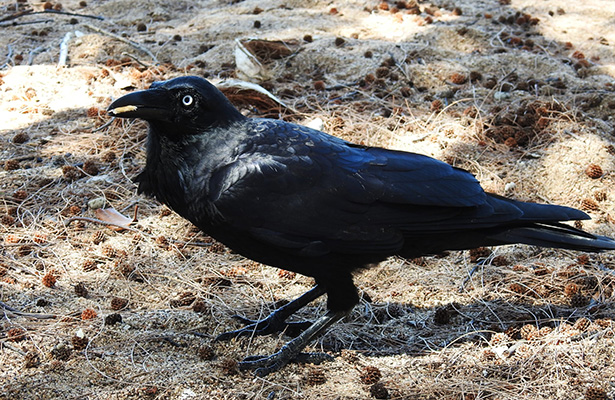
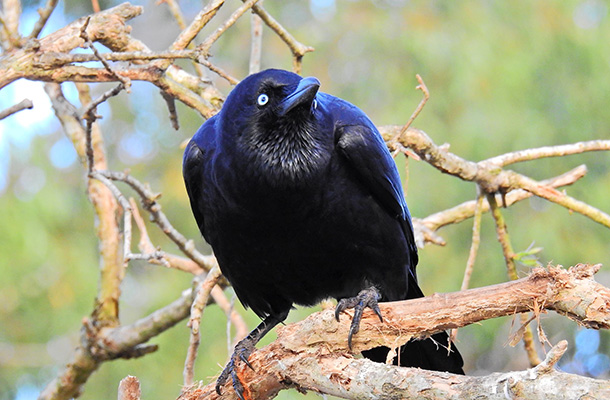
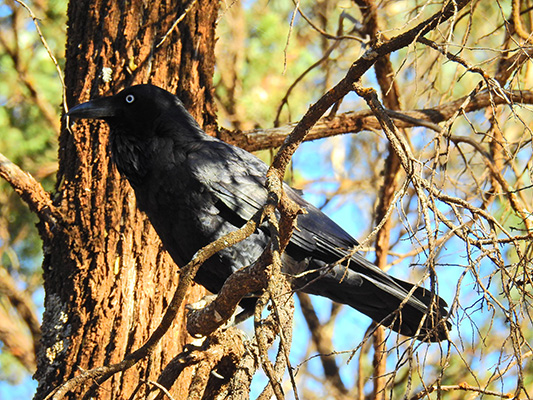
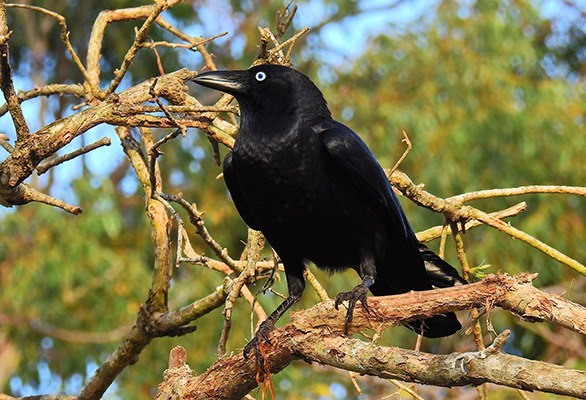
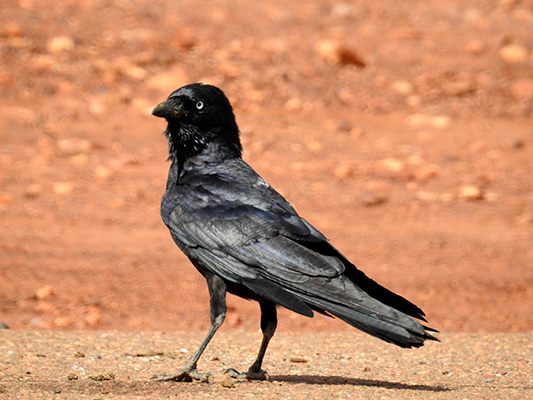
At first glance, the Australian Raven appears entirely black, but a closer look reveals a bird rich in subtle detail.
- Size: Large, around 46–53 cm long
- Plumage: Glossy black with a faint blue-purple sheen in bright sunlight
- Beak: Long, heavy and slightly curved, often showing a pale base in adults
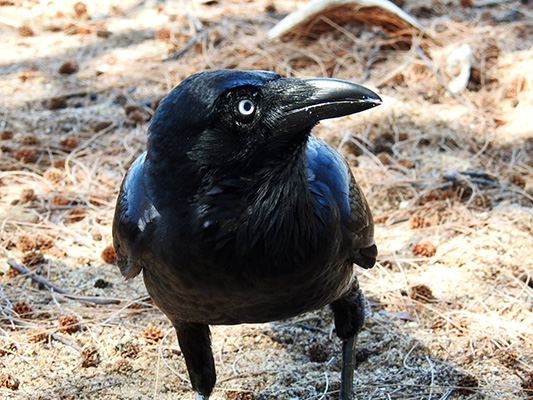
- Eyes: Older birds and subadults have white irises, while younger birds show a distinctive blue inner ring around the pupil. Hatchlings and juveniles begin life with dark brown irises, which they retain until about 15 months of age. From this point, the iris gradually shifts to a hazel colour with a blue inner rim, a transitional stage that lasts until the bird reaches approximately 2.5 to 3 years of age, when the eyes finally become fully white.
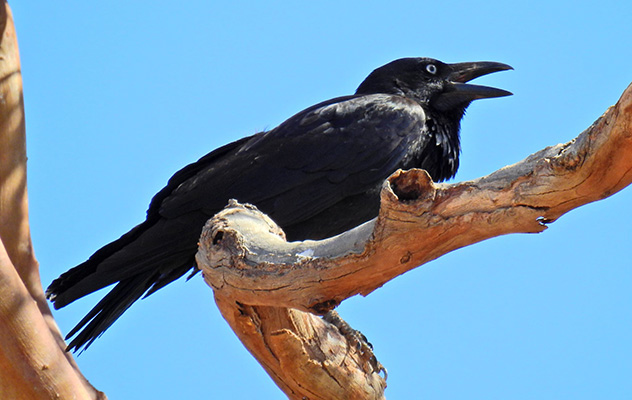
- Throat feathers: Long, shaggy feathers known as hackles, especially visible when calling
When it calls, the raven often lifts its head and fluffs its throat feathers, making it appear even more imposing.
Where Is the Australian Raven Found?
The Australian Raven is one of the most widespread ravens on the continent.
Distribution
- Found across eastern, southern and central Australia
- Absent from far north Queensland and much of the tropical north-westHabitats
- Open woodlands and forests
- Farmland and grasslands
- Coastal areas
- Urban environments, including cities and suburbs
Its success in towns and cities reflects a remarkable ability to adapt to human-altered landscapes.
Breeding and Family Life
Australian Ravens form long-term pair bonds, often staying with the same partner for life.
Breeding Season
- Usually July to September, but can vary with climate and food availability
Nest
- A large, sturdy bowl made of sticks
- Lined with bark, grass and wool
- Built high in trees or on tall structures such as power poles
Chicks
- 3–5 eggs per clutch
- Both parents share incubation and feeding
- Young birds remain with their parents for several months, learning how to forage and survive
This extended family care plays a vital role in passing on knowledge, a hallmark of raven intelligence.
Diet and Behaviour
Australian Ravens are highly opportunistic omnivores.
They feed on:
- Insects and small animals
- Seeds, grains and fruit
- Carrion (dead animals)
- Human food scraps in urban areas
They are known for their problem-solving skills, often observed manipulating objects, opening containers, and remembering food locations.
Longevity
- Average lifespan: 10–15 years in the wild
- Maximum recorded: Over 20 years
Their intelligence, adaptability and cautious nature contribute to their long lives.
Interesting Facts
- Ravens can recognise individual human faces and remember them for years.
- They play an important ecological role by cleaning up carrion, helping reduce the spread of disease.
- Juvenile ravens often form loose “gangs” before pairing up as adults.
- Their intelligence rivals that of great apes in some problem-solving tasks.
Conservation and Coexistence
The Australian Raven is not threatened and has benefited from land clearing and urbanisation. However, this success sometimes leads to conflict, particularly around rubbish and livestock feed.
Rather than seeing them as pests, ravens can be appreciated as:
- Skilled recyclers of the landscape
- Indicators of environmental change
- A reminder of nature’s resilience in shared spaces
By securing waste and protecting natural habitats, we can continue to coexist with this remarkable bird.
A Familiar Voice of Australia
The Australian Raven is more than just a black silhouette against the sky. It is a sharp-minded survivor, a devoted parent, and a constant presence in both wild and urban Australia. Once you learn its call, you may find it becomes a familiar voice—one that tells the story of a land shaped by adaptation, intelligence and enduring connection to place.
Photo Gallery