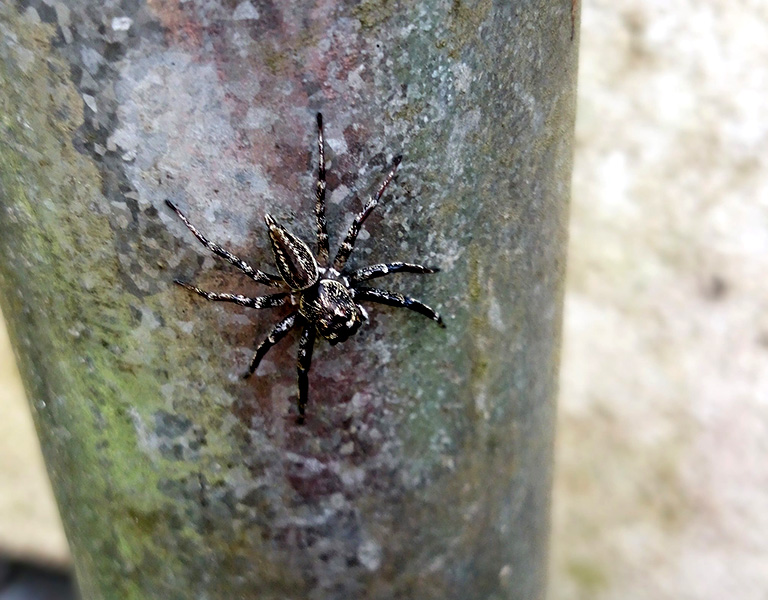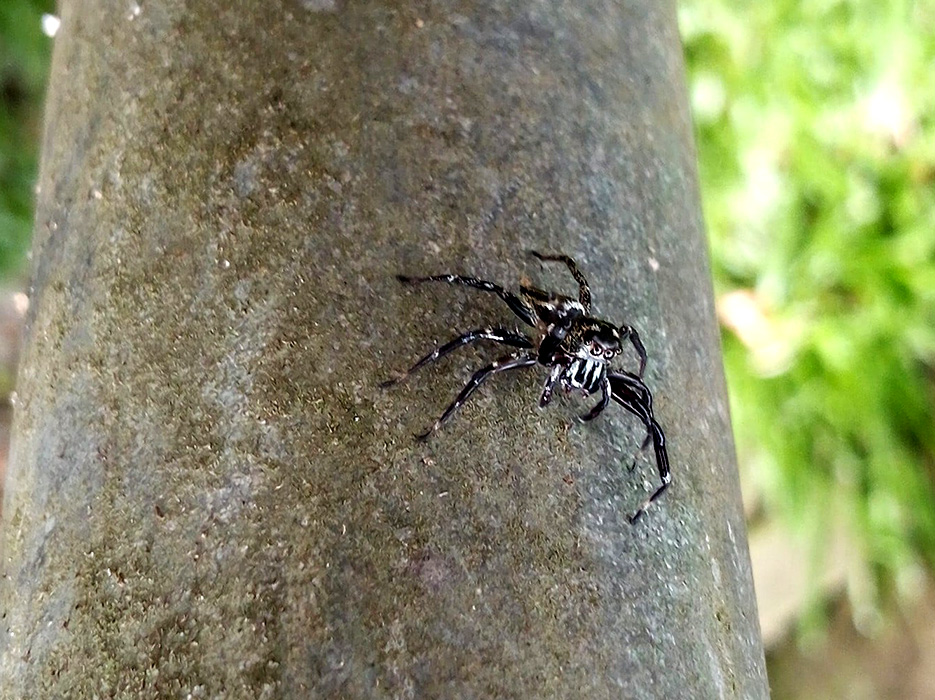
Australian Jumping spiders
Australian Jumping Spiders
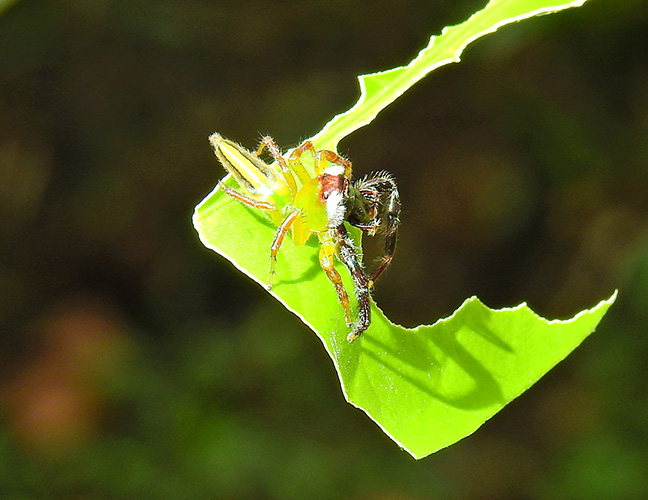
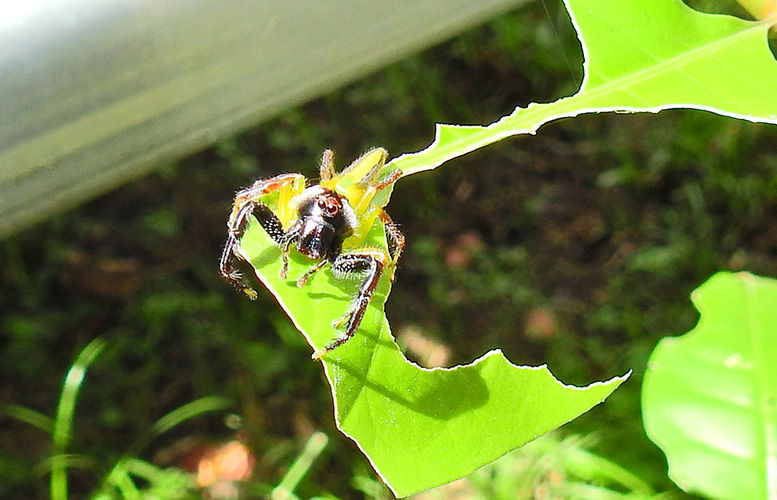
In the warmth of a sunlit morning, a tiny spider pauses on a leaf. It turns its head, watching you watch it, then leaps — not away in panic, but with precision and confidence. This is an Australian jumping spider, one of the most engaging and intelligent-looking spiders in our landscape.
Belonging to the family Salticidae, jumping spiders are small, curious hunters known for their excellent eyesight, agile movements and surprisingly expressive behaviour.
Where Australian Jumping Spiders Are Found
Jumping spiders are found across all of Australia, from tropical north Queensland to temperate southern regions and even arid inland zones.
They live in:
- Gardens and backyards
- Bushland and forests
- Grasslands
- Urban walls, fences and window frames
They are most active during the day, when sunlight supports their keen vision.
Species Diversity
Australia is home to hundreds of jumping spider species, many of which are found nowhere else on Earth.
Well-known groups include:
| Common Group | Scientific Genus | Notes |
|---|---|---|
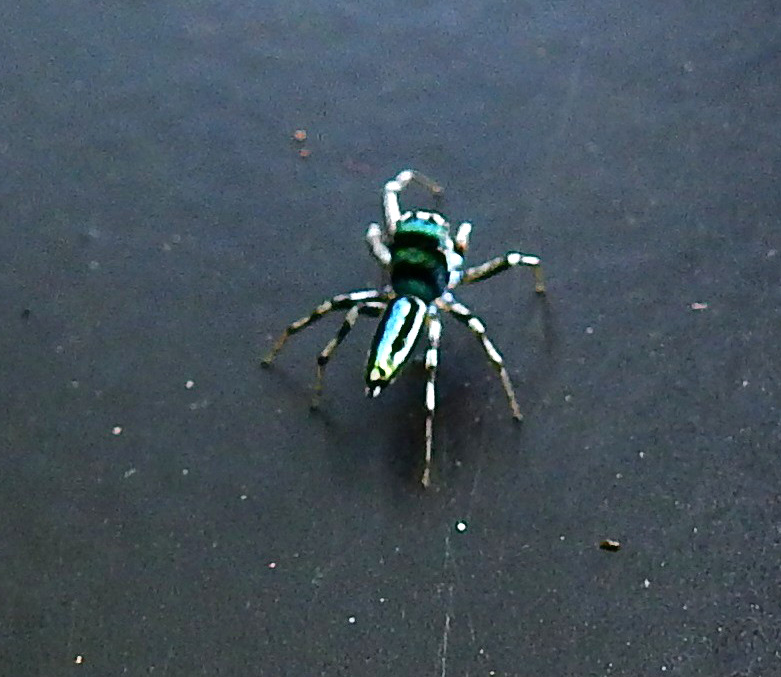
| Peacock Spiders | Maratus spp. | Famous for colourful courtship dances |
| Bronze Jumping Spiders | Helpis spp. | Metallic sheen, often found on foliage |
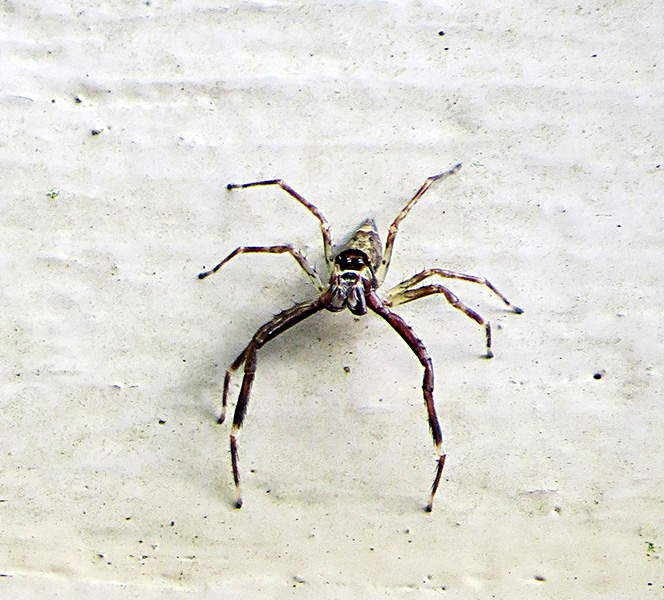
| Grey Wall Jumpers | Menemerus spp. | Common on buildings |
| Ant-mimicking Jumpers | Myrmarachne spp. | Resemble ants for protection |
Vision – Among the Best in the Spider World
Jumping spiders have four pairs of eyes, but their two large front eyes are truly remarkable.
They can:
- See colour and ultraviolet light
- Judge distance accurately
- Track moving objects — including people
This sharp vision allows them to hunt without webs and recognise potential mates.
How They Hunt
Jumping spiders are active stalk-and-pounce predators.
Their hunting process:
- They slowly approach prey, moving in short, deliberate steps.
- They attach a silk safety line behind them.
- They leap with extraordinary accuracy.
- They bite and quickly immobilise their prey.
Despite their size, they can jump many times their own body length.
What They Eat
Jumping spiders feed on:
- Flies
- Mosquitoes
- Small moths
- Ants
- Other tiny spiders
Their presence helps keep insect populations balanced, especially in gardens.
Breeding and Courtship
Jumping spiders are famous for their complex mating displays.
- Males perform visual dances using:
- Leg waves
- Body vibrations
- Bright colours or iridescent scales
- Females watch carefully and may reject unsuitable suitors
After mating:
- Females lay eggs in a silk retreat
- They guard the eggs until the spiderlings hatch
The courtship of peacock spiders (Maratus) is among the most elaborate in the spider world.
Longevity
- Average lifespan: about 1 year
- Some species may live slightly longer under favourable conditions
- Most die after breeding
Their short lives are filled with constant movement and exploration.
Venom and Safety
All jumping spiders are venomous, but:
- Their venom is harmless to humans
- Bites are extremely rare
- Any bite is usually no worse than a mild mosquito bite
They are non-aggressive and more likely to retreat or observe than attack.
Indigenous Knowledge and Cultural Perspectives
In Aboriginal cultures, small animals such as jumping spiders were carefully observed as part of Country.
- Their movements and seasonal appearance contributed to ecological understanding
- Spiders often symbolised awareness, patience and precision
- Webs and silk were associated with connection and knowledge
These observations reflect a deep respect for even the smallest hunters in the landscape.
Fascinating Facts About Jumping Spiders
- They can turn to face you and appear to “watch”
- They do not use webs to catch prey
- They show problem-solving behaviour
- Some species mimic ants or beetles
- Peacock spiders are considered among the most colourful spiders on Earth
Why Australian Jumping Spiders Matter
Jumping spiders are tiny but vital:
- They help control insect populations
- They support healthy ecosystems
- They invite curiosity rather than fear
By pausing to watch a jumping spider, we are reminded that intelligence, beauty and bravery come in very small packages — and that Australia’s wildlife reveals its wonders to those willing to look closely.
Photo Gallery