Australian Fishing Spiders
Australian Fishing Spiders
Silent hunters of creeks and waterways
As dusk settles over a still creek and the surface of the water turns to glass, a spider waits at the edge. Its legs rest lightly on the water, sensing the faintest ripple. In a sudden burst of movement, it strikes — pulling an insect, or even a small fish, from beneath the surface. These are Australian fishing spiders, remarkable hunters that live where land and water meet.
Fishing spiders belong to the family Pisauridae, often called nursery web spiders, and are among Australia’s most specialised arachnids.
Where Australian Fishing Spiders Are Found
Fishing spiders occur across much of Australia, particularly in regions with reliable freshwater.
They are commonly found:
- Along creeks, rivers and streams
- Beside lakes, dams and wetlands
- In mangroves and swampy bushland
- Around garden ponds
They prefer sheltered, vegetated edges where prey is abundant and water is calm.
Species and Identification
Australia is home to several fishing spider species, mainly within the genus:
Dolomedes(the true fishing spiders)
Notable species include:
- Dolomedes facetus
- Dolomedes instabilis
These spiders are among the largest spiders in Australia, with long legs adapted for movement across water surfaces.
Appearance and Adaptations
Fishing spiders are built for an amphibious life.
Key features:
- Long, powerful legs often banded with pale markings
- Bodies covered in fine, water-repellent hairs
- Camouflaged brown, grey or cream colouring
- Leg spans that can exceed 15 centimetres
Their legs spread wide, allowing them to distribute their weight and “stand” on water using surface tension.
What Fishing Spiders Eat
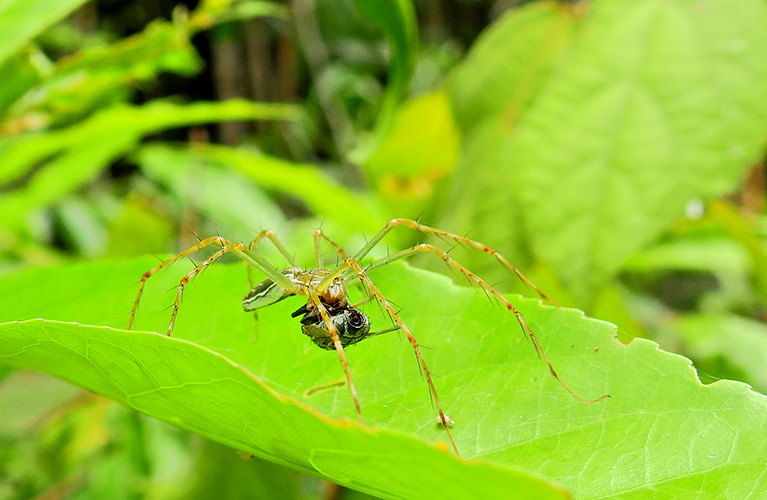
Fishing spiders are opportunistic predators.
Their diet includes:
- Aquatic insects
- Water striders
- Mosquito larvae
- Tadpoles
- Small fish
They detect prey by sensing vibrations on the water’s surface and beneath it.
How They Hunt
Fishing spiders hunt using patience and precision.
They:
- Rest with legs touching the water surface
- Sense vibrations caused by movement
- Lunge forward in a rapid strike
- Inject venom to immobilise prey
They can:
- Run across water
- Dive beneath the surface
- Trap air bubbles against their body while submerged
This ability allows them to pursue prey underwater for short periods.
Breeding and Maternal Care
Fishing spiders show strong parental behaviour.
- Females carry their egg sac in their jaws
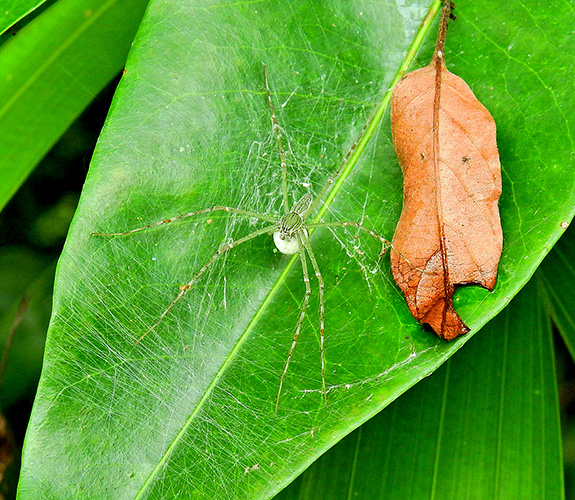
- Before hatching, the mother builds a nursery web among vegetation
- Spiderlings remain protected until they disperse
This attentive care significantly increases offspring survival.
Longevity
- Average lifespan: around 2 years
- Females generally live longer than males
- Much of their life is spent waiting, sensing and ambushing
Venom and Safety
Fishing spiders are venomous, but:
- Their venom is not dangerous to humans
- Bites are rare and defensive
- Effects are usually mild, similar to a bee sting
They are shy spiders that prefer escape over confrontation.
Indigenous Knowledge and Cultural Context
Aboriginal Australians have long observed the behaviour of animals around waterways.
- Creatures that move between water and land were seen as important indicators of seasonal change
- Spiders near water reflected healthy freshwater systems
- Observations of hunting behaviour contributed to ecological knowledge passed through generations
While specific fishing spider stories vary by Nation, their presence aligns with broader cultural understandings of balance between land and water.
Fascinating Facts About Fishing Spiders
- They can walk on water using surface tension
- They trap air bubbles when diving underwater
- They can catch prey larger than themselves
- They do not use webs to catch prey
- Females show advanced maternal care
Why Australian Fishing Spiders Matter
Fishing spiders play a vital ecological role:
- They help control aquatic and flying insects
- They indicate healthy freshwater habitats
- They connect terrestrial and aquatic food webs
Quiet, patient and highly skilled, Australian fishing spiders remind us that some of the most extraordinary hunters in nature live at the water’s edge — unseen, yet essential.
Photo Gallery