Giant Stick Insects
Giant Stick Insects of Australia
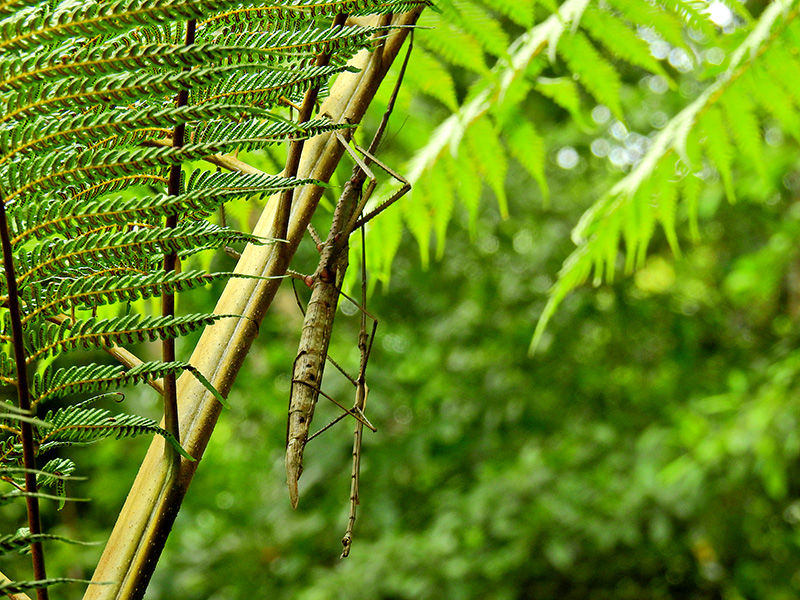
When you walk beneath Australia’s forests at night, you may be passing under some of the largest insects on Earth without ever knowing it. Australia is home to several species of giant stick insects, remarkable for their size, patience, and extraordinary camouflage. These insects belong to the order Phasmatodea and have evolved to blend so perfectly with branches and leaves that they often remain hidden in plain sight.
While many smaller stick insects live across the country, a handful of truly giant species stand out for their length, weight, and presence. Most belong to the genus Acrophylla, with one notable giant species outside this group.
What Makes a Stick Insect “Giant”?
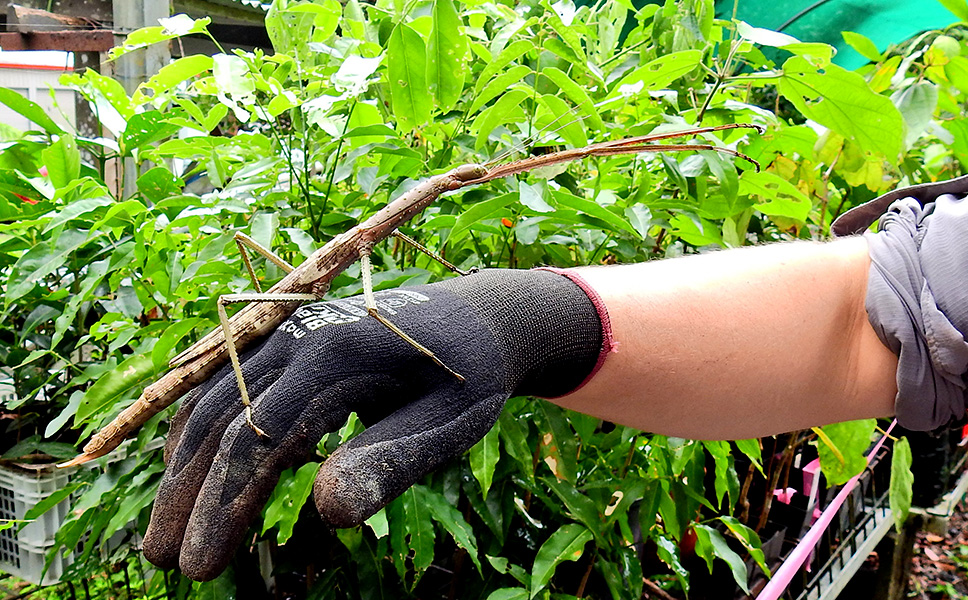
In Australia, a stick insect is generally considered “giant” when it exceeds 20 centimetres in body length, has a thick and heavy‑bodied form rather than a slender twig shape, lives high in trees, often in forest canopies, and has limited flight ability despite having wings.
Several Australian species meet these criteria, placing them among the largest insects in the world.
Major Giant Stick Insect Species in Australia
Titan Stick Insect (Acrophylla titan)
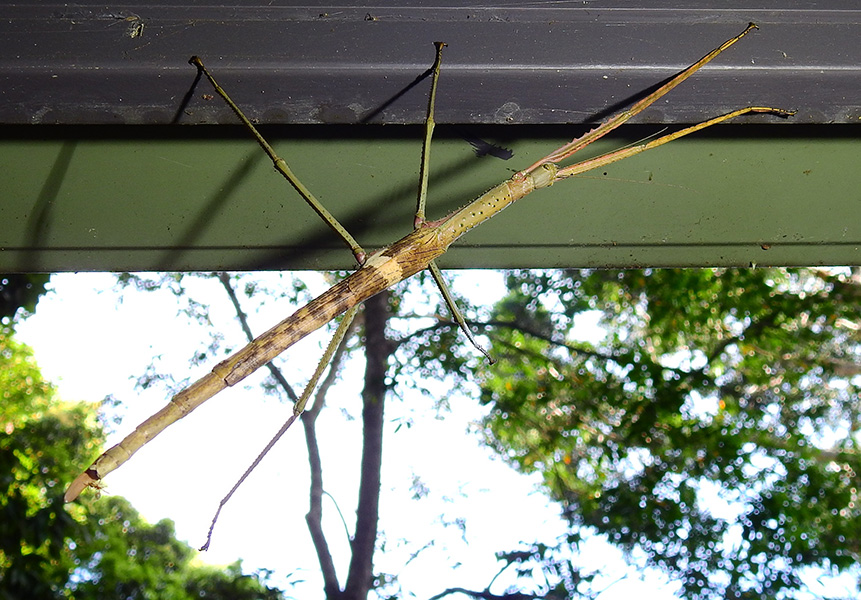
One of the most well‑known giant species, the Titan Stick Insect is found along eastern Australia, from Queensland through New South Wales to Victoria.
Females reach 20–27 centimetres in length.
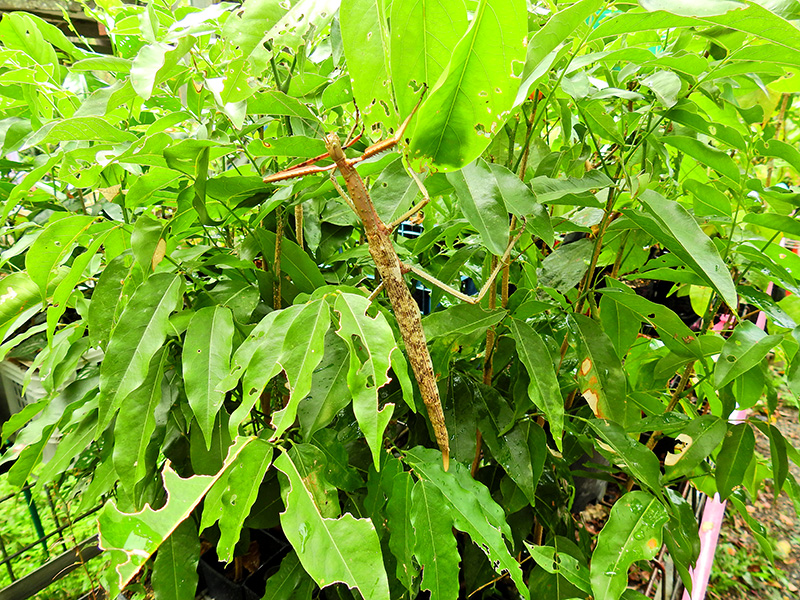
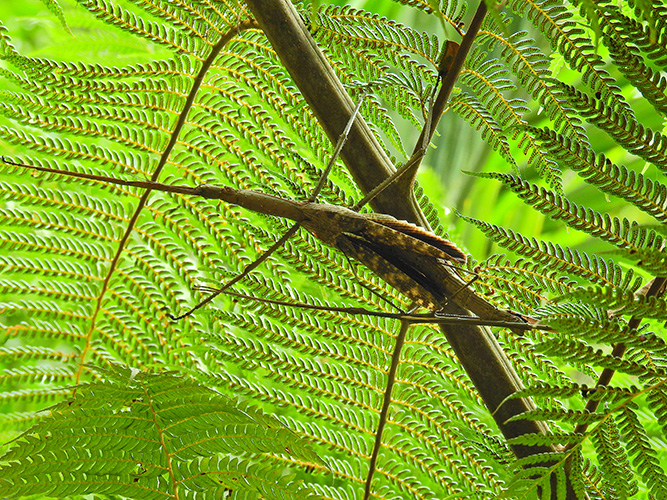
They have excellent bark‑like camouflage.
Males can fly short distances, while females are flightless.
They are most often found in eucalypt forests and bushland.
Wülfing’s Stick Insect (Acrophylla wuelfingi)
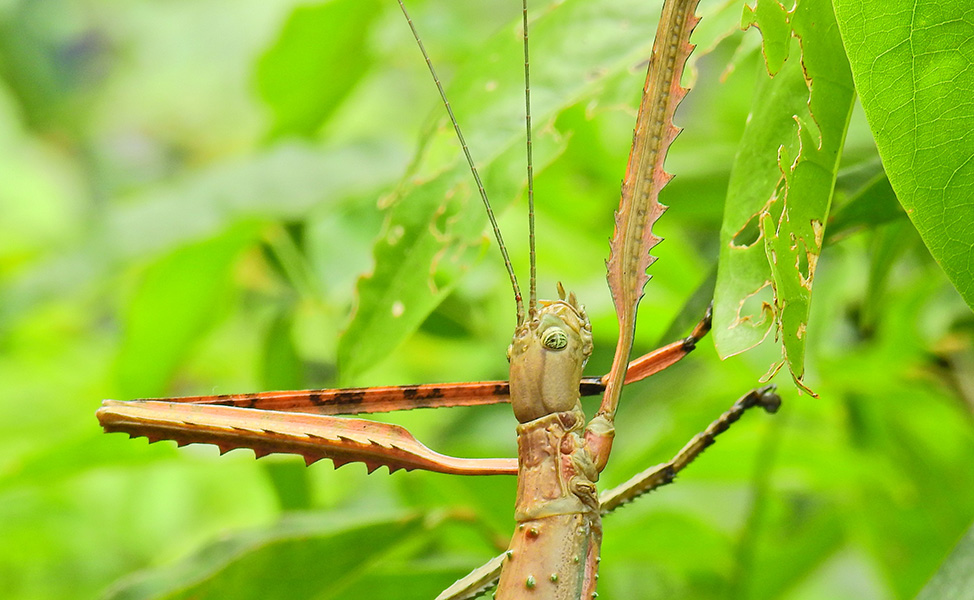
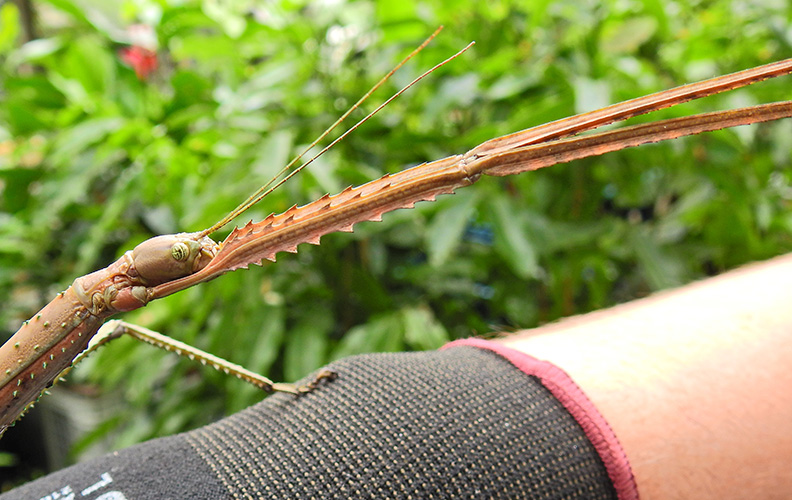
Restricted to far‑north Queensland, this species is a large, leaf‑mimicking giant.
It has a broad, flattened body resembling leaves.
It lives in rainforest, eucalypt bushland, she‑oak woodlands, and suburban gardens.
Females are heavy‑bodied and flightless.
Males can fly short distances.
Highlands Giant Stick Insect (Acrophylla alta)
Described in 2025, Acrophylla alta is one of Australia’s most significant insect discoveries.
It is found only in high‑altitude rainforests of far‑north Queensland.
Adult females can exceed 40 centimetres in length.
It is believed to be the heaviest insect in Australia.
It lives high in the forest canopy.
Goliath Stick Insect (Eurycnema goliath)
Although not in the genus Acrophylla, this species is still considered a giant.
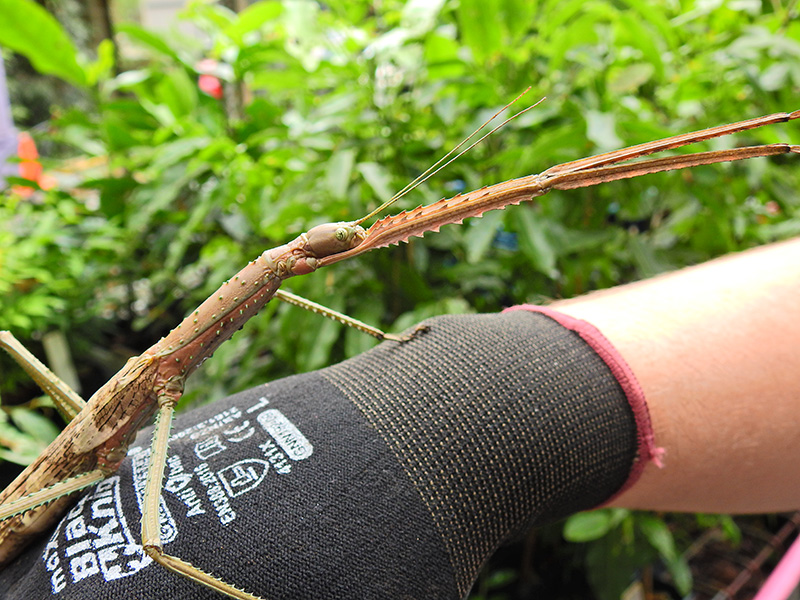
It has a thick, robust body.
It occurs in northern and eastern Australia.
Females are among the heaviest stick insects in the country.
It is known for producing a strong defensive spray.
Where Giant Stick Insects Live
Giant stick insects are typically found in rainforests and tall eucalypt forests, woodlands with mature native trees, and high forest canopies where they rarely descend to ground level. Some species are also found in suburban gardens where suitable native vegetation is present.
Because many species live high above the forest floor, they are often only discovered after storms or cyclones bring them down.
Behaviour and Survival
Despite their size, giant stick insects are gentle, plant‑eating animals.
They are mostly nocturnal and feed at night.
They rely heavily on camouflage and stillness.
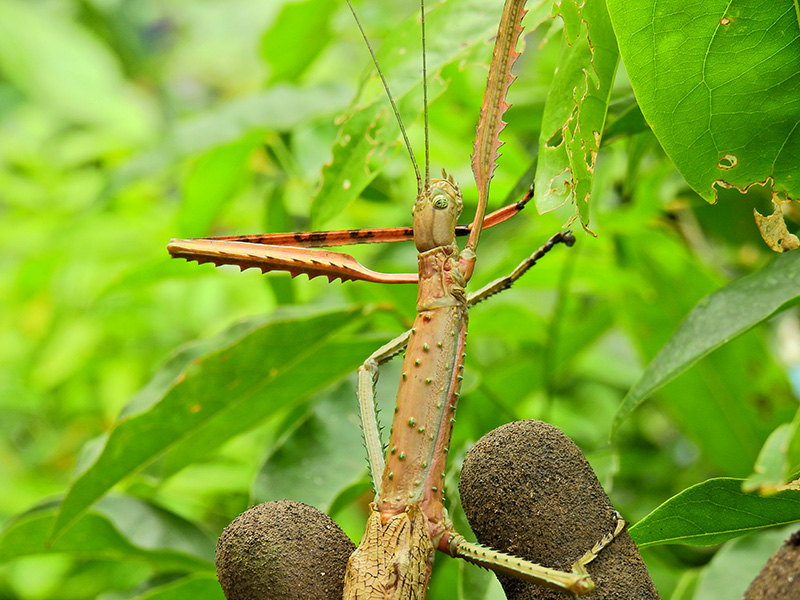
They use their wings mainly for defensive displays rather than long‑distance flight.
Some species release a defensive spray to deter predators.
Their slow movements and patience are key to survival.
Breeding and Life Cycle
Giant stick insects have a slow and deliberate breeding cycle that suits their forest lifestyle.
Breeding usually occurs during warmer months when food plants are abundant.
Males use flight or careful climbing to locate females high in trees.
After mating, females lay eggs individually over many months, often dropping them to the ground below.
The eggs resemble seeds and blend into leaf litter, helping protect them from predators. Depending on the species and environmental conditions, eggs may take several months, or even longer, to hatch.
Newly hatched nymphs instinctively climb upwards into vegetation, where they begin feeding. They grow slowly, shedding their skin multiple times before reaching adulthood. From egg to natural death, many giant stick insects can be part of the ecosystem for more than a year.
In some species, females are capable of limited parthenogenesis, meaning they can produce offspring without mating, although sexual reproduction is more common in wild populations.
Why Giant Stick Insects Matter
Giant stick insects play a quiet but vital role in Australian ecosystems. They help regulate plant growth, provide food for birds, reptiles, and mammals, and act as indicators of healthy, intact forests.
Conservation Considerations
Most giant stick insects are not currently listed as endangered, but they are highly dependent on intact forest habitats.
Habitat clearing, loss of mature trees, pesticide use, and climate change, particularly for high‑altitude species, all pose risks to their survival.
Protecting native forests and planting indigenous trees in gardens helps ensure these remarkable insects continue to thrive.
Australia’s Quiet Giants
Australia’s giant stick insects are among the most extraordinary insects on Earth. Hidden among leaves and branches, they represent patience, adaptation, and the deep evolutionary history of Australia’s landscapes. Learning about them helps us appreciate the often‑overlooked giants living quietly above our heads.
Photo Gallery