Spiny Leaf Insect
Spiny Leaf Insect
Also known as the Giant Prickly Stick Insect, Macleay’s Spectre, or the Australian Walking Stick
Among Australia’s forests lives a stick insect that looks less like a twig and more like a creature from ancient times. The Spiny Leaf Insect is one of Australia’s most recognisable and well‑studied phasmids, famous for its thorny appearance, dramatic behaviour, and remarkable survival strategies.
A Living Illusion
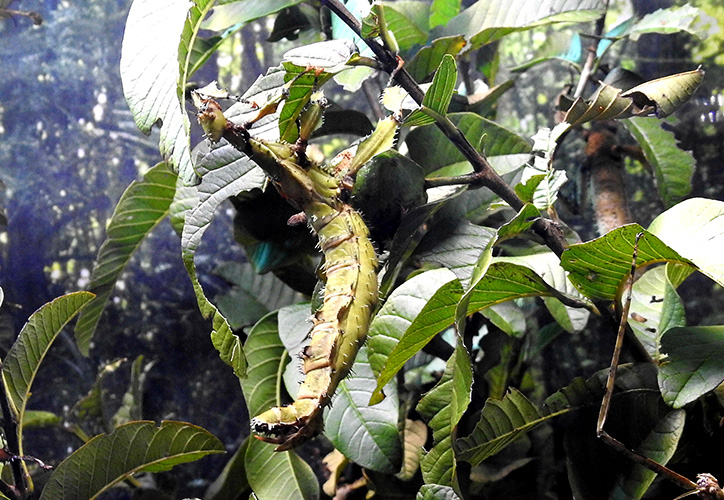
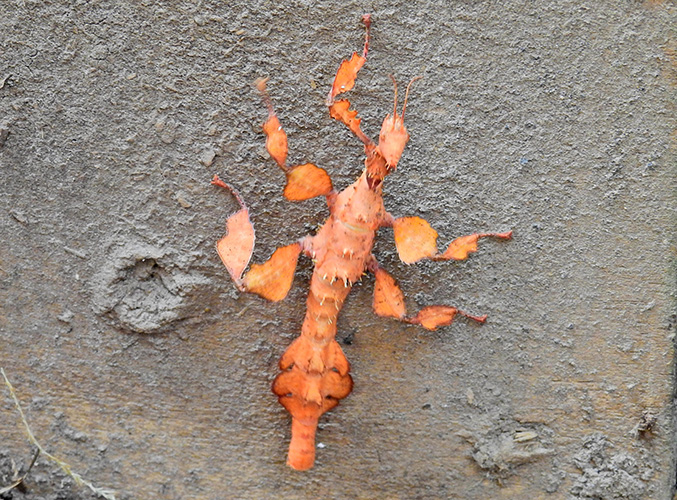
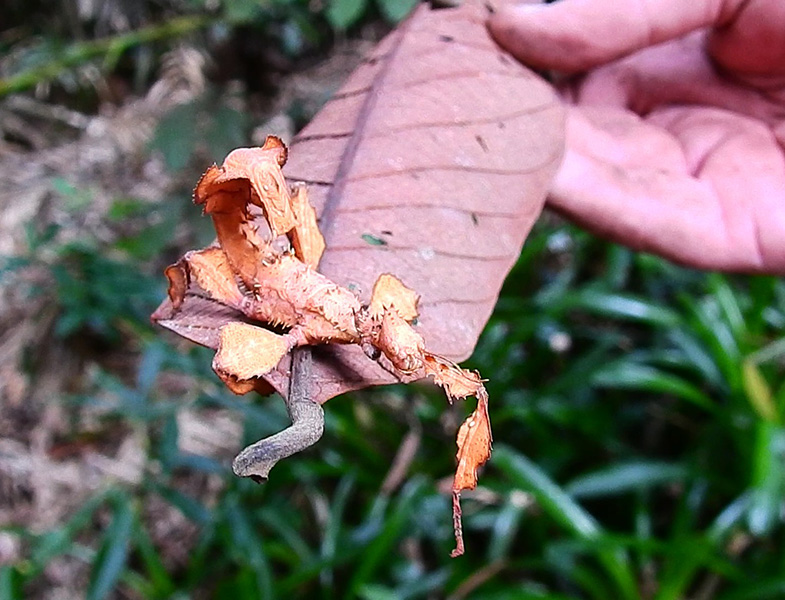
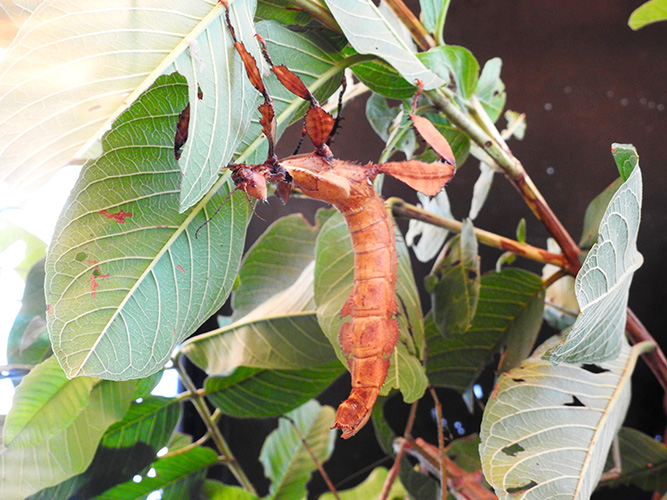
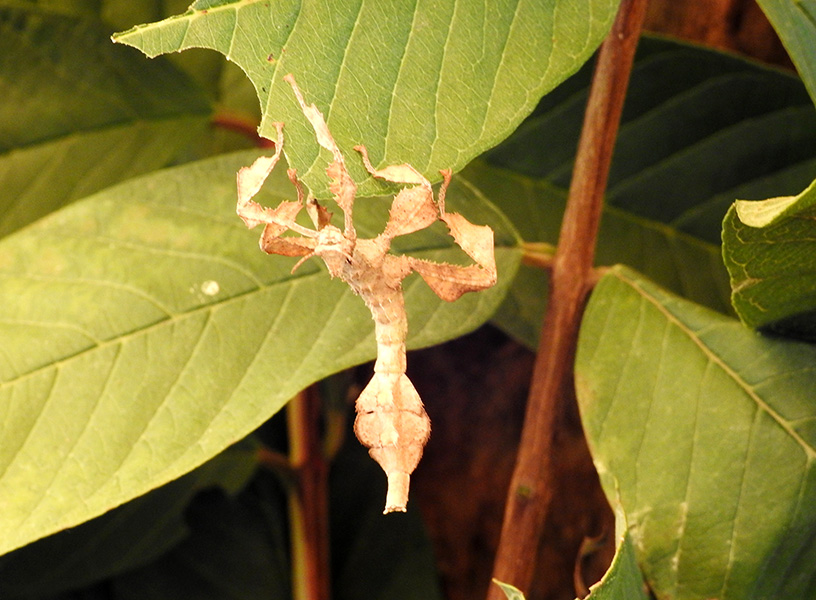
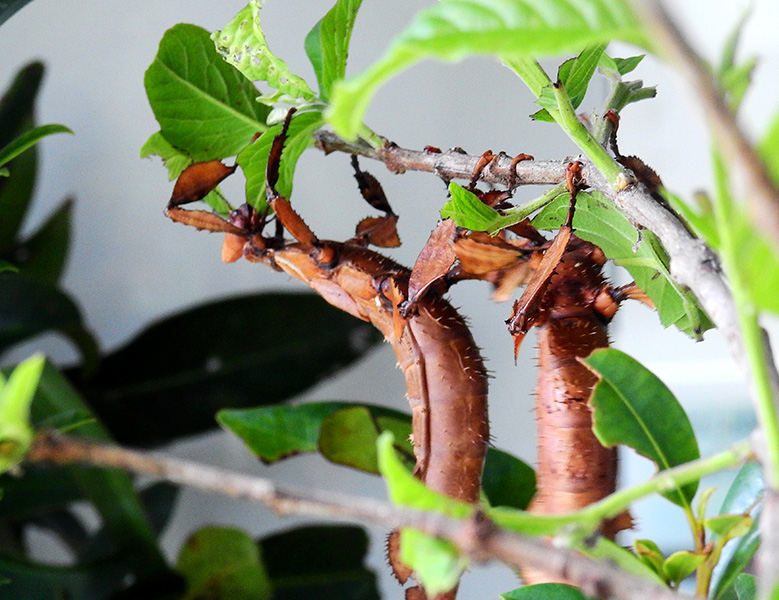
Rather than imitating a smooth branch, Extatosoma tiaratum mimics dry leaves, bark, and thorny plant growth. Its body is covered in spines and leaf‑like lobes that break up its outline, making it difficult for predators to recognise it as an animal.
Adults usually measure 10–15 centimetres in length. Females are larger, heavier, and more robust, while males are slimmer and more agile.
Habitat and Distribution
The Spiny Leaf Insect is found along eastern Australia, from Queensland through New South Wales to Victoria.
It lives in a range of habitats, including:
- Eucalypt forests and woodlands
- Open bushland
- Forest edges and well‑vegetated suburban gardens
Its ability to use common native plants has allowed it to adapt well to human‑modified environments.
Diet and Host Plants
This species feeds mainly on the leaves of eucalyptus (gum trees), but it can also use a variety of other native and introduced plants, including bramble, rose, and guava. This flexible diet helps explain why it is one of the most widespread and commonly encountered large stick insects in Australia.
Behaviour and Defence
Extatosoma tiaratum is nocturnal, feeding at night and resting during the day.
When threatened, it puts on one of the most dramatic defensive displays of any Australian insect. It may rear up, arch its body, spread its legs, and open its wings to reveal bright colours underneath. This display makes it appear larger and more dangerous than it really is.
If the threat continues, it can release a defensive spray with a sharp smell. Despite its fierce appearance, it is completely harmless to humans.
Wings and Movement
Both sexes develop wings when mature.
Females are too heavy to fly and use their wings mainly for balance and defence.
Males are capable of flight and often fly at night, especially when searching for females. They are sometimes attracted to artificial lights.
Breeding and Life Cycle
The Spiny Leaf Insect has a slow but productive life cycle.
Females lay eggs individually, dropping them to the ground below. The eggs closely resemble plant seeds, helping them blend into leaf litter. Eggs may take several months to hatch.
Newly hatched nymphs are particularly remarkable. They resemble ants, both in colour and movement, which helps protect them from predators during their most vulnerable stage. As they grow, they moult multiple times before reaching adulthood.
In many populations, females can reproduce through parthenogenesis, producing offspring without mating, although sexual reproduction also occurs.
Ecological Role
As a leaf‑feeding insect, Extatosoma tiaratum plays a role in shaping plant growth and forms part of the food web, supporting birds, reptiles, and other predators that can overcome its defences.
Its presence is a sign of healthy, vegetated environments.
Conservation Notes
The Spiny Leaf Insect is not currently listed as threatened and is relatively resilient compared with many other large insects. However, it still depends on native vegetation.
Protecting eucalyptus trees, reducing pesticide use, and maintaining green corridors in suburban areas help ensure this species continues to thrive.
Interesting Facts
- Nymphs mimic ants, a rare defence strategy among insects
- One of the most commonly kept stick insects for education
- Can reproduce with or without males
- Known for dramatic threat displays rather than aggression
- Completely harmless despite its intimidating appearance
A Spectre of the Bush
The Spiny Leaf Insect is a striking reminder that survival in nature is often about illusion and behaviour rather than force. Through camouflage, mimicry, and patience, Extatosoma tiaratum has become one of Australia’s most fascinating and enduring insects.
Photo Gallery