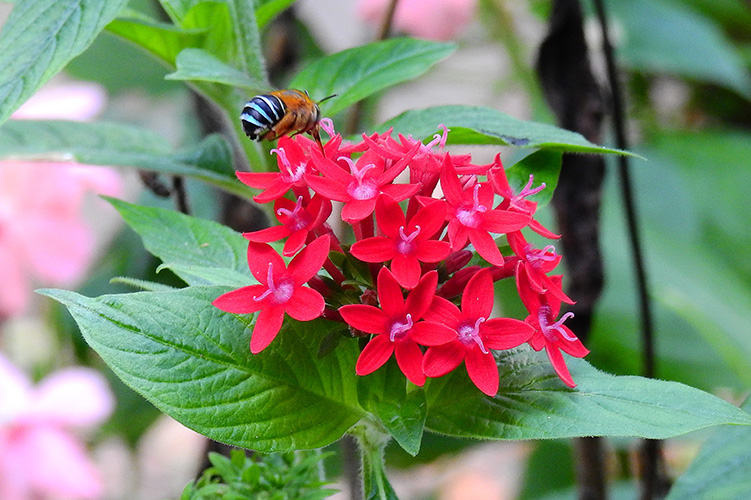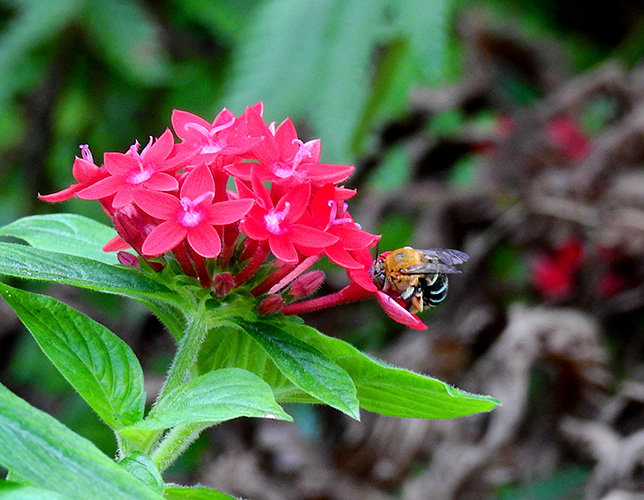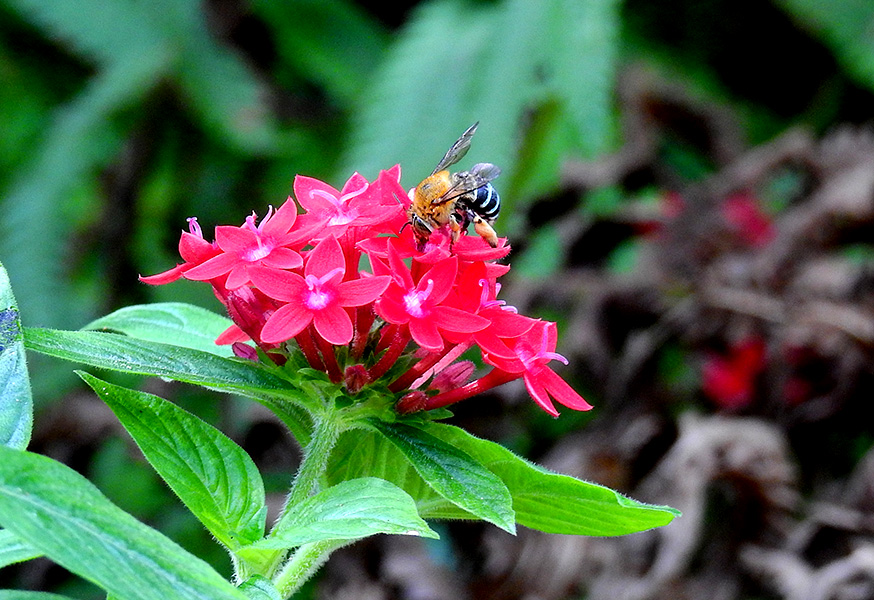
Blue-banded bee
Blue‑banded Bee of Australia
Hovering like a tiny helicopter and flashing bands of turquoise blue, Amegilla cingulata, the blue‑banded bee, is one of Australia’s most recognisable native bees. Fast‑moving, solitary and highly effective as a pollinator, this species plays an important role in both natural ecosystems and home gardens.
Meet the Blue‑banded Bee
Amegilla cingulata is a native Australian bee from the family Apidae. It was first scientifically described in 1775 by entomologist Johan Christian Fabricius.
Unlike the introduced European honey bee, blue‑banded bees are solitary. Each female builds and provisions her own nest, without a queen or workers.
How to Recognise Amegilla cingulata
Blue‑banded bees are striking and easy to identify:
- Body length of about 10–12 mm
- Metallic blue bands across a dark abdomen
- Large, greenish eyes
- Pale brown, translucent wings
Males have five blue bands, while females have four, making sex identification relatively simple.
Where They Are Found
Amegilla cingulata is widespread across mainland Australia, occurring in Queensland, New South Wales, Victoria, South Australia, Western Australia and the Australian Capital Territory. They are absent from Tasmania.
They live in a wide range of habitats, including woodlands, forests, heathlands, coastal areas and inland regions. They are also common in urban gardens and parks, where flowering plants are available.
A Solitary Lifestyle
Although they often nest near one another, blue‑banded bees do not live in colonies.
Females dig burrows in soil, clay, mud or soft sandstone, sometimes using garden beds, creek banks or old mortar. Each nest contains several brood cells, each stocked with pollen and nectar for a single egg.
Males do not build nests. At night, they can often be seen clinging to plant stems with their jaws, resting in the open.
Buzz Pollination – A Special Skill
One of the most important traits of the blue‑banded bee is its ability to perform buzz pollination.
By gripping a flower and vibrating its flight muscles, the bee shakes pollen loose from flowers that release pollen only through vibration. This is essential for plants such as tomatoes and eggplants, as well as many native Australian flowers.
Honey bees cannot perform buzz pollination, making Amegilla cingulata especially valuable for both wild plants and food crops.
What They Feed On
Blue‑banded bees collect nectar and pollen from a wide variety of flowers. They show a strong preference for blue and purple blooms, including:
- Native pea flowers
- Grevillea and Lambertia species
- Garden plants such as lavender, salvia, tomatoes and eggplants
They are also known to investigate people wearing blue clothing, a harmless and curious behaviour.
Do Blue‑banded Bees Sting?
Female blue‑banded bees can sting if handled or threatened, but they are non‑aggressive and rarely sting. Males cannot sting at all.
They do not defend hives and are safe to observe in gardens and natural settings.
Ecological Importance
Blue‑banded bees play a vital role by:
- Pollinating native plants
- Improving yields of certain food crops
- Supporting healthy ecosystems
- Demonstrating the importance of native pollinators alongside introduced species
They are not currently threatened, but they depend on diverse flowering plants, suitable nesting sites and reduced pesticide use.
Why Blue‑banded Bees Matters
Fast, brilliant and independent, the blue‑banded bee reminds us that pollination in Australia does not depend on one introduced species alone. Hidden in garden walls, creek banks and soil beneath our feet, Amegilla cingulata quietly keeps landscapes flowering and food growing.
It is a small insect with an outsized role — and a perfect example of why Australia’s native invertebrates deserve attention, understanding and care.
Photo Gallery