Cane Beetle
The Cane Beetle: A Formidable Foe of Sugarcane
The Cane Beetle, also known as the Greyback Canegrub in its larval stage, is a native Australian beetle belonging to the Scarabaeidae family. It is widely recognized not for its appearance, but for its significant impact as a major agricultural pest in the sugarcane-growing regions of Queensland, particularly between Mossman and Sarina.
What Do They Look Like?
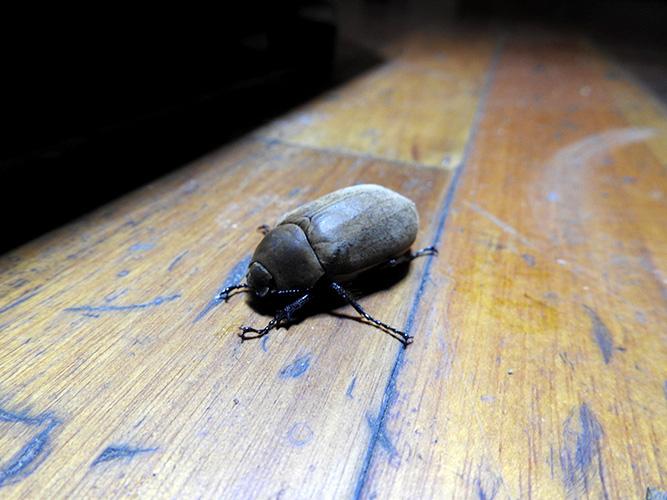
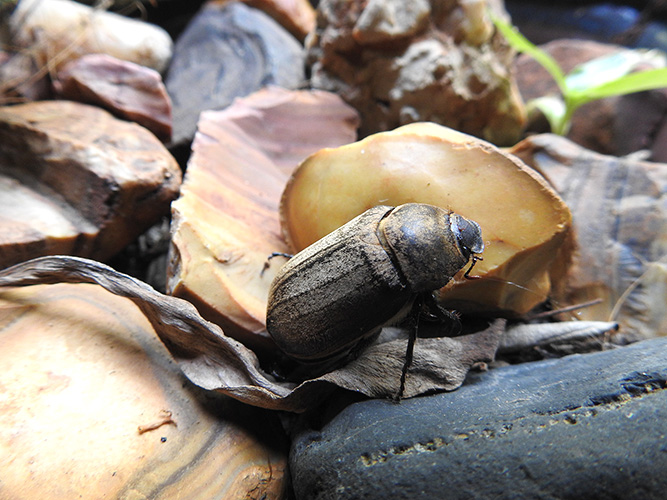
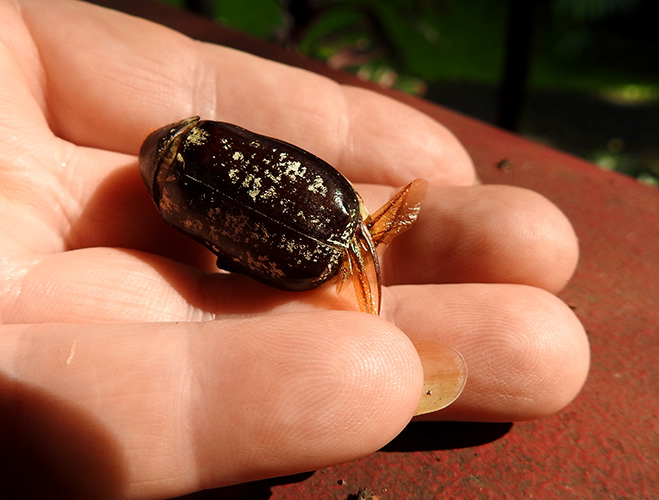
- Adults: The adult beetle is a robust creature, measuring up to 25 millimetres in length. It has a hard, oval-shaped exoskeleton that is predominantly black but is covered in distinctive white hairs (setae), giving it a speckled or greyish appearance.
- Larvae (Grubs): The larval stage is where the real trouble begins. These are classic “curl grubs”—creamy-white, soft-bodied, C-shaped larvae with a darker head. They live underground and are voracious feeders.
A Life Cycle Linked to the Seasons
The Cane Beetle has a one-year life cycle that is closely tied to the wet season in tropical Australia.
- Emergence & Mating: Following the first significant rains of the warm season (typically between October and January or February), adult beetles emerge from the soil at dusk. They fly to nearby trees to feed on foliage and mate.
- Egg Laying: After mating, the female beetles return to sugarcane fields. They burrow into the soil, often near the base of tall cane plants, to lay clutch of eggs.
- The Destructive Grub Stage: The eggs hatch into small white larvae. From February to May, these grubs aggressively feed on the roots of the sugarcane plants. This is the most damaging phase, as their feeding can severely stunt the plant’s growth or even kill it completely by destroying its root system.
- Pupation: After feeding for several months, the fully grown grub borrows deeper into the soil to pupate. It develops into an adult beetle within about a month but remains underground, waiting for the right weather conditions to emerge and start the cycle again the following year.
Why Are They a Problem?
The Greyback Canegrub is considered the main pest of sugarcane crops in many parts of north Queensland. The extensive damage caused by the larvae feeding on roots can lead to significant crop losses, costing the sugar industry millions of dollars in some years. Identifying the damage early can be difficult, often requiring farmers to dig up plants or rely on visual cues like yellowing leaves.
A Historical Blunder: The Cane Toad Connection
You can’t talk about the Cane Beetle without mentioning one of Australia’s most infamous ecological mistakes. In the 1930s, the Cane Toad (Rhinella marina) was deliberately introduced from Hawaii in an attempt to control Cane Beetle populations. The hope was that the toads would eat the adult beetles.
Unfortunately, the plan failed spectacularly. The toads found the beetles, which live high up on the cane stalks, difficult to reach. Instead, they turned their appetites to a smorgasbord of other native Australian insects and small animals that were easier to catch.Instead of controlling the beetle, the poisonous Cane Toad spread rapidly, becoming a major environmental pest itself and threatening many native species. It’s a stark reminder of the complexities of ecosystems and the risks of introducing non-native species as biological control.
Today, management of Cane Beetles involves more modern techniques, including strategic chemical treatments and research into using satellite imagery to map damage fields.
Photo Gallery