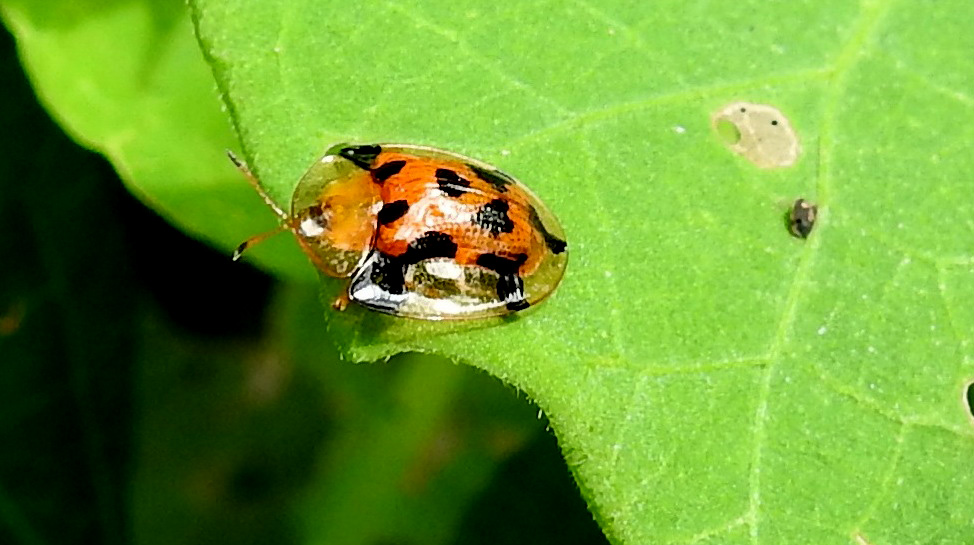
Orange Tortoise Beetle
aspidimorpha punctum
Orange Tortoise Beetle: Nature’s Little Helmet
If you’re looking closely at the leaves of a wattle tree and spot a tiny, bright orange dome that looks like a miniature walking helmet, you’ve likely found an Orange Tortoise Beetle.
These aren’t related to actual tortoises, of course, but one look at their incredible shape and you’ll understand the name immediately. They are a wonderful example of how Australian insects have evolved unique ways to stay safe while munching on our native vegetation.
Built Like a Shield
The most defining feature of this beetle is its shape. It is almost perfectly hemispherical—round and highly domed.
- The Colour of Sunset: They are typically a beautiful, warm, burnished orange to reddish-brown. It’s a colour that really pops against the grey-green foliage of their favourite trees.
- The “Tortoise” Trick: The edges of their hard wing cases (elytra) and the area behind their head are flattened and flared outwards, creating a wide “brim” all the way around their body. When the beetle is resting or feels threatened, it tucks its head, legs, and antennae completely underneath this brim. It transforms from an insect into a smooth, impenetrable orange dome, leaving nothing for a predator to grab onto.
Where to Find Them (and What They Eat)
These beetles are true-blue Aussies. You won’t usually find them on your vegetables; they are specialists that prefer our native flora.
Their absolute favourite food is the leaves of Acacia trees (Wattles). They are particularly fond of Blackwood wattles (Acacia melanoxylon) and similar species with broad leaves.
You’ll often see them sitting right in the middle of a leaf during the day, bold as brass, trusting their shield-shape to protect them from birds.
The Next Generation
The adult beetle is only half the story. Their life cycle plays out entirely on their host tree.
- Eggs: The female lays clusters of cigar-shaped eggs, often arranged in neat rows on the underside of a leaf or along a stem.
- Larvae: The larvae that hatch look nothing like the adults. They are often plump, slightly bumpy, grub-like creatures, sometimes greenish or yellowish with dark markings. They are voracious eaters and can strip young leaves quite quickly.
- Defence Tactics: The larvae have their own defence. Many species in this group have glands on their back that can pop out and release a foul-smelling liquid to deter ants and birds that come looking for a snack.
While a lot of them on one tree might make the leaves look a bit ragged, they rarely cause lasting harm to a healthy, established wattle tree. They are just another colourful part of the complex web of life in the Australian bush.
Photo Gallery