Australian Rhinoceros Beetle
Australian Rhinoceros Beetle: Our Miniature Monster
If you live along the warmer coastlines of Queensland or northern New South Wales, summer nights often bring a very loud, clumsy thud against the window screen. If you go outside to investigate, you might find yourself face-to-face with one of Australia’s most impressive insects: the Australian Rhinoceros Beetle.
These aren’t just big beetles; they are absolute units. They are among the largest beetles on the continent, with some heavyweights reaching up to 7 centimetres in length. They are shiny, dark brown to almost black, and built like little bulldozers.
A Tale of Two Beetles (The Horns)
The first thing everyone notices about these beetles is, of course, the horns that give them their name. But here’s the catch: only half the population has them!
This species shows incredible sexual dimorphism, meaning the males and females look very different.
- The Males (The Jousters): The males are spectacular. They possess two large, curved horns that look like pincers. One horn comes off the front of their head, and the other arches over it from their thorax (the middle section). They use these horns like miniature forklifts to battle other males, trying to flip their rivals over to win the attention of a female. It’s a miniature wrestling match happening right on a tree branch!
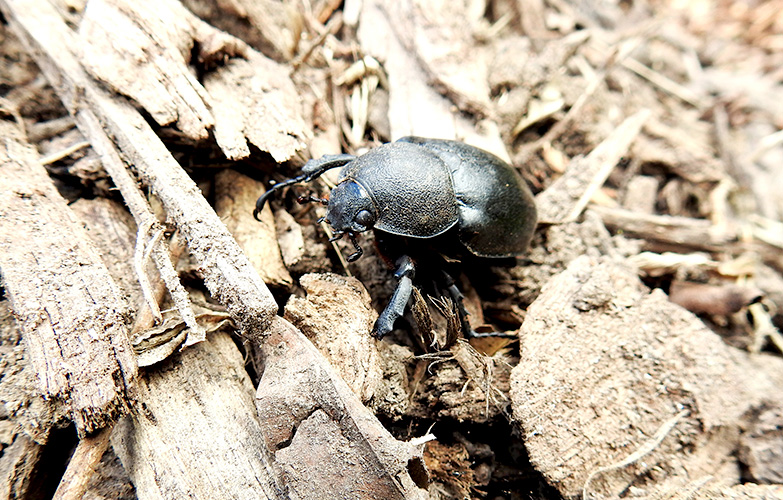
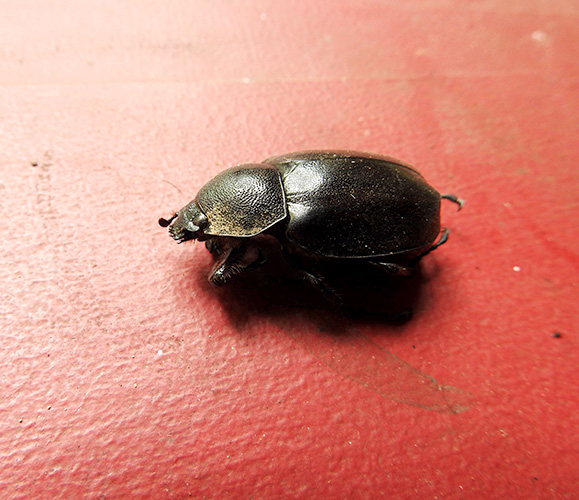
- The Females (The Smooth Operators): The female beetles have no horns at all. They have a much smoother, rounder body and are often slightly smaller than the big males. Because they look so different, many people think they are a completely different type of beetle.
The Secret Life of a Gentle Giant
Despite their intimidating armour and wrestling matches, Rhinoceros Beetles are actually quite gentle giants. They don’t bite humans, and their horns aren’t sharp.
If you try to pick one up, however, they have a surprising defence trick. They can make a loud hissing or squeaking sound. They do this by rubbing the tip of their abdomen against the inside of their wing cases. It’s just their way of saying, “Hey, put me down!”
From Compost Muncher to Sweet Tooth
The adult beetles you see in summer have a real sweet tooth. In the wild, they congregate on trees to feed on sap flows, or they might munch on soft, overripe fruit.
But before they grow their armour, they live a much quieter life. The larvae are gigantic, C-shaped white curl grubs that live deep inside rotting logs or big compost heaps. They are vital decomposers, spending months turning dead wood back into rich soil before building a pupal chamber and transforming into the magnificent adult beetle.
They are a true summer icon of the Australian east coast and a wonderful reminder of the incredible creatures living right in our own backyards.
Photo Gallery