Lesser Wanderer Butterfly
The Nomadic Navigator: Discover the Lesser Wanderer Butterfly
If you have ever spotted a flash of brilliant orange fluttering low over a sun-drenched Australian paddock, you might have assumed you were looking at the famous Monarch butterfly. But look a little closer! You have likely just crossed paths with Australia’s own nomadic marvel: the Lesser Wanderer (Danaus petilia).
A member of the brush-footed butterfly family (Nymphalidae), this highly mobile insect is a true survivor, constantly on the move across the continent in search of rain and fresh growth. Let’s dive into the fascinating lifecycle, chemical defences, and conservation needs of this native beauty.
Deep Time Connections: First Nations and the Butterfly’s Journey
For First Nations peoples, the changing seasons and the arrival of nomadic insects have long been closely observed. In the south-west of Western Australia, the Noongar people refer to butterflies generally as Bindi Bindi or Barn Barn.
While the butterfly itself is a beautiful seasonal visitor, the native plants it relies on for survival hold deep cultural significance. One of the Lesser Wanderer’s primary native host plants is the Native Pear or Bush Banana (Marsdenia australis). For thousands of years, Indigenous Australians across the arid interior have safely harvested and eaten the nutrient-rich flowers, fruits, and roots of this resilient desert vine, sharing a profound connection to the very ecosystems that sustain the Lesser Wanderer.
A Flash of Orange: What Does It Look Like?
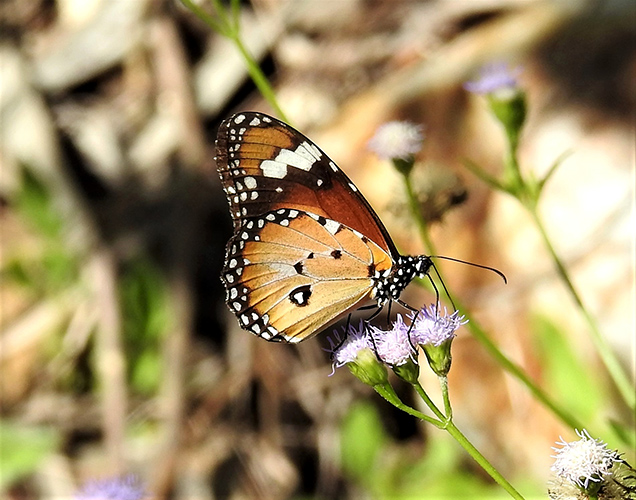
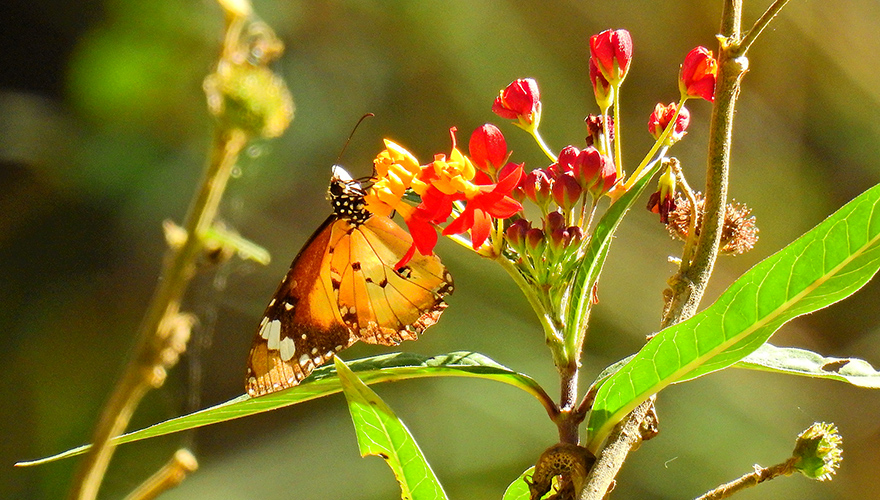
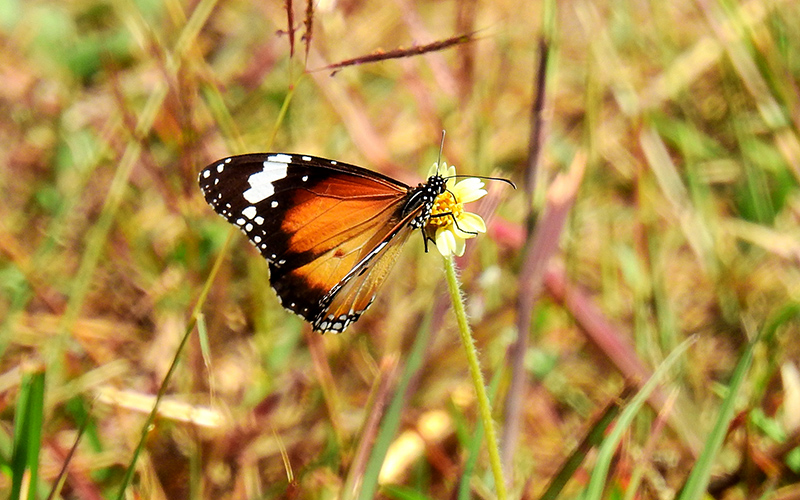
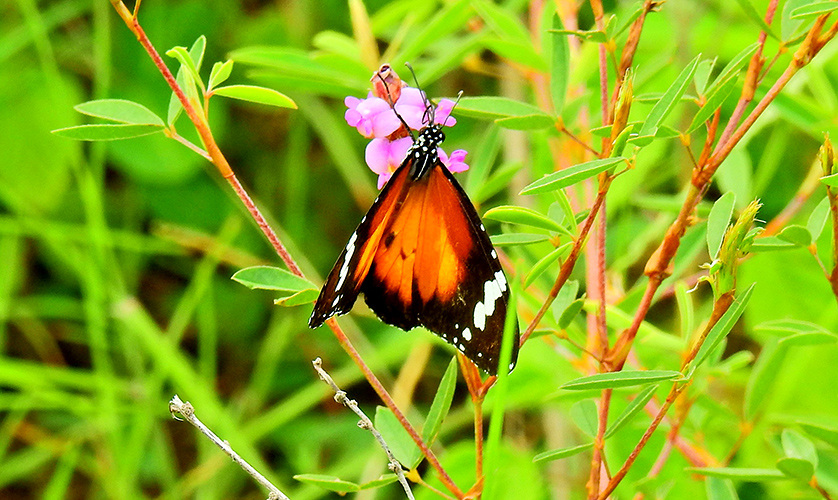
To identify a Lesser Wanderer, you need to look for a masterpiece of warning colours.
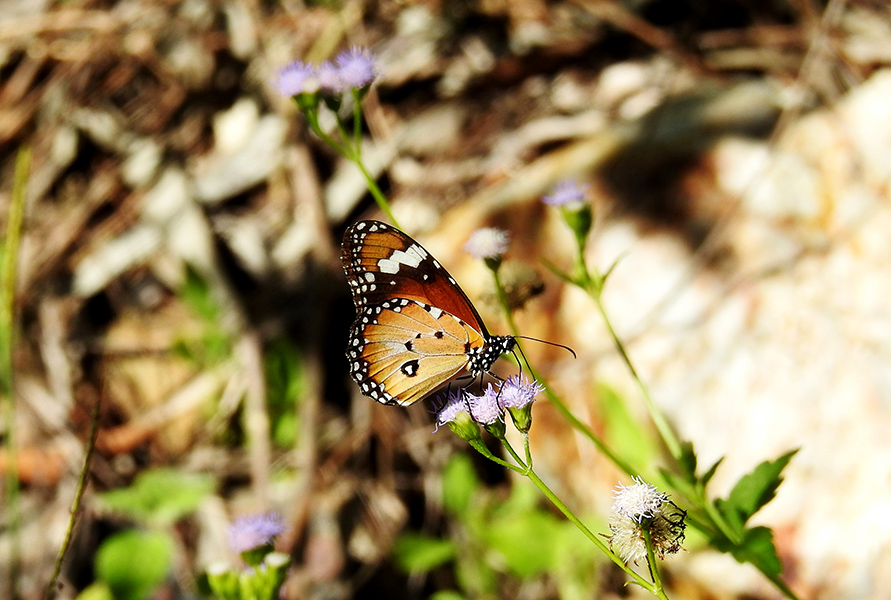
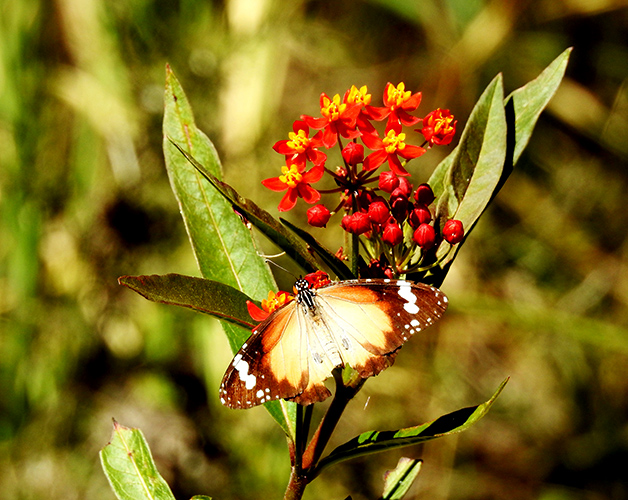
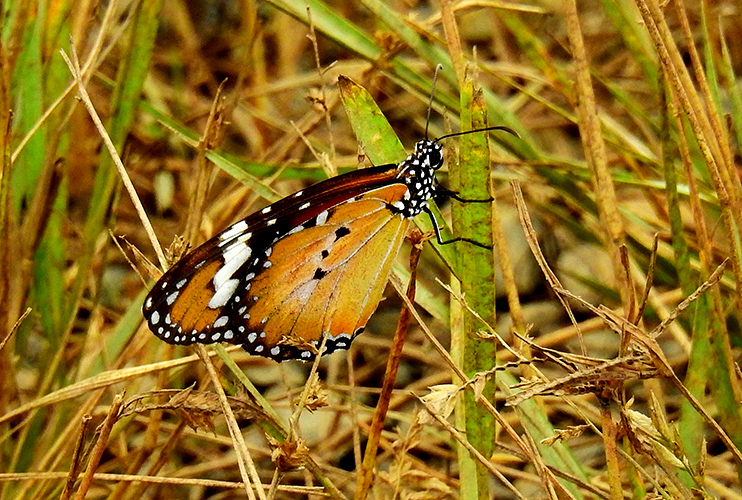
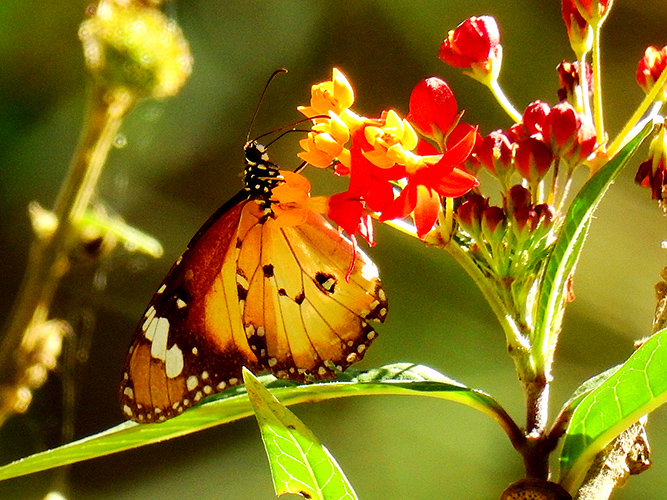
- The Adult Butterfly: They are a medium-sized butterfly with a wingspan of between 60 and 80 millimetres. Their wings are a striking, rich tawny-orange, bordered by thick, velvety black margins. The tips of their forewings are capped in black and heavily spotted with crisp white markings. While they look very similar to the introduced Monarch (often just called the “Wanderer” in Australia), the Lesser Wanderer is smaller, has much more black on the tips of its wings, and lacks the heavy black tracing along its wing veins.
- The Caterpillar: The larvae are visually spectacular. They feature striking, elongated yellow spots set within bold black and white stripes running down their bodies. They also sport prominent, fleshy black tentacles (filaments) that give them a slightly prehistoric look.
- The Pupa: Before emerging as an adult, the caterpillar forms a smooth, greenish-brown chrysalis adorned with a brilliant, metallic golden ring around its middle—looking almost like a piece of suspended jewellery.
A Life on the Wing: Breeding and Longevity
The Lesser Wanderer does not stay in one place for long. They are a nomadic species, meaning their populations constantly shift across the arid centre of Australia and the cooler south-eastern states, chasing the rains that trigger the growth of their host plants.
- The Breeding Cycle: Females lay pale yellow, bullet-shaped eggs singly on the leaves of “milkweed” plants (plants with a milky sap).
- Rapid Development: Because they live in unpredictable environments, they grow quickly. Once the caterpillar has eaten its fill and pupated, the adult butterfly typically emerges from its golden-ringed chrysalis in just 10 days, depending on the temperature.
- Longevity: While the adult butterflies only live for a few weeks, their nomadic flights are incredibly purposeful. They are capable of covering vast distances, often flying slowly and close to the ground, allowing them to disperse widely across the continent.
Fascinating Facts: Chemical Warfare and Romance
- A Toxic Diet: The Lesser Wanderer’s caterpillars feed exclusively on milkweeds, which contain potent toxins known as cardiac glycosides. The caterpillars absorb these heart poisons into their bodies, passing them right through to the adult butterfly. Their bright orange and black colours are a visual warning to predators like birds: “Do not eat me, I am highly toxic!”
- Perfumed Pencils: The male Lesser Wanderer takes romance very seriously. He features a small, raised black scent pouch on his hindwings. Furthermore, males have special, brush-like appendages at the tip of their abdomen called “hairpencils”. By feeding on plants containing specific alkaloids, the male converts these chemicals into a powerful sex pheromone, which he scatters over a female using his hairpencils during courtship.
Conservation Status and Environmental Threats
Nationally, the Lesser Wanderer is classified as a species of Least Concern, and its nomadic nature ensures its population remains broadly stable.
However, their conservation story is incredibly complex. In natural environments, their biggest threat is the clearing of native coastal heathlands and the destruction of their native host vines. Yet, in urban and agricultural areas, the butterfly has adapted to rely heavily on introduced milkweeds, such as the Narrow-leaf Cotton-bush (Gomphocarpus fruticosus). Because these introduced plants are considered noxious agricultural weeds, they are frequently sprayed with herbicides or eradicated, which inadvertently removes the butterfly’s primary food source in settled areas.
What Can We Do to Help the Species?
Supporting the Lesser Wanderer requires a thoughtful approach to gardening and habitat management:
- Plant Native Milkweeds: The safest and most eco-friendly way to support this butterfly is to plant native host plants. Depending on your region, vines like the Desert Cynanchum (Cynanchum floribundum) or the Bush Bean (Rhyncharrhena linearis) provide the perfect, non-weedy nursery for their caterpillars.
- Provide Nectar Sources: Adult butterflies need constant fuel for their nomadic flights. Planting native, nectar-rich shrubs like Bottlebrushes (Callistemon) or native daisies will give them a safe place to stop and refuel.
- Ditch the Broad-Spectrum Sprays: Because the caterpillars are entirely reliant on the foliage of their host plants, using chemical insecticides in your garden will break their delicate lifecycle. Embrace a chemical-free yard to watch these winged wanderers thrive.
Scientific & Cultural References
- Atlas of Living Australia. Danaus petilia: Lesser Wanderer.
- Braby, M. F. (2000). Butterflies of Australia: Their Identification, Biology and Distribution. CSIRO Publishing.
- Butterfly Conservation South Australia. The Wanderer (Monarch) Butterfly: The case FOR and AGAINST.
- Grokipedia. Danaus petilia: Taxonomy, Life Cycle, and Conservation.
- ReWild Perth. Lesser Wanderer – Noongar Names and Habitat Guide.
- South Australian Butterflies & Moths. Lesser Wanderer – Danaus petilia (Stoll).
Photo Gallery