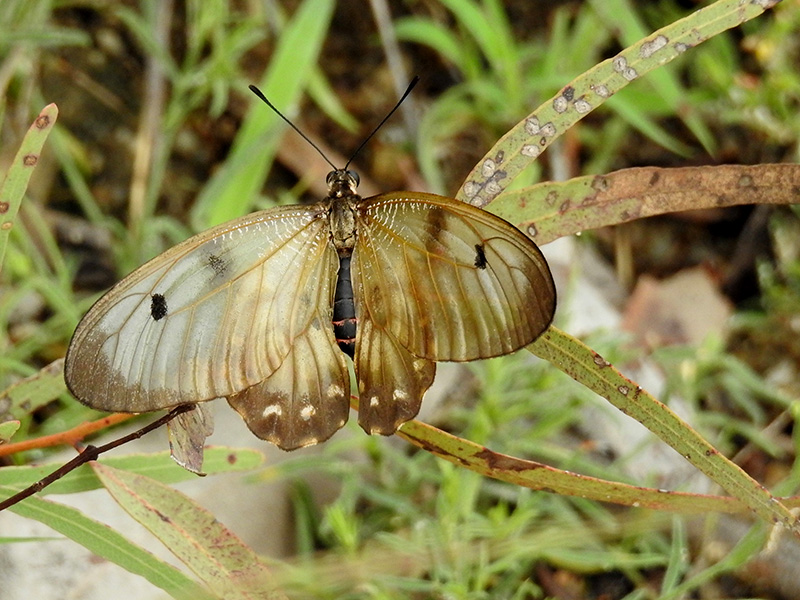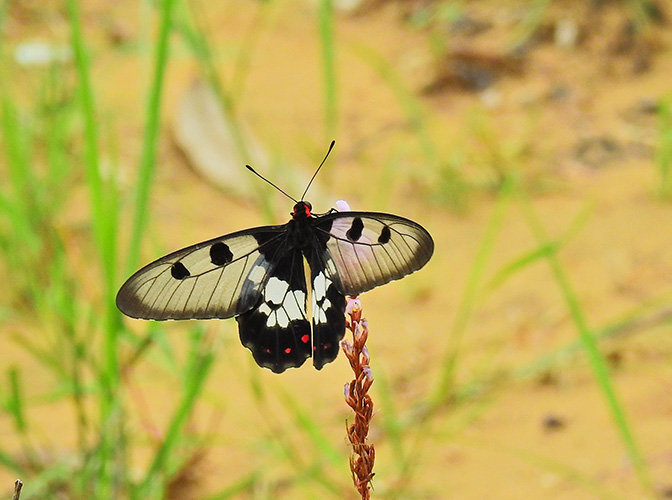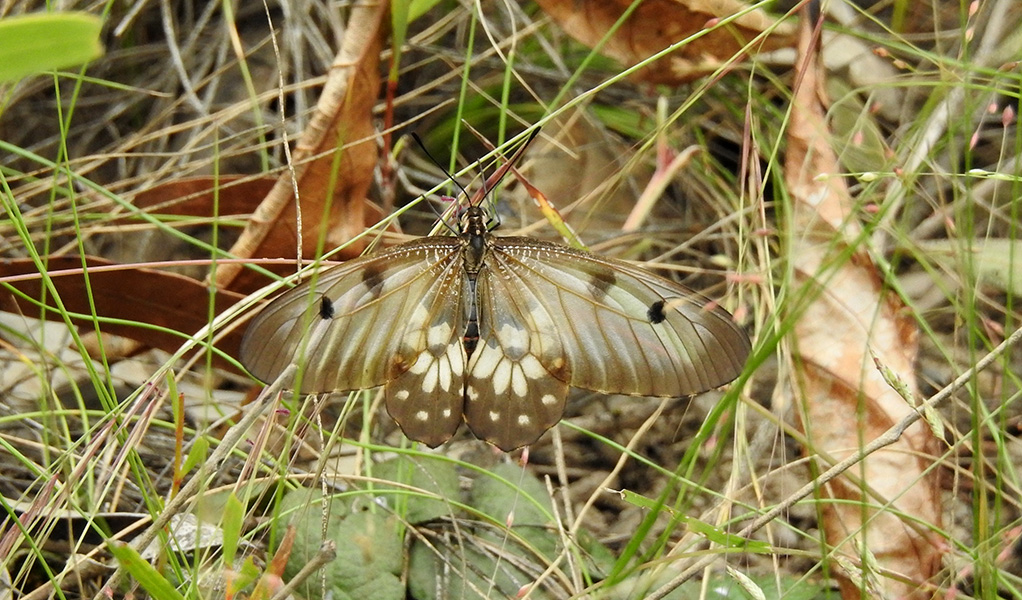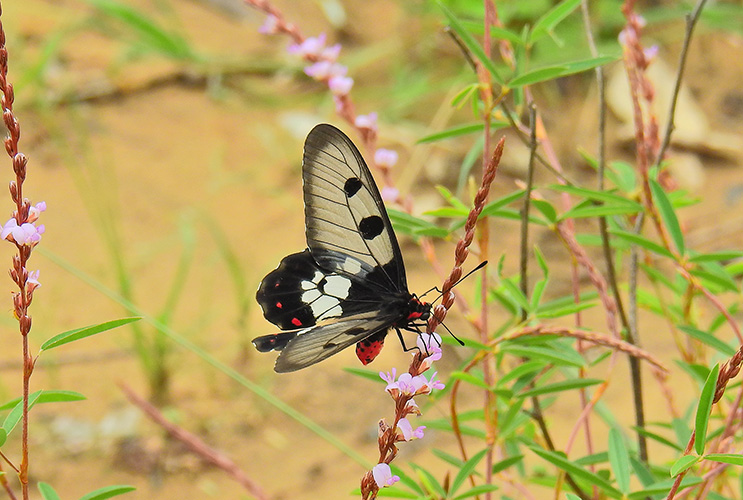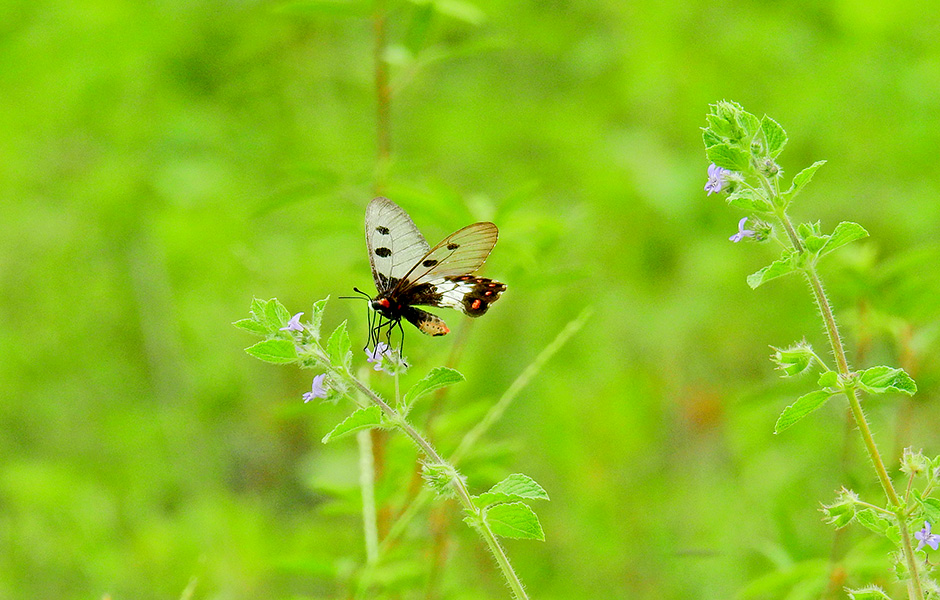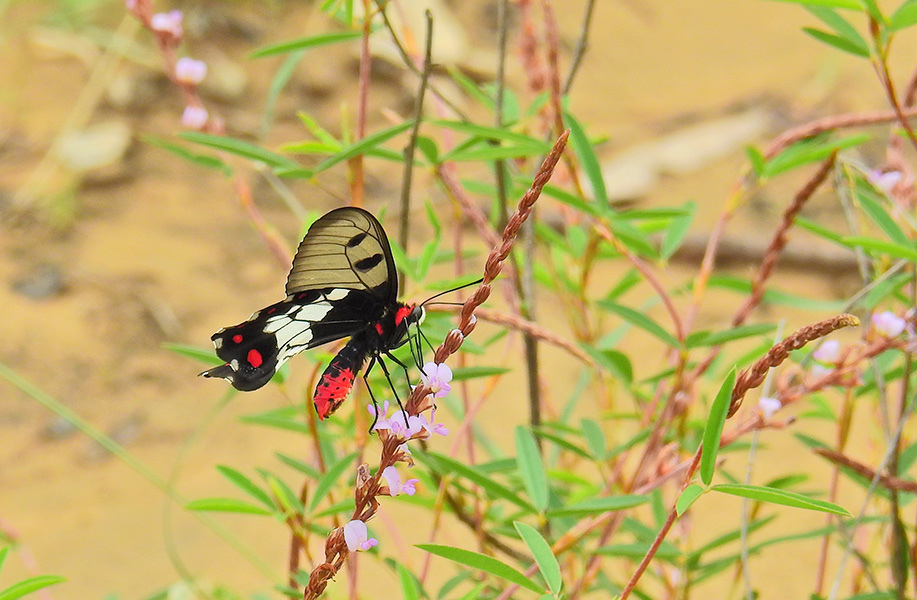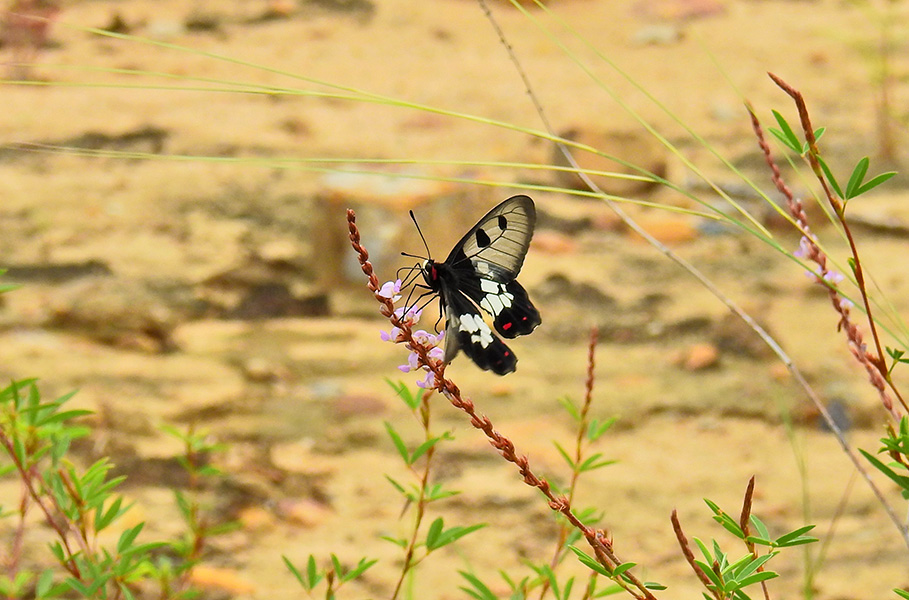
Clearwing Swallowtail butterfly
The Ancient Survivor: The Clearwing Swallowtail
If you are wandering through the dry, open eucalyptus forests of eastern Australia and spot a butterfly with completely see-through wings fluttering lazily in the sunshine, you are in for a treat. You have just found the Clearwing Swallowtail (Cressida cressida).
Affectionately known by many early Australian naturalists as the “Big Greasy,” this fascinating insect is the only species in its entire genus. Tracing its ancient lineage back to when Australia, Antarctica, and South America were joined as the supercontinent Gondwana, this unique butterfly brings a touch of prehistoric wonder to our coastal woodlands.
A Tale of Two Butterflies: What Does It Look Like?
To identify a Clearwing Swallowtail, you first need to know if you are looking at a male or a female, because they look so incredibly different that early scientists originally thought they were two separate species!
- The Male: The males are striking and slightly larger, boasting a wingspan of up to 80 millimetres. Their front wings are almost entirely clear (translucent) like glass, marked with two stark black spots and a fine black border. 1 Their hindwings feature a thick black border surrounding a white centre, beautifully decorated with a series of bright red warning spots.
- The Female: The females are smaller, with a wingspan of around 70 millimetres. They lack the stark white and bright red of the males. Instead, their wings are a semi-translucent, pale tawny-brown. As they age, the coloured scales naturally rub off, leaving their wings looking exactly like a sheet of aged, translucent greaseproof paper—which is exactly how they earned their charming nickname, the “Big Greasy”!
The Forest Cycle: Breeding and Longevity
The Clearwing Swallowtail’s survival is entirely dependent on a very specific family of native climbing plants.
- Toxic Nurseries: Females seek out native Dutchman’s pipe vines (specifically native Aristolochia species) growing quietly in the forest understory. 3 She lays beautiful, dome-shaped yellow eggs decorated with raised orange bumps directly onto the leaves.
- The Caterpillars: Once hatched, the caterpillars look wonderfully bizarre. They are a deep, rich maroon colour, heavily mottled with creamy-white markings and covered in short, fleshy spikes. They are voracious eaters, often consuming their entire host plant before dropping to the ground and marching aggressively through the leaf litter to find another.
- A Fleeting Life: Like many of our native butterflies, their time in the sun is brief. Once the adult butterfly emerges from its marble-patterned chrysalis, they live fast. In the wild, adult males typically survive for around 38 days, while females live for an average of just 25 days.
Fascinating Facts: Chastity Belts and Chemical Warfare
- The Bizarre Mating Plug: The Clearwing Swallowtail has one of the most astonishing mating behaviours in the insect world. After mating, the male secretes a massive, hardened external mating plug (known as a sphragis) right onto the female’s abdomen. Looking almost like a tentacled chastity belt, this physical shield physically prevents the female from ever mating with another male again, ensuring only his genetics are passed on!
- Poisonous Protectors: The native Aristolochia vines the caterpillars eat are highly toxic. The caterpillars cleverly absorb these toxins into their bodies, passing them right through to the adult butterfly. The male’s bright red spots are a visual warning to hungry birds: “Do not eat me, I am poisonous!
- The Sneaky Mimic: Because the male Clearwing is so toxic, another completely harmless Australian butterfly—the Dingy Swallowtail (Papilio anactus)—has evolved to perfectly mimic his black, white, and red appearance and slow flying style, tricking birds into leaving it alone too!
Conservation Status and Environmental Threats
From a broad conservation standpoint, the Clearwing Swallowtail is classified as a species of Least Concern, and its populations remain relatively stable across northern and eastern Australia.
However, in south-eastern Queensland and northern New South Wales, they are falling victim to a deadly, human-introduced trap. The invasive South American Dutchman’s Pipe vine (Aristolochia elegans) has escaped from suburban gardens and is smothering our native bushland. Because it smells identical to our native vines, female Clearwings are tricked into laying their eggs on it. Tragically, the leaves of this invasive weed are highly toxic to the caterpillars, and when they hatch and take their first bite, they rapidly perish.
What Can We Do to Help the Species?
Protecting the Big Greasy requires a little bit of backyard vigilance. Here is how you can help them thrive:
- Eradicate the Weed: The absolute best thing you can do for the Clearwing Swallowtail (and the endangered Richmond Birdwing butterfly!) is to check your garden for the invasive South American Dutchman’s Pipe vine (Aristolochia elegans). If you find it, rip it out by the roots and dispose of it safely.
- Plant Native Vines: Support your local native nurseries by purchasing and planting native Aristolochia vines (such as Aristolochia meridionalis) to provide a safe, natural nursery for the next generation of caterpillars.
- Go Chemical-Free: Because the caterpillars rely on a very specific diet, using broad-spectrum chemical sprays or pesticides in the garden will easily wipe them out. Embrace a natural garden to ensure these ancient survivors have a safe place to land.
Scientific References
- Braby, M. F. (2000). Butterflies of Australia: Their Identification, Biology and Distribution. CSIRO Publishing.
- Brisbane City Council. Weed Identification: Dutchman’s pipe (Aristolochia elegans).
- Carvalho, et al. (2020). Evolutionary history of the sphragis in butterflies. ZooKeys.
- Land for Wildlife South East Queensland. Big Greasy, big attitude: Fauna Profiles.
- Learn Butterflies. Clearwing Swallowtail (Cressida cressida).
- Wikipedia Contributors. Cressida cressida. Wikipedia, The Free Encyclopedia.
Photo Gallery