RED-KNEED DOTTEREL
The Elegant Wader: Red‑kneed Dotterel
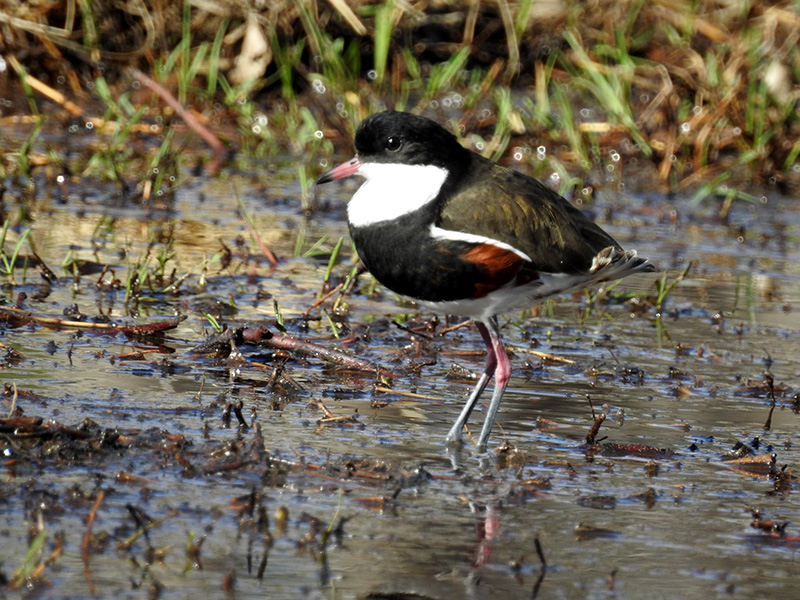
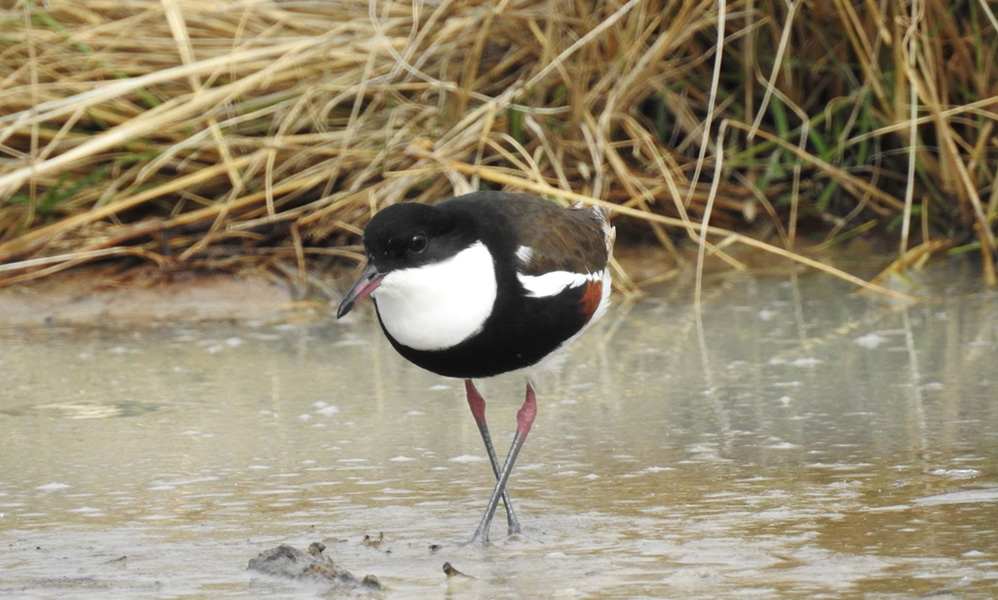
The Red‑kneed Dotterel (Erythrogonys cinctus) is one of Australia’s most striking wetland birds. With its clean black‑and‑white plumage and vivid red legs, this graceful wader stands out clearly against the muddy edges of lakes, wetlands, and floodplains.
Unlike many dotterels that live along sandy beaches, the Red‑kneed Dotterel prefers freshwater wetlands and inland waterways, where it quietly searches for food along the water’s edge. Although it is not as commonly seen as some other shorebirds, its elegant appearance makes it a favourite among birdwatchers.
What Does the Red‑kneed Dotterel Look Like?
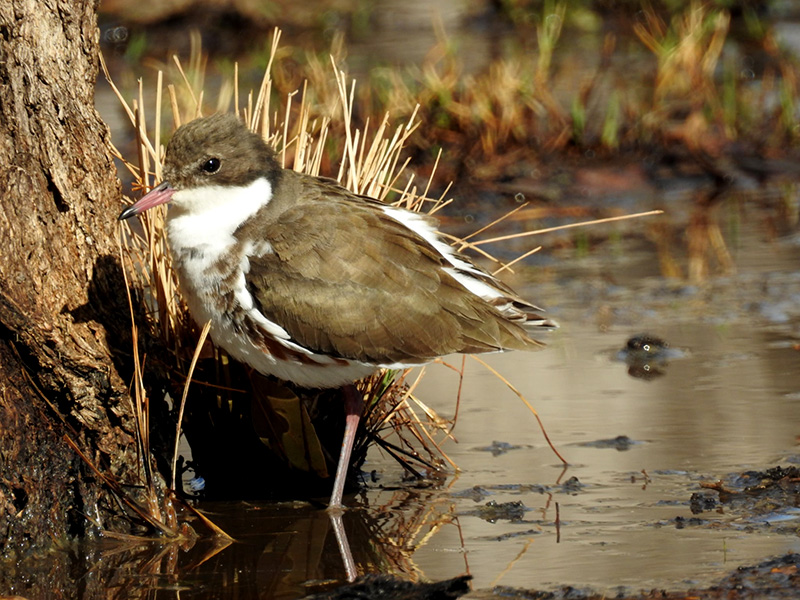
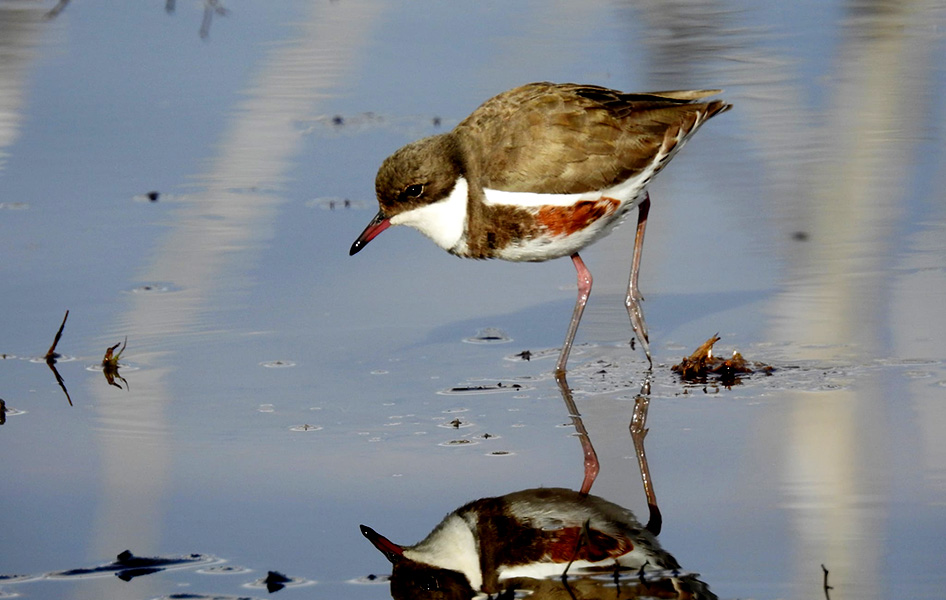
The Red‑kneed Dotterel is a medium‑sized wading bird measuring about 19–22 centimetres in length.
Its appearance is distinctive and easy to recognise:
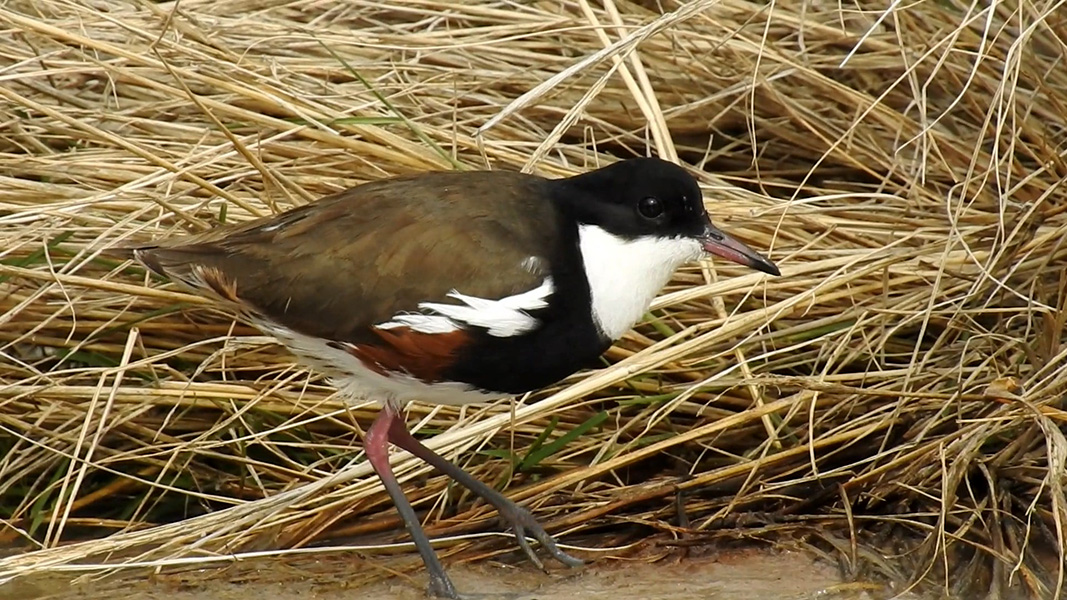
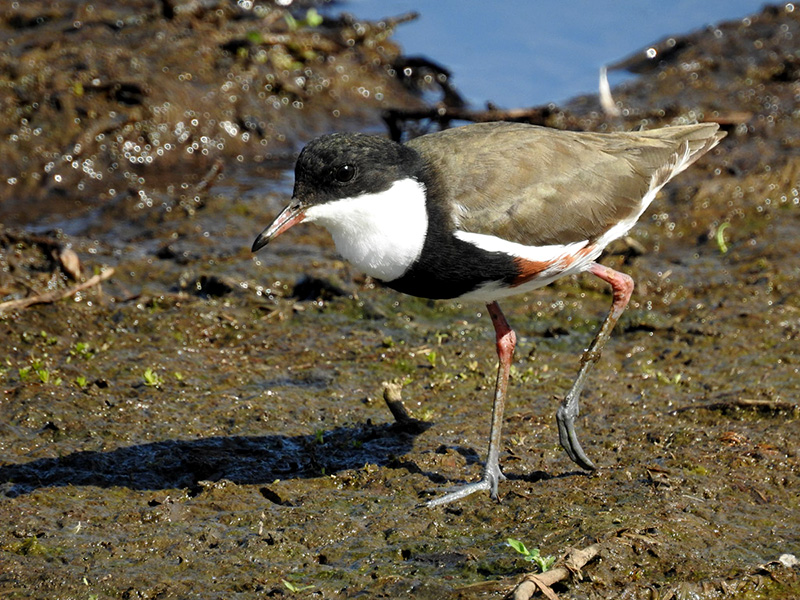
- Head and chest: Glossy black.
- Face and throat: Bright white with a clear black band across the upper chest.
- Back and wings: Dark brown to black.
- Belly: White.
- Legs: Bright red with a distinctive “knee” joint that gives the species its name.
- Eyes: Dark red.
When standing in shallow water, the contrast between the bird’s black body and vivid red legs is particularly striking.
Habitat and Distribution
The Red‑kneed Dotterel is widely distributed across Australia, particularly in inland regions where wetlands appear after rainfall.
It is commonly found in:
- freshwater lakes and lagoons
- floodplains and temporary wetlands
- swamps and marshes
- river edges and billabongs
- occasionally coastal wetlands
These birds are often associated with shallow water and muddy margins, where they can easily forage.
Because many inland wetlands in Australia appear only after rain, Red‑kneed Dotterels are highly mobile and may move large distances in response to changing water conditions.
Feeding Habits
Red‑kneed Dotterels are active foragers that hunt along the edges of shallow water.
Their diet mainly consists of:
- aquatic insects
- small crustaceans
- worms
- molluscs
- other small invertebrates
They feed by walking slowly along the shoreline, watching carefully before picking prey from the surface or probing lightly into the mud.
Unlike some shorebirds that probe deeply into mud with long bills, the Red‑kneed Dotterel typically captures prey from the surface or shallow water.
Breeding and Nesting
Red‑kneed Dotterels breed when conditions are favourable, often after rainfall creates productive wetlands.
- Nest location: a simple scrape in the ground close to water
- Nest material: minimal, sometimes lined with small stones or plant fragments
- Eggs: usually 3–4 eggs with speckled camouflage patterns
- Incubation: about four weeks
- Parental care: both parents guard the nest and care for the chicks
Like many shorebirds, the eggs blend perfectly with the surrounding ground, making them difficult for predators to detect.
Once hatched, the chicks quickly leave the nest and follow their parents while learning to forage.
Longevity
Red‑kneed Dotterels can live around 10 to 15 years in the wild, although exact lifespans vary depending on environmental conditions and predation.
Their survival often depends on the availability of healthy wetlands and safe nesting areas.
Indigenous Connections
Wetland birds such as the Red‑kneed Dotterel have long been part of the landscapes managed and understood by First Nations peoples across Australia.
Their presence often signals healthy wetlands rich in aquatic insects and other small animals. Observing the movements and behaviour of birds around water sources forms part of traditional ecological knowledge used to understand seasonal changes and the health of Country.
Because Australia contains many Indigenous language groups, traditional names for this species vary regionally and are not always widely recorded in publicly available sources.
Conservation Status and Threats
The Red‑kneed Dotterel is currently considered a species of Least Concern, and populations remain stable across much of Australia.
However, they still face several challenges, including:
- loss of wetlands due to land development
- pollution and poor water quality
- disturbance of nesting sites
- predation by introduced animals such as foxes and cats
Protecting wetlands is essential for maintaining healthy populations of this species.
How You Can Help
You can help protect Red‑kneed Dotterels and other wetland birds by:
- supporting wetland conservation and restoration projects
- protecting natural vegetation around lakes and rivers
- keeping dogs away from nesting areas
- reducing pollution entering waterways
Healthy wetlands benefit not only dotterels but a wide range of birds, fish, and other wildlife.
Why the Red‑kneed Dotterel Matters
The Red‑kneed Dotterel is one of the most elegant birds of Australia’s wetlands. Its striking appearance, adaptability, and strong connection to inland water systems make it an important part of the country’s birdlife.
Where Red‑kneed Dotterels are found, it often means that the surrounding wetlands are rich with life — a sign that the ecosystem is functioning well.
Scientific References
BirdLife Australia – Red‑kneed Dotterel species profile
Australian Museum – Red‑kneed Dotterel information
Pizzey, G. & Knight, F. The Field Guide to the Birds of Australia
Department of Climate Change, Energy, the Environment and Water – Wetland bird information
Wikipedia – Erythrogonys cinctus (Red‑kneed Dotterel)
Photo Gallery