Blue-banded Eggfly Butterfly
Blue-banded Eggfly Butterfly
A Flash of Sapphire in the Rainforest
In the warm forests of northern Australia, a dark butterfly glides through shafts of sunlight before settling briefly on a leaf. When its wings open, a brilliant streak of electric blue suddenly appears, glowing like polished sapphire. This striking insect is the Blue-banded Eggfly butterfly (Hypolimnas alimena), one of the most beautiful butterflies found in Australia’s tropical rainforests.
With its bold colours and confident flight, the Blue-banded Eggfly is a memorable sight along forest edges, walking tracks, and sunny clearings in the north of the continent. Though often seen alone, its vibrant wing pattern ensures it rarely goes unnoticed.
Scientific Classification
- Scientific name: Hypolimnas alimena
- Family: Nymphalidae (brush-footed butterflies)
- Common name: Blue-banded Eggfly
The genus Hypolimnas includes several well-known tropical butterflies, many of which show dramatic colour differences between males and females.
Appearance
The Blue-banded Eggfly is a medium-sized butterfly, with a wingspan typically between 70 and 85 millimetres.
Male
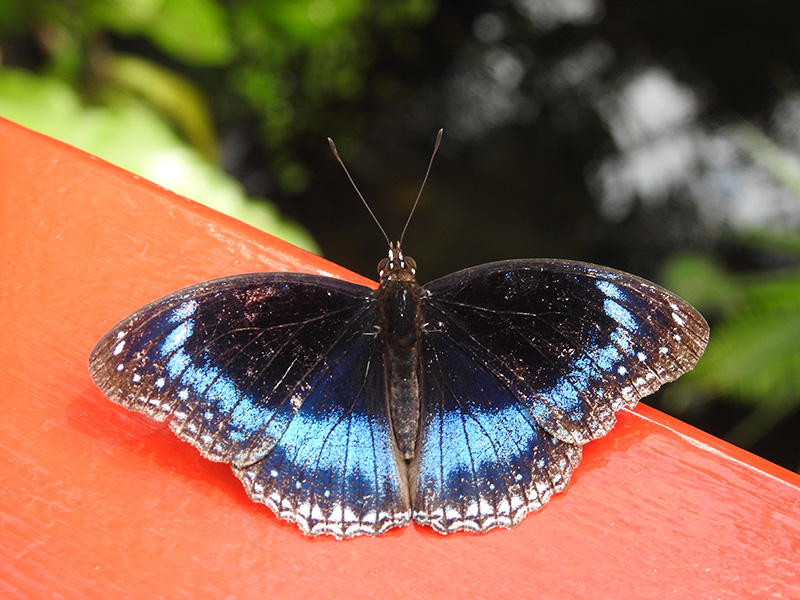
Males are particularly striking and easy to identify:
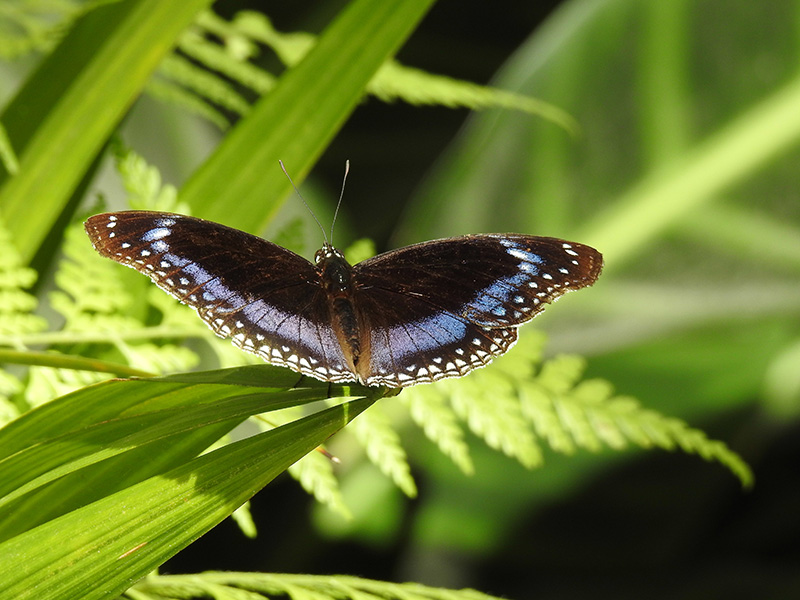
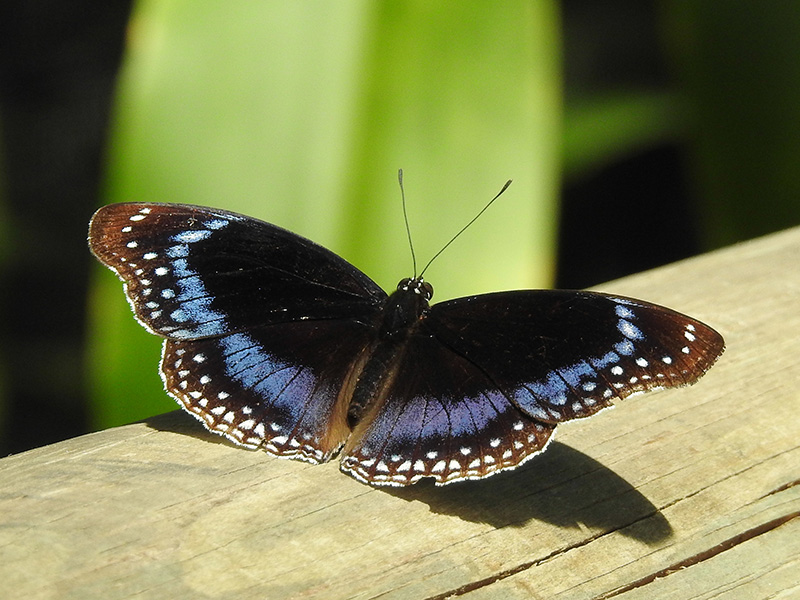
- Velvety black wings
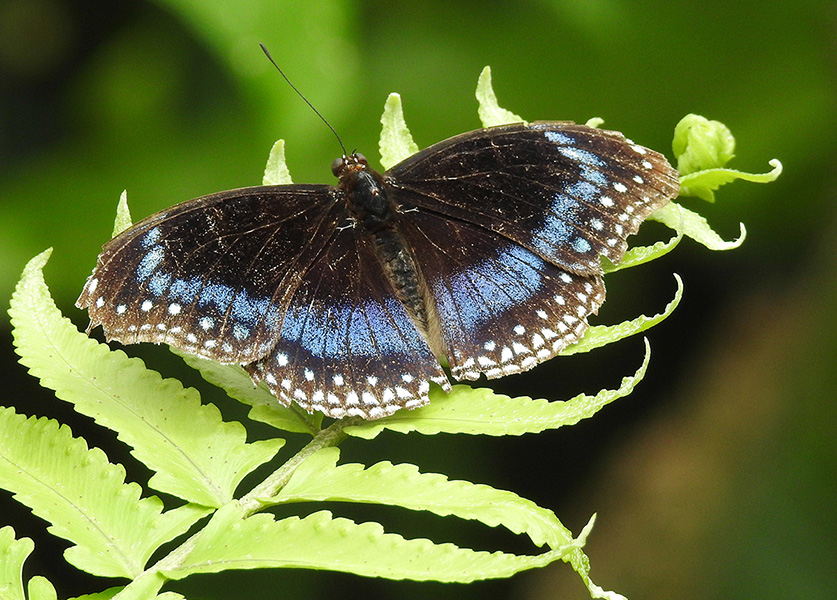
- A broad iridescent blue band running across both forewings and hindwings
- Subtle white markings near the edges
- The blue band often appears to shimmer depending on the angle of ligh
Female
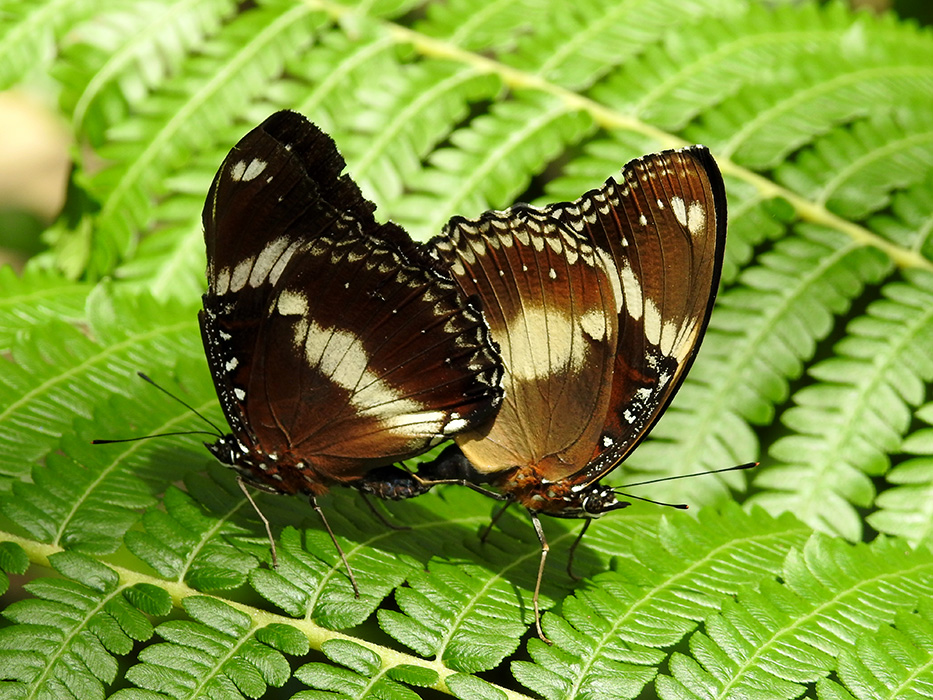
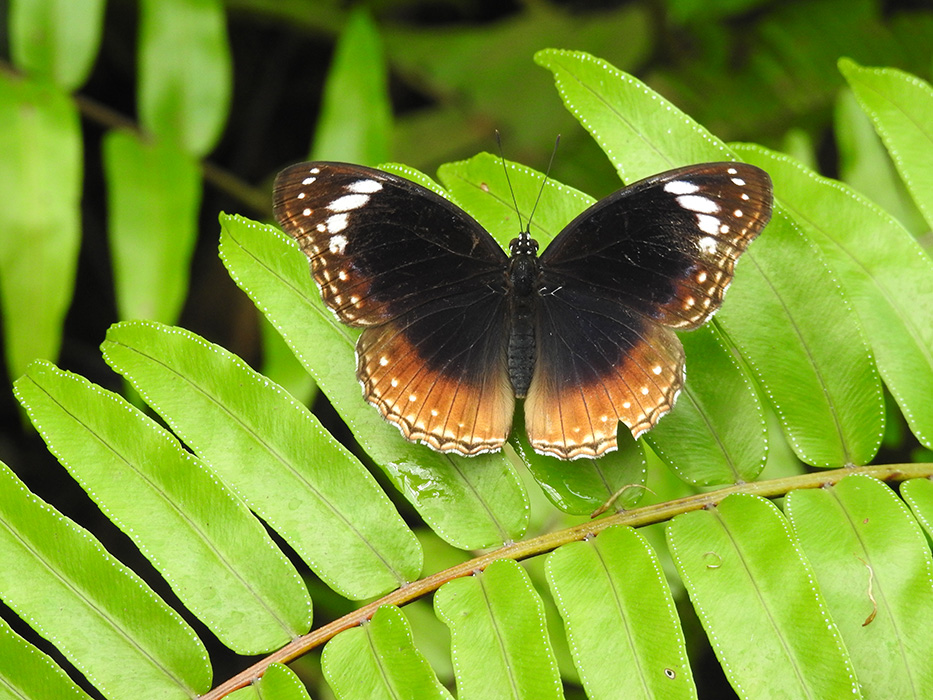
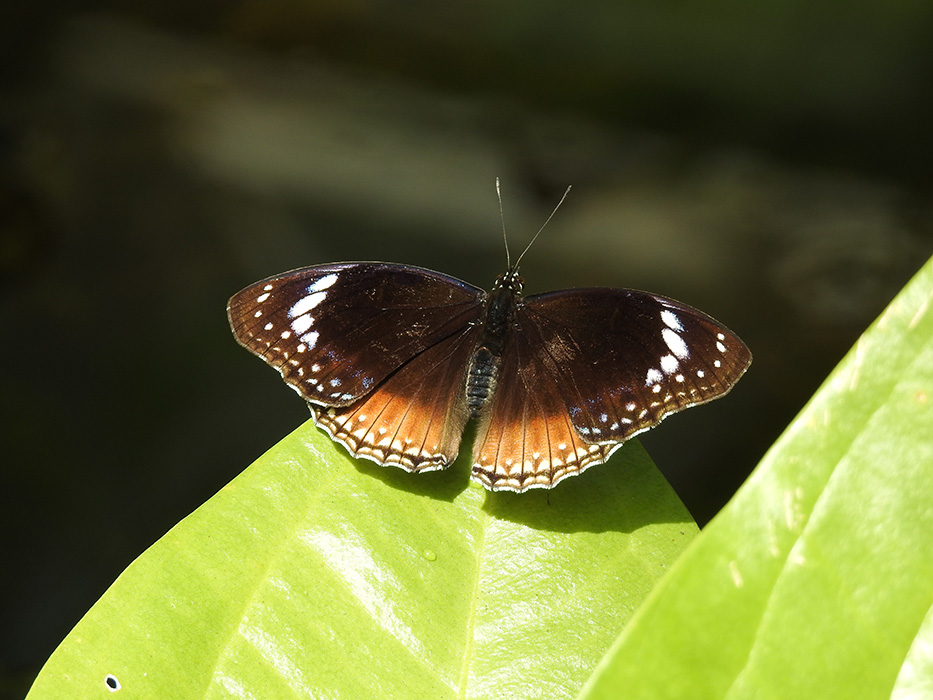
Females look quite different from males, a phenomenon known as sexual dimorphism.
Female features include:
- Brown wings with white patches and spots
- A more complex pattern that may resemble other butterfly species
- Less vivid colouring, which likely helps reduce attention from predators
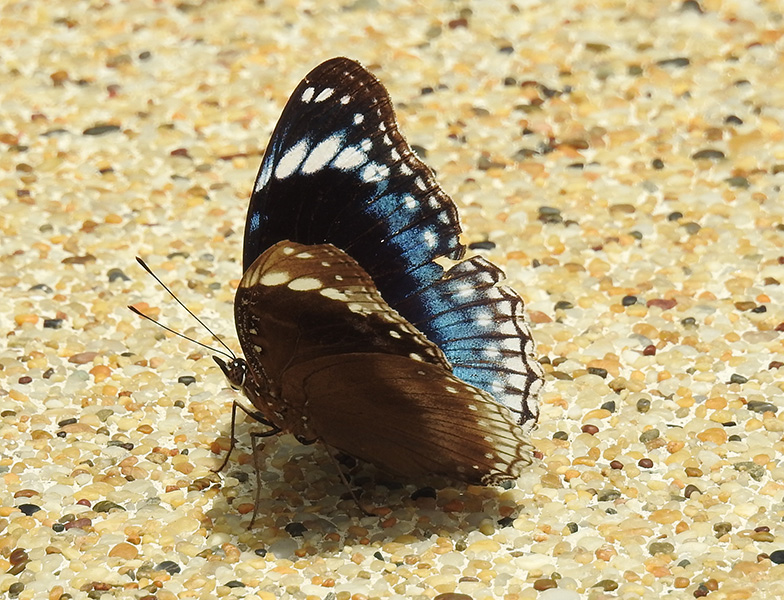
The underside of both sexes is usually brownish with lighter markings, providing camouflage when resting with wings closed.
Colour Variation in the Blue‑banded Eggfly
The Blue‑banded Eggfly is well known for its striking contrast of dark wings and shimmering blue markings, but like many butterflies in the Hypolimnas genus, it also shows noticeable variation in colour and pattern.
Variation Within Females
Female Blue‑banded Eggflies may differ in:
- The size and shape of the white patches
- The intensity of brown colouring
- The contrast between light and dark areas
- Subtle pattern differences along the wing edges
Some females appear strongly patterned with large white markings, while others have more muted patterns that blend into forest backgrounds.
Light and Structural Colour
Another interesting feature of the species is that the male’s blue band can appear different shades of blue depending on lighting conditions. The colour may shift from deep cobalt to a brighter electric blue as sunlight reflects off the microscopic scales on the wings.
This means the butterfly can look slightly different as it moves through sunlight and shade in the forest.
Subtle Regional Differences
Across its range—from northern Australia through Papua New Guinea and parts of Indonesia—small regional differences in pattern and colour intensity can occur. These are usually subtle but are of interest to butterfly researchers studying population variation.
A Dynamic Display of Colour
Although the Blue‑banded Eggfly may appear simple at first glance, closer observation reveals a butterfly with layers of variation and optical effects. From the shimmering blue band of the male to the patterned camouflage of the female, these colour differences reflect the complex evolutionary strategies butterflies use to survive in tropical forests.
Habitat and Distribution
In Australia, the Blue-banded Eggfly occurs mainly in tropical northern regions, including:
- Northern Queensland
- Cape York Peninsula
- coastal rainforest and monsoon forest areas
Across its wider range, the species also occurs in:
- Papua New Guinea
- parts of Indonesia
- surrounding tropical islands
Typical habitats include:
- rainforest edges
- forest tracks and clearings
- creek lines
- tropical gardens near forest
- shaded woodland
They are most active in warm, sunny conditions, often flying along paths where sunlight reaches the forest floor.
Behaviour and Flight
The Blue-banded Eggfly has a confident, gliding flight with occasional quick wingbeats. Males are particularly active and may patrol small territories in search of females.
Common behaviours include:
- Basking with wings open to absorb warmth
- Perching on leaves or branches in sunny patches
- Puddling, where butterflies gather on damp soil to absorb minerals
These minerals are important for reproduction and overall health.
Diet
Adult butterflies feed mainly on:
- flower nectar
- rotting fruit
- tree sap
- minerals from damp soil
Their long, flexible proboscis acts like a drinking straw, allowing them to draw nectar from flowers.
Caterpillar Diet
The caterpillars feed on several host plants, particularly species in the Acanthaceae family, including plants in the genus Pseuderanthemum and related shrubs found in tropical forests.
Photo Gallery