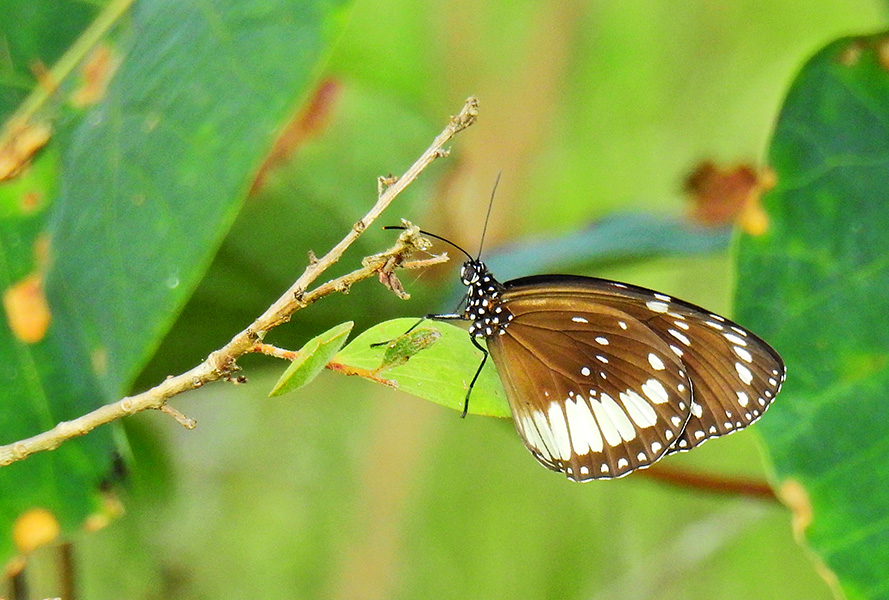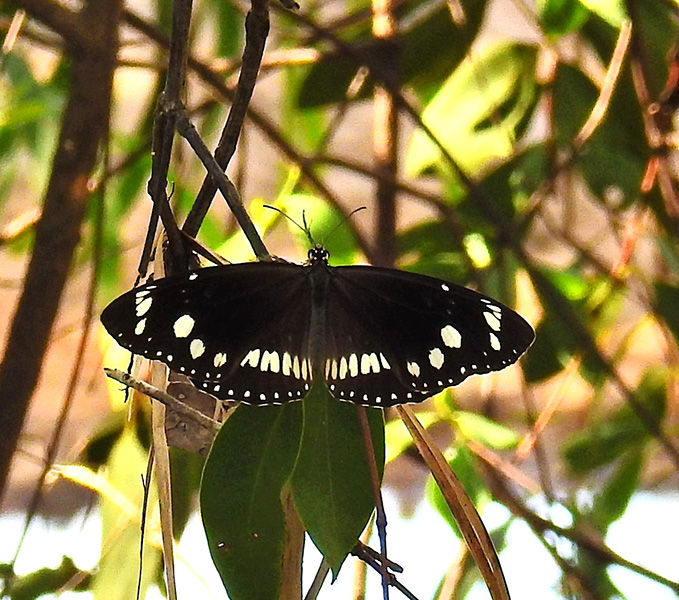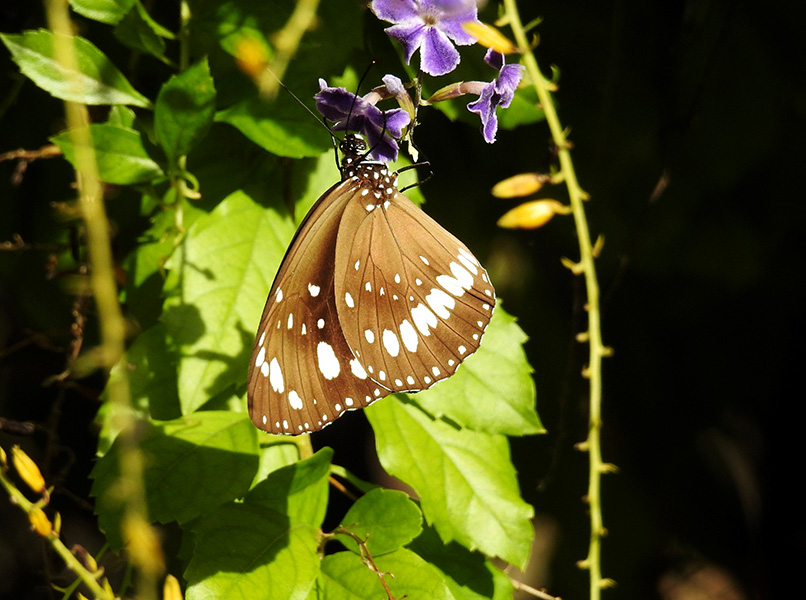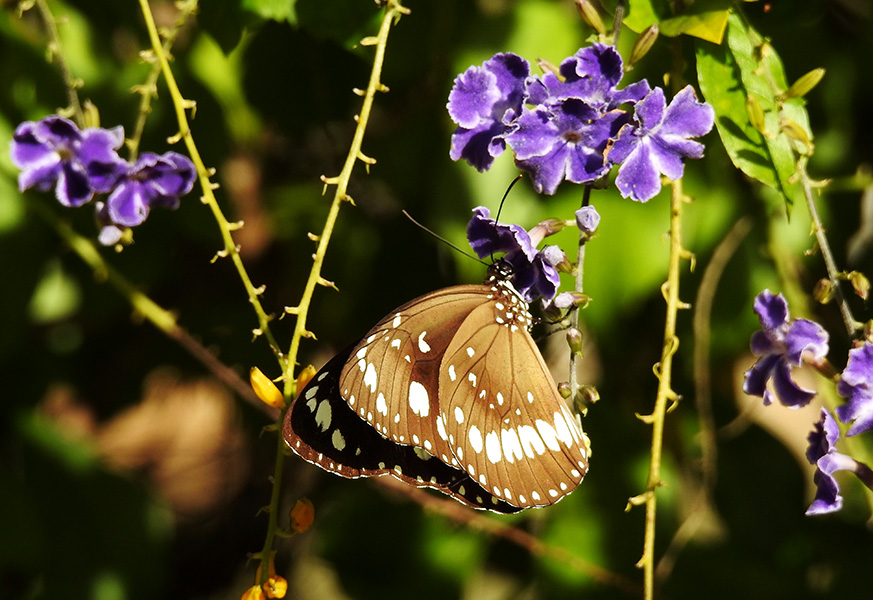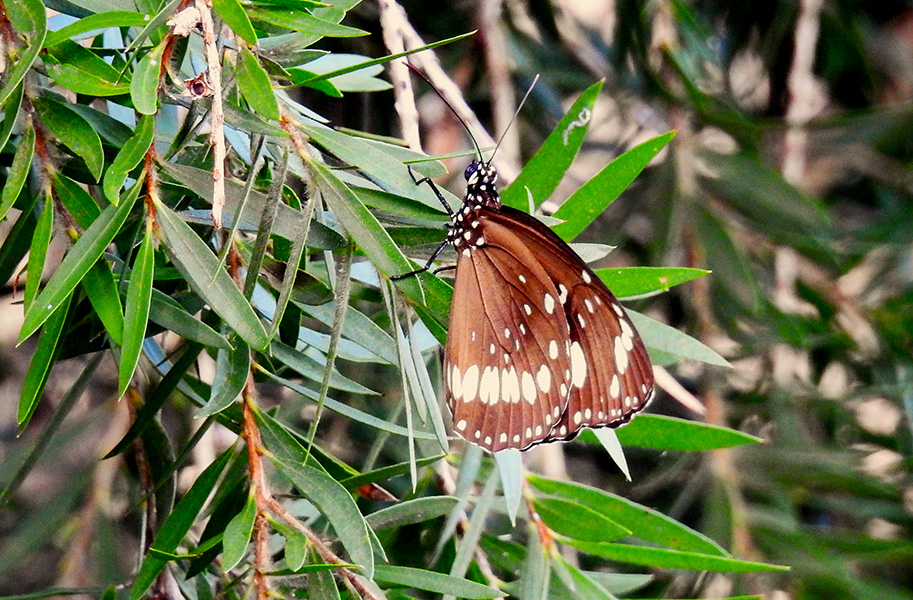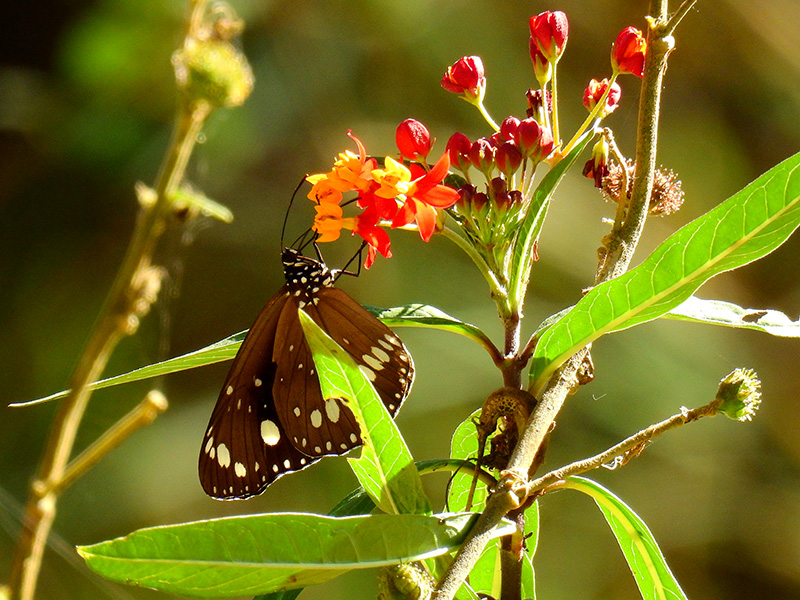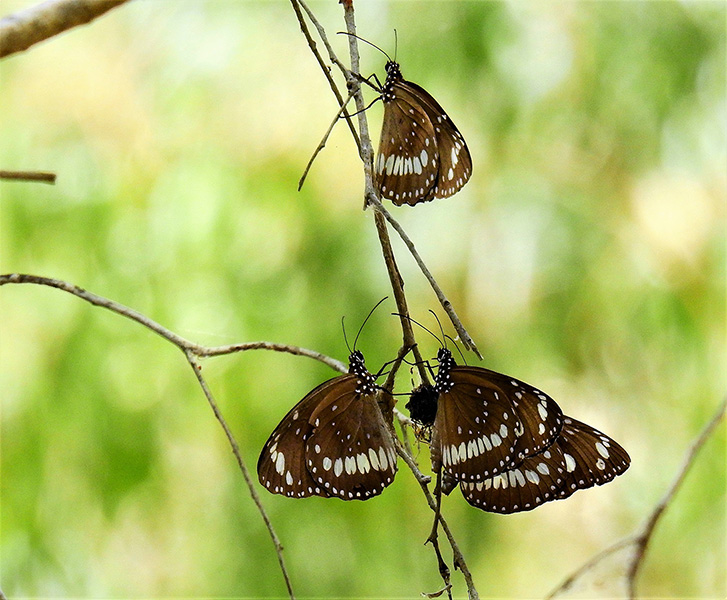
Common Crow Butterfly
The Gentle Glider: Common Crow Butterfly
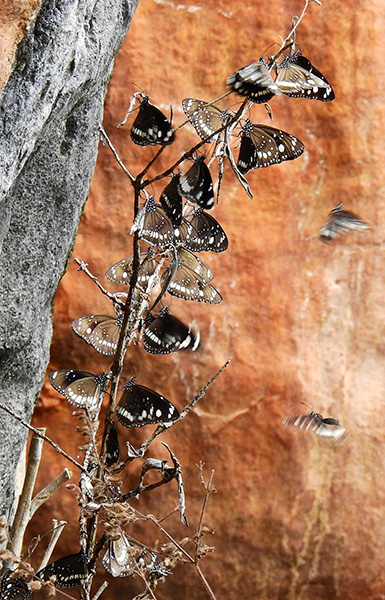
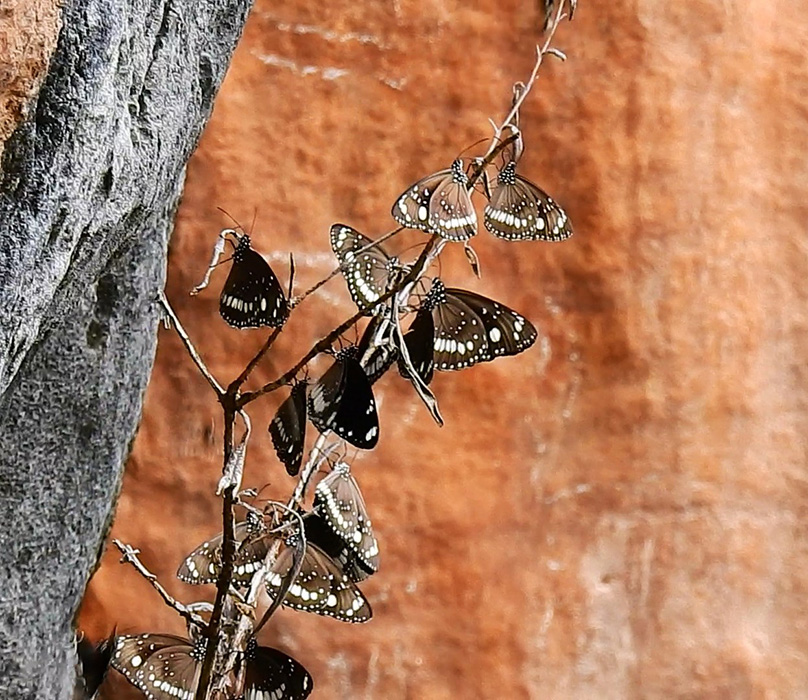
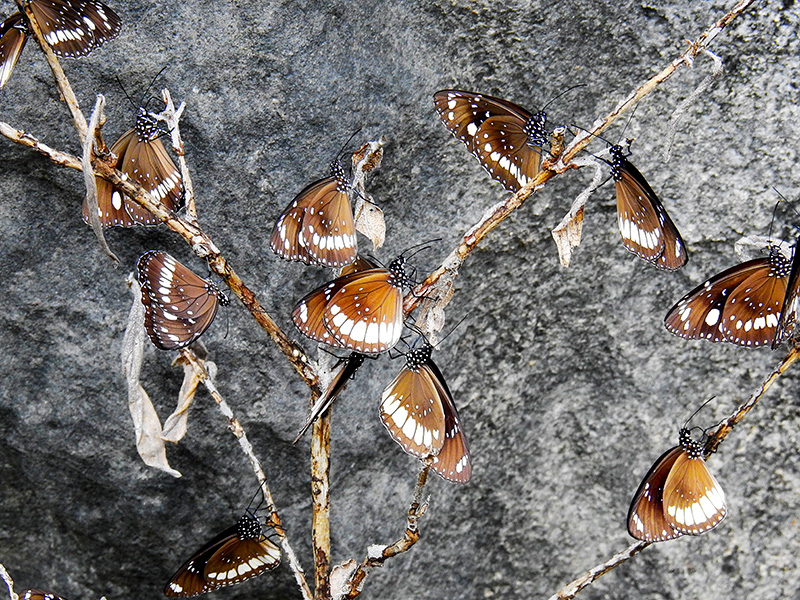
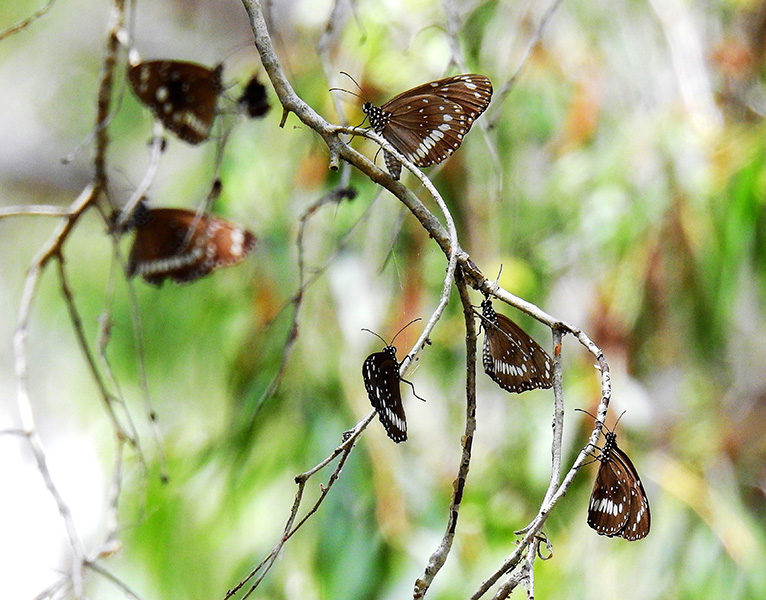
The Common Crow (Euploea core) is a graceful and widespread butterfly found across much of northern and eastern Australia. Known for its slow, drifting flight and dark velvety wings dotted with white spots, this species is a familiar sight in tropical and subtropical gardens, forests, and coastal habitats.
Belonging to the milkweed butterfly group within the brush‑footed butterfly family Nymphalidae, the Common Crow is closely related to other well‑known butterflies such as the Blue Tiger and the Monarch. Like many members of this group, it relies on toxic host plants that help protect it from predators.
What Does the Common Crow Look Like?
The Common Crow is a medium‑sized butterfly with a wingspan of around 80–95 millimetres.
Its appearance is elegant and distinctive:
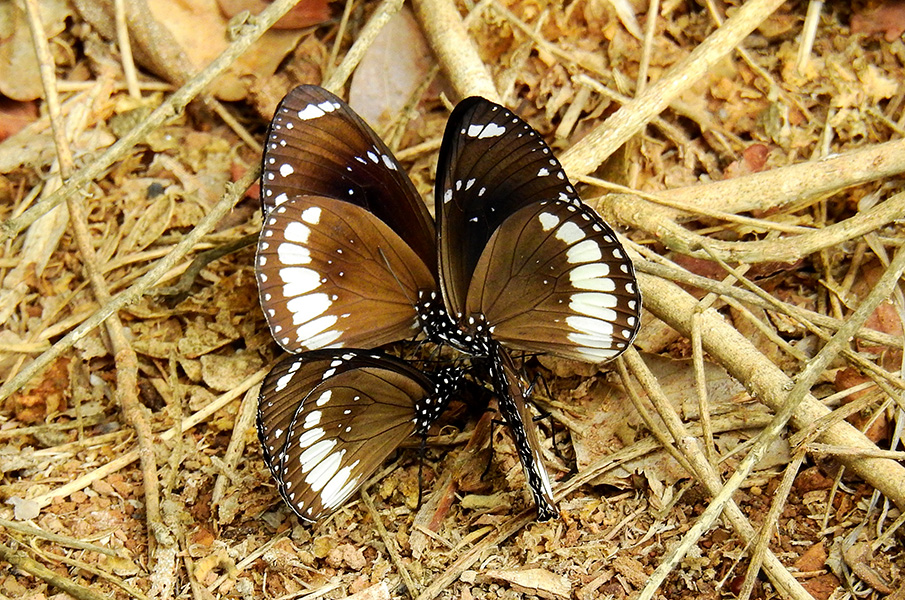
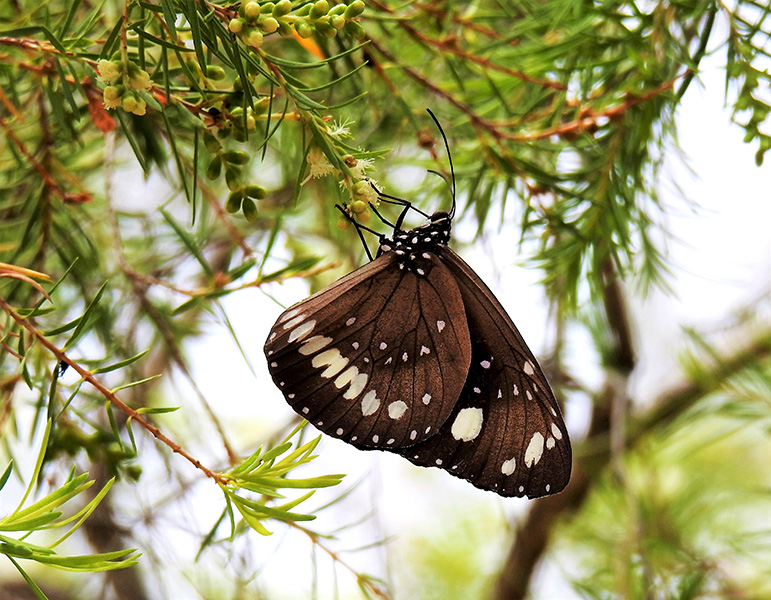
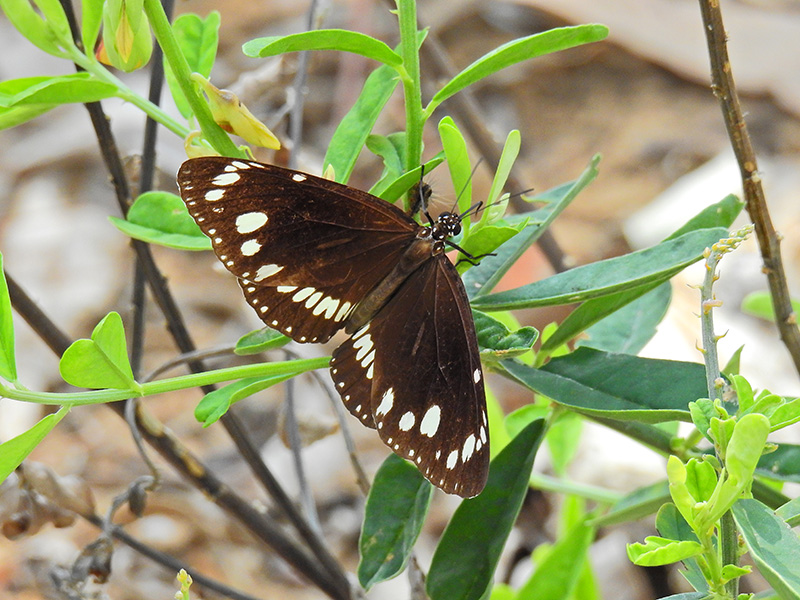
- Wings: Deep chocolate‑brown to black with rows of small white spots.
- Hindwings: Slightly rounded with a series of pale spots along the margins.
- Body: Dark with small white markings.
- Flight style: Slow and gliding, often floating gently through vegetation.
This relaxed flight style makes the butterfly easy to observe as it moves through forests or gardens.
Habitat and Distribution
The Common Crow occurs widely throughout northern and eastern Australia, including Queensland, the Northern Territory, and parts of northern New South Wales. It is also found across Asia, Southeast Asia, and the Pacific region.
In Australia it commonly inhabits:
- tropical and subtropical forests
- coastal woodland
- mangrove margins
- urban parks and gardens
- roadside vegetation
Because it tolerates a range of environments, it is one of the more familiar butterflies in northern Australia.
Feeding Habits
Adult Common Crow butterflies feed mainly on flower nectar.
They often visit a wide variety of flowering plants, including:
- native flowering shrubs
- rainforest vines
- garden plants
- coastal vegetation
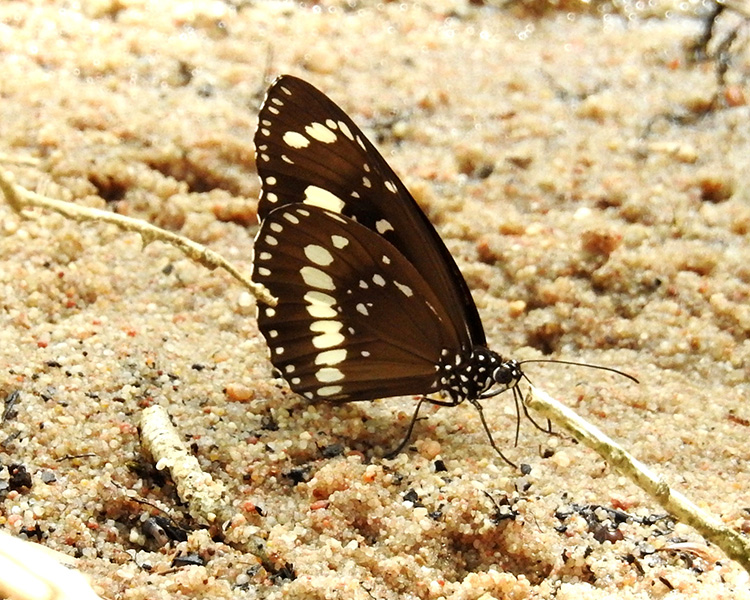
They may also obtain minerals from damp soil or rotting fruit.
Their slow and steady flight allows them to travel easily between patches of flowers.
Breeding and Host Plants
The life cycle of the Common Crow depends on plants in the milkweed and vine families, which contain natural toxins.
Typical host plants include:
- native milkweed vines
- certain species of Hoya and Marsdenia
- other related plants in the dogbane family
Life Cycle
- Egg: Small and laid singly on host plant leaves.
- Caterpillar: Pale with bands and small tentacle‑like filaments.
- Chrysalis: Smooth and pale green with a metallic golden band.
- Adult butterfly: Emerges to feed and reproduce.
The caterpillars absorb toxins from the host plants, making both the larvae and adult butterflies distasteful to predators.
Longevity
The complete life cycle from egg to adult generally takes around four to five weeks, depending on environmental conditions.
Adult butterflies usually live two to three weeks, though several generations may appear each year in warm climates.
Indigenous Connections
Butterflies have long been observed as part of the seasonal rhythms of Australia’s landscapes by First Nations peoples. Their appearance often coincides with flowering plants and warmer weather, reflecting the close relationship between insects, vegetation, and climate.
Traditional ecological knowledge recognises butterflies as part of the broader ecosystem that connects plants, animals, and environmental change. Because Australia contains many Indigenous language groups, traditional names for the Common Crow vary regionally and are not always widely documented in publicly available sources.
Conservation Status and Threats
The Common Crow is currently considered a species of Least Concern, as it remains widespread across its range.
However, local populations may still be affected by:
- habitat loss
- pesticide use
- removal of host plants
Planting suitable host plants and nectar flowers in gardens can help support these butterflies.
Why the Common Crow Matters
The Common Crow butterfly is a beautiful and important part of Australia’s tropical ecosystems. Its slow, floating flight and striking pattern make it easy to recognise, while its reliance on native plants highlights the importance of healthy vegetation.
By protecting natural habitats and planting butterfly‑friendly gardens, we can help ensure that this elegant butterfly continues to glide through Australia’s forests and gardens.
Scientific References
Braby, M. F. Butterflies of Australia: Their Identification, Biology and Distribution
Atlas of Living Australia – Euploea core records
Australian Butterfly Conservation resources
CSIRO – Australian butterfly information
Wikipedia – Euploea core (Common Crow Butterfly)
Photo Gallery