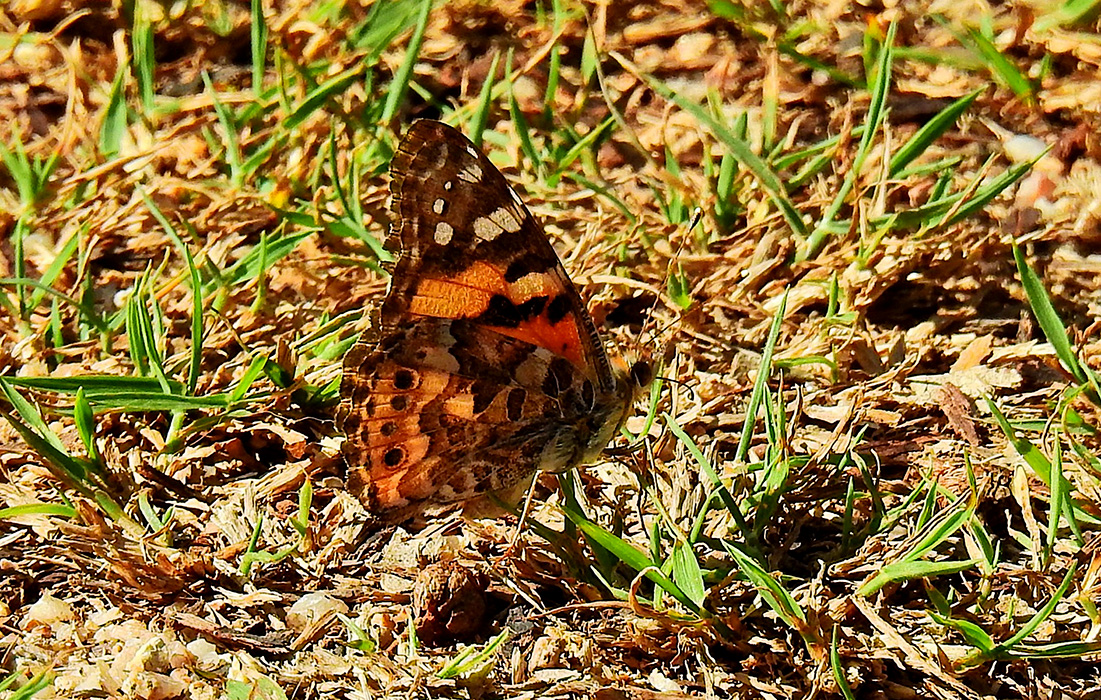
Painted Lady Butterfly
The Global Traveller: Painted Lady Butterfly
The Painted Lady (Vanessa cardui) is one of the most widespread butterflies in the world and a remarkable visitor to Australia. Known for its warm orange colouring and delicate black‑and‑white markings, this butterfly is admired for both its beauty and its extraordinary migratory abilities.
Unlike many butterflies that remain within a limited range, the Painted Lady is a true global traveller. It occurs on every continent except Antarctica and is capable of travelling vast distances in search of food and breeding sites.
What Does the Painted Lady Look Like?
The Painted Lady is a medium‑sized butterfly with a wingspan of about 50–65 millimetres.
Its wings display a complex pattern of colours and markings:
- Upper wings: Bright orange with black patches and white spots near the tips.
- Hindwings: Orange with rows of small black spots.
- Underside: A beautiful mosaic of brown, grey, and cream patterns that provide camouflage when the butterfly rests with its wings closed.
These patterns help the butterfly blend into bark, rocks, or dry vegetation when it is resting.
Habitat and Distribution
The Painted Lady is one of the most widely distributed butterflies on Earth. It can be found across:
- Australia
- Europe
- Asia
- Africa
- North and South America
In Australia it appears in many environments, including:
- grasslands and open woodland
- farmland and roadside vegetation
- deserts after rainfall
- gardens and parks
Because the species is highly mobile, its numbers can vary greatly from year to year depending on rainfall and plant growth.
Feeding Habits
Adult Painted Lady butterflies feed primarily on flower nectar.
They visit a wide range of flowering plants, including:
- daisies
- thistles
- native flowering shrubs
- garden flowers
They also sometimes feed on minerals from damp soil or juices from rotting fruit.
Their strong flight allows them to move easily between flowering areas in search of nectar.
Breeding and Host Plants
The Painted Lady uses a variety of host plants for its caterpillars. Many of these plants belong to the daisy family (Asteraceae).
Common host plants include:
- thistles
- everlasting daisies
- capeweed
- other wild herbs
Life Cycle
- Egg: Laid singly on host plant leaves.
- Caterpillar: Dark with spines and yellow markings.
- Chrysalis: A suspended pupa attached to vegetation.
- Adult butterfly: Emerges and begins feeding and breeding.
The caterpillars often build small silk shelters among the leaves of their host plants where they feed and hide from predators.
Longevity
The complete life cycle from egg to adult typically takes about four to six weeks, depending on weather conditions.
Adult butterflies usually live two to four weeks, but their ability to migrate allows successive generations to travel great distances over time.
One of the World’s Greatest Butterfly Migrations
The Painted Lady is famous for its large‑scale migrations. In many parts of the world, massive movements of Painted Ladies occur when conditions become favourable.
In Australia, large numbers may appear following periods of rainfall that produce abundant wildflowers and host plants. These population explosions can lead to impressive migrations across inland regions.
Indigenous Connections
Butterflies have long been part of the seasonal rhythms of Australian landscapes observed by First Nations peoples. The appearance of butterflies often coincides with flowering plants and changing weather patterns.
Traditional ecological knowledge recognises insects such as butterflies as indicators of healthy ecosystems and seasonal change. Because Australia contains many Indigenous language groups, traditional names for the Painted Lady vary regionally and are not always widely recorded in public sources.
Conservation Status and Threats
The Painted Lady is currently considered a species of Least Concern because of its enormous global range and adaptability.
However, like many butterflies, it can still be affected locally by:
- pesticide use
- habitat loss
- reduction of native flowering plants
Maintaining natural vegetation and flowering plants helps support butterfly populations.
Why the Painted Lady Matters
The Painted Lady butterfly is a symbol of resilience and adaptability. Its ability to travel across continents and thrive in many habitats makes it one of nature’s most impressive insects.
Whether appearing in gardens, wildflower fields, or desert landscapes after rain, the Painted Lady reminds us of the incredible journeys that even small creatures can undertake.
Scientific References
Braby, M. F. Butterflies of Australia: Their Identification, Biology and Distribution
Atlas of Living Australia – Vanessa cardui records
Australian Butterfly Conservation resources
CSIRO – Australian insect biodiversity
Wikipedia – Vanessa cardui (Painted Lady Butterfly)
Photo Gallery