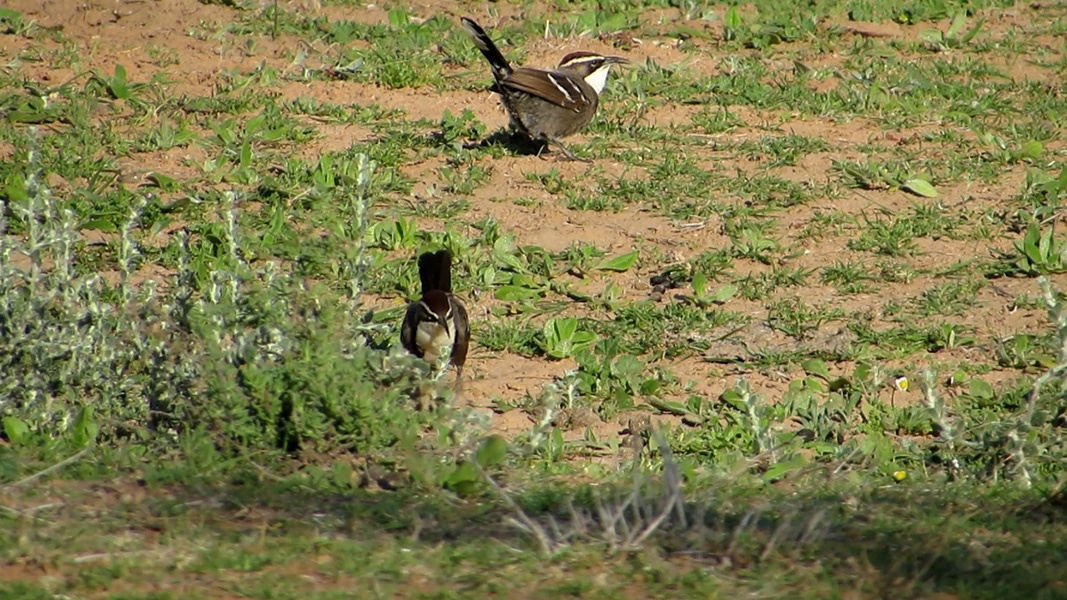
Chestnut-crowned Babbler
The Chestnut-crowned Babbler (Pomatostomus ruficeps) is a highly social bird that lives in the dry inland regions of Australia. Known for its lively chatter and cooperative family life, this species moves through the landscape in small groups that work together to forage, build nests and raise their young. Adapted to some of Australia’s harshest environments, the Chestnut-crowned Babbler thrives in arid and semi‑arid woodlands and shrublands where teamwork helps the group survive.
These energetic birds spend much of their time on the ground or hopping through low vegetation, constantly communicating with soft calls that help keep the family group together.
Quick Facts
Scientific name: Pomatostomus ruficeps
Length: about 21–23 cm
Wingspan: about 30–35 cm
Lifespan: estimated 5–8 years in the wild
Habitat: Arid and semi‑arid woodlands, shrublands and dry inland regions
Diet: Insects, spiders, larvae and small invertebrates
Conservation status: Least Concern (IUCN)
What Does the Chestnut-crowned Babbler Look Like?
The Chestnut-crowned Babbler is a medium-sized bird with a slender body and long tail, typical of Australia’s babbler family.
Key features include
- A distinctive rich chestnut-brown crown on the head
- White eyebrow stripe above the eye
- Dark line through the eye
- Brown back and wings
- Pale grey throat and underparts
- Long dark tail often held upright
These colours help the bird blend into dry woodland and scrubland environments.
What Does the Chestnut-crowned Babbler Sound Like?
Chestnut-crowned Babblers are very vocal birds, constantly communicating with their group.
- Rapid chattering notes
- Soft contact calls used while foraging
- Short alarm calls when danger is detected
Their calls often create the impression of a continuous conversation within the group as they move through vegetation.
Habitat and Distribution
The Chestnut-crowned Babbler is found across inland Australia, particularly in dry regions.
Its range includes parts of
- South Australia
- Western Queensland
- New South Wales
- Northern Territory
- Western Australia
Typical habitats include
- Acacia shrublands
- Dry open woodlands
- Mulga country
- Semi‑arid scrublands
These birds are well adapted to hot, dry environments with scattered vegetation.
Where Can You See Chestnut-crowned Babblers?
Birdwatchers may encounter these birds in inland and arid regions of Australia, particularly in areas with mulga or acacia woodland.
They are often seen
- Moving in small groups across the ground
- Hopping through low shrubs
- Foraging among leaf litter and bark
Because of their constant calling, they are often heard before they are seen.
Diet and Feeding Behaviour
Chestnut-crowned Babblers feed mainly on small invertebrates.
Their diet includes
- Beetles
- Ants
- Spiders
- Insect larvae
- Other small invertebrates
They forage by probing bark, turning leaf litter and searching the ground, often working together as a group to locate food.
Lifespan and Longevity
Although detailed lifespan studies are limited, Chestnut-crowned Babblers are believed to live around 5–8 years in the wild, similar to other babbler species.
Young birds often remain with their family group for several seasons, helping to raise younger siblings before breeding themselves.
Breeding and Nesting
Chestnut-crowned Babblers are cooperative breeders, meaning several birds assist in raising the young.
Nest
Their nests are large and distinctive.
They are
- Dome-shaped structures
- Built from sticks, grasses and plant fibres
- Often placed in shrubs or small trees
Groups may build multiple nests, with some used for roosting rather than breeding.
Eggs and incubation
Typical breeding details include
- Clutch size: usually 2–4 eggs
- Egg colour: pale with darker speckles
- Incubation period: about 14–16 days
Several members of the group help feed and protect the chicks.
Interesting Facts
- Chestnut-crowned Babblers often build several nests within their territory, including special roosting nests.
- They are highly cooperative birds, with family groups working together to raise chicks.
- Their chestnut-coloured crown is one of the easiest ways to identify the species.
- These birds are well adapted to Australia’s harsh inland climates.
- Babblers communicate constantly, helping the group stay coordinated while moving through dense vegetation.
Conservation Status
According to the IUCN Red List, the Chestnut-crowned Babbler is classified as Least Concern.
The species remains relatively widespread across inland Australia, although local populations can be affected by habitat changes.
Threats
Potential threats include
- Habitat clearing for agriculture
- Loss of native woodland and shrubland
- Predation by feral cats and foxes
- Changes to fire regimes
Maintaining healthy arid woodland ecosystems is important for the long-term survival of the species.
What Can We Do to Help?
Protecting habitats in Australia’s inland regions helps support Chestnut-crowned Babblers and many other species.
Helpful actions include
- Protecting native woodland and shrubland habitats
- Supporting sustainable land management
- Controlling feral predators
- Maintaining vegetation corridors between habitat patches
- Protecting areas with old trees and natural vegetation
These efforts help maintain the ecosystems that babblers depend on.
References
BirdLife Australia
https://birdlife.org.au
IUCN Red List – Pomatostomus ruficeps
https://www.iucnredlist.org
Australian Museum
https://australian.museum
Birds of the World – Cornell Lab of Ornithology
https://birdsoftheworld.org
Atlas of Living Australia
https://www.ala.org.au
Photo Gallery