Coppery brushtail possum
Hidden in the rainforests of north-eastern Queensland, the Coppery Brushtail Possum is one of Australia’s lesser-known marsupials. By day it shelters in tree hollows or dense foliage. By night it emerges to move through the forest canopy, its warm copper-brown coat and bright eyes making it a beautiful but often overlooked part of the Wet Tropics. Unlike the familiar Common Brushtail Possum seen in towns and suburbs, this species is mainly a possum of wetter forests.
What Does the Coppery Brushtail Possum Look Like?
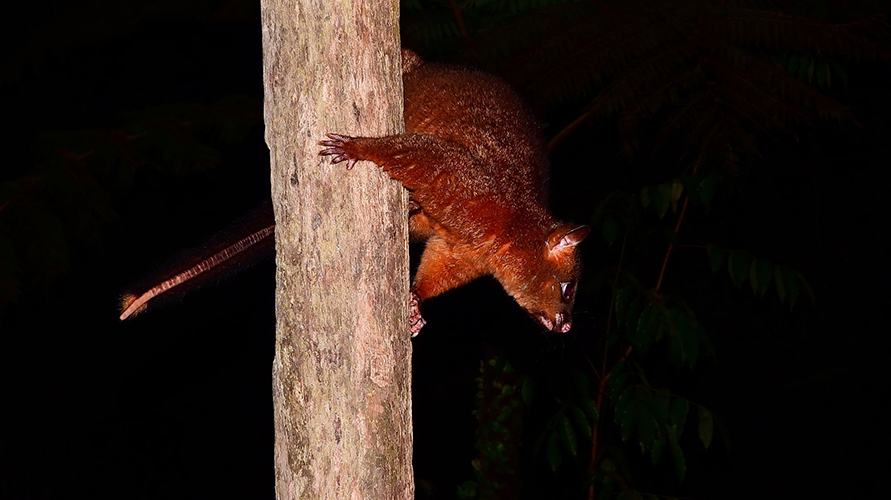
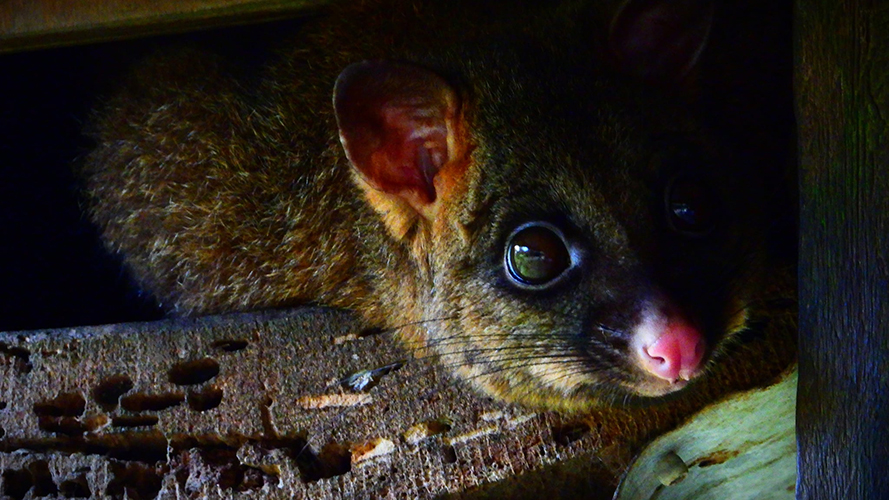
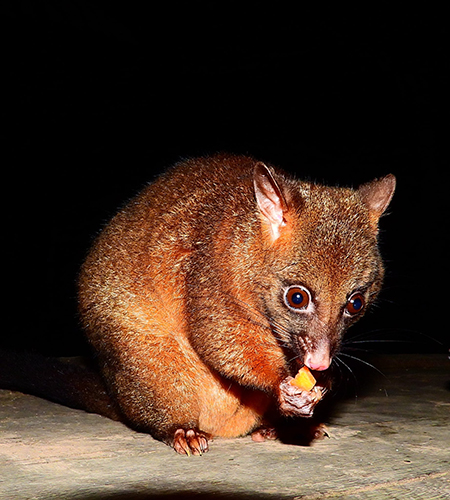
The Coppery Brushtail Possum is a medium-sized, tree-dwelling possum with a rich coat that ranges from coppery brown to reddish-brown. Its underparts are usually paler.
Key features include:
- a sturdy body
- large dark eyes adapted for night vision
- rounded ears
- a pointed pinkish nose
- a long bushy tail that helps with balance and climbing
Its thick fur and strong limbs make it well suited to life in forested habitats.
What Does the Coppery Brushtail Possum Sound Like?
The Coppery Brushtail Possum is usually quiet and secretive. Detailed descriptions of species-specific vocalisations are limited, but like other brushtail possums it may produce:
- low growls
- harsh cough-like calls
- hisses
- guttural sounds during disputes or when alarmed
Most people are more likely to notice it by movement in the trees or by its eye-shine in torchlight than by sound.
Where Does the Coppery Brushtail Possum Live?
The Coppery Brushtail Possum is found only in north-eastern Queensland, mainly in the Wet Tropics region.
It lives in:
- tropical rainforest
- wet sclerophyll forest
- rainforest margins
- forested uplands and gullies
It is an arboreal species, meaning it spends much of its life in trees. During the day it shelters in hollows, dense vegetation or other protected places, then emerges at night to feed.
Habitat
This possum depends on well-vegetated forest habitat with safe shelter sites and a reliable supply of leaves, flowers and fruit. Because it has a relatively limited range, the protection of intact forest is especially important for the species.
What Does the Coppery Brushtail Possum Eat?
The Coppery Brushtail Possum is mainly herbivorous. Its diet includes:
- leaves
- young shoots
- flowers
- buds
- fruits
As a rainforest possum, it feeds on a variety of native plants and plays a role in the ecology of north Queensland forests.
Behaviour
The Coppery Brushtail Possum is:
- nocturnal, active mainly at night
- arboreal, spending much of its time in trees
- usually solitary, except during breeding or when a mother is caring for a joey
It moves carefully through branches and may descend lower in the forest to travel or feed.
Longevity
Precise lifespan data for the Coppery Brushtail Possum are limited. Like other brushtail possums, it is thought to be a relatively long-lived marsupial and may live for several years in the wild, with some individuals possibly reaching close to 10 years in favourable conditions.
Breeding
The Coppery Brushtail Possum usually gives birth to one joey at a time.
Like other possums:
- the young is born after a very short gestation
- it continues developing in the mother’s pouch
- after leaving the pouch, it will ride on the mother’s back before becoming independent
In tropical Queensland, breeding timing can vary depending on local conditions and food availability.
Did You Know?
- The Coppery Brushtail Possum is found nowhere else in the world except north-eastern Queensland.
- Although it belongs to the brushtail possum group, it is far more a rainforest species than the familiar suburban Common Brushtail Possum.
- Its rich reddish-brown coat is the reason for its common name “coppery”.
- At night, its eyes can reflect strongly in torchlight, making it easier to spot in the canopy.
- A mother usually raises just one joey at a time, carrying it first in her pouch and later on her back.
Conservation Status
The Coppery Brushtail Possum is currently listed as Least Concern on the IUCN Red List.
Although it is not presently considered globally threatened, its restricted range means that habitat protection remains very important.
Threats
The main threats to the Coppery Brushtail Possum include:
- habitat loss and fragmentation
- clearing of rainforest and wet forest
- loss of hollow-bearing trees
- road mortality
- predation by cats and dogs in disturbed areas
- climate change affecting the Wet Tropics
- severe weather events that damage forest canopy and food sources
How People Can Help
People can help protect the Coppery Brushtail Possum by:
- protecting rainforest and wet forest habitat
- retaining mature native trees and hollow-bearing trees
- restoring native vegetation between forest patches
- keeping cats indoors, especially at night
- keeping dogs under control near bushland
- driving carefully on forest roads after dark
- supporting conservation programs in the Wet Tropics of Queensland
References
IUCN Red List – Trichosurus johnstonii
https://www.iucnredlist.orgQueensland Government Wildlife Online – Coppery Brushtail Possum
https://wildlife-online.qld.gov.auAtlas of Living Australia – Trichosurus johnstonii
https://www.ala.org.auVan Dyck, S. and Strahan, R. The Mammals of Australia
Menkhorst, P. and Knight, F. A Field Guide to the Mammals of Australia
Photo Gallery