Black-headed Skimmer
The Black-headed Skimmer
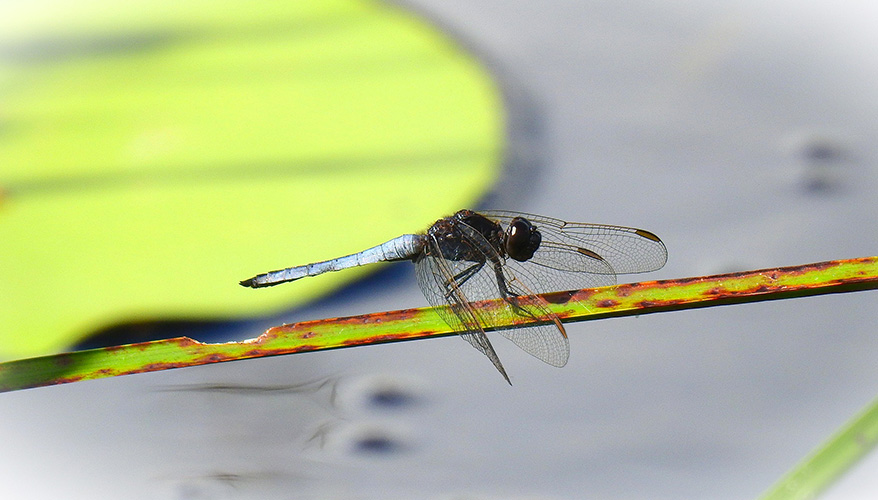
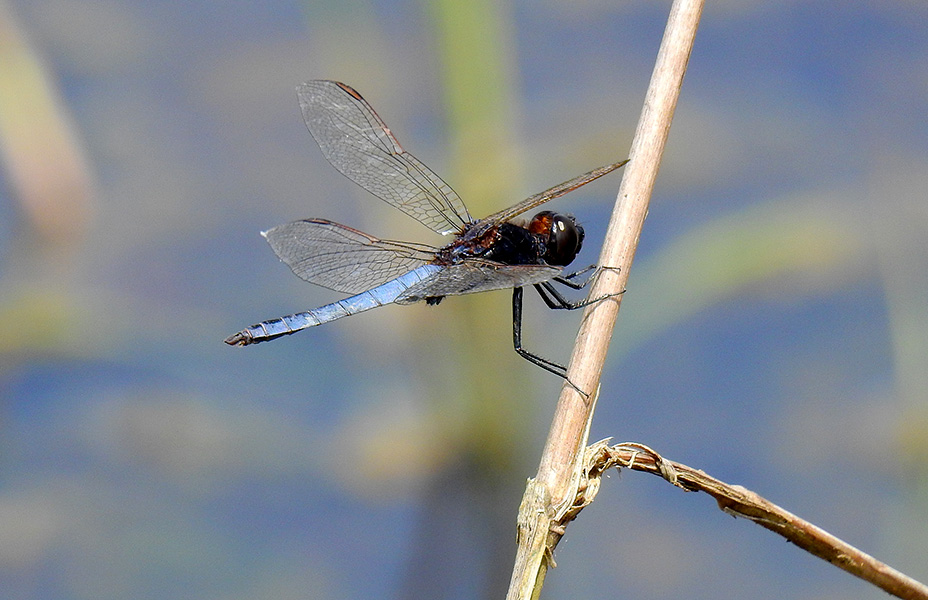
The Black-headed Skimmer (Crocothemis nigrifrons) is a wonderful example of why you can’t always judge a book by its cover—or a dragonfly by its name!
If you are standing by a pond and spot a dragonfly that looks like a deep, intense blue with a distinctly dark head, you’ve likely found this common and widespread Australian species. It’s another one of our “backyard blues” that is found across much of the country.
Blue Body, Black Face
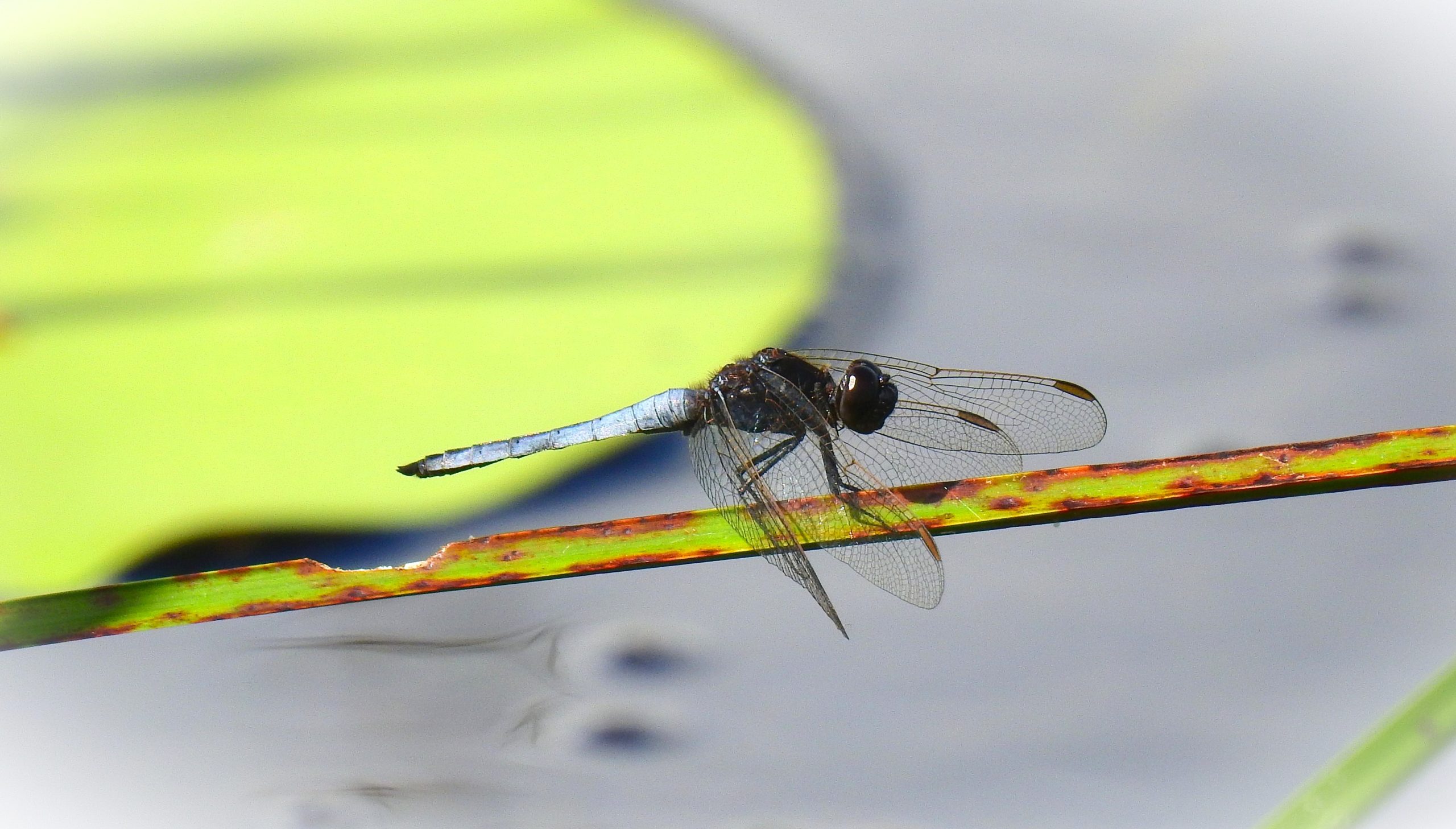
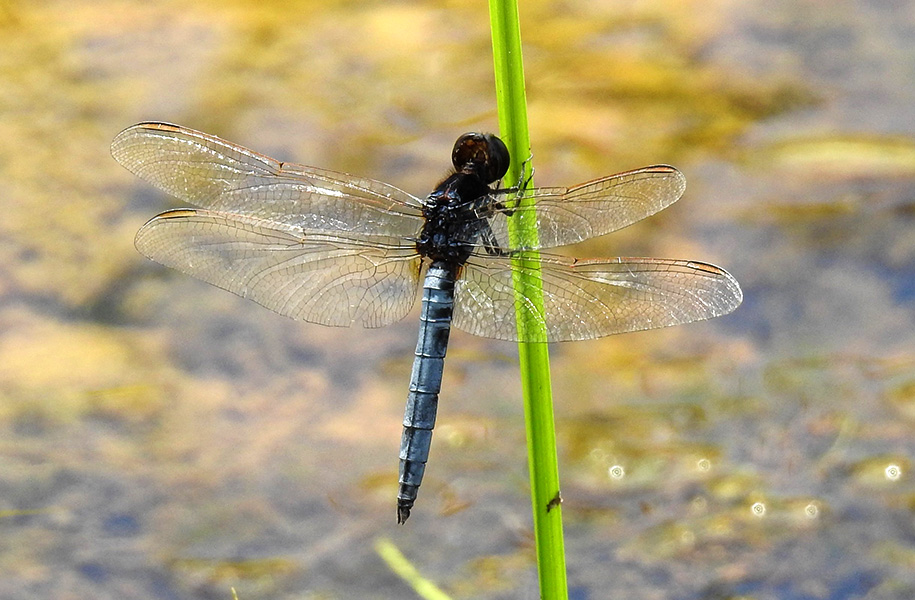
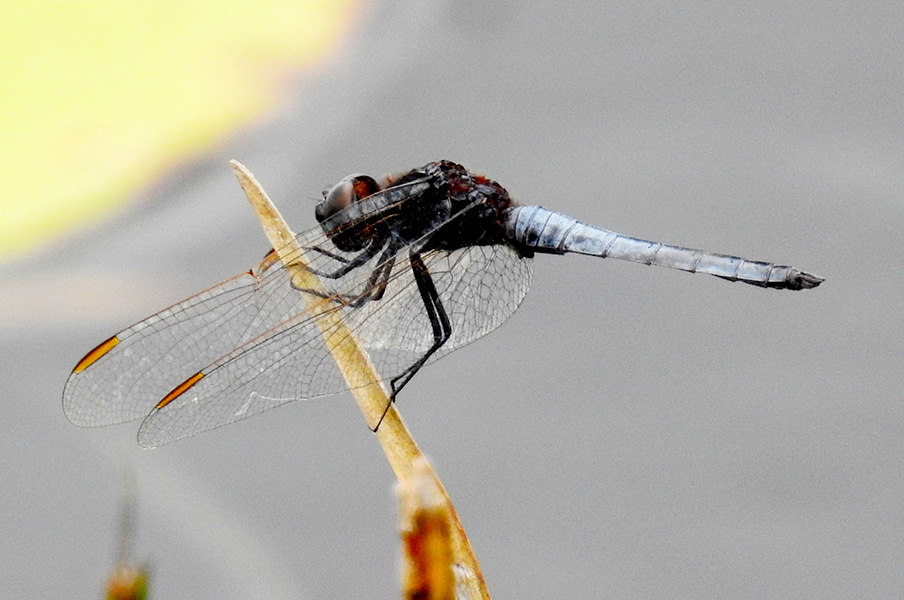
Just like the Blue Skimmer, the mature male Black-headed Skimmer is the one that catches the eye.
- The Body: As he matures, his body becomes covered in a dense, waxy coating known as pruinescence. This gives him a striking deep blue colour, sometimes leaning towards indigo.
- The “Black Head”: The key feature to look for is right on the front of his head. His “frons”—basically the dragonfly’s forehead—is a very dark metallic black or deep blue-black. This dark mask contrasts sharply with his blue body and is the feature that gives the species its name.
- The Wings: His wings are clear, but keep an eye on the very base of them, right where they join the body. You’ll often see a small, distinct patch of amber or yellow colour.
The Golden Female
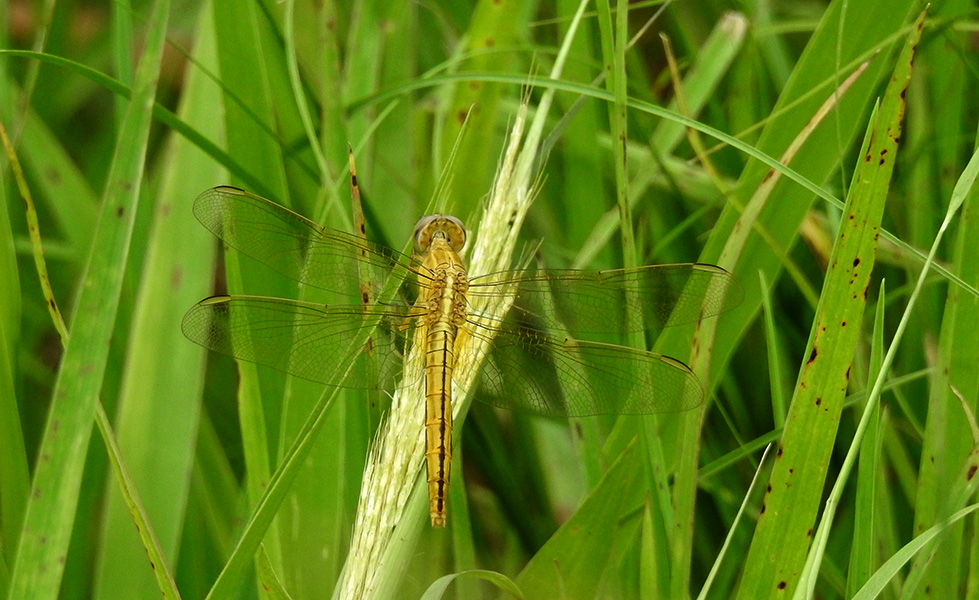
Once again, we have a species where the female looks completely different. She has no blue colouring at all. Instead, she is a lovely golden-yellow to pale brown colour with a lighter stripe running down her back. She is perfectly camouflaged for resting among dried grasses and reeds near the water’s edge.
Immature males—those that have just emerged as adults—also look like the females before they develop their blue coating.
Behaviour and Habitat
The Black-headed Skimmer is a very adaptable species. You’ll find them around a wide variety of still or slow-moving waters, including garden ponds, dams, lakes, and even temporary pools created by heavy rains.
They are “perchers,” meaning they like to find a favourite spot—a reed, a stick, or a rock—and sit there waiting for food to fly by. They will dart out to catch prey and then often return to the same perch to eat it.
They can be quite territorial, and you’ll often see the blue males chasing each other away from their chosen patch of water.
Photo Gallery