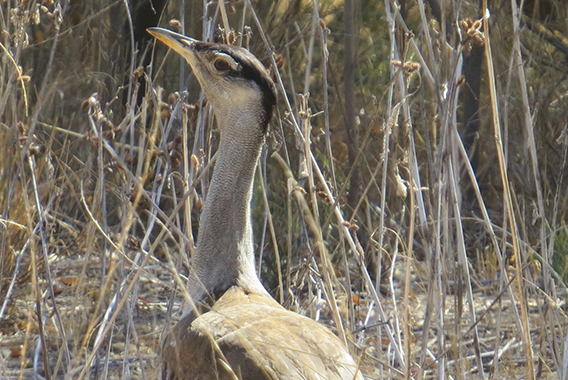
AUSTRALIAN BUSTARD
Ardeotis australis
Australian Bustard
The Australian Bustard is one of the largest flying birds found on the Australian continent. Tall, elegant and often moving slowly through open grasslands, this impressive bird has long been a familiar sight in the wide inland landscapes of northern and central Australia.
Once widespread across much of the continent, the Australian Bustard—sometimes called the “plains turkey” in rural Australia—has declined in many southern regions. Today it remains an important species of the open plains and holds deep cultural significance for many Aboriginal and Torres Strait Islander peoples, who have known and respected the bird for thousands of years.
Quick Facts
- Scientific name: Ardeotis australis
- Family: Otididae (bustards)
- Height: up to 1.2 metres
- Wingspan: up to 2.3 metres
- Weight: males up to 14 kg, females usually much smaller
- Conservation status: Least Concern globally, but declining in parts of Australia
The Australian Bustard is among the heaviest flying birds in Australia.
What Does the Australian Bustard Look Like?
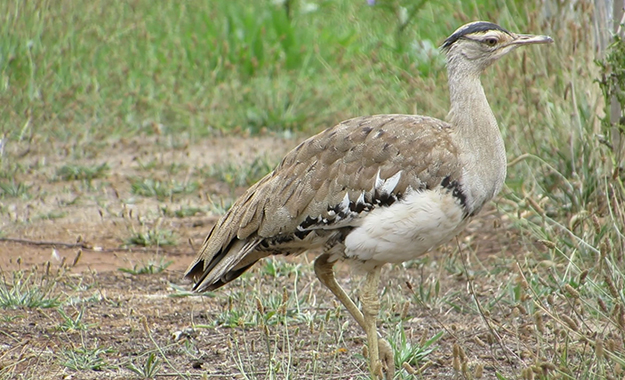
This bird is tall and long-legged, built for walking across open country.
Key features
- Brown upperparts with fine black patterning
- White underparts
- Long pale grey neck
- Black crown on the head
- Long powerful legs adapted for walking
- Broad wings with striking white patches visible in flight
Males are significantly larger than females and appear more robust, especially during breeding displays.
When taking off, the bustard must run slightly before lifting into the air, but once airborne it becomes a powerful, steady flyer.
Sounds and Calls
The Australian Bustard is generally a quiet species, but males produce distinctive sounds during the breeding season.
Vocalisations include
- Deep booming calls produced by males during courtship
- Low grunts or croaks in close interactions
- Occasional soft hissing sounds when disturbed
During display, the booming call can carry surprisingly far across open grasslands.
Habitat and Distribution
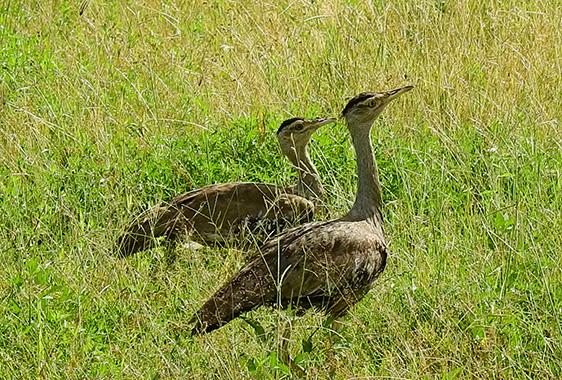
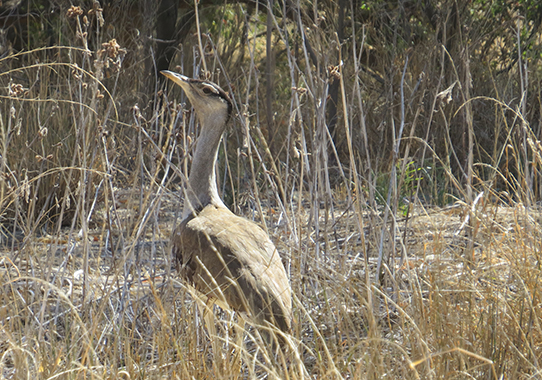
The Australian Bustard lives mainly in open landscapes, where its height and long legs allow it to watch for predators.
Typical habitats
- Grasslands
- Open savannas
- Shrublands
- Agricultural plains
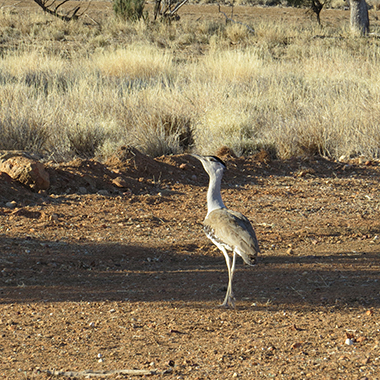
- Arid and semi-arid regions
Distribution in Australia
Today the species is most common in:
- Northern Territory
- Northern and western Queensland
- Western Australia
It has declined across southern and eastern Australia, where it was once widespread.
Bustards are often nomadic, moving long distances in response to rainfall and food availability.
Diet
The Australian Bustard is an omnivorous hunter and forager.
Common foods
- Grasshoppers and large insects
- Beetles and other invertebrates
- Small reptiles such as lizards
- Seeds and grains
- Berries and plant material
- Occasionally small mammals
They usually forage by walking slowly through grasslands, carefully scanning the ground for movement.
Longevity
Precise lifespan data for wild Australian Bustards is limited, but they are believed to live around 10–15 years in the wild, with some individuals potentially surviving longer in favourable conditions.
Large birds like bustards generally have slow reproductive rates, which means population recovery can take time when numbers decline.
Breeding Behaviour
The breeding season often depends on rainfall and local conditions, but commonly occurs between September and December in many regions.
Courtship display
Male bustards perform a dramatic display to attract females.
During this display the male:
- Inflates a large throat pouch
- Raises his tail
- Fluffs his white feathers
- Walks slowly while producing deep booming calls
This display makes the bird appear much larger and almost entirely white, a striking sight across open plains.
Nesting
Unlike many birds, bustards do not build a complex nest.
- The female lays one or two eggs
- Eggs are placed directly on the ground, usually among grass or low vegetation
Parental care
The female alone incubates the eggs and raises the chicks.
Incubation lasts about 23–28 days. The chicks are able to walk soon after hatching and follow their mother through the grasslands.
Interesting Facts
- The Australian Bustard is Australia’s heaviest bird capable of flight.
- Males can weigh more than double the weight of females.
- The species is related to bustards found in Africa, Europe and Asia.
- Their slow, deliberate walking style helps them conserve energy in hot environments.
- Bustards can fly long distances when searching for food or suitable habitat.
Cultural Significance
The Australian Bustard holds important cultural meaning for many Indigenous Australian communities.
For thousands of years it has been:
- A traditional food source
- Part of Dreaming stories and cultural knowledge
- Featured in Indigenous art and ecological understanding of landscapes
Traditional land management practices historically helped maintain the open habitats that bustards prefer.
Conservation Status
According to the IUCN Red List, the Australian Bustard is listed as:
Least Concern
However, in Australia the species has experienced significant regional declines, particularly in the south-east.
Threats
Key threats to the Australian Bustard include:
- Habitat loss from agriculture and land clearing
- Predation by introduced animals, especially foxes and feral cats
- Collisions with fences or vehicles
- Disturbance of nesting sites
- Illegal hunting in some areas
Because bustards lay very few eggs, populations can decline quickly when adult birds are lost.
What Can We Do to Help?
Protecting Australian Bustards depends largely on protecting the landscapes they rely on.
Helpful actions include
- Conserving native grasslands and open woodland
- Supporting sustainable land management
- Controlling invasive predators such as foxes and feral cats
- Protecting nesting areas during breeding season
- Supporting conservation programs in northern Australia
Greater awareness of the species also helps reduce accidental disturbance in areas where bustards still occur.
A Giant of the Australian Plains
With its towering height, powerful wings and dramatic breeding displays, the Australian Bustard remains one of the most impressive birds of the continent’s open landscapes. Seeing one stride across the grasslands or rise heavily into flight is a reminder of the vast ecosystems that once covered much of Australia.
Protecting those landscapes will help ensure that this remarkable bird continues to roam the plains for generations to come.
References
BirdLife Australia – Australian Bustard
https://birdlife.org.auIUCN Red List – Ardeotis australis
https://www.iucnredlist.orgAustralian Government Species Profile and Threats Database
https://www.environment.gov.auAustralian Museum – Australian Bustard
https://australian.museumCornell Lab of Ornithology – Birds of the World
https://birdsoftheworld.orgAtlas of Living Australia
https://www.ala.org.au
Photo Gallery