AUSTRALIAN DARTER
The Snake‑Necked Fisher: The Australian Darter
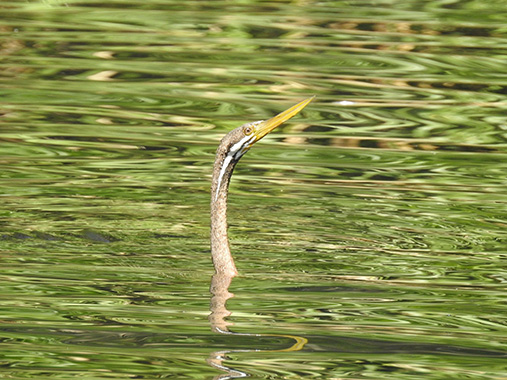
If you spend time around Australian rivers, lakes, and wetlands, you might notice a strange sight gliding silently through the water — a long, slender neck rising above the surface like a snake. This unusual bird is the Australian Darter (Anhinga novaehollandiae), sometimes called the Snakebird because of the way it swims.
When swimming, the body sits low in the water and often remains hidden, making the neck appear almost detached from the rest of the bird.
Closely related to cormorants, the Australian Darter is one of Australia’s most fascinating waterbirds. Elegant and patient, it is a highly specialised underwater hunter perfectly adapted for life beneath the surface.
What Does the Australian Darter Look Like?
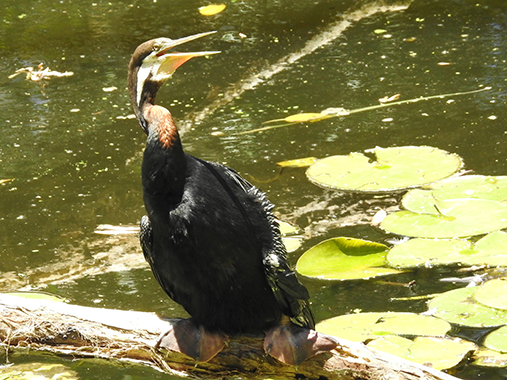
The Australian Darter has a distinctive and graceful appearance that sets it apart from other waterbirds.
- Size: Around 85–95 centimetres long with a wingspan reaching about 1.2 metres.
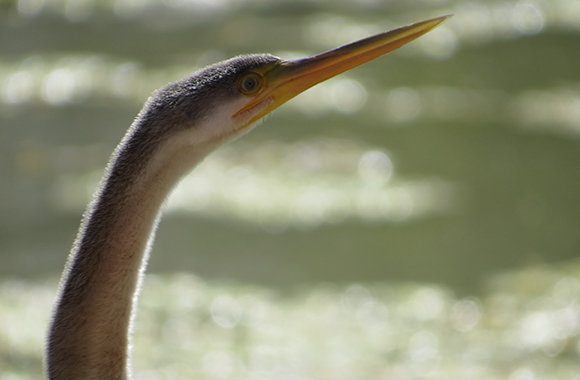
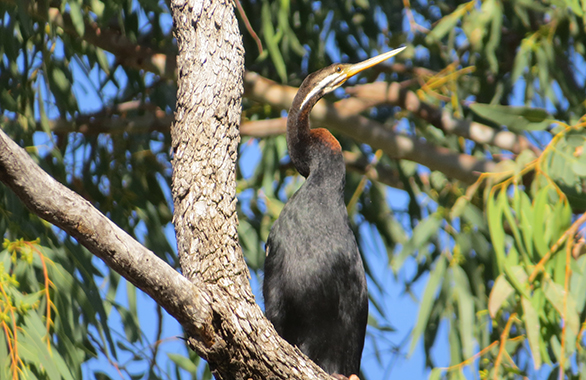
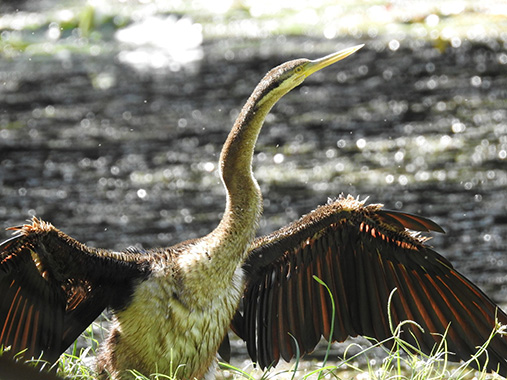
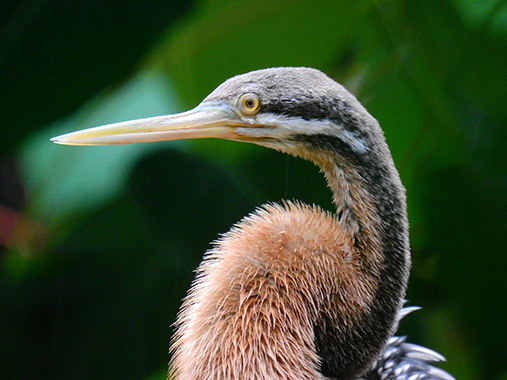
- Neck: Long and extremely slender, giving the bird its famous snake‑like appearance in the water.
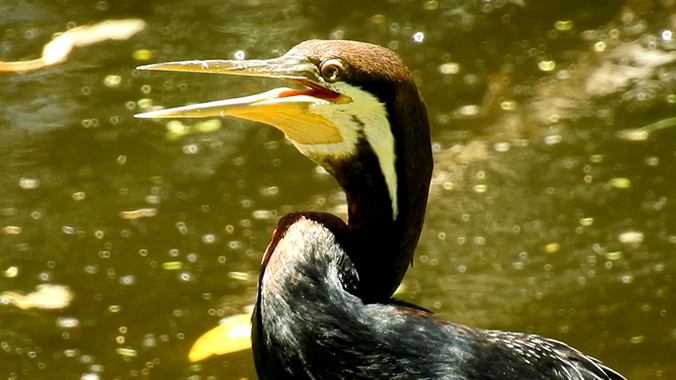
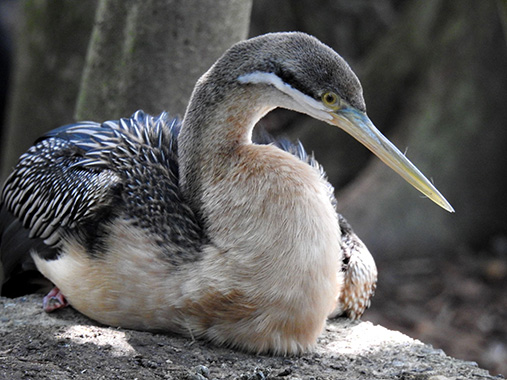
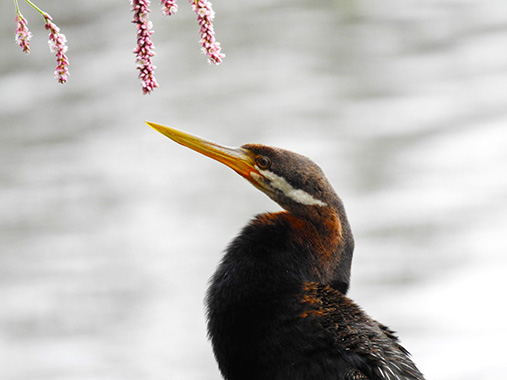
- Bill: A long, straight, dagger‑like bill designed for spearing fish.
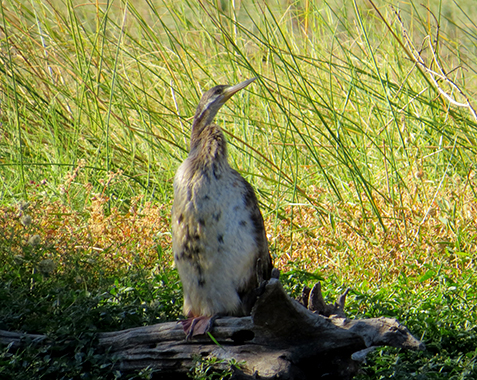
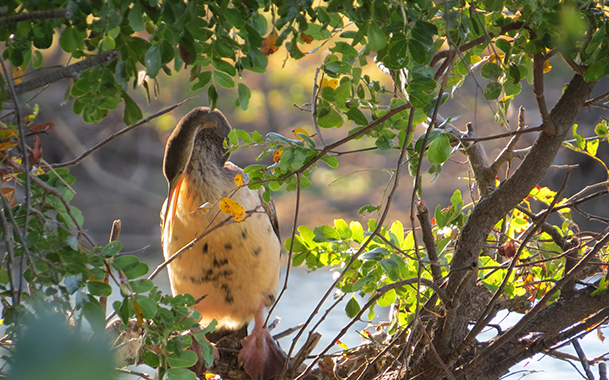
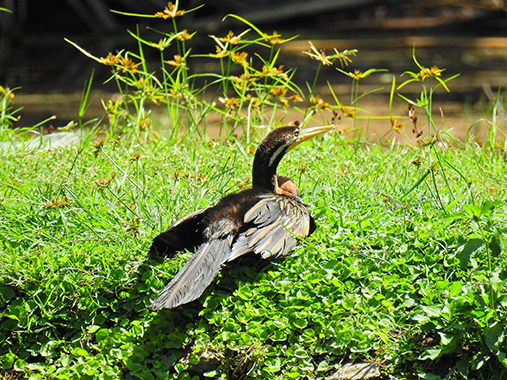
- Plumage: Females have a paler brown neck and upper chest with darker wings and body
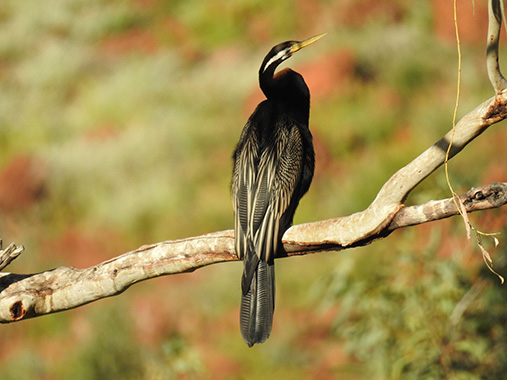
- Males are mostly black with glossy green and purple highlights and striking silvery streaks along the wings.
Habitat and Distribution
Australian Darters are found across much of mainland Australia and parts of New Guinea.
They prefer calm freshwater environments such as:
- rivers and billabongs
- lakes and reservoirs
- wetlands and swamps
- slow‑moving streams
- mangrove lagoons and estuaries
They are often seen perched on logs, branches, or fence posts near water where they can watch for prey.
Feeding Habits
The Australian Darter is an expert underwater hunter.
Their diet mainly consists of:
- fish
- frogs
- aquatic insects
- crustaceans
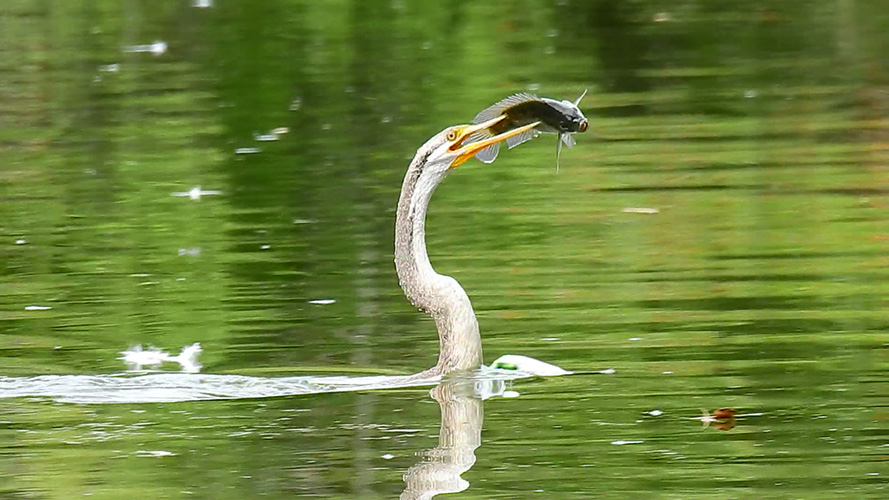
Unlike cormorants, which grab fish with their hooked bills, darters use their sharp spear‑like bill to stab prey underwater. Once they capture a fish, they return to the surface, toss it into the air, and swallow it headfirst.
Darters swim using powerful strokes of their webbed feet while their wings remain folded tightly against their body, allowing them to move quickly and quietly underwater.
Like cormorants, their feathers are not fully waterproof. This allows them to sink more easily when diving but means they must dry their wings afterward.
The Famous Wing‑Drying Pose
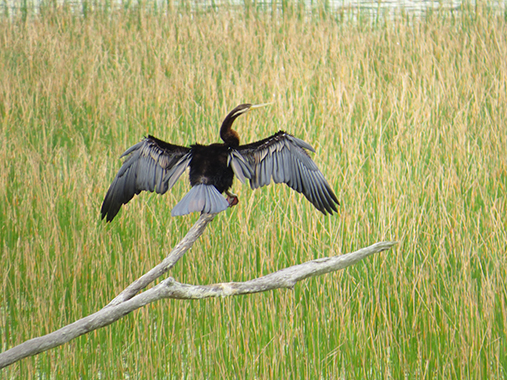
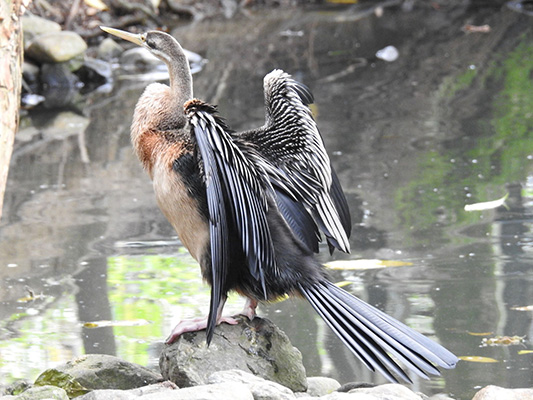
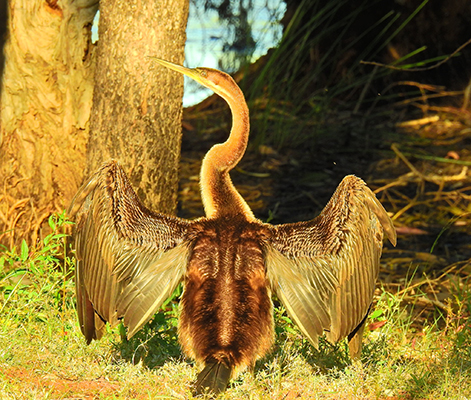
After diving, Australian Darters often climb onto a branch or rock and hold their wings wide open to dry in the sun.
This distinctive pose serves two purposes:
- drying their partially waterlogged feathers
- warming their bodies after swimming in cool water
It is one of the most recognisable behaviours of both darters and cormorants.
Breeding and Nesting
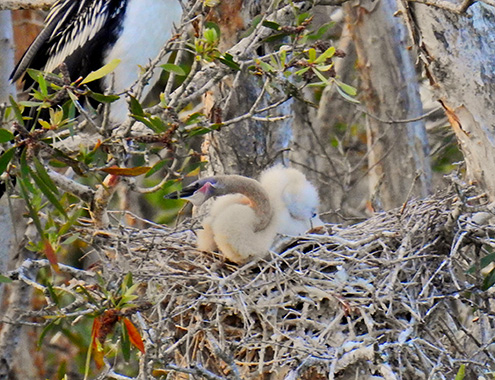
Australian Darters usually breed in colonies, often alongside other waterbirds such as cormorants, herons, and ibises.
- Nesting sites: trees growing in water, reedbeds, or flooded forests
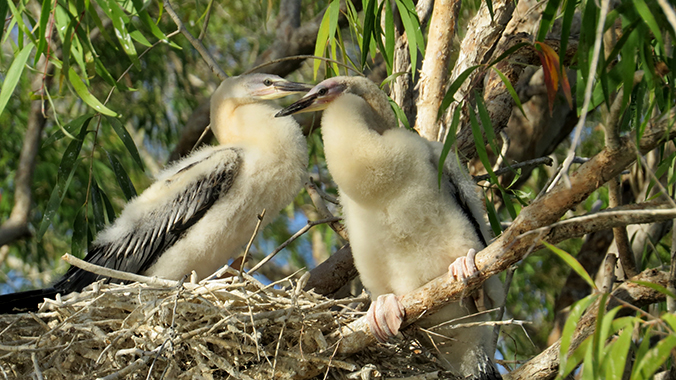
- Nest structure: stick platforms lined with leaves and reeds
- Eggs: typically 3–5 pale bluish eggs
- Incubation: about four weeks
- Parental care: both parents incubate the eggs and feed the chicks
Young darters remain in the nest until they are strong enough to fly, after which they gradually learn to dive and hunt.
Longevity
Australian Darters typically live around 10 to 15 years in the wild, although some birds have been recorded living more than 20 years under favourable conditions.
Their survival depends heavily on clean waterways and healthy fish populations.
Indigenous Connections
Across many Aboriginal cultures, waterbirds such as darters and cormorants are closely observed as indicators of the health of rivers and wetlands. Their presence reflects productive waterways where fish and aquatic life are abundant.
Because the Australian Darter is such a skilled fisher, it has long been recognised as part of the complex ecological balance of wetland systems that First Nations peoples have managed and understood for thousands of years.
As with many widespread Australian birds, traditional names vary between language groups and are not always widely documented in public sources. Recognising their role in the natural landscape helps acknowledge the deep knowledge and connection that Traditional Owners maintain with waterways and wildlife.
Conservation Status and Threats
The Australian Darter is currently classified as a species of Least Concern, and its population remains stable in many areas.
However, it faces several ongoing threats:
- wetland destruction and drainage
- pollution and poor water quality
- disturbance of breeding colonies
- entanglement in fishing line and nets
- declines in fish populations
Because darters rely heavily on healthy waterways, they are sensitive indicators of environmental change.
How You Can Help
Protecting wetlands helps protect darters and many other species.
You can help by:
- keeping rivers and lakes free of rubbish
- disposing of fishing line and tackle properly
- supporting wetland conservation projects
- avoiding disturbance near nesting colonies.
Why the Australian Darter Matters
The Australian Darter is one of the most elegant and specialised hunters in Australia’s waterways. Its snake‑like swimming style, spear‑like hunting technique, and dramatic wing‑drying pose make it one of the most distinctive birds in the country.
Where darters are found, it often means the water is still healthy enough to support life beneath the surface — a quiet sign that the ecosystem is working as it should.
Scientific References
- Australian Museum – Australian Darter species profile
- BirdLife Australia – Australian Darter information
- Pizzey, G. & Knight, F. The Field Guide to the Birds of Australia
- Department of Climate Change, Energy, the Environment and Water – Waterbird information
- Wikipedia – Anhinga novaehollandiae (Australian Darter)
Photo Gallery