BLACK BITTERN
The Shadow of the Wetlands: The Black Bittern
If you find yourself exploring the dense, shaded edges of an Australian wetland at dusk, you might hear a deep, resonant booming echoing across the water,. Yet, spotting the bird making the sound is a true challenge. Enter the Black Bittern (Ixobrychus flavicollis)—one of Australia’s most secretive and beautifully adapted waterbirds.
Unlike the towering, highly visible White Egrets that patrol the open shallows, the Black Bittern is a master of stealth. Favouring the dense, tangled cover of paperbark swamps, coastal mangroves, and tree-lined creeks, this elusive native hunter is a true prize for any birdwatcher.
A Master of Disguise: What Does It Look Like?
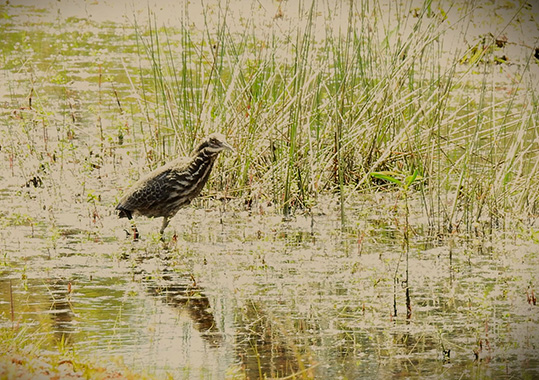
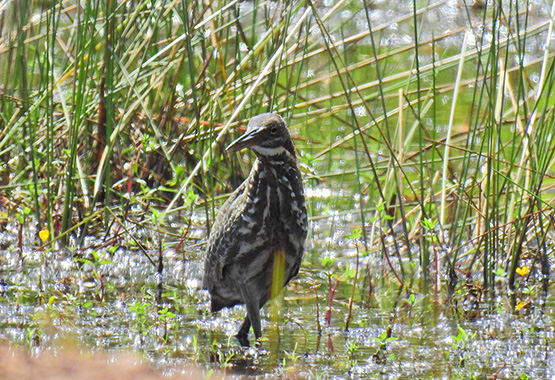
To spot a Black Bittern, you have to look closely into the shadows of the riverbank. They are a medium-sized heron, standing roughly 58 to 66 centimetres tall.
- The Male: The males are striking, featuring a dark, sooty-black to dark grey head and back that often shimmers with a subtle blue sheen in the right light. Their most distinctive feature is a brilliant, pale-yellow stripe that runs down the sides of their head and neck, bordering a heavily streaked brown and white throat,.
- The Female: The females are slightly paler and browner, trading the stark black back for softer tones and featuring a warm, yellowish wash across their underparts,.
- The Bill and Legs: Both sexes boast a long, dagger-like bill—often dark on top with a pale green or purple hue underneath—perfectly designed for spearing aquatic prey, supported by dark, sturdy legs,.
The Wetland Cycle: Breeding and Longevity
The life of the Black Bittern is completely intertwined with the health of heavily vegetated waterways.
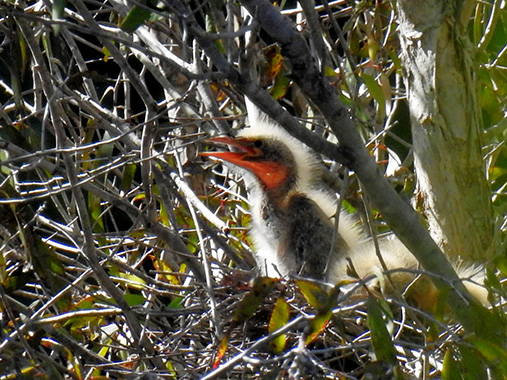
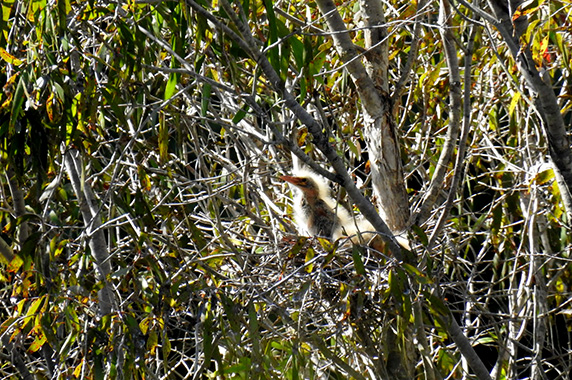
- Hidden Nurseries: While many herons breed in massive, noisy colonies, the Black Bittern is generally a solitary nester. During the breeding season (typically between September and April), a pair will construct a loose, shallow platform nest out of sticks and woven reeds,. Crucially, they build these nests high up in the forks of leafy branches overhanging the water, providing excellent protection from ground predators.
- Shared Parenting: The female lays a clutch of between three to five eggs,. Both the male and the female share the dedication of incubating the eggs and tirelessly rearing the young chicks until they are ready to fledge.
- Longevity: Because of their incredibly secretive nature, tracking their exact lifespan in the wild is challenging. However, their average generation length is estimated to be around 4 to 5 years,, and with healthy habitat and an absence of predators, individuals can reach between 8 to 10 years of age.
Fascinating Facts: Night Fishers and the “Bittern Stance”
- The Bittern Stance: The Black Bittern has an incredible defence mechanism. If they are startled by a predator or a passing human, they don’t immediately fly away. Instead, they stretch their body completely vertical and point their long bill straight up at the sky,. Because of the vertical yellow and brown streaks on their neck, they instantly blend in to look exactly like a cluster of upright reeds swaying in the breeze!
- Creatures of the Night: While they can occasionally be seen foraging during the day, they are primarily crepuscular and nocturnal hunters,. They use the cover of dusk and darkness to slowly stalk their prey, feeding on frogs, small fish, snails, freshwater shrimp, and dragonflies.
- The Booming Call: They are far more often heard than seen. During the breeding season, the male produces a loud, repetitive, and deeply resonant cooing or booming call to attract a mate and establish territory,,.
Conservation Status and Environmental Threats
Globally, the Black Bittern is classified as a species of Least Concern due to its wide distribution across Asia,. However, the story within Australia is deeply concerning.
Because they rely so heavily on undisturbed, heavily vegetated river edges, they are incredibly vulnerable to habitat destruction,. They are currently listed as Vulnerable in New South Wales,, and Critically Endangered in Victoria. Tragically, due to swamp drainage and rising river salinity, they have not been recorded breeding in the south-west of Western Australia for over 50 years and are largely considered locally extinct in that region,.
Their biggest local threats include the clearing of riparian (riverbank) vegetation, the trampling of creek beds by livestock, and the introduction of feral predators like foxes and cats, which easily raid their nests for eggs and juveniles.
What Can We Do to Help the Species?
Protecting the Black Bittern means fiercely protecting the quiet, scrubby edges of our waterways. Here is how we can all help ensure their booming calls continue:
- Protect Riparian Zones: Support local landcare initiatives that focus on revegetating riverbanks and fencing off natural waterways from cattle and sheep. This ensures the dense overhanging vegetation the bitterns need to nest remains undisturbed.
- Keep Cats Contained: Feral and roaming domestic cats are devastating to ground and low-branch nesting birds,. Keeping your pet cat securely indoors or in an outdoor enclosure directly protects vulnerable wetland chicks.
- Advocate for Wetlands: Oppose the unnecessary draining of local swamps and coastal wetlands,. Healthy, vegetated wetlands are essential not only for the bitterns but for the frogs and fish they rely on to survive.
Scientific References
- Australian Museum. Black Bittern. Animal Species Profiles.
- BirdLife Australia. Black Bittern – Conservation and Habitat.
- Department of Environment, Land, Water and Planning (Victoria). Threatened Species Assessment: Dupetor flavicollis (Black Bittern).
- HeronConservation. Black Bittern – Ixobrychus flavicollis.
- NSW Environment, Energy and Science. Black Bittern – profile.
Photo Gallery