BLACK CURRAWONG
Black Currawong- Tasmanian Currawong
Strepera fuliginosa
Introduction
The Black Currawong, also known as the Tasmanian Currawong, is a striking forest bird found only in Tasmania and several nearby islands. With its deep black plumage, bright yellow eyes, and ringing calls echoing through cool mountain forests, this species is one of Tasmania’s most recognisable birds. Although related to butcherbirds and Australian magpies in the Artamidae family, the Black Currawong has its own distinctive personality—bold, curious and highly intelligent.
Often seen walking along forest edges, farmland, and alpine clearings, these birds are opportunistic feeders that play an important ecological role by controlling insects and cleaning up carrion.
What the Black Currawong Looks Like
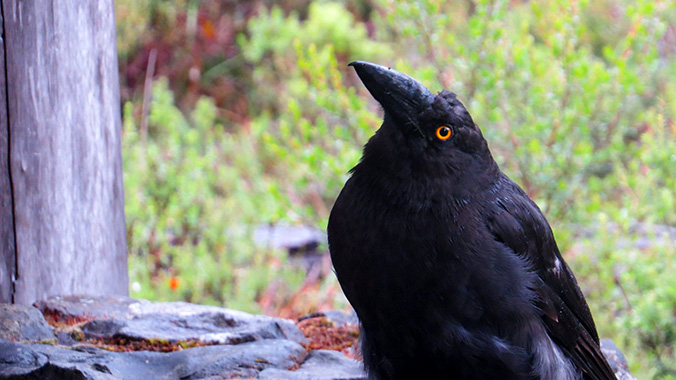
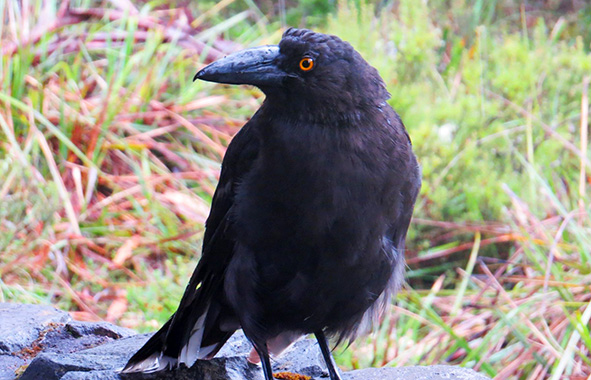
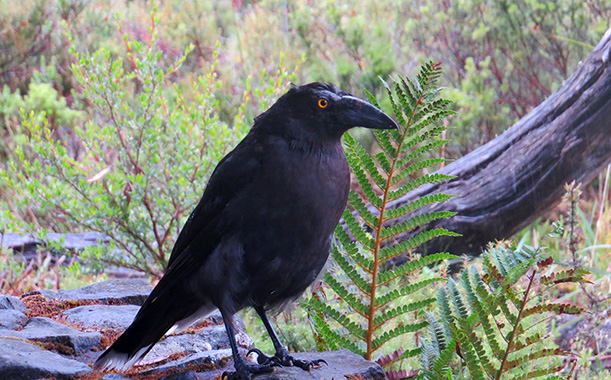
The Black Currawong is a large, crow‑like bird with a powerful build.
Key features include:
- Length: about 50–52 cm
- Wingspan: around 80 cm
- Weight: approximately 350–450 grams
- Plumage: glossy black feathers over the entire body
- Eyes: bright yellow to pale golden
- Tail: broad with distinctive white patches visible when flying
- Bill: strong and slightly hooked, adapted for an omnivorous diet
Juvenile birds appear duller than adults and have darker eyes that gradually become bright yellow as they mature.
What the Black Currawong Sounds Like
The calls of the Black Currawong are loud, musical, and far‑carrying across Tasmanian forests.
Common vocalisations include:
- ringing “kar‑week… kar‑week” calls
- deep “karr‑waa” notes
- softer chattering or conversational sounds between pairs
These vocalisations often echo across valleys and are most frequently heard during the breeding season when birds are defending territory.
Habitat and Distribution
Black Currawongs are endemic to Tasmania, meaning they occur nowhere else in the world.
They inhabit:
- temperate rainforests
- wet eucalyptus forests
- alpine woodlands
- farmland and rural landscapes
- forest edges and mountain regions
During colder months, some birds move to lower elevations or farmland in search of food.
Diet
The Black Currawong is an omnivore and opportunistic feeder.
Its diet includes:
- insects and beetles
- spiders and other invertebrates
- small reptiles and nestling birds
- carrion (dead animals)
- berries and fruits
- seeds and grains
Their scavenging habits help clean the environment by removing carcasses.
Breeding
The breeding season generally occurs from September to January.
Breeding behaviour includes:
- pairs forming strong territories
- large stick nests built high in trees
- nests lined with softer materials such as bark fibres and grass
Typical breeding details:
- Clutch size: usually 2–3 eggs
- Egg colour: pale grey or greenish with darker markings
- Incubation: about 19–21 days, mainly by the female
- Both parents feed and protect the chicks
Young birds remain dependent on their parents for several weeks after leaving the nest.
Longevity
Precise longevity data in the wild is limited, but currawongs are known to be relatively long‑lived birds.
Estimated lifespan:
- Wild: around 10–15 years
- Captivity: potentially longer
Like other intelligent corvid‑like birds, they may live longer than many similar‑sized birds.
Interesting Facts
- The Black Currawong is the largest currawong species in Australia.
- It is endemic to Tasmania, making it a unique part of the island’s wildlife heritage.
- Bright yellow eyes give the species a striking and slightly intense appearance.
- These birds are highly intelligent and adaptable, capable of learning quickly and exploiting new food sources.
- Currawongs play an important role in ecosystems as both predator and scavenger.
- The species has several subspecies across Tasmania, including birds found on King Island and Flinders Island.
Conservation Status
- IUCN Red List: Least Concern
- Australian status: Not currently threatened
The species remains relatively common across Tasmania, although local pressures can affect populations.
Threats
Despite its stable status, the Black Currawong faces several potential threats:
- Habitat loss from land clearing and forestry
- Vehicle collisions when feeding on roadkill
- Secondary poisoning from pest control baits
- Climate change, which may alter alpine and forest habitats
- Human persecution, particularly in agricultural areas where they may occasionally take eggs or chicks of poultry
What We Can Do to Help
Protecting the Black Currawong also helps protect Tasmania’s forest ecosystems.
Actions people can take include:
- Protect and restore native forest habitats
- Avoid using harmful poisons or baits that can affect wildlife
- Drive carefully in wildlife‑rich areas to reduce collisions
- Support conservation programs protecting Tasmanian forests
- Encourage wildlife‑friendly land management practices on farms
Maintaining healthy forests ensures this intelligent bird continues to echo its ringing calls through Tasmania’s landscapes.
References
BirdLife Australia
https://birdlife.org.au
IUCN Red List – Strepera fuliginosa
https://www.iucnredlist.org
Birds in Backyards – Currawongs
https://www.birdsinbackyards.net
Tasmanian Government – Wildlife Species Information
https://www.naturalvaluesatlas.tas.gov.au
Handbook of Australian, New Zealand and Antarctic Birds (HANZAB)
Australian National Wildlife Collection – CSIRO
https://www.csiro.au
Photo Gallery