BLACK-FACED CORMORANT
Black-faced Cormorant
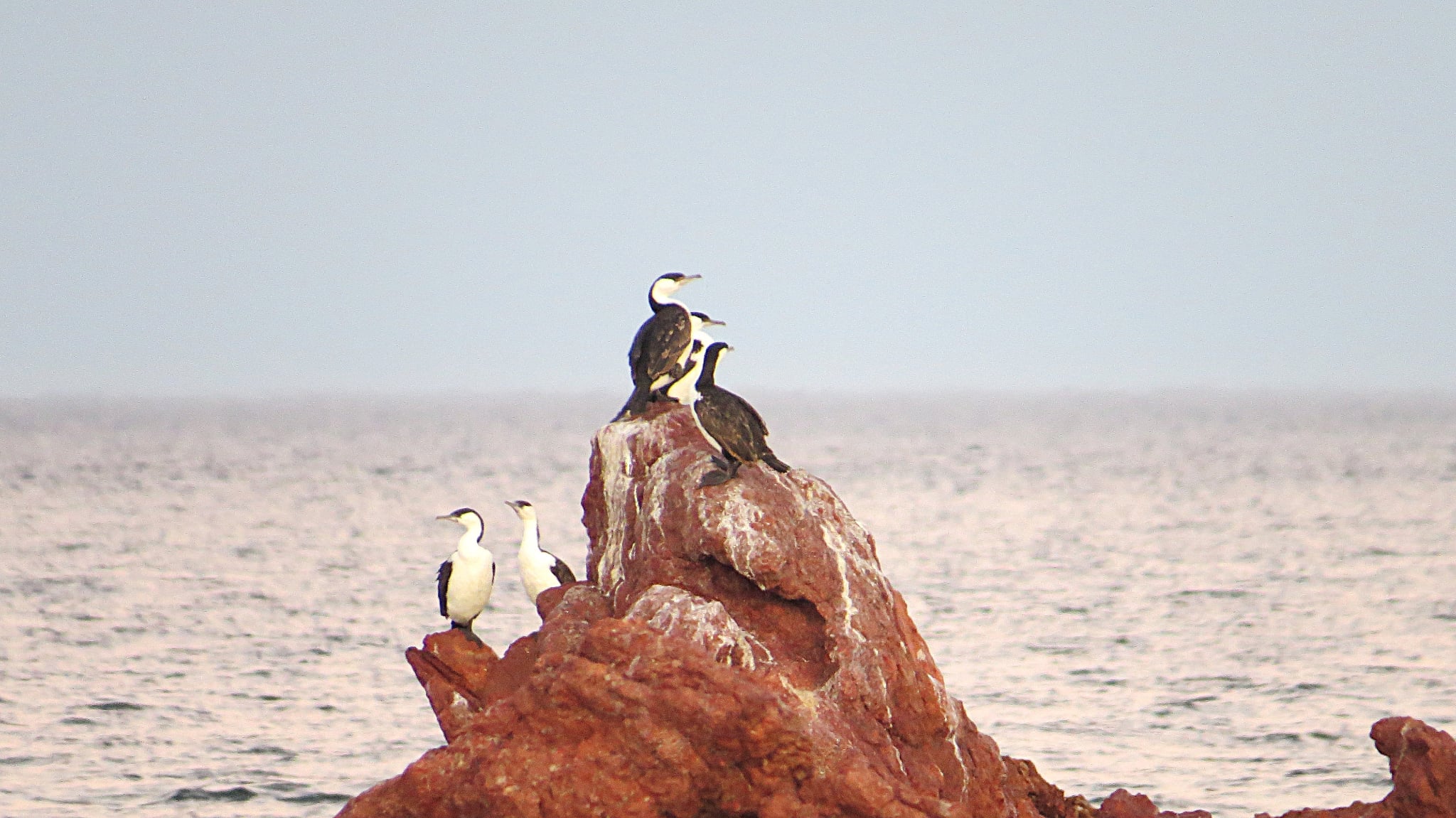
If you love exploring the rugged, windswept coastlines of southern Australia, you have likely shared the salty air with a true ocean specialist. Perched high on sea-battered rocky outcrops, the Black-faced Cormorant (Phalacrocorax fuscescens)—sometimes known as the Black-faced Shag—is a magnificent marine hunter.
Unlike many other cormorants that happily swim in freshwater rivers and suburban lakes, this bird is an Australian endemic that absolutely refuses to leave the ocean. Found exclusively along our southern and south-western shores, from Western Australia across to Tasmania and southern New South Wales.
Spot the Difference: What Does It Look Like?
To identify a Black-faced Cormorant, you need to look closely at its head, as they are very frequently confused with the closely related Pied Cormorant!
- The Black Mask: They are a medium-to-large seabird, standing about 65. The easiest way to identify them is their distinct “mask.” The black feathers of their crown and back extend entirely over and below their eyes, seamlessly blending into the dark, bare skin at the base of their grey bill. (In contrast, the Pied Cormorant has white feathers above its eye and a bright yellow face patch!).
- A Tuxedo of Feathers: Their upper body, wings, and tail are a sleek, glossy black that shines with a subtle metallic blue or green tint in the bright coastal sun. Their underparts, from the chin right down to the tail, are a brilliant, snow-white.
- The Eyes: If you are lucky enough to view them through binoculars, you will be mesmerized by their eyes, which are a striking, piercing blue-green.
The Ocean Cycle: Breeding and Longevity
The Black-faced Cormorant’s lifecycle is tied to the dramatic, rocky offshore islands of the wild Southern Ocean.
- Rocky Nurseries: Unlike river-dwelling cormorants that nest in trees, these marine specialists nest exclusively on the ground. Forming noisy, tightly packed colonies on sheer sea cliffs and isolated rocky islands, they build mound-shaped nests out of driftwood, marine sponges, and seaweed, cementing it all together with their own guano (droppings).
- Shared Parenting: Depending on the region and the abundance of fish, they can breed at almost any time of the year. The female usually lays a clutch of two to three pale blue eggs. Both the male and female are highly dedicated parents, taking turns to incubate the eggs for around a month and constantly diving into the cold surf to catch food for the growing chicks.
- Longevity: Surviving the treacherous Southern Ocean is no easy feat, but these tough seabirds are built for endurance. In the wild, they typically live for around 10 to 15 years, with some banded individuals recorded reaching over 20 years of age!
Fascinating Facts: Benthic Hunters and Shags
- The Benthic Diver: The Black-faced Cormorant is a “benthic” forager, meaning it actively hunts along the bottom of the seafloor. Using their powerful, webbed feet for propulsion, they dive deeply through the kelp forests to snap up bottom-dwelling fish like wrasse, whiting, and leatherjackets.
- Cormorant or Shag? You will often hear this bird called a “Black-faced Shag.” Historically, the term “cormorant” was used for species that were mostly black, while “shag” was used for species that featured a crest on their head or were strictly marine. Today, the terms are practically interchangeable!
- Endemic to Australia: While many seabirds are global nomads, the Black-faced Cormorant is a true homebody. They are entirely endemic to Australia and do not migrate, spending their entire lives hunting and breeding along our southern shores.
Conservation Status and Environmental Threats
Nationally, the Black-faced Cormorant is classified as a species of Least Concern. Because they nest on rugged, inaccessible offshore islands, their breeding colonies are naturally well-protected from land-based feral predators like foxes and cats.
However, because they are so heavily reliant on coastal marine zones, they face significant ocean-based threats. They are highly vulnerable to localized marine pollution, particularly oil spills, which destroy the waterproofing of their feathers and cause fatal hypothermia. Furthermore, as deep-diving hunters, they frequently drown after becoming entangled in commercial gillnets, submerged crab pots, and discarded recreational fishing lines.
What Can We Do to Help the Species?
Protecting our coastal specialists requires us to be mindful custodians of the ocean. Here is how you can help ensure their colonies continue to thrive:
- Dispose of Fishing Tackle Safely: Never cast old fishing line, hooks, or bait bags into the ocean or leave them on the jetty. A diving cormorant cannot see clear nylon line underwater, making it a deadly, invisible trap.
- Boat Responsibly: If you are out on the water exploring offshore islands, keep a respectful distance from rocky outcrops where cormorants are nesting or resting. Startling a colony can cause adults to panic and accidentally knock their own eggs or chicks off the steep cliff edges.
- Support Marine Sanctuaries: Advocate for the protection of local marine parks and sustainable fishing practices. Healthy, well-managed coastal waters ensure there is always a plentiful supply of fish for these beautiful seabirds to hunt.
Scientific References
- Australian Museum. Black-faced Cormorant. Animal Species Profiles.
- BirdLife Australia. Black-faced Cormorant Profile and Marine Conservation.
- Department of Natural Resources and Environment Tasmania. Seabirds: Black-faced Cormorant.
- Pizzey, G., & Knight, F. (2012). The Field Guide to the Birds of Australia. HarperCollins Publishers.
- Wikipedia Contributors. Black-faced cormorant. Wikipedia, The Free Encyclopedia.
Photo Gallery