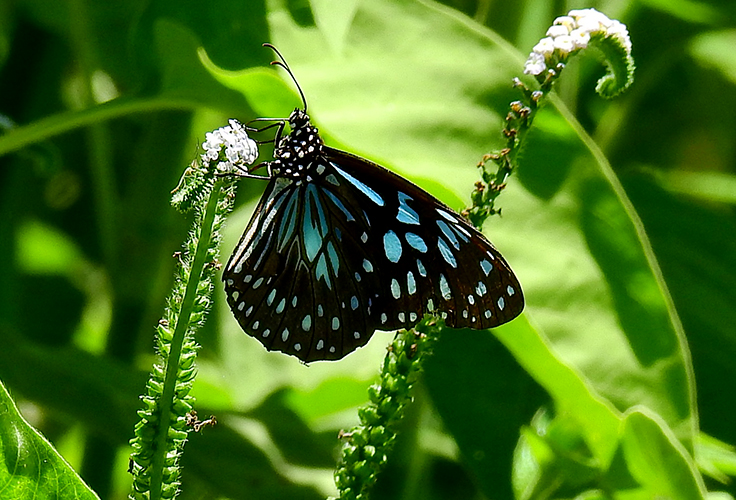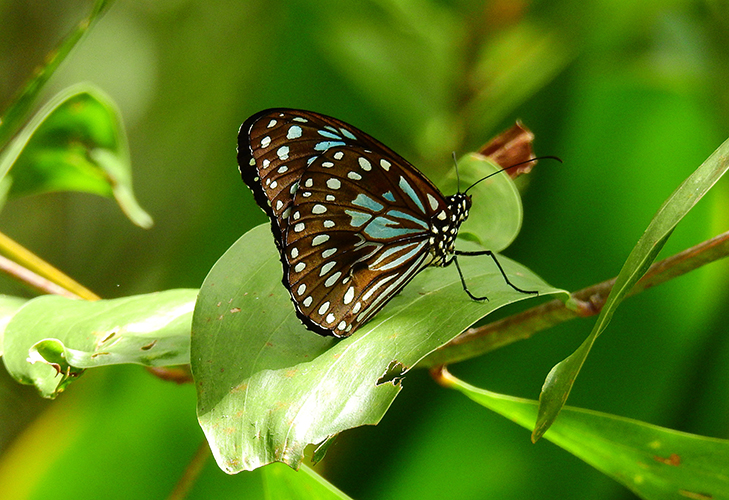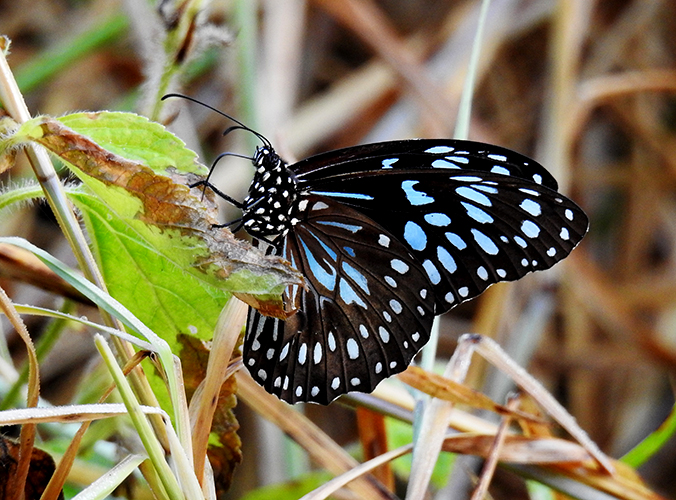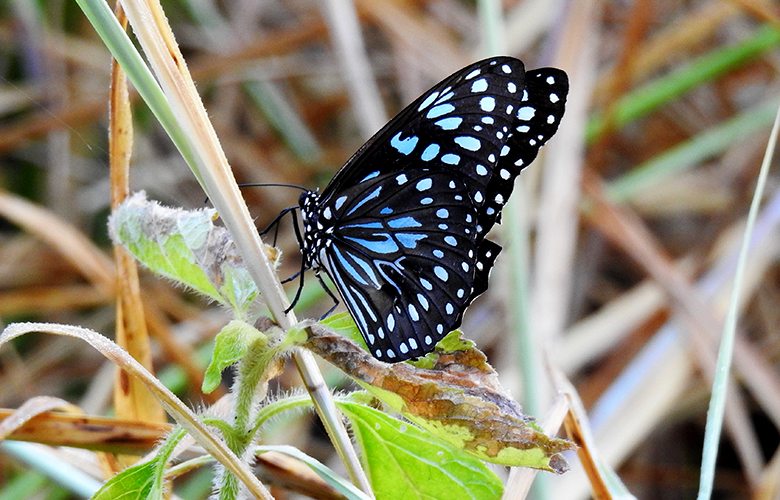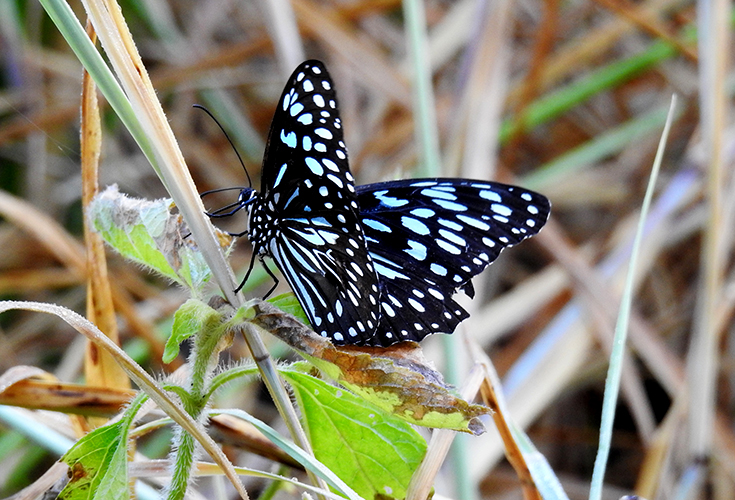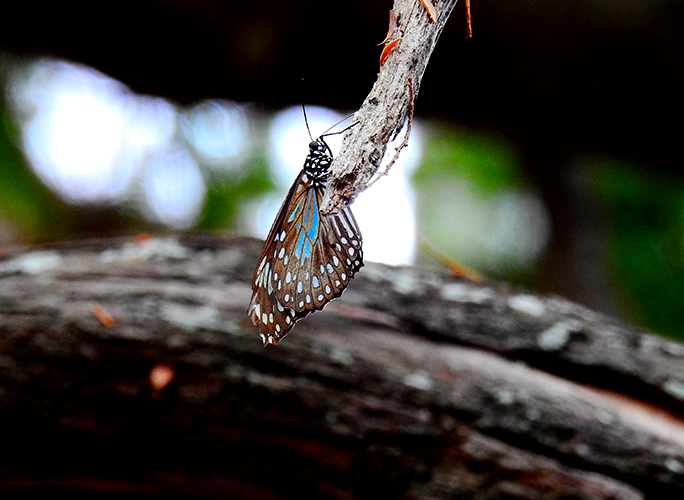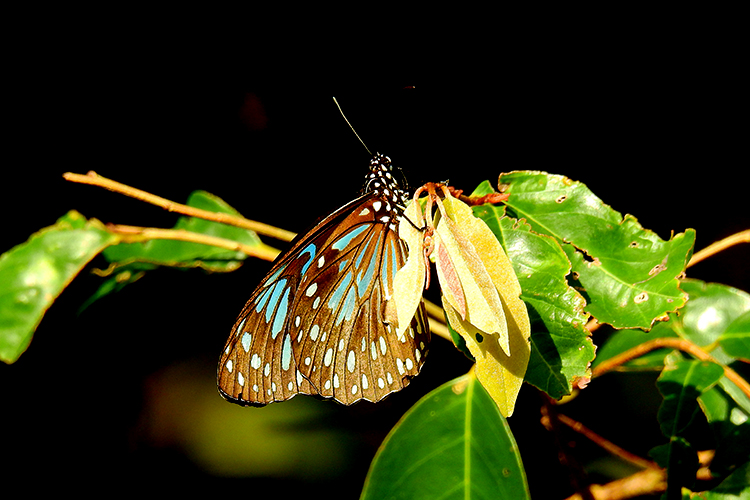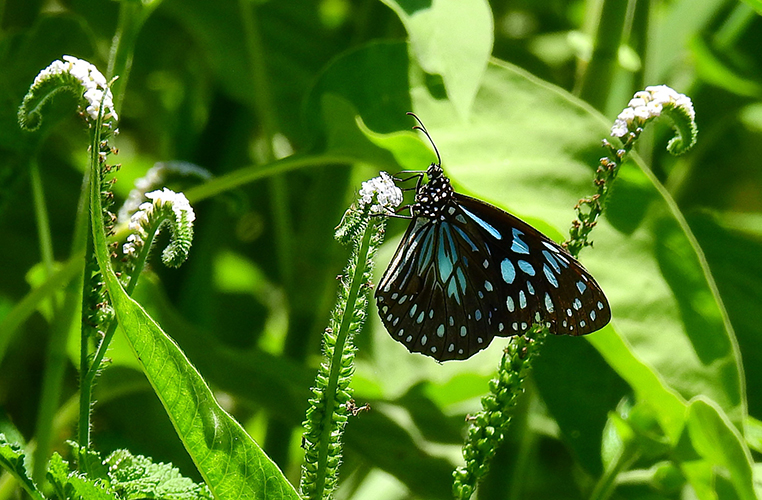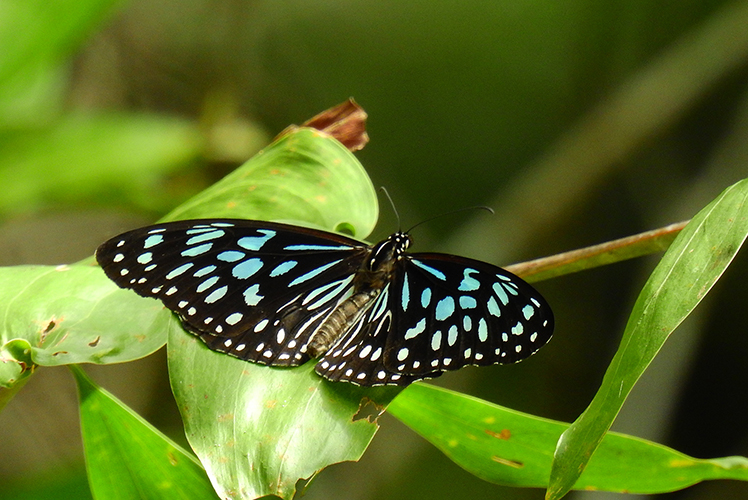
Blue Tiger butterfly
Blue Tiger Butterfly
Imagine standing on a quiet, sun-dappled beach in subtropical Queensland when the air suddenly fills with thousands of gliding, blue-flecked wings. You are witnessing the mass migration of the Blue Tiger Butterfly (Tirumala hamata). Sometimes known as the Blue Wanderer, this spectacular insect is one of Australia’s most celebrated coastal travellers, renowned for its epic journeys and complex chemical ecology.
What Does It Look Like?
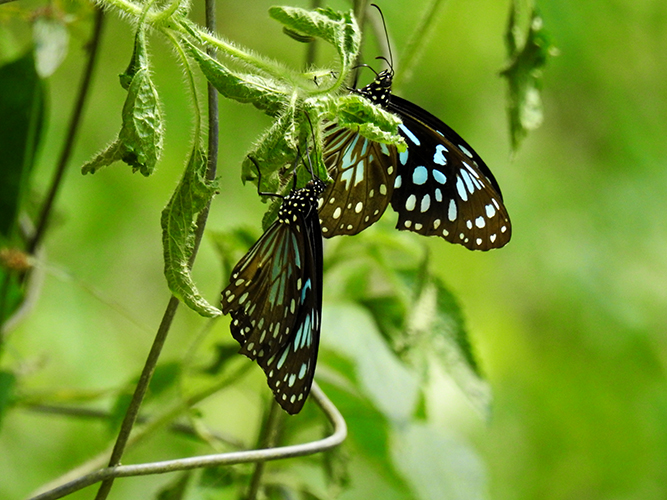
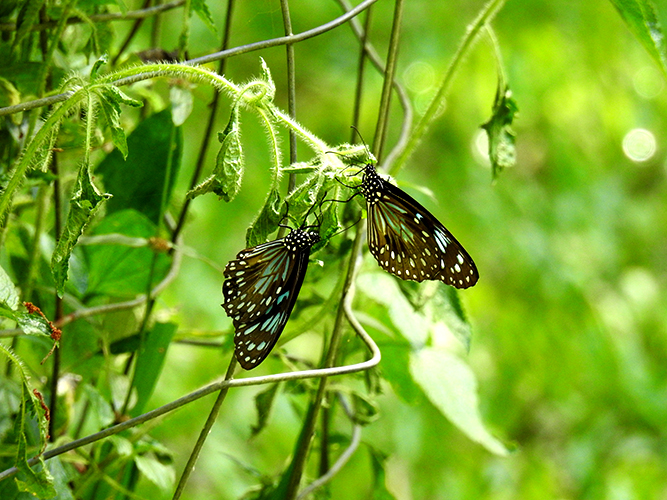
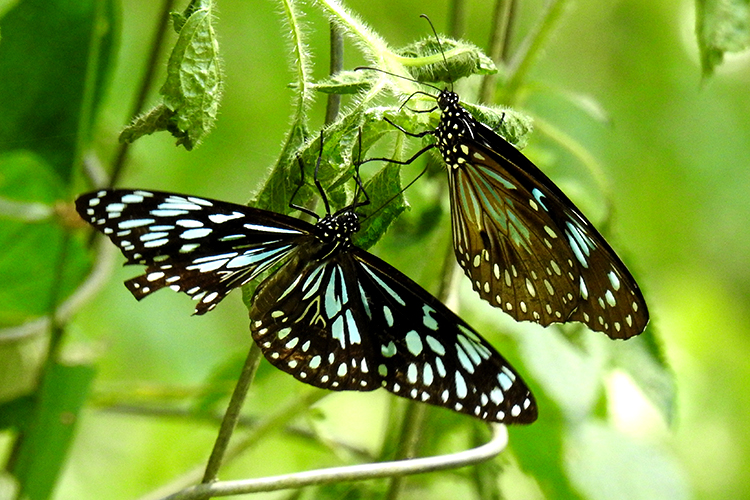
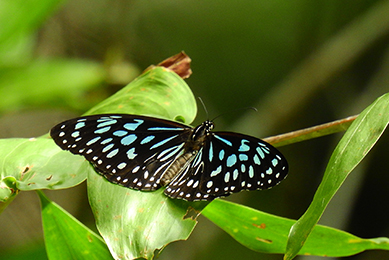
The Blue Tiger is a large, elegant butterfly with a wingspan stretching between 70 and 75 millimetres (sometimes reaching up to 95 millimetres). Its upper wings are a deep, velvety black, intricately patterned with elongated, semi-transparent (hyaline) pale blue streaks and spots. This stained-glass effect allows it to blend perfectly into the dappled shade of the rainforest canopy or coastal scrub.
The visual magic doesn’t start with the adult, however. The Blue Tiger’s earlier life stages are equally striking:
- The Eggs: Females lay tiny, pale yellow, bullet-shaped eggs that are heavily pitted and measure just 2 millimetres high.
- The Caterpillar: The larvae are a smoky grey to greenish-blue with stark black and white bands, highlighted by a bold orange stripe running down their sides. They also sport two pairs of long, fleshy black tentacles (filaments).
- The Pupa: Before its final transformation, the caterpillar forms a shiny, jade-green chrysalis decorated with ten metallic spots that start as brilliant gold and gradually turn to silver.
Breeding and Longevity
Unlike many butterfly species whose adult lives are a brief flash of colour lasting mere days, the Blue Tiger is built for endurance.
- Remarkable Longevity: The adult Blue Tiger is one of our longest-living butterflies, capable of surviving for an astonishing six months! This extended lifespan allows them to overwinter in large, sheltering clusters in shady coastal gullies.
- Breeding Cycle: Their breeding is closely tied to the flush of new growth on their host plants, often triggered by heavy spring and summer rains. Females lay their eggs singly on the young, tender shoots of various native vines. The complete cycle from egg to adult takes roughly a month, but during dry spells, females will halt breeding entirely and join mass aggregations to wait for better conditions.
Fascinating Facts About the Blue Tiger
- Epic Migrations: In Australia, Blue Tigers are famous for their mass migrations. Following summer rains, millions of these butterflies travel down the east coast from North Queensland into northern New South Wales, flying with a slow, graceful, gliding motion, often just a metre or two above the ground.
- Chemical Warfare: The caterpillars feed on toxic plants, particularly the Corky Milk Vine (Secamone elliptica), absorbing poisonous compounds called Pyrrolizidine Alkaloids (PAs). These toxins are passed right through to the adult butterfly, making them incredibly bitter and toxic to predatory birds.
- Perfume and Romance: The male Blue Tiger takes courtship to another level. He will actively scratch the leaves of specific alkaloid-rich plants—like the Monkey Rope Vine (Parsonsia straminea) or Blue Heliotrope—to drink the sap. He then converts these chemicals into a potent sex pheromone. During courtship, he releases this perfume from special scent pouches on his wings, dusting the female using unique, brush-like appendages at the tip of his abdomen known as “hair pencils”.
Conservation Status and Environmental Threats
Currently, the Blue Tiger Butterfly is considered common and is not officially listed as a threatened species. Because of their wide distribution across Southeast Asia and down the Australian coast, their overall population remains robust.
However, they are facing increasing localised threats. Like so many native species, their biggest hurdle is habitat destruction. The clearing of coastal land, littoral rainforests, and saltwater marshlands directly destroys the specific microclimates and native vines the Blue Tiger relies on to breed. Additionally, extreme weather events like severe, prolonged droughts can heavily impact their breeding cycles and the availability of their food plants.
What Can We Do to Help the Species?
Creating a welcoming environment for the Blue Tiger is incredibly rewarding. Here is how you can support their epic journeys in your own backyard:
- Plant the Right Vines: To truly help the Blue Tiger breed, you need to provide their caterpillar host plants. If you live in a suitable climate (Queensland or northern NSW), planting native vines like the Corky Milk Vine (Secamone elliptica) or the Monkey Rope Vine (Parsonsia straminea) is the absolute best way to support them.
- Create Shaded Resting Spots: During their migration and overwintering periods, Blue Tigers look for cool, shaded, and damp areas to rest. Maintaining dense, bushy corners in your garden, especially near water sources or in gullies, gives them a safe haven.
- Go Chemical-Free: Because the caterpillars rely on a very specific diet, using pesticides or herbicides in the garden will easily wipe out the next generation. Embrace natural garden management to ensure these weary travellers have a safe place to land.
Scientific References
- Braby, M. F. (2000). Butterflies of Australia: Their Identification, Biology and Distribution. CSIRO Publishing.
- Brisbane Insects and Spiders. Blue Tiger Butterfly – Tirumala hamata.
- Finia – Fraser Island Natural Integrity Alliance. Winged wanderers migrating north through the Great Sandy Area.
- Jenkinson, W. (2015). Life history notes on the Blue Tiger, Tiramula hamata. Butterflies and Other Invertebrates Club.
- Land for Wildlife (South-East Queensland) / The Echo. Butterflies on the move: Tirumala hamata.
Photo Gallery