BUFF-BANDED RAIL
Buff‑banded Rail
Among the reeds and grassy edges of Australia’s wetlands lives a bird that is both secretive and surprisingly bold. The Buff‑banded Rail (Gallirallus philippensis) is one of the most widespread members of the rail family and is often heard before it is seen. With its striking chest band and curious behaviour, this adaptable bird has learned to thrive in a variety of environments, from coastal marshes to suburban parks.
Although rails are usually shy birds that hide in thick vegetation, the Buff‑banded Rail is often more confident than its relatives and may wander out into open areas while searching for food.
What Does the Buff‑banded Rail Look Like?
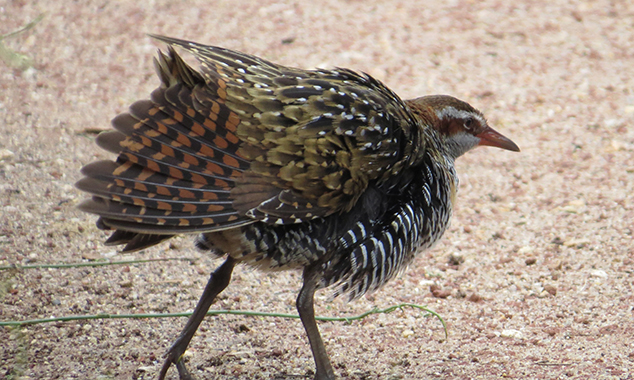
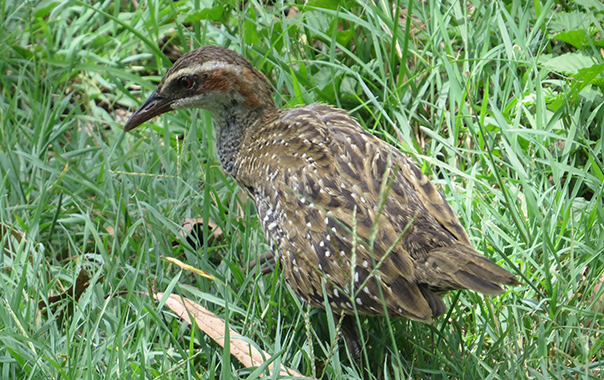
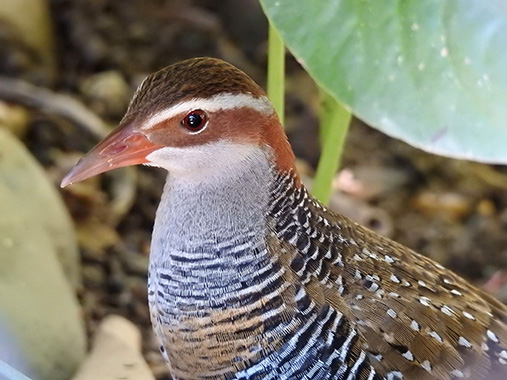
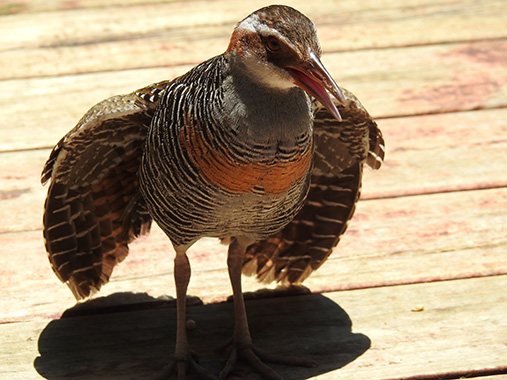
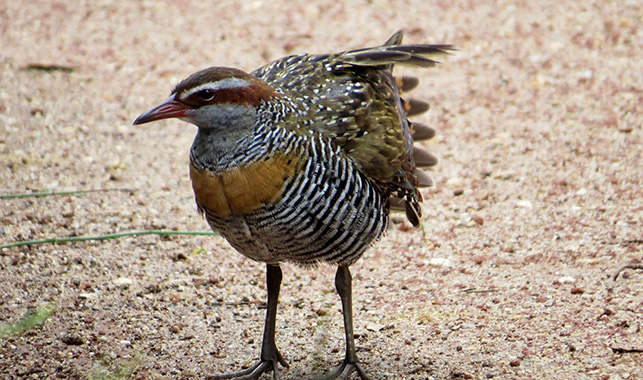
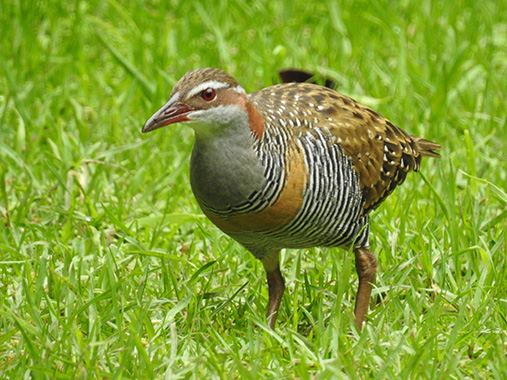
The Buff‑banded Rail is a medium‑sized rail measuring 28–33 centimetres in length, with a strong body and long legs designed for walking through dense vegetation.
Key features include:
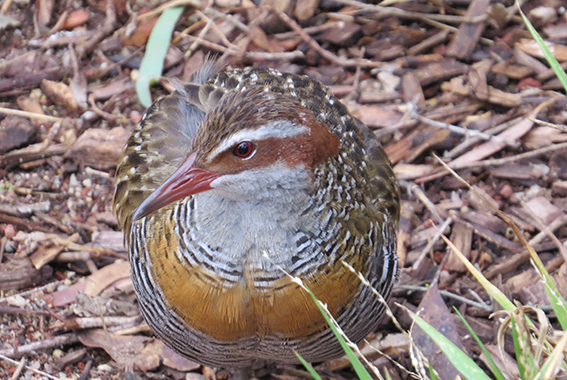
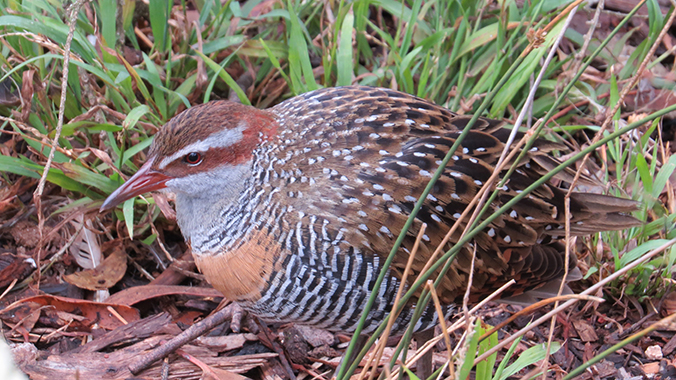
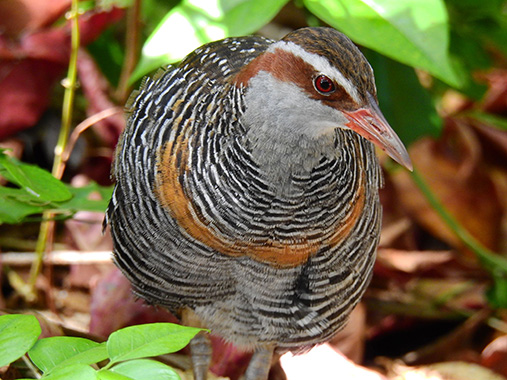
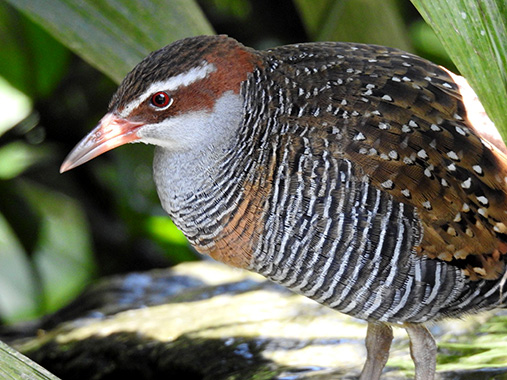
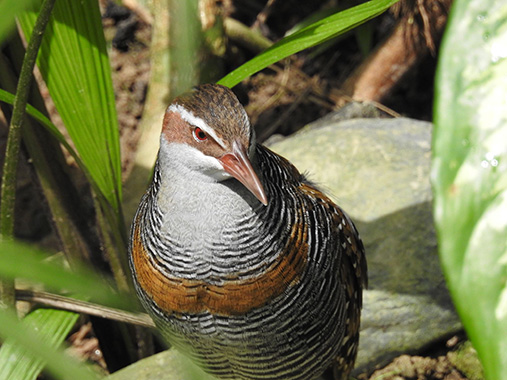
- Buff‑coloured band: A distinctive pale buff band stretches across the chest, giving the species its name.
- Upper body: Brown and black with fine streaking and mottled markings.
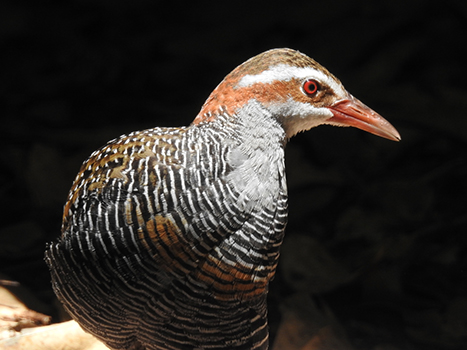
- Face: Greyish with a darker eye stripe.
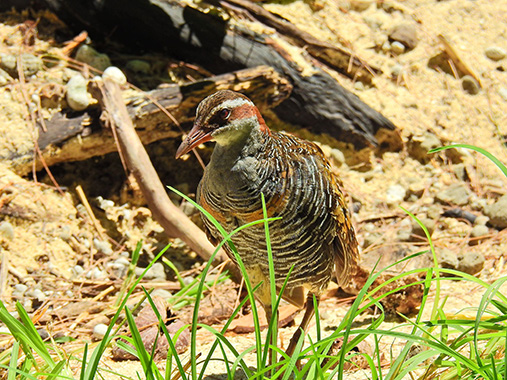
- Flanks: Boldly barred black and white.
- Bill: Slightly curved and pinkish‑red with a darker tip.
- Legs: Long and reddish, ideal for walking through reeds and shallow water.
When startled, the rail often runs quickly into cover rather than flying, weaving through vegetation with remarkable agility.
Habitat and Distribution
The Buff‑banded Rail is one of the most widely distributed rails in the Australasian region. It occurs across:
- most of Australia
- New Zealand
- many Pacific islands
- parts of Southeast Asia
In Australia it can be found in a wide variety of habitats, including:
- wetlands and marshes
- mangroves and estuaries
- riverbanks and billabongs
- grassy farmland near water
- suburban parks and gardens close to wetlands
Its adaptability allows it to live in both natural and modified landscapes, provided there is nearby vegetation for shelter.
Feeding Habits
Buff‑banded Rails are omnivorous foragers and spend much of their day walking slowly through vegetation in search of food.
Their diet includes:
- insects and insect larvae
- worms and small crustaceans
- snails
- seeds and plant material
- small frogs and other tiny animals
They usually feed along muddy shorelines or in damp grass, using their bill to probe into soil and leaf litter. Unlike diving waterbirds, rails feed mainly on land or in shallow water.
Buff‑banded Rails are most active during early morning and late afternoon, although they may also forage at night.
Breeding and Nesting
The breeding season often depends on rainfall and food availability, but it typically occurs between spring and early summer.
- Nest location: hidden among dense grasses, reeds, or low shrubs near water
- Nest structure: a cup made of grasses and leaves
- Eggs: usually 4–7 cream or buff eggs with dark speckles
- Incubation: around three weeks
- Parental care: both parents incubate the eggs and care for the chicks
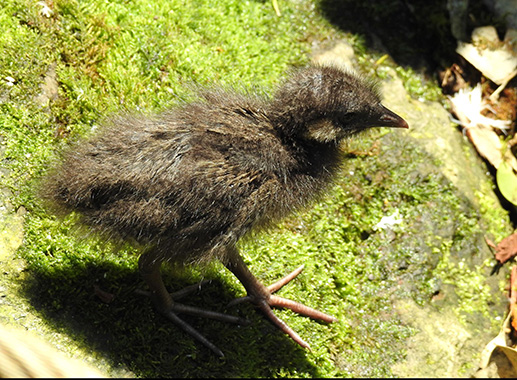
The chicks hatch covered in black down and quickly follow their parents through vegetation while learning to forage.
Longevity
Buff‑banded Rails generally live around 6 to 10 years in the wild, although exact lifespans can vary depending on habitat conditions and predation.
Indigenous Connections
Rails and other wetland birds have long been part of the rich ecosystems managed and observed by First Nations peoples throughout Australia. Birds living in reedbeds and marshes often signal healthy wetlands with abundant insects, fish, and plant life.
Traditional ecological knowledge recognises the behaviour of wetland birds as indicators of seasonal changes, water levels, and the condition of Country. As with many widely distributed species, traditional names for the Buff‑banded Rail vary among language groups and are not always recorded in widely available public sources.
Acknowledging the role of these birds in wetland ecosystems reflects the deep cultural understanding of waterways that Traditional Owners have maintained for thousands of years.
Conservation Status and Threats
The Buff‑banded Rail is currently considered a species of Least Concern and remains common across much of its range.
However, it still faces several threats, including:
- wetland drainage and habitat loss
- predation by introduced animals such as cats and foxes
- disturbance of nesting areas
- pollution of waterways
Island populations are particularly vulnerable to introduced predators.
How You Can Help
Protecting wetland habitats benefits rails and many other species.
You can help by:
- supporting conservation of wetlands and marshes
- keeping domestic pets away from sensitive wetland areas
- reducing pollution entering waterways
- protecting natural vegetation around lakes and rivers
Why the Buff‑banded Rail Matters
The Buff‑banded Rail is a resilient survivor of Australia’s wetlands. Its ability to adapt to different environments has helped it remain widespread, but it still depends on healthy habitats to thrive.
Whether calling from deep within reeds or wandering along the edge of a quiet marsh, the Buff‑banded Rail remains a fascinating and important part of Australia’s wetland wildlife.
Scientific References
- BirdLife Australia – Buff‑banded Rail species profile
- Australian Museum – Buff‑banded Rail information
- Pizzey, G. & Knight, F. The Field Guide to the Birds of Australia
- Department of Climate Change, Energy, the Environment and Water – Wetland bird information
- Wikipedia – Gallirallus philippensis (Buff‑banded Rail)
Photo Gallery