Chequered Swallowtail
Chequered Swallowtail
When we think of swallowtail butterflies, we usually imagine the lush, humid tropics. However, the Chequered Swallowtail (Papilio demoleus sthenelus) breaks all the rules. A powerful, fast-flying nomad of the Australian outback, this butterfly is intimately tied to the boom-and-bust cycles of our arid interior.
Often arriving suddenly in the southern agricultural regions following heavy outback rains, this highly mobile insect is a true survivor. Let’s explore the life, surprising diet, and unique habits of this resilient desert wanderer.
Deep Time Connections: Following the Desert Rain
For First Nations peoples of the arid interior, the changing of the landscape following rare, heavy rainfall is deeply significant. The Chequered Swallowtail is intrinsically linked to these rain events.
When floodwaters hit the ephemeral creek beds and dry floodplains of the outback, dormant native legumes—specifically native scurf-peas like the Emu-foot (Cullen tenax)—burst into life. As these vital desert plants blanket the red earth, the Chequered Swallowtails arrive in massive numbers to breed. For tens of thousands of years, the sudden presence of these fluttering nomads has served as a beautiful, living indicator that the harsh desert is experiencing a period of rich, vibrant renewal.
A Swallowtail Without a Tail: What Does It Look Like?
To spot a Chequered Swallowtail is to see a flash of high-contrast brilliance against the sun-baked earth.
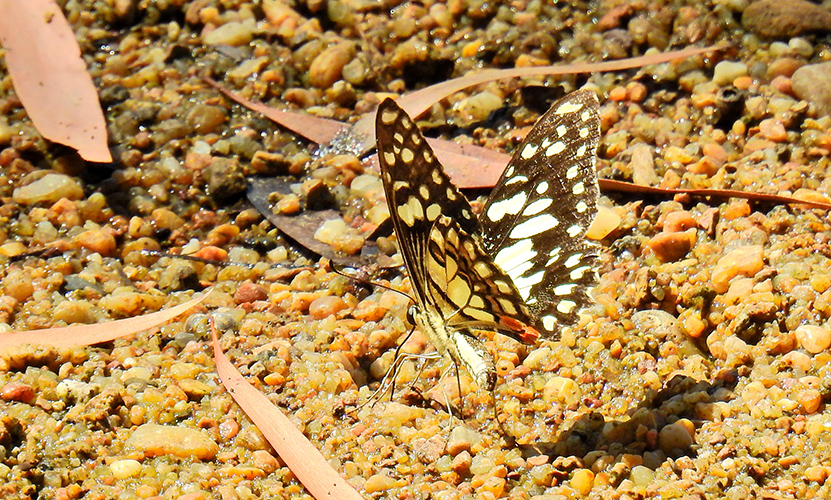
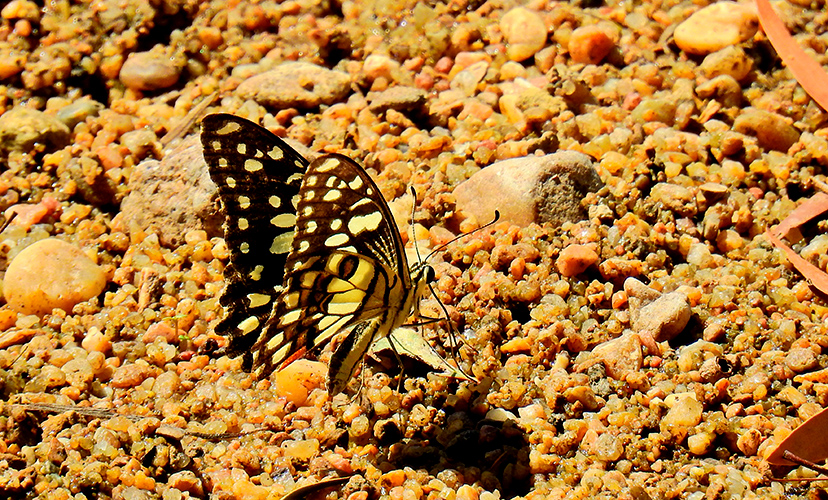
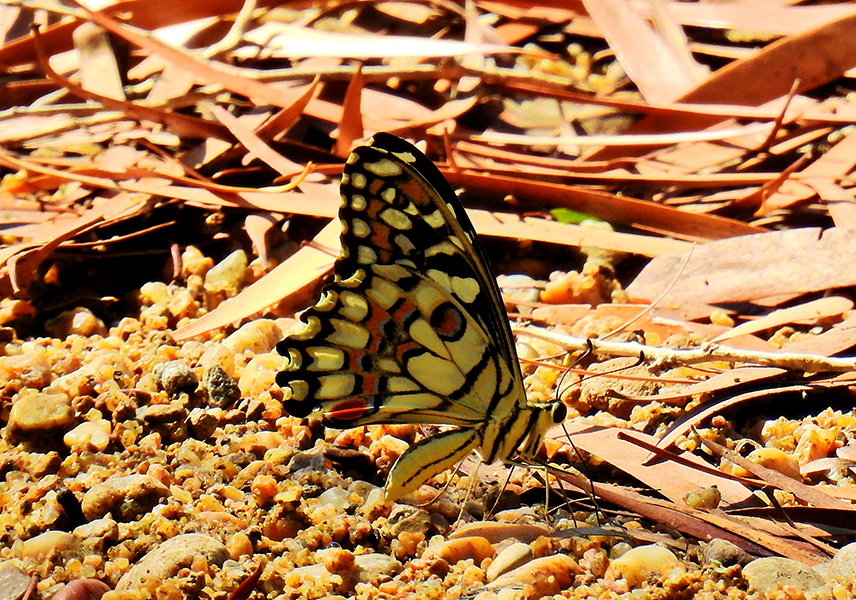
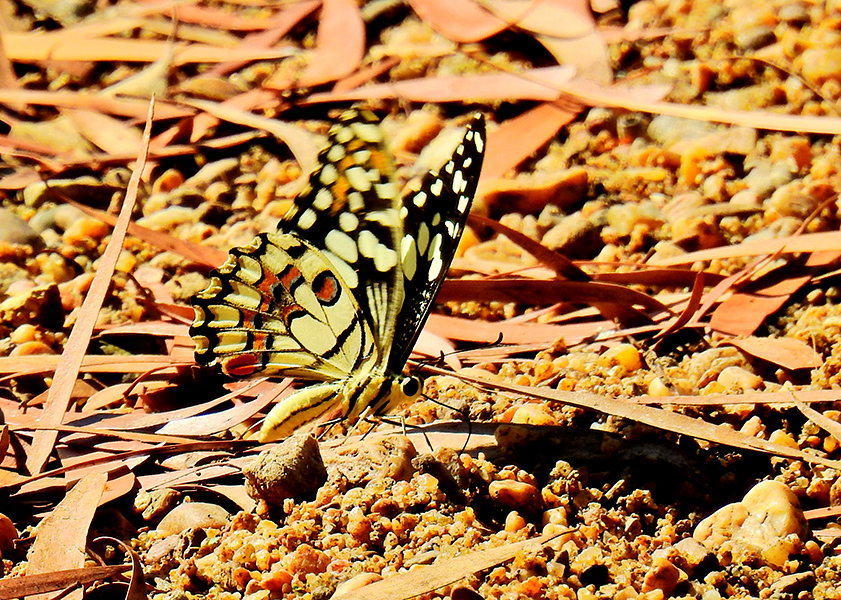
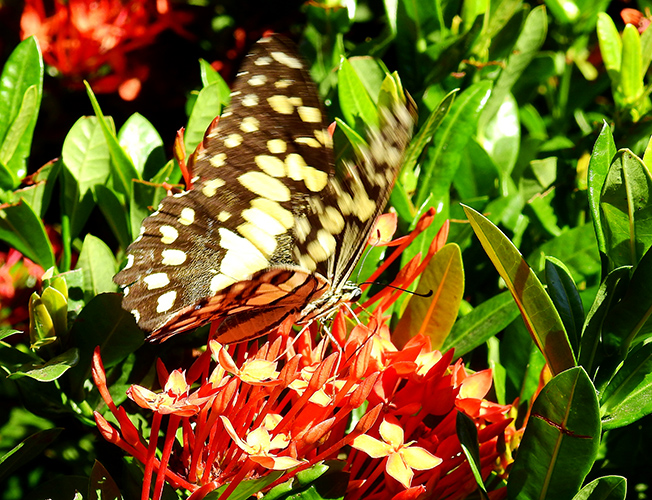
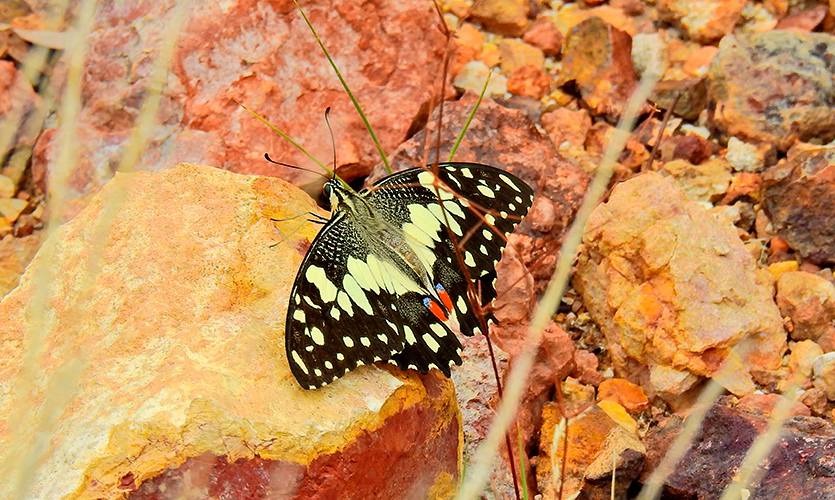
- The Adult Butterfly: Despite its family name, this butterfly is actually “tailless”. It is a large, powerful insect with a wingspan of up to 100 millimetres. The wings are a velvety, dark brown-black canvas, heavily chequered with striking pale yellow or cream spots and bands. On the lower edge of their hindwings, they sport a single, prominent red “eyespot” bordered by a crescent of metallic blue.
- The Caterpillar: The larvae are masters of disguise. When they first hatch, they are dark brown or black with a distinct white patch—making them look exactly like an unappetising bird dropping! As they mature, they moult into a rich, velvety green caterpillar adorned with darker markings and small orange-yellow spots.
- The Pupa: Before emerging, they form a mottled, greyish-green or brown chrysalis that perfectly mimics a broken, dry twig attached to the host plant.
The Boom and Bust Cycle: Breeding and Longevity
The lifecycle of the Chequered Swallowtail is built for speed, allowing them to take advantage of short-lived desert blooms.
- The Breeding Cycle: Females lay perfectly spherical, pale yellow eggs singly on the soft, green leaves of their host plants. Because the desert heat accelerates their growth, the entire journey from a freshly laid egg to a flying adult can take as little as a month in ideal conditions.
- A Fleeting Life: Once the adult butterfly emerges, its primary goal is to fly, feed, and reproduce before the harsh outback sun takes its toll. In the wild, their lifespan is brief—typically living for only 2 to 4 weeks as an adult butterfly. Towards the end of their lives, you can often see their once-vibrant black and yellow wings becoming faded and pale due to UV bleaching from the harsh sun.
Fascinating Facts: The Citrus Anomaly and Puddle Clubs
- The Fussy Australian Eater: Across Asia, the Papilio demoleus is known as the “Lime Butterfly” because its caterpillars are a massive agricultural pest that decimate citrus orchards. However, the Australian subspecies (P. d. sthenelus) is completely different! Our native Chequered Swallowtail rarely touches citrus. Instead, it strongly prefers native legumes, particularly the Cullen species.
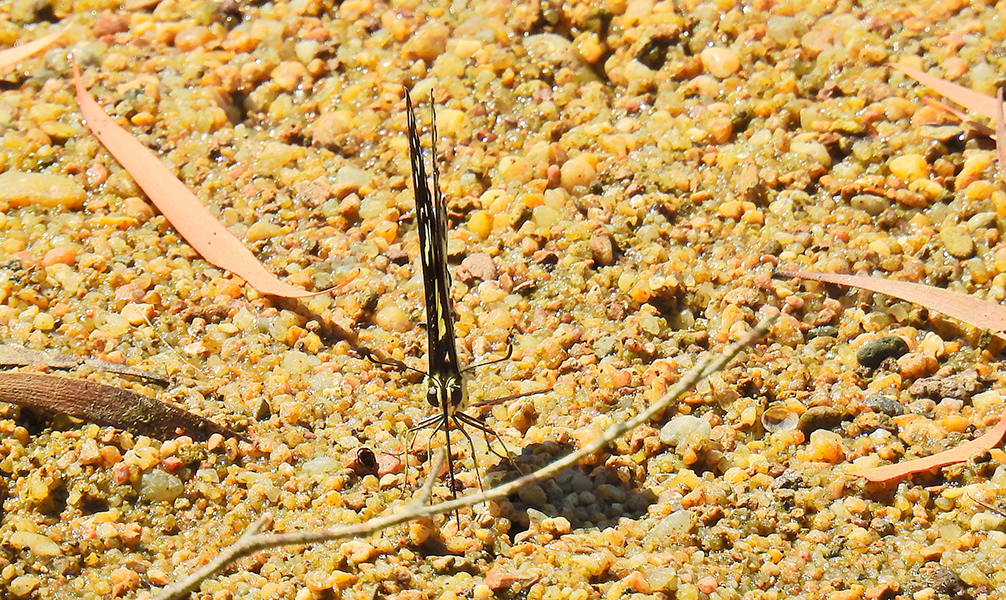
- Mud-Puddling Males: If you spot a group of these butterflies gathered on damp mud near a drying creek bed, you have found a “puddle club.” Male Chequered Swallowtails actively drink from damp soil to extract essential salts and minerals (like sodium), which they then pass on to the female during mating to help ensure healthy eggs.
- Chemical Defences: Like all swallowtail caterpillars, they possess a hidden weapon. Just behind their head, they have a fleshy, brightly coloured, forked organ called an osmeterium. If a predator threatens them, they instantly shoot this organ out, releasing a pungent, foul-smelling chemical that smells like rancid butter!
Conservation Status and Environmental Threats
Nationally, the Chequered Swallowtail is a highly successful, widespread species and is classified as Least Concern. Their powerful flight means they can constantly migrate to find suitable breeding grounds.
However, in our southern, settled agricultural regions, their numbers are often limited by habitat degradation. The heavy grazing of sheep and cattle easily wipes out the delicate native Cullen plants they rely on. Without these specific native legumes, the butterflies cannot establish local breeding populations and are reduced to just being occasional, passing visitors.
What Can We Do to Help the Species?
Bringing this magnificent desert wanderer into your local ecosystem is incredibly rewarding. Here is how you can support them:
- Plant “Emu-foot” (Cullen tenax): If you want to see these butterflies breed in your garden, you need to provide their favourite nursery. Planting native scurf-peas like Cullen tenax (Emu-foot) or Cullen australasicum is the absolute best way to attract egg-laying females.
- Create a Mud Puddle: Because the males desperately need salts, leaving a shallow, muddy depression in a sunny corner of your garden can provide a vital mineral refuelling station for passing butterflies.
- Ditch the Insecticides: Because their caterpillars look like bird droppings when young, they are easily missed. Using broad-spectrum chemical sprays in the garden will unintentionally wipe out the next generation of these beautiful fliers.
Scientific & Cultural References
- Atlas of Living Australia. Papilio demoleus sthenelus: Chequered Swallowtail.
- Braby, M. F. (2000). Butterflies of Australia: Their Identification, Biology and Distribution. CSIRO Publishing.
- Butterfly Conservation South Australia. Papilio demoleus sthenelus (Chequered Swallowtail).
- South Australian Butterflies & Moths. Chequered Swallowtail – Papilio demoleus sthenelus.
- Wikipedia Contributors. Papilio demoleus. Wikipedia, The Free Encyclopedia.
Photo Gallery