Children's Stick Insect
Children’s Stick Insect
Quietly clinging to eucalyptus leaves along Australia’s eastern forests is a stick insect that blends beauty with surprise. The Children’s Stick Insect is one of Australia’s most well‑known phasmids, admired for its leaf‑like appearance and dramatic defensive displays.
First described in 1833, this species has become an important example of camouflage, behaviour, and adaptation in Australian insects.
Appearance and Identification
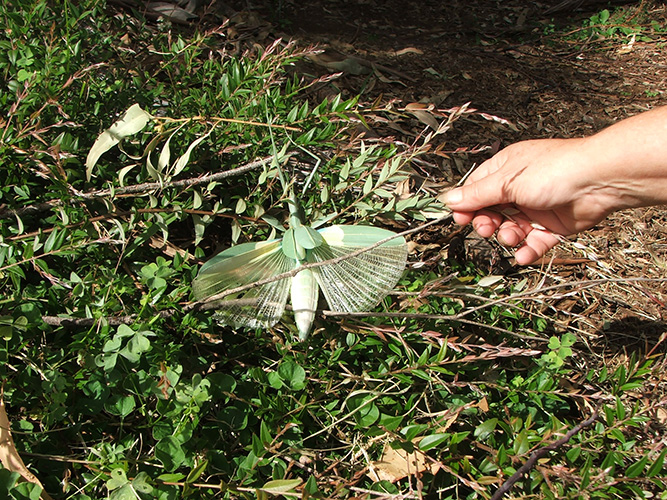
The Children’s Stick Insect is a medium to large stick insect, usually growing between 11 and 15 centimetres in length.
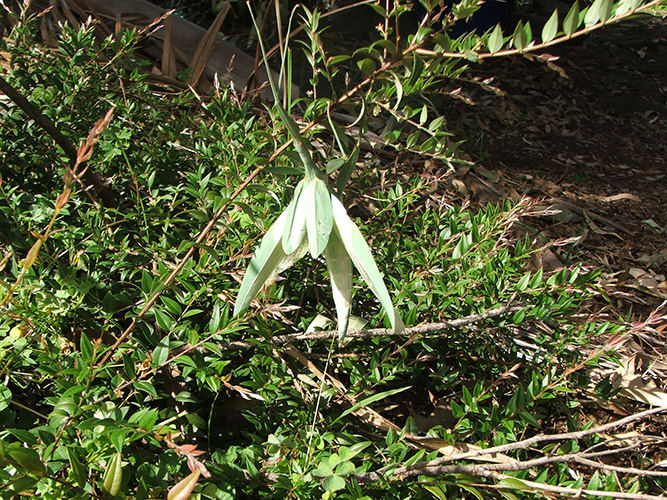
Females are larger and broader, typically soft green, though they may also appear cream, pinkish, or pale purple. Their bodies closely resemble leaves, with flattened shapes and subtle vein‑like markings. Males are slimmer and more stick‑like, often reddish‑brown in colour.
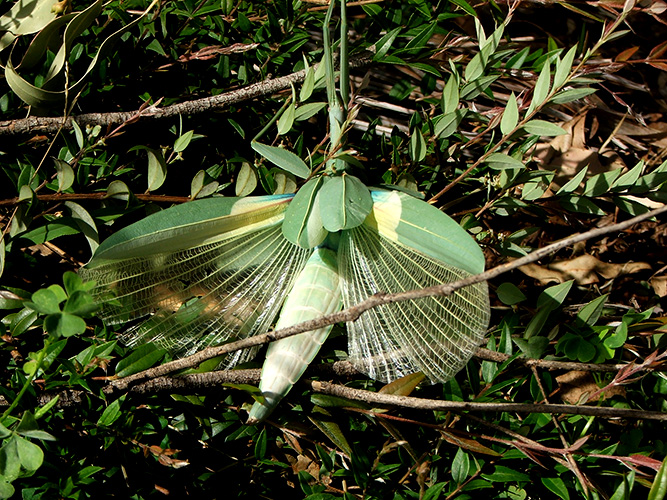
Both sexes develop two pairs of wings when mature. The hind wings hide bright blue and yellow patches, which are normally concealed when the insect is at rest.
Nymphs are especially well camouflaged, with a yellow stripe along the body that aligns perfectly with the mid‑vein of a leaf.
Habitat and Distribution
Children’s Stick Insect is found in eastern mainland Australia, including:
- Queensland
- New South Wales
- Victoria
It lives primarily in:
- Eucalypt forests and woodlands
- Coastal and inland bushland
- Areas where gum trees are abundant
Because eucalyptus leaves form its main diet, the species is closely tied to habitats where these trees thrive.
Behaviour and Defence
This species is nocturnal, feeding at night and remaining motionless during the day.
When disturbed, it performs one of Australia’s most striking insect defence displays. It may raise and flap its wings to expose the bright blue patches, strike its hind legs together, and vibrate surrounding leaves. This sudden movement and colour display is designed to startle predators, such as birds or reptiles, giving the insect time to escape..
If threatened further, the insect can shed a leg in a process known as autotomy, sacrificing a limb to survive an attack.
Wings and Movement
Both sexes possess wings as adults.
Females are too heavy‑bodied to fly effectively and rely mainly on camouflage for protection.
Males are strong fliers and often travel between trees at night in search of females. They are sometimes attracted to artificial lights in warmer months.
In both sexes, wings are used far more often for defence than for regular travel.
Diet
Children’s Stick Insect feeds primarily on the leaves of eucalyptus (gum) trees, though it may use closely related native plants when available.
This diet places it firmly within forest and woodland ecosystems dominated by native trees.
Life Cycle and Longevity
The species follows an incomplete metamorphosis, with no pupal stage.
Females lay small, oval, grey eggs that fall to the leaf litter below. Eggs laid in winter typically hatch in autumn. Nymphs grow slowly, shedding their skin several times before reaching adulthood.
Females may live for a year or more, laying eggs throughout adulthood, while males usually have shorter life spans.
Conservation Status
Children’s Stick Insect is currently listed as Least Concern, with stable populations across much of its range. However, it still depends on healthy native vegetation.
Protecting eucalyptus forests and reducing pesticide use helps ensure this species continues to thrive.
Interesting Facts
- Also known as the Yellow‑winged Spectre
- One of the most commonly studied Australian stick insects
- Nymphs align their body stripe with leaf veins for perfect camouflage
- Can shed legs to escape predators
- Harmless to humans despite dramatic displays
A Familiar Face of the Bush
The Children’s Stick Insect is a reminder that Australia’s forests are filled with quiet marvels. Perfectly adapted to leaves and light, it teaches us how camouflage, behaviour, and patience can be just as powerful as speed or strength in the natural world.
Photo Gallery