COMMON GREENSHANK
The Global Nomad: Common Greenshank
Imagine standing by a quiet Australian coastal mudflat or inland wetland in the height of summer. Suddenly, a clear, ringing “choo-choo-choo” call echoes across the water, and an elegant, long-legged wader lands gracefully in the shallows. You have just met the Common Greenshank (Tringa nebularia).
Unlike our resident waterbirds, the Common Greenshank is a true global nomad. Arriving on our shores every spring, they spend the Australian summer feeding and resting before embarking on one of the most remarkable migratory journeys on the planet. Let’s wade into the life, epic travels, and the pressing conservation needs of this beautiful, nervous shorebird.
A Wader in the Mist: What Does It Look Like?
To spot a Common Greenshank amongst a mixed flock of waders, you need to look for a bird built for elegant, shallow-water hunting.
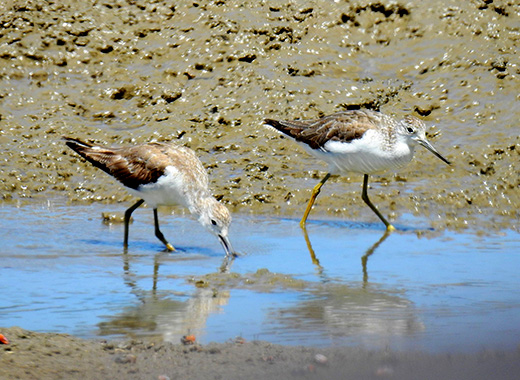
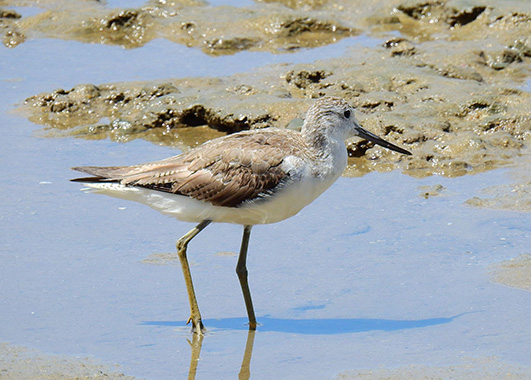
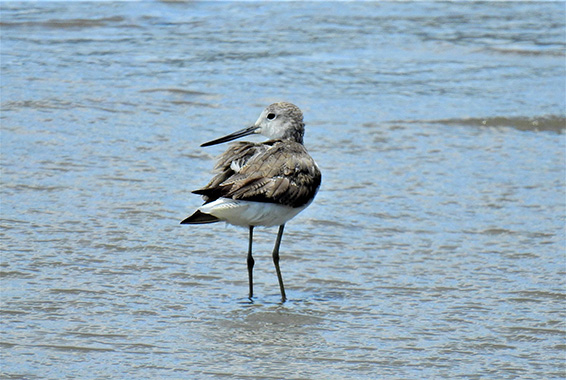
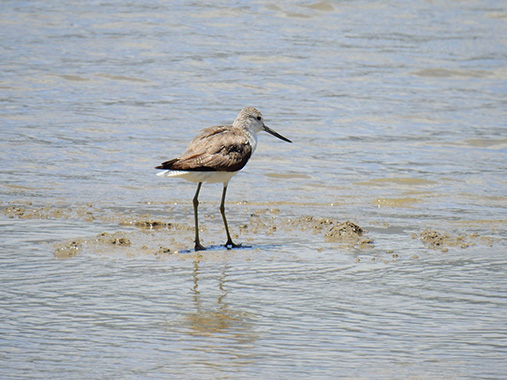
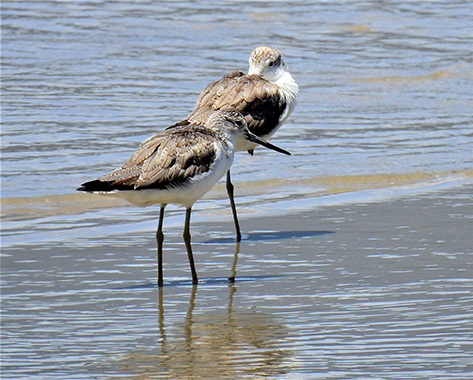
- The Body: They are a medium-to-large wader, standing around 30 to 35 centimetres tall. Their plumage is a beautiful study in subtle contrasts: their underparts are a stark, clean white, while their upper body and wings are a mottled grey-brown, finely speckled with white margins.
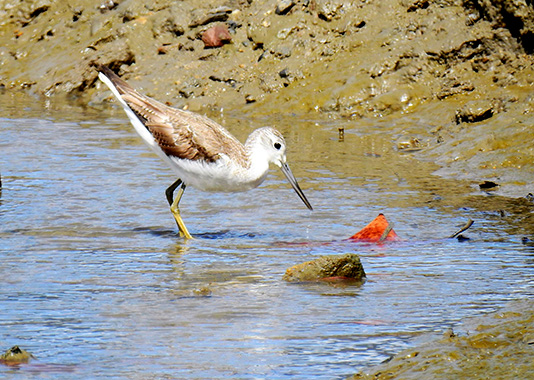
- The Legs and Bill: True to their name, they sport very long, pale greyish-green or yellowish-green legs. Their bill is heavily built, dark, and features a very distinct, slight upward curve toward the tip—perfect for sweeping through the water.
- In Flight: If you accidentally startle one, watch it fly away. As it takes to the air in a rapid, zigzag flight pattern, it reveals a brilliant, stark white “V” or wedge shape running straight up the centre of its back.
An Epic Journey: Breeding and Longevity
The most incredible fact about the Common Greenshank is that despite being widespread across Australia in the summer, they do not breed here!
- The Northern Nurseries: Every year, between March and April, the Greenshanks leave Australia and fly thousands of kilometres north along the East Asian-Australasian Flyway. They breed in the vast, boggy taiga forests and northern steppes spanning from Scotland, across Scandinavia, all the way to eastern Russia and Siberia.
- Ground Nesting: Arriving in the sub-arctic summer, they establish territories and engage in beautiful, tumbling display flights. They build their nests as a simple, shallow scrape on the dry ground near marshy areas. The female usually lays four pale green, heavily splotched eggs.
- Shared Parenting: Both parents share the 26-day incubation duty. The chicks are precocial, meaning they hatch covered in down and are ready to leave the nest and run within hours, taking advantage of the 24-hour Arctic daylight to feed rapidly.
- Longevity: For a bird that makes such an exhausting, globe-spanning flight twice a year, their endurance is astonishing. In the wild, they commonly live for 12 to 15 years, and some banded individuals have been recorded surviving for an incredible 24 years, returning to the exact same Australian wetlands year after year!
Fascinating Facts: Frantic Feeders and Mist Dwellers
- What’s in a Name? The scientific name of the Common Greenshank is wonderfully poetic. Tringa comes from an ancient word for a wading bird, while nebularia is derived from the Latin word for “mist”—a beautiful nod to the damp, foggy marshlands they love to call home.
- The Active Hunter: Unlike the Great Egret, which stands completely still to hunt, the Greenshank is highly active and nervous. They feed by picking, probing, and rapidly sweeping their slightly upturned bill through the mudflats. They are even known to suddenly dash erratically through the shallows, actively chasing down small fleeing fish!
- Night Fishers: Because their incredible migrations require so much energy, they cannot afford to stop eating when the sun goes down. Greenshanks are highly adept at foraging through the dark, using the sensitive tips of their bills to locate crustaceans, molluscs, and worms in the nighttime mud.
Conservation Status and Environmental Threats
While the Common Greenshank is classified as Least Concern globally, their story within Australia has recently taken a deeply concerning turn. In early 2024, their conservation status under the Australian EPBC Act was officially upgraded to Endangered.
Extensive monitoring has shown their population numbers dropping by over 50 percent in recent decades. The primary cause of this decline isn’t happening in Australia or Siberia, but right in the middle of their migration route. The massive, rapid reclamation and industrial development of crucial coastal mudflats along the Yellow Sea in East Asia has destroyed the vital “stopover” refuelling stations these birds desperately need to survive their global flight. Locally, they are also threatened by the draining of Australian wetlands and constant disturbance by humans and unleashed dogs on our beaches.
What Can We Do to Help the Species?
Protecting migratory shorebirds requires a global mindset, but local actions make a massive difference. Here is how we can help the Common Greenshank rest and refuel on our shores:
- Leash Your Dogs: The single easiest way to help our migratory shorebirds is to keep dogs strictly on a leash when walking near estuaries, mudflats, and coastal lagoons. When a resting Greenshank is chased into the air, it burns the precious fat reserves it desperately needs to fly back to Siberia.
- Keep Your Distance: If you are birdwatching, kayaking, or fishing, admire these wary birds from a distance. If they start bobbing their heads nervously or calling out, you are too close.
- Support Wetland Conservation: Advocate for the protection of local coastal saltmarshes and inland wetlands. These quiet, muddy fringes are the vital dining rooms that sustain our global nomads throughout the long Australian summer.
Scientific References
- ACT Government. Nature Conservation (Common Greenshank) Conservation Advice 2025.
- BirdLife Australia. Common Greenshank profile and migratory shorebird conservation.
- Department of Climate Change, Energy, the Environment and Water. Conservation Advice for Tringa nebularia (Common Greenshank).
- Museums Victoria Collections. Tringa nebularia, Common Greenshank.
- Queensland Wader Study Group. Greenshank – Identification and Migratory Habits.
- Wikipedia Contributors. Common greenshank. Wikipedia, The Free Encyclopedia.
Photo Gallery