COMMON NODDY
The Common Noddy
The Common Noddy is a graceful, ocean‑going seabird with a calm, almost gentle presence, often seen resting in large colonies on remote tropical islands. If you spend time on coral cays in the Great Barrier Reef or islands in the Indian and Pacific Oceans, you may find them circling overhead or perched quietly in the trees, gently bobbing their heads in that characteristic “nodding” motion that gave them their name.
Quick Facts
| Feature | Detail |
|---|---|
| Scientific name | Anous stolidus |
| Family | Laridae (gulls, terns and noddies) |
| Size | ~38–45 cm long |
| Wingspan | ~75–86 cm |
| Weight | ~150–250 g |
| Global status | Least Concern (IUCN) |
| Australian range | Tropical and subtropical coasts & islands, especially Great Barrier Reef and offshore islands in the north and north‑west |
What They Look Like
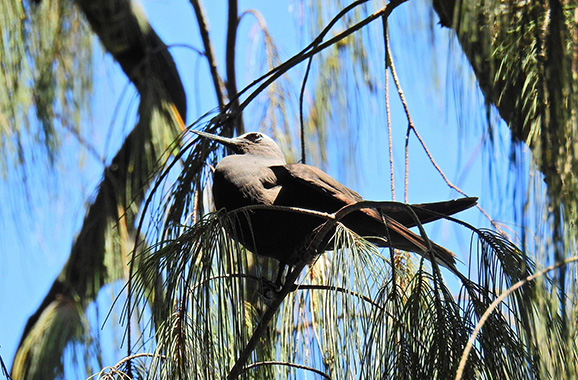
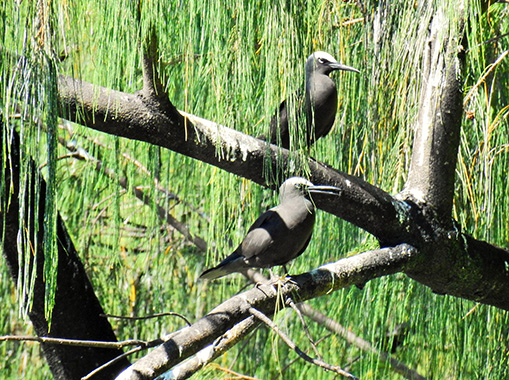
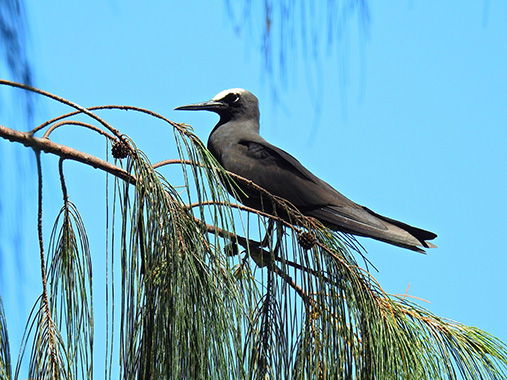
At first glance, the Common Noddy looks like a dark tern. A closer look reveals some beautiful and subtle details.
Plumage and Features
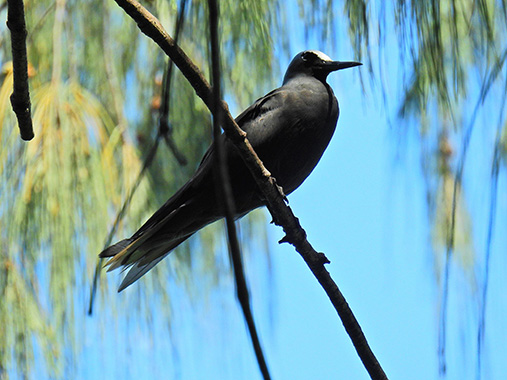
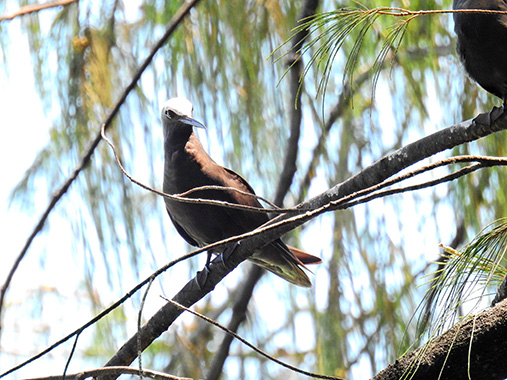
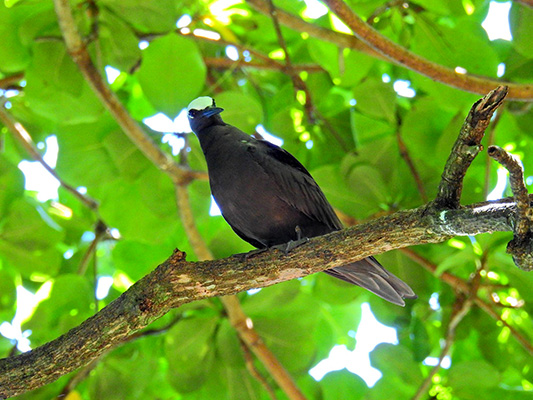
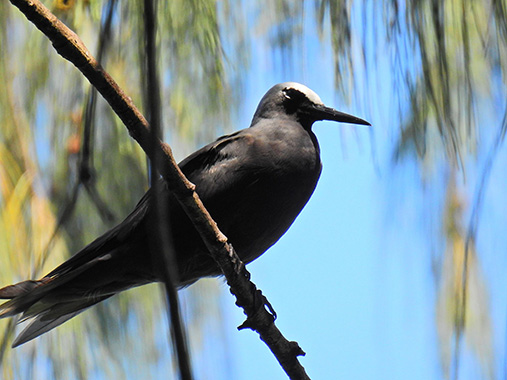
- Overall colour: Deep chocolate‑brown body and wings.
- Cap and forehead: A paler, smoky to silvery grey crown that contrasts with the darker body.
- Bill: Long, slender and black, slightly down‑curved at the tip – ideal for snatching fish near the surface.
- Eyes: Dark, often looking large and gentle against the paler head, giving them a soft expression.
- Tail: Moderately long and slightly forked, not as sharply forked as many terns.
In flight they look elegant and buoyant: long, narrow wings slicing low over the water, often gliding with only a few flaps, as if they are skimming the sea’s breath.
Why “Noddy”?
If you watch a colony at close range, you will see one of their most characteristic behaviours:
- They often greet partners or neighbours by repeatedly bobbing or “nodding” their heads.
- This nodding can be:
- A courtship or pair‑bond behaviour
- A way to reduce tension in crowded nesting sites
Early sailors noticed this odd, repetitive movement and began calling them “noddies”. The scientific name stolidus hints at their seemingly calm, almost indifferent nature when perched at colonies.
Where They Live
Global Distribution
The Common Noddy is a truly tropical seabird:
- Found throughout tropical and some subtropical oceans in:
- Pacific Ocean
- Indian Ocean
- Atlantic Ocean (tropical regions)
- They nest mainly on remote oceanic islands:
- Coral cays
- Volcanic islands
- Sandy islets with low vegetation
In and Around Australia
In Australia, Common Noddies are mainly found:
- Along the northern and north‑eastern coasts
- On offshore islands including parts of:
- The Great Barrier Reef
- Coral Sea islets
- Islands off Western Australia and the Northern Territory
They spend most of their lives at sea, returning to land primarily to breed and rest.
Life at Sea: Feeding and Behaviour
How They Feed
Common Noddies are surface feeders. They rarely plunge deeply into the water like some terns or gannets.
They typically:
- Fly low over the water, sometimes just above the waves
- Pick small prey from the surface with quick, precise snaps of the bill
Their diet includes:
- Small schooling fish
- Squid
- Other small marine creatures near the surface
They often feed:
- Around shoals of fish driven to the surface by larger predators such as tuna or dolphins
- In mixed flocks with other seabirds, each species using slightly different feeding techniques
Flight and Voice
- Flight: Smooth and buoyant, with flexible wingbeats and frequent gliding.
- Calls: In colonies they can be quite noisy, producing:
From a distance, a breeding colony can sound like a constant, low crackle of voices, with individual calls weaving together into one continuous chorus.
Nesting and Breeding
Common Noddies are colonial nesters, often forming dense colonies with hundreds or thousands of birds.
Nest Sites
They typically nest on:
- Low trees or shrubs
- Cliff ledges
- Occasionally bare ground if vegetation is limited
Nests are often:
- Small platforms made of twigs, grass, seaweed and droppings
- Re‑used and built up over several seasons, becoming quite substantial mounds
Eggs and Chicks
Common Noddy breeding is surprisingly simple and focused:
- Clutch size: Usually one egg
- Egg: Cream or buff with brown to black speckles, helping it blend with the nesting material
- Incubation: Around 33–36 days, shared by both parents
- Chick:
- Born with a soft, downy coat
- Initially quite dependent, huddling in the nest for warmth and protection
- Fed by both parents, which regurgitate partly digested fish and squid
As the chick grows:
- It becomes more adventurous around the nest
- Begins to flex and flap its wings, preparing for that crucial first flight over the sea
Senses and Colony Atmosphere
To imagine a Common Noddy colony, think of:
- Sight: A busy mosaic of brown and grey birds on branches and rocks, wings opening and closing, heads gently bobbing, chicks begging with vibrant urgency.
- Sound: A constant backdrop of calls:
- Harsh cries
- Softer clucks between partners at the nest
- Smell: A strong, salty odour of seaweed, guano and warm air that surrounds many seabird colonies.
- Feel: The humid, often hot tropical air; the wind moving through the nesting trees; the impact of many pairs of wings beating close overhead.
In this crowd, each bird recognises its mate and chick by voice and familiar behaviours, a vital skill in such a noisy neighbourhood.
Role in the Ecosystem
Common Noddies play several important ecological roles:
- Nutrient transport: By feeding at sea and defecating on islands, they bring marine nutrients onto land. This:
- Enriches soils
- Supports plants and invertebrates
- Indicators of ocean health:
- Changes in numbers, breeding success or distribution can signal shifts in fish populations or ocean conditions.
- Prey and predator relationships:
- They are preyed upon by larger birds (like some raptors), large gulls, and occasionally introduced mammals (where these occur).
- Their behaviour at sea can help fishers and scientists locate areas with rich marine life.
Conservation Status and Threats
Global Status
According to the IUCN Red List, the Common Noddy is currently classed as Least Concern, largely because:
- It has a wide global range
- There are many large colonies
However, “Least Concern” does not mean “no concern”.
Key Threats
Introduced predators
- Rats, cats and other mammals on breeding islands can:
- Eat eggs and chicks
- Disturb nesting birds, causing them to abandon colonies
- Rats, cats and other mammals on breeding islands can:
Habitat disturbance
- Human activities on small islands:
- Clearing vegetation
- Development (buildings, tourism infrastructure)
- Frequent visitation near colonies
- Human activities on small islands:
Pollution and marine threats
- Plastic ingestion and entanglement
- Oil spills that contaminate feathers and feeding grounds
Climate change and ocean warming
- Changes in sea temperature and currents can:
- Shift fish distributions
- Reduce food availability
- Cause breeding failures in poor food years
- Sea‑level rise and stronger storms can:
- Erase low‑lying nesting sites
- Wash out nests more frequently
- Changes in sea temperature and currents can:
Conservation Efforts and How People Help
Many of the steps that protect Common Noddies also benefit a wide range of seabirds and marine life:
- Eradicating invasive species from breeding islands (e.g. rats and cats) to make colonies safe again.
- Protecting nesting areas:
- Declaring islands as nature reserves or national parks
- Managing tourism so visitor access does not disturb colonies during breeding
- Marine protected areas:
- Safeguarding key feeding grounds from overfishing and destructive practices
- Monitoring and research:
- Tracking breeding success
- Recording changes in colony size and distribution
- Studying diet to understand shifts in marine ecosystems
On a personal level, people help by:
- Reducing plastic use and properly disposing of rubbish so it does not reach the sea
- Supporting organisations that conserve seabirds and their islands
- Respecting no‑access zones and distance rules when visiting seabird islands
How the Common Noddy Differs from Similar Species
Common Noddies are part of a small group of seabirds called “noddies”. Two key comparisons:
| Species | Key Differences from Common Noddy |
|---|---|
Lesser Noddy (Anous tenuirostris) | Generally smaller, with paler head and slightly more delicate build; more restricted range. |
Black Noddy (Anous minutus) | Smaller, darker body with a more sharply contrasting white cap and slimmer bill; also widespread on tropical islands. |
To distinguish a Common Noddy:
- Look for the chocolate‑brown body, paler greyish crown, and larger overall size compared to Black and Lesser Noddies.
- Their head colour contrast is less stark than the bright white cap of a Black Noddy.
Imagine standing on a tiny coral cay at dusk. The air is warm, and the sea breathes against the shore in slow, steady waves. As the light softens, dark shapes appear over the water – Common Noddies returning from a day of feeding.
They glide in low, wings catching the last of the sun’s gold, then rise towards the trees. One bird lands beside its nest, where a single fluffy chick waits, calling softly. The adult answers with a rough, familiar note, then leans forward and gently feeds the chick. Around them, hundreds of pairs repeat the same quiet ritual.
This nightly return binds the noddies to their island, and the island to the sea. Each day, they carry energy from the ocean to the land, and each night they rest, rebuild, and prepare to fly out again at dawn. Protecting their islands means protecting that link – a connection between sea, sky and shore that has existed for thousands of years.
Photo Gallery