Cruiser Butterfly
Cruiser Butterfly
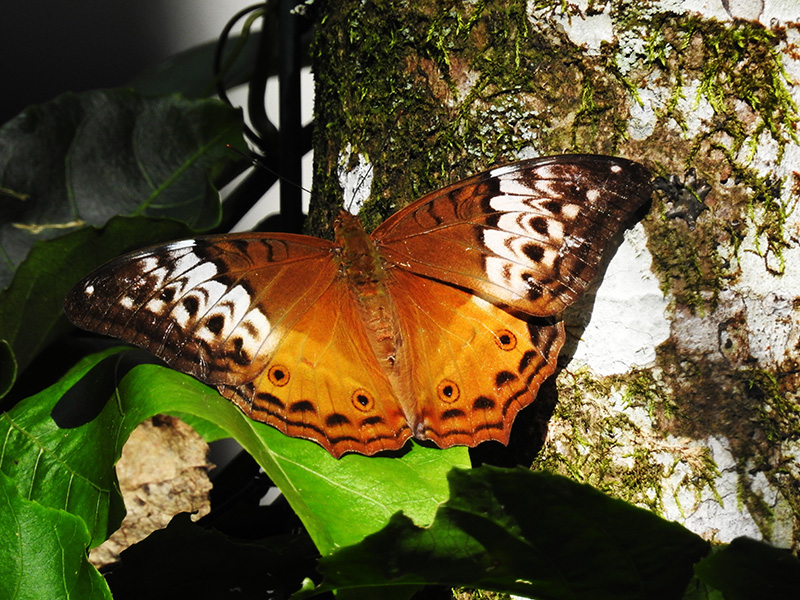
Along sunlit forest tracks in northern Australia and across much of Southeast Asia, a flash of glowing orange drifts through the trees. Unlike many butterflies that flutter rapidly, this one moves with smooth, confident glides, weaving through the forest canopy as though it owns the air. This elegant traveller is the Cruiser butterfly (Vindula arsinoe), named for its calm, sailing style of flight.
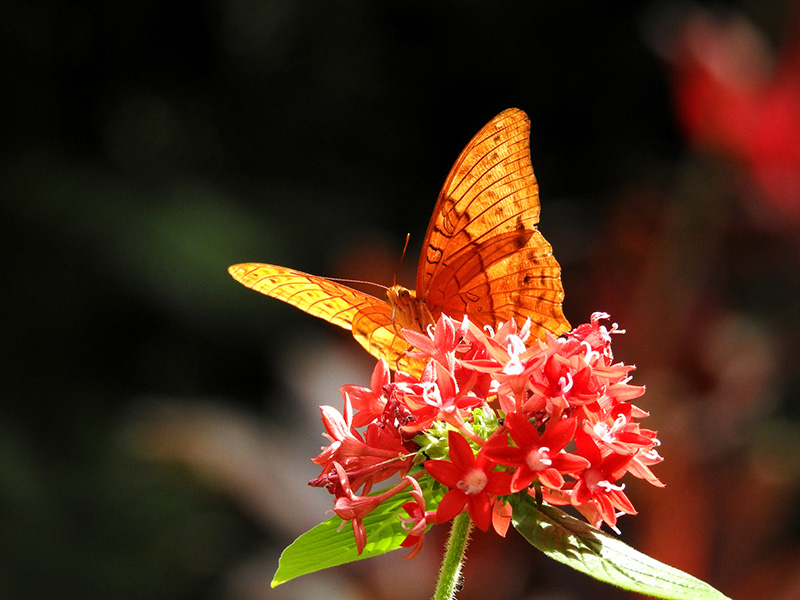
The Cruiser is one of the most striking butterflies found in tropical forests. Its rich orange wings patterned with black markings make it easy to recognise, while its graceful gliding behaviour often allows observers to watch it drifting through patches of sunlight along forest edges and creek lines.
Scientific Classification
- Scientific name: Vindula arsinoe
- Family: Nymphalidae (brush-footed butterflies)
- Common name: Cruiser
- Subfamily: Heliconiinae
The species occurs in several regional forms across its wide distribution, but all share the distinctive orange and black pattern.
Appearance
The Cruiser is a medium-to-large butterfly, with a wingspan typically ranging from 6 to 8 centimetres.
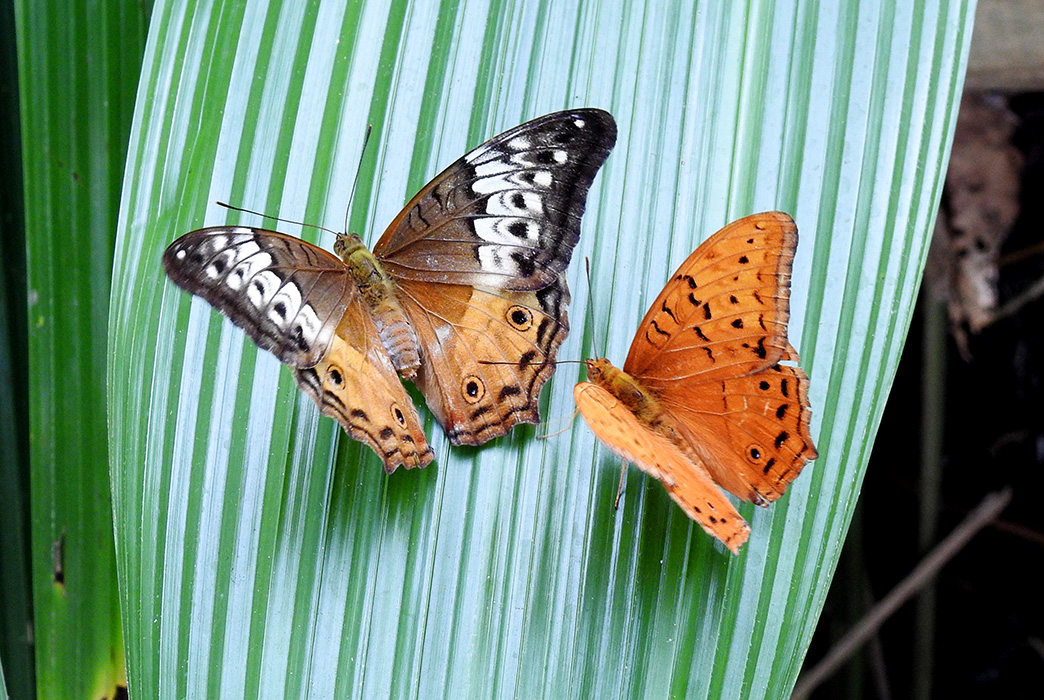
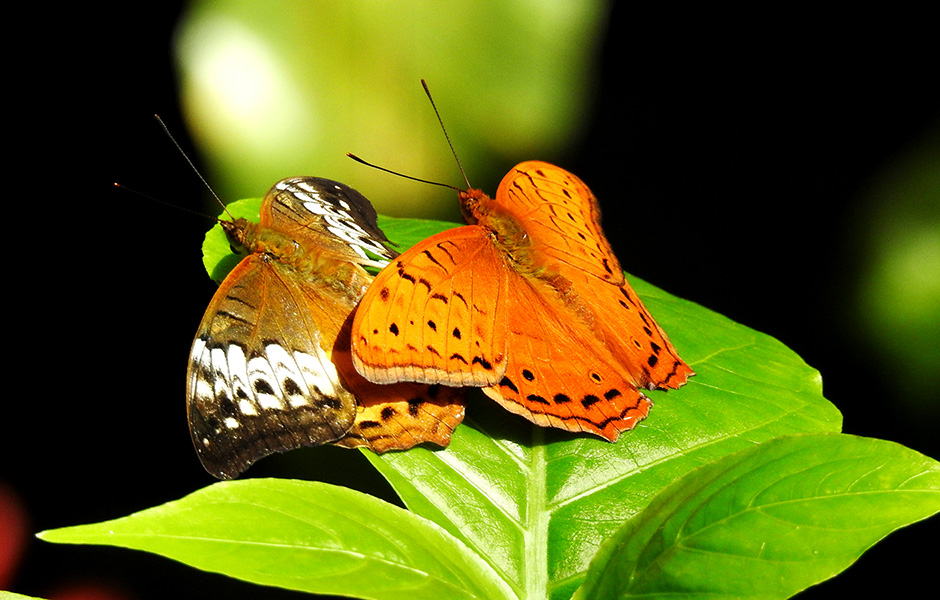
Male
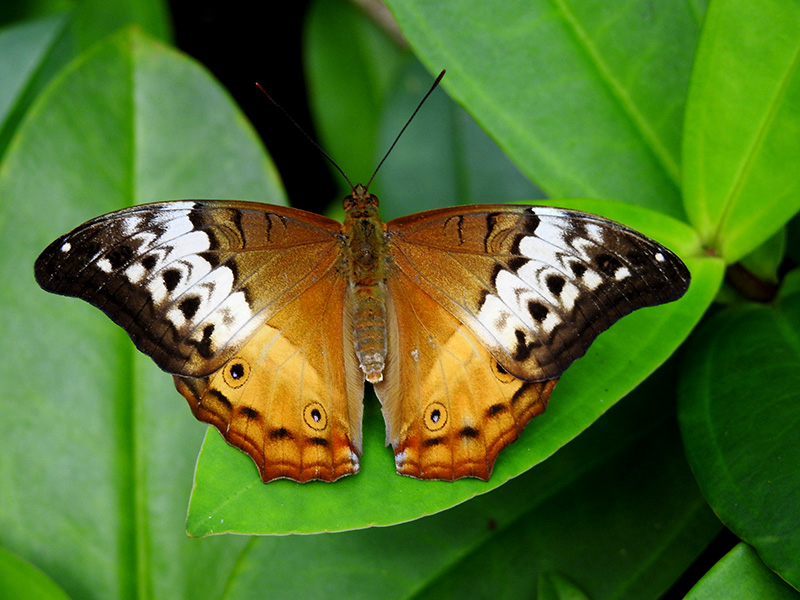
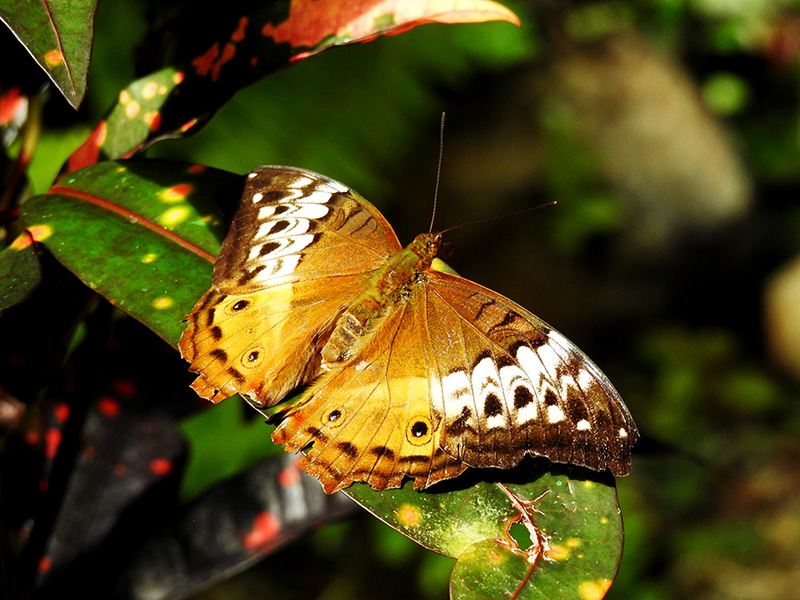
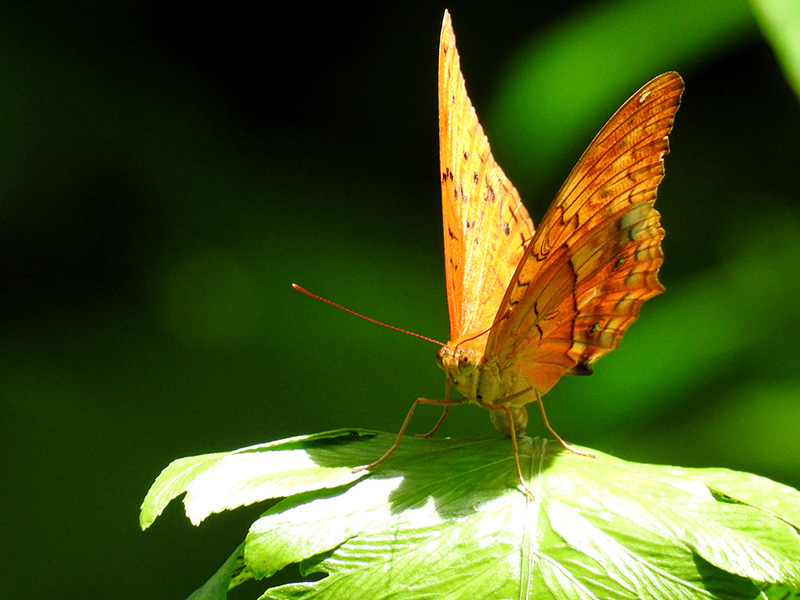
Male Cruisers are especially vivid and easy to identify:
- Bright deep orange wings
- Bold black veins and borders
- White spots along the wing margins
- Streamlined shape suited to gliding flight.
Female
Females look dramatically different due to sexual dimorphism.
They may appear in several colour forms, including:
- Orange similar to males
- Brown or darker forms
- Patterns that can resemble other butterfly species
This variation may help females avoid predators by mimicking less palatable butterflies.
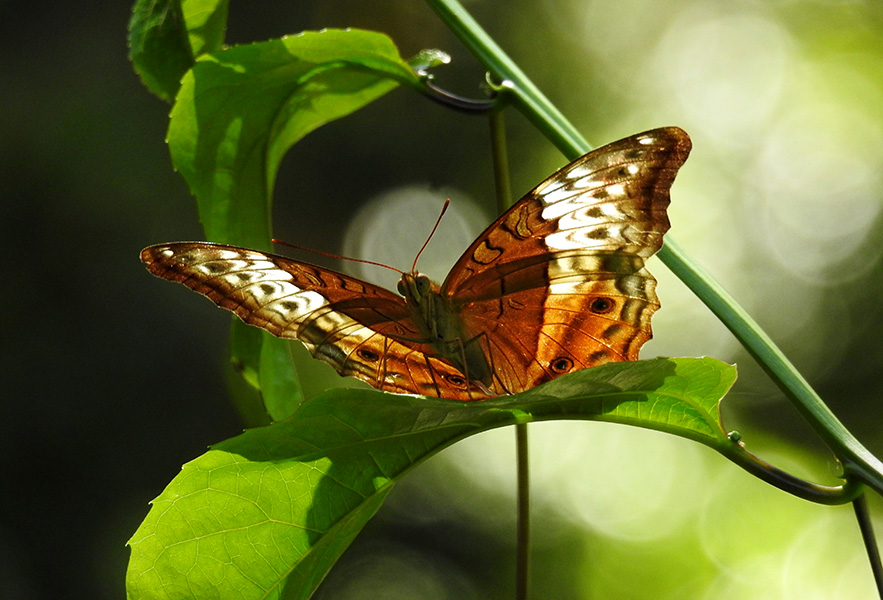
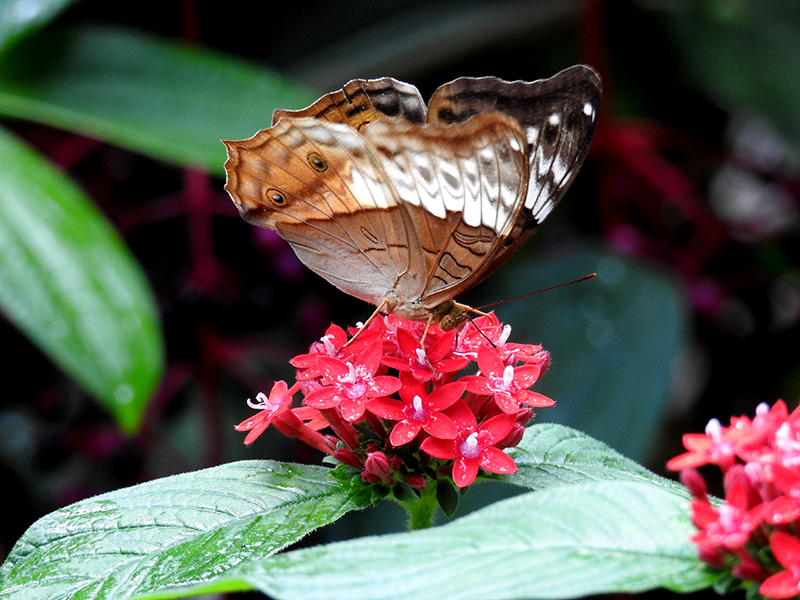
The underside of the wings in both sexes is generally paler with intricate patterns, helping camouflage them when resting on leaves or tree trunks.
Flight and Behaviour
The Cruiser’s name perfectly describes its movement.
Instead of constant fluttering, it often:
- Glides smoothly between wingbeats
- Soars along forest trails and streams
- Patrols territories in warm, sunny weather
Males are particularly active and may spend long periods patrolling forest clearings in search of females.
They also engage in “puddling” behaviour, gathering on damp soil, animal droppings, or wet sand to absorb minerals needed for reproduction.
Habitat and Distribution
The Cruiser is primarily a tropical and subtropical forest species.
In Australia it occurs mainly in:
- Northern Queensland
- Cape York Peninsula
- Tropical rainforest regions of the Wet Tropics
Across its wider range it is found throughout:
- Southeast Asia
- Indonesia
- Papua New Guinea
- The Solomon Islands
- Parts of India and Sri Lanka
Typical habitats include:
- rainforest edges
- forest clearings
- riverbanks
- shaded walking tracks
- tropical gardens near forest
Because they favour warm, humid environments, they are most active during sunny periods within forested landscapes.
Life Cycle and Breeding
Like all butterflies, the Cruiser undergoes complete metamorphosis, progressing through four stages:
- Egg
- Caterpillar (larva)
- Chrysalis (pupa)
- Adult butterfly
Eggs
Females lay eggs individually on the leaves of host plants.
Caterpillars
The caterpillars are dark with branching spines, which may help deter predators. They feed on leaves of plants in the Passifloraceae family, particularly species of Passiflora (passionfruit vines).
Chrysalis
The chrysalis is often angular and leaf-like, providing camouflage among foliage.
Adults
After emerging, adults spend their time feeding, mating, and dispersing through forest habitats.
Lifespan
The lifespan of a Cruiser butterfly varies by life stage:
- Egg: around 3–7 days
- Caterpillar stage: roughly 2–3 weeks
- Chrysalis stage: about 1–2 weeks
- Adult butterfly: typically 2–4 weeks
Environmental conditions such as temperature, rainfall, and food availability can influence development time.
Diet
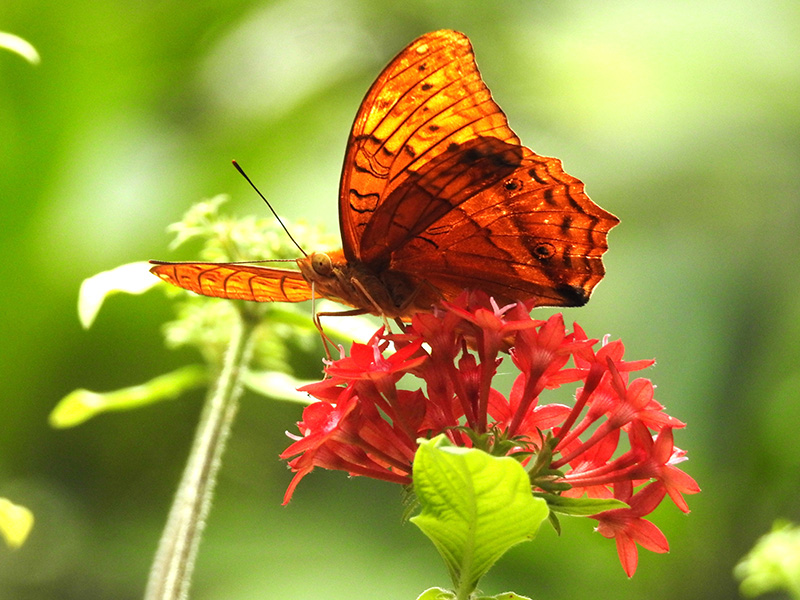
Adult Cruisers primarily feed on:
- flower nectar
- rotting fruit
- tree sap
- minerals from damp soil
The caterpillars feed exclusively on host plant leaves, especially passionfruit relatives.
Interesting Facts
- Graceful flight: The Cruiser’s gliding style is unusual among butterflies and gives it its common name.
- Colour-changing females: Female Cruisers can appear in multiple colour forms, making them harder for predators to recognise.
- Mineral collectors: Males often gather in groups on wet soil to absorb salts and nutrients.
- Forest indicator: Because they depend on healthy vegetation, their presence often signals intact forest habitat.
Conservation Status
- Global status: Not currently listed as threatened
- In Australia, the species remains locally common in suitable tropical habitats.
However, like many rainforest insects, its long-term survival depends on the protection of forest ecosystems.
Threats
Potential threats include:
- Rainforest clearing and fragmentation
- Urban expansion in tropical regions
- Loss of native host plants
- Climate change affecting tropical ecosystems
- Pesticide use in agricultural areas
Butterflies are particularly sensitive to habitat changes because both adult nectar sources and caterpillar host plants must be present.
How We Can Help
Supporting butterfly populations benefits entire ecosystems.
Ways people can help include:
- Protecting rainforest and native vegetation
- Planting nectar-rich flowers in gardens
- Growing native or non-invasive passionfruit vines that caterpillars can feed on. Host Plants include: native Passiflora species the best vine being the Passiflora aurantia while the introduced Passionfruit vine Passiflora subpelta & suberosa will attract the females to lay but the plants are toxic to the larvae and they all die. If you live within the range of the Cruiser Butterfly you should eradicate these vines from your property” and plant the native vine species.
- Reducing pesticide use
- Supporting conservation of tropical forests
Even small wildlife-friendly gardens can provide important feeding spots for butterflies travelling between habitats.
A Gliding Jewel of the Forest
The Cruiser butterfly is a quiet but beautiful part of tropical ecosystems. With wings that glow like orange sunlight and a flight that seems almost effortless, it moves through the rainforest as both pollinator and traveller.
Protecting the forests where this butterfly glides ensures that future generations will still see these living sparks drifting through warm tropical air.
References
- Australian Butterfly Foundation – https://www.abf.org.au
- Atlas of Living Australia – https://www.ala.org.au
- Butterflies of Australia – https://lepidoptera.butterflyhouse.com.au
- IUCN Red List – https://www.iucnredlist.org
- Queensland Government Wildlife Information – https://www.qld.gov.au
- CSIRO Australian Insect Resources – https://www.csiro.au :::
Photo Gallery