DUSKY GRASSWREN
Dusky Grasswren
The Dusky Grasswren is a shy, ground-dwelling bird of Australia’s arid inland landscapes. It belongs to the family Maluridae, which means it is related to fairy-wrens and emu-wrens, although it looks and behaves quite differently. Instead of bright blue plumage and busy movement through garden shrubs, the Dusky Grasswren is a bird of rocky ranges, spinifex hummocks and remote dry country.
This species is endemic to Australia and is often difficult to see well because it slips quickly through low vegetation and broken rock. It is more often noticed by a brief call, a flick of its long tail, or a fast dash between spinifex clumps.
What does the Dusky Grasswren look like?
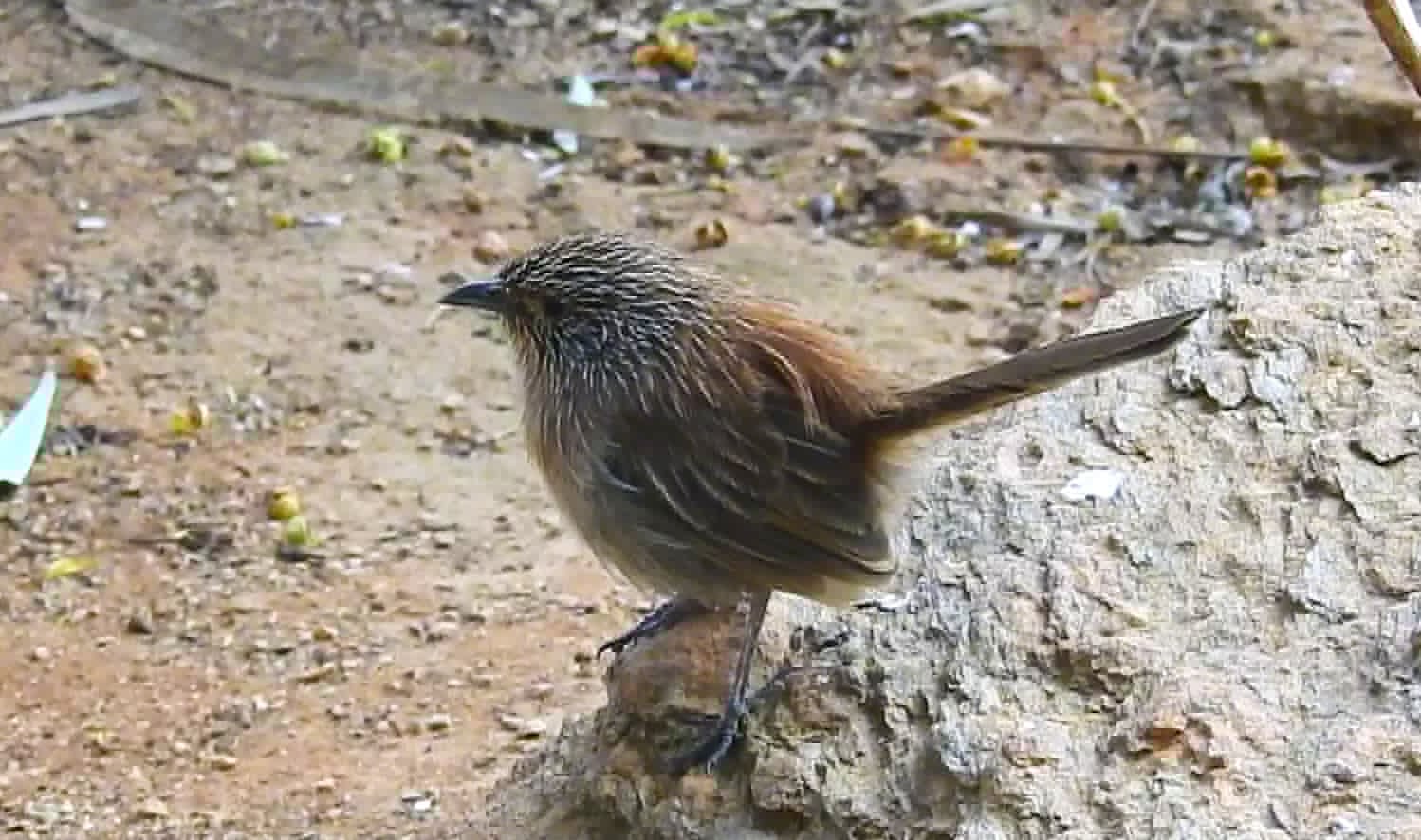
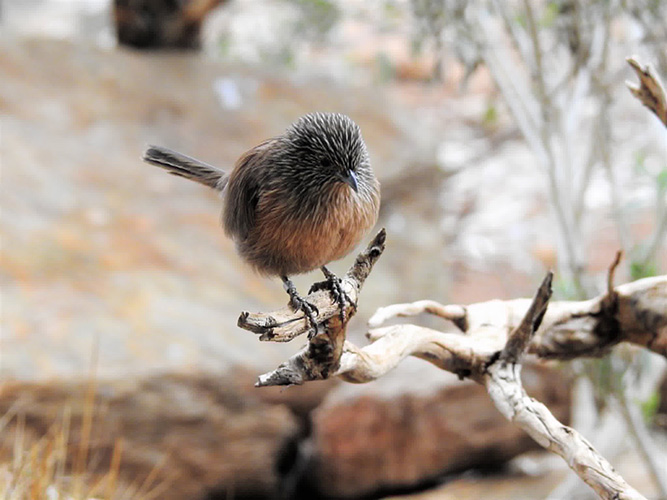
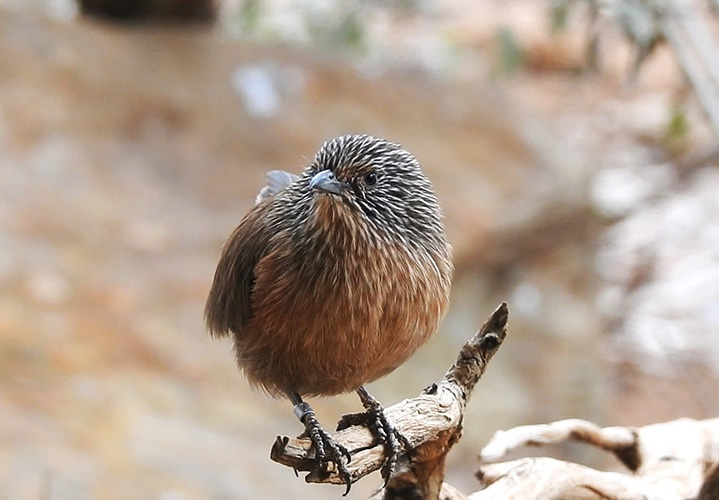
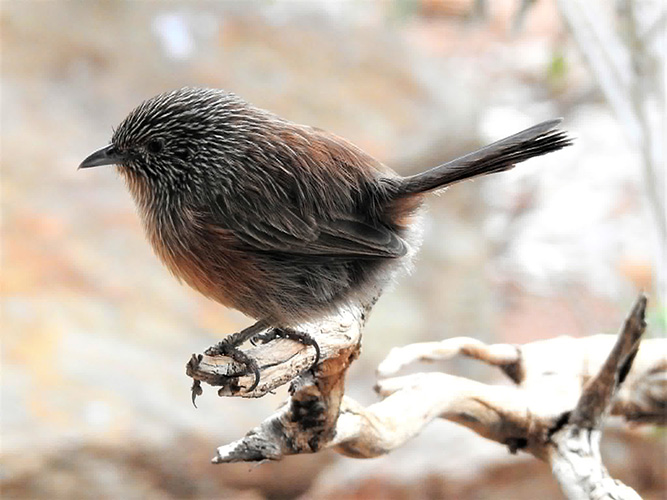
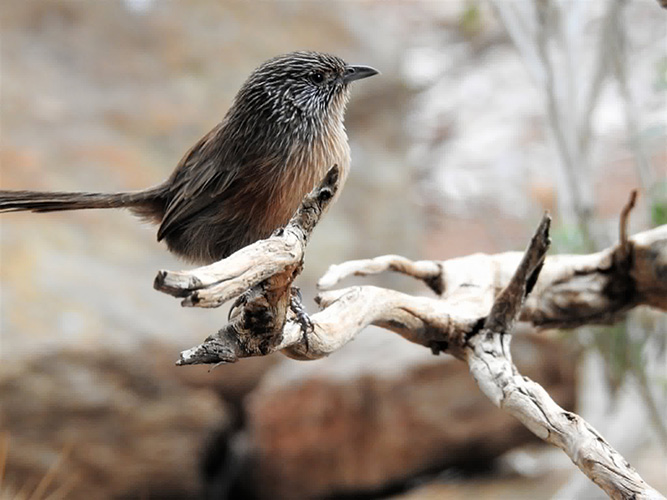
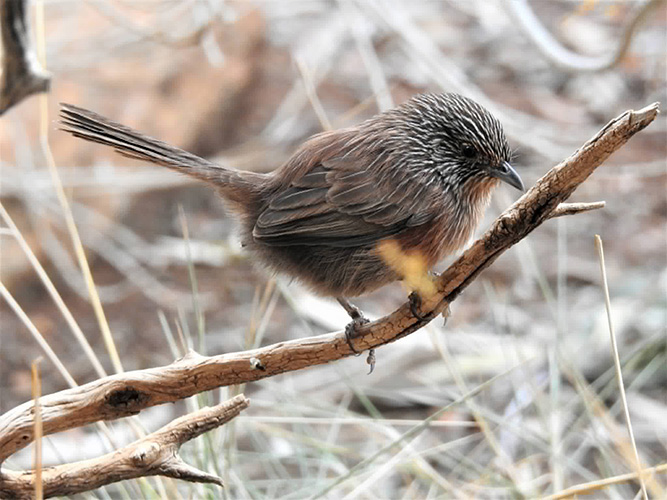
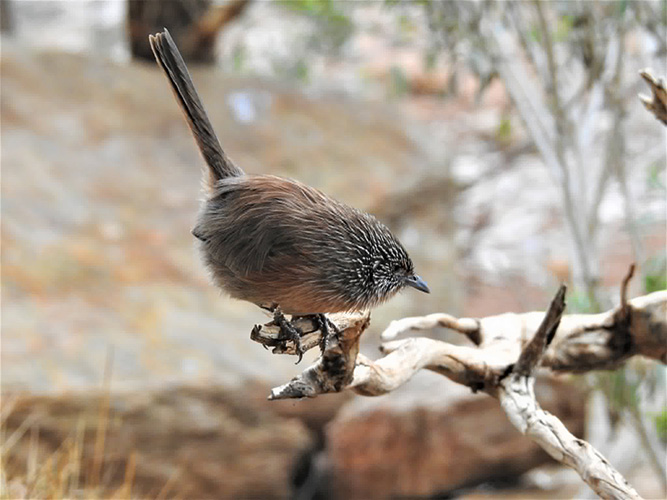
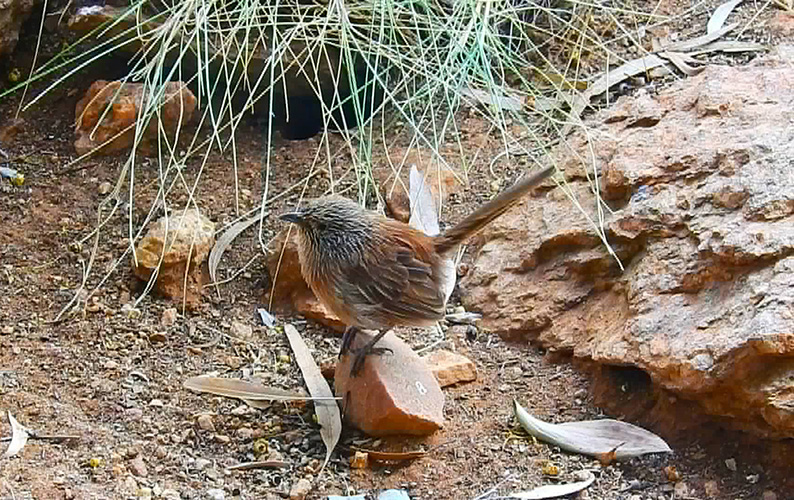
The Dusky Grasswren is a small to medium-sized, long-tailed grasswren with a sturdy body and strong legs suited to life on the ground. Its plumage is generally brown to dusky brown, helping it blend beautifully into rocky, dry country.
Key features include:
- finely streaked upperparts
- a long, graduated tail
- pale to buff-toned underparts
- a well-camouflaged, earthy appearance
- sexes that are fairly similar, unlike the more brightly coloured fairy-wrens
Its colouring is ideal for survival in arid country, where shadow, stone, dry grass and spinifex create a patchwork of browns, greys and muted gold.
What does the Dusky Grasswren sound like?
The Dusky Grasswren gives soft, fine contact calls and high, musical trills. Its voice is usually not loud, but in the stillness of rocky inland country the notes can carry surprisingly well.
People listening carefully may hear:
- thin, high-pitched calls
- short trills or tinkling notes
- quiet communication between members of a pair or small group
Like many secretive inland birds, it is often heard before it is clearly seen.
Where does the Dusky Grasswren live?
The Dusky Grasswren lives in arid and semi-arid inland Australia, especially in rocky country with spinifex and low shrubs. It favours places where broken stone, ridges, slopes and hummocks provide shelter, nesting sites and protection from predators.
Typical habitat includes:
- rocky hills and ranges
- stony slopes
- spinifex grassland
- dry gullies and escarpments
- sparsely vegetated inland country
This bird is especially associated with remote, rugged landscapes, where it can move quietly through crevices, rock piles and dense ground cover.
What does the Dusky Grasswren eat?
The Dusky Grasswren feeds mainly on small invertebrates and seeds gathered from the ground and low vegetation.
Its diet includes:
- insects
- spiders
- small invertebrates
- seeds
- other tiny food items found around spinifex and rocks
It usually forages by walking or running low to the ground, picking food from leaf litter, soil, grass bases and sheltered spots among stones.
How long does the Dusky Grasswren live?
Precise published information on the lifespan of the Dusky Grasswren in the wild is limited. This is common for remote inland species that are difficult to study over long periods.
Like many small Australian songbirds, it is likely to live several years when conditions are favourable, but survival can vary with:
- drought
- fire
- food availability
- predation by introduced animals
Because long-term studies are limited, we will present longevity cautiously rather than give an exact figure that may not be well supported.
Dusky Grasswren breeding and nest
The breeding of the Dusky Grasswren is closely linked to seasonal conditions, especially rainfall and food supply. In inland Australia, successful breeding often depends on good seasons.
Breeding features include:
- a domed nest made from grasses and plant material
- the nest usually placed low in spinifex or shrubs
- a side entrance, which helps conceal the nest
- a small clutch, commonly around 2 to 3 eggs
The nest is carefully hidden, giving protection from heat, wind and predators. As with many grasswrens, both adults are involved in caring for the young.
Interesting facts about the Dusky Grasswren
- The Dusky Grasswren is in the same family as fairy-wrens, even though it looks much more subdued.
- It is not a true wren. True wrens belong to a completely different bird family.
- Grasswrens are famous for being secretive and difficult to observe, often running rather than flying far.
- The Dusky Grasswren is specially adapted to harsh inland environments, where camouflage and caution are essential.
- In older references, taxonomy may differ, so some sources may treat grasswren groups slightly differently.
Dusky Grasswren conservation status
The Dusky Grasswren is generally regarded as Least Concern globally on current broad conservation assessments, although this does not mean it faces no risks. Like many inland birds, it occurs in patchy populations and depends on healthy habitat.
Its apparent security can be affected by the fact that:
- it lives in specialised habitat
- inland populations can fluctuate with seasonal conditions
- fire and introduced predators can affect local numbers.
Threats to the Dusky Grasswren
The main threats to the Dusky Grasswren include:
- altered fire regimes, especially fires that are too frequent or too extensive
- predation by feral cats and foxes
- habitat disturbance from grazing or trampling by stock and feral herbivores
- fragmentation of suitable habitat
- climate change, including harsher droughts and changing fire patterns
Because this species depends on dense ground cover and shelter among rocks and spinifex, any process that simplifies or destroys that structure can reduce habitat quality.
How people can help the Dusky Grasswren
People can help protect the Dusky Grasswren by:
- supporting feral predator control
- protecting rocky spinifex habitat
- encouraging careful, science-based fire management
- respecting fragile inland habitats when travelling
- staying on marked tracks in sensitive areas
- recording sightings through citizen science projects such as eBird or BirdLife Australia’s Birdata
- supporting conservation programs and Indigenous land management, which play an important role in caring for arid landscapes
Why the Dusky Grasswren matters
The Dusky Grasswren is a wonderful example of how life adapts to Australia’s toughest environments. It may not be brightly coloured or easy to find, but it represents the quiet resilience of the inland. In rocky spinifex country, where the air is dry and the landscape seems still, this shy little bird is part of a much larger story about survival, balance and the importance of protecting Australia’s wild places.
Reference links
Australian Faunal Directory: Amytornis purnelli
https://biodiversity.org.au/afd/taxa/Amytornis_purnelliIUCN Red List search: Amytornis purnelli
https://www.iucnredlist.org/search?query=Amytornis%20purnelli&searchType=specieseBird species page: Dusky Grasswren
https://ebird.org/species/dusgra1Atlas of Living Australia search: Amytornis purnelli
https://www.ala.org.au
Photo Gallery