Short-eared rock-wallaby
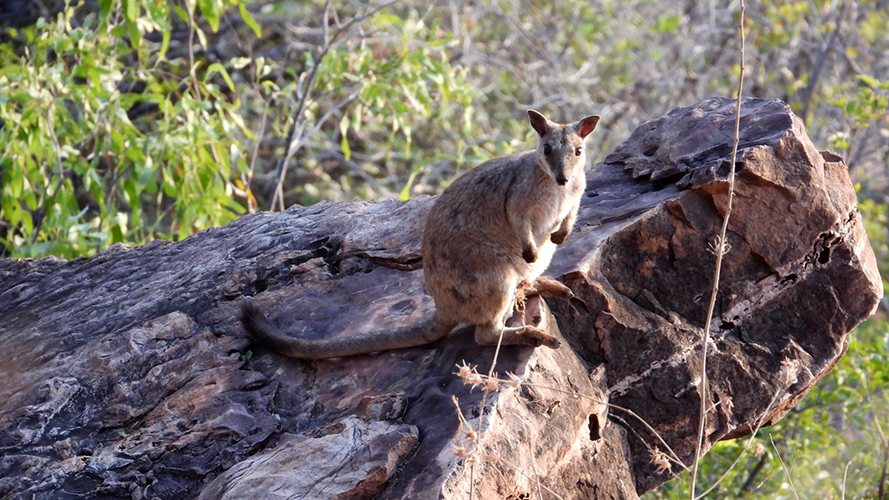
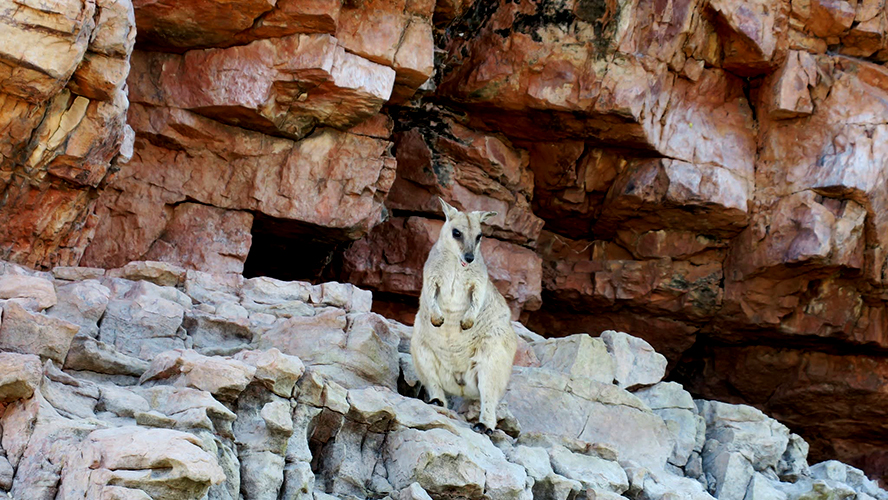
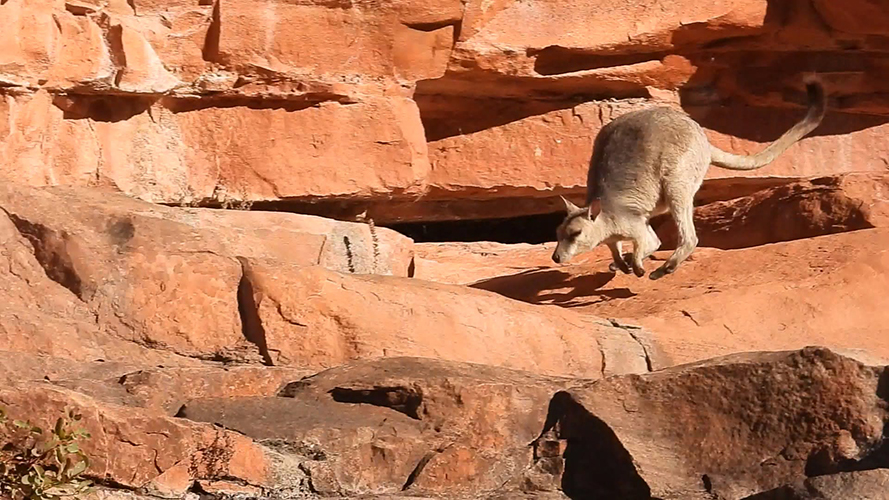
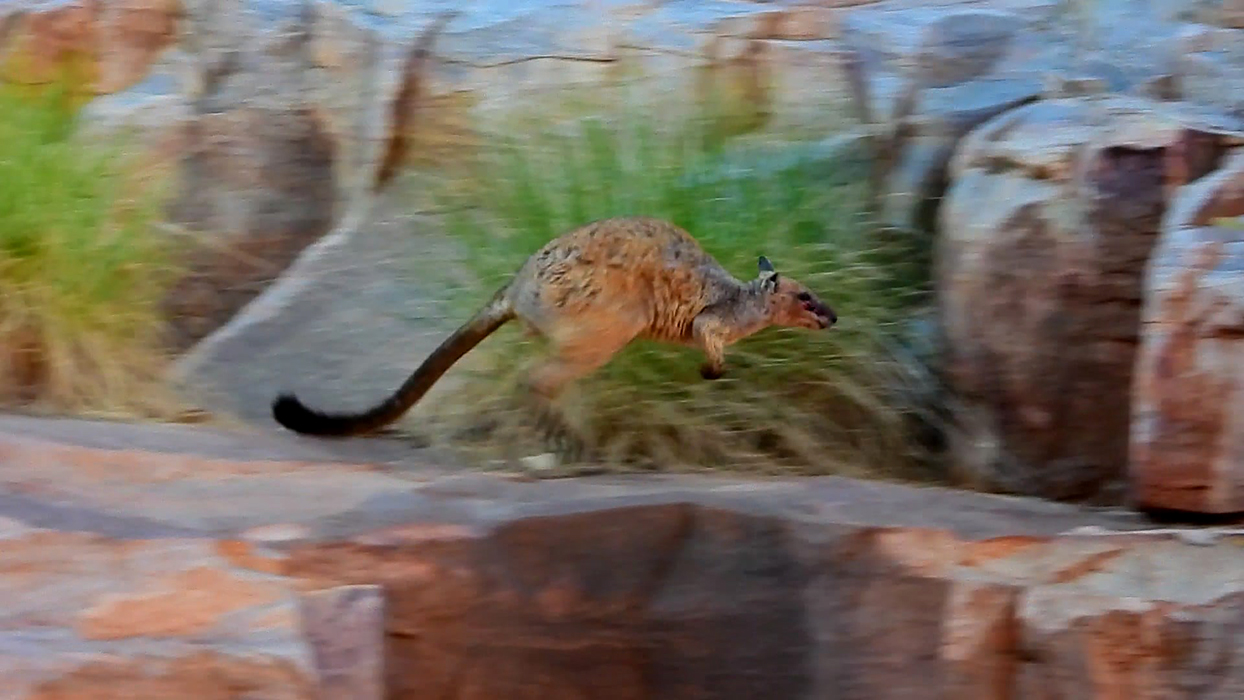
In the rugged stone country of northern Australia, the Short-eared Rock-wallaby moves with extraordinary confidence. One moment the rocks seem still and silent, and the next a small wallaby springs across a ledge, tail held out for balance, disappearing into a crack in the escarpment. This agile marsupial is beautifully adapted to life among cliffs, boulders and sandstone outcrops, where shelter, shade and nearby feeding areas help it survive in a harsh and demanding landscape.
The Short-eared Rock-wallaby is a small rock-wallaby species known for its short rounded ears, soft earthy colouring and remarkable climbing ability. It spends much of the day resting in crevices, caves and shaded rock ledges, then emerges in the cooler hours to feed on grasses, herbs and other plant material.
Taxonomy note
The Short-eared Rock-wallaby has undergone taxonomic revision. Older references often used Petrogale brachyotis for a broader group across northern Australia, while some modern authorities separate part of that former range as Wilkins’ Rock-wallaby, Petrogale wilkinsi. Because of this, some maps and conservation notes differ between sources. For clarity, this page focuses on the Short-eared Rock-wallaby, Petrogale brachyotis, while noting that classification changes may affect range information.
Scientific classification
Scientific name: Petrogale brachyotis
Common name: Short-eared Rock-wallaby
Family: Macropodidae
Order: Diprotodontia
Animal group: Marsupial
What does the Short-eared Rock-wallaby look like?
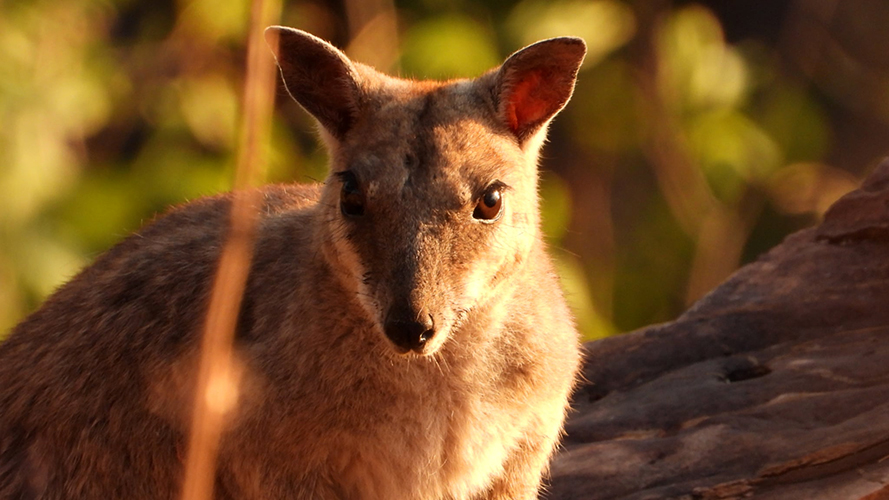
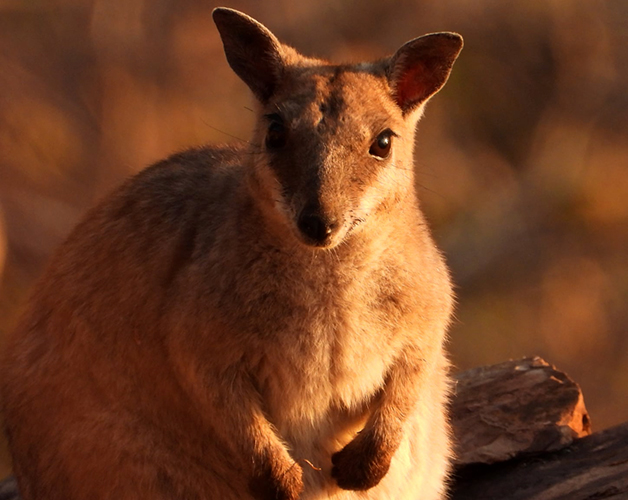
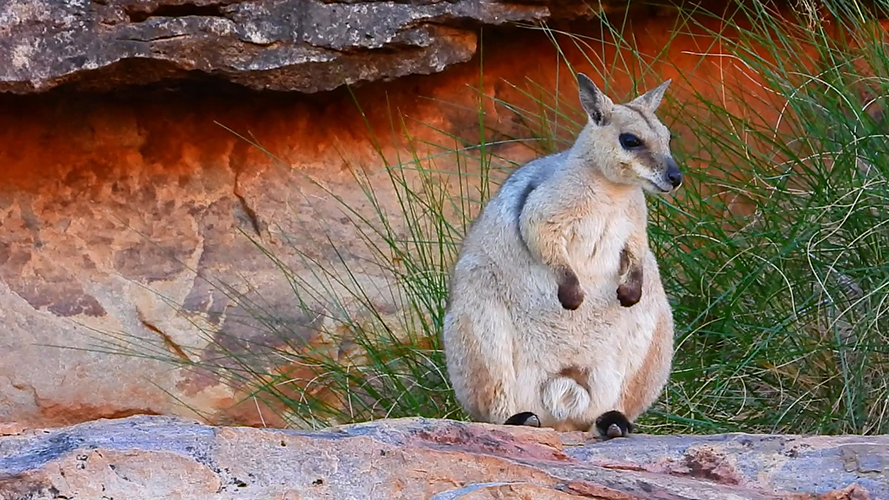
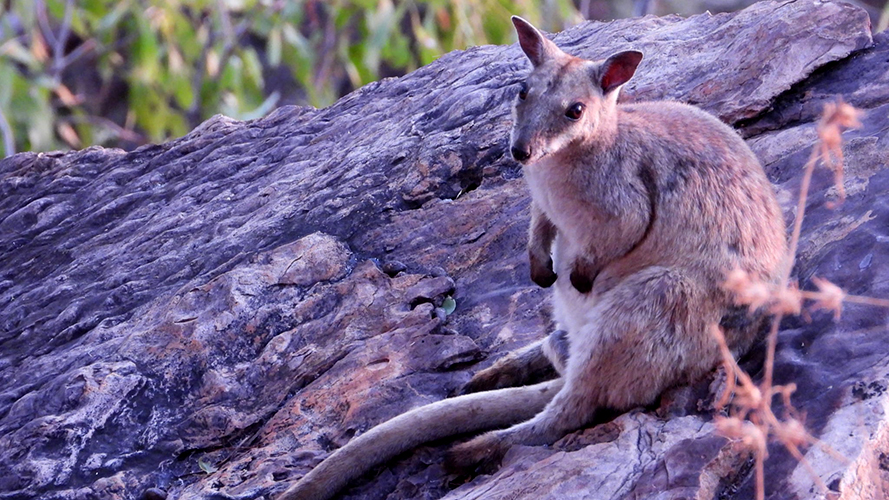
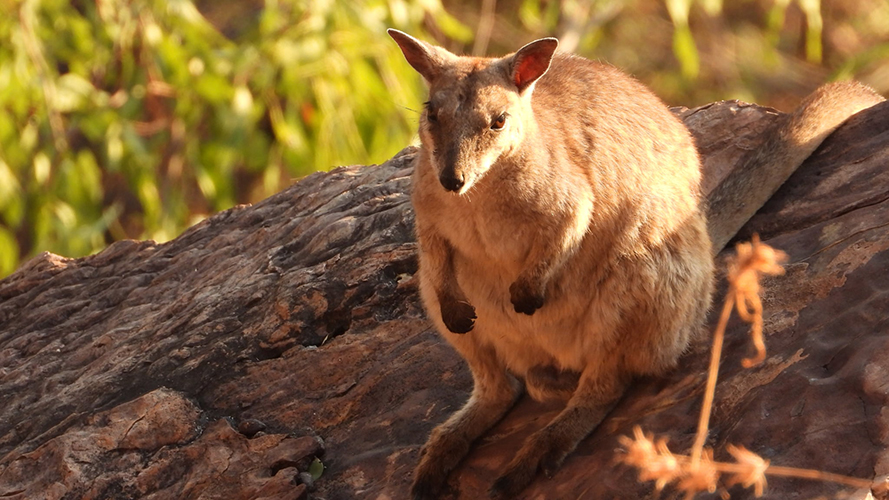
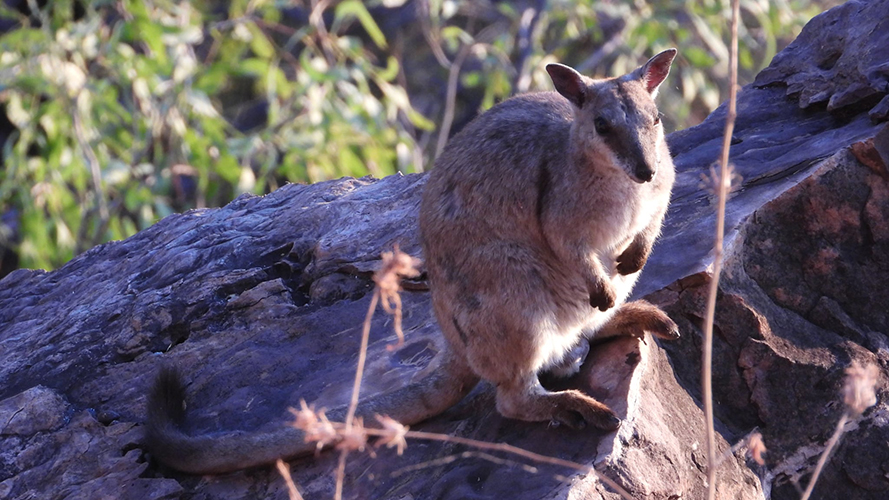
The Short-eared Rock-wallaby is a small, lightly built macropod with a body designed for speed, balance and climbing. Its most obvious feature is its short rounded ears, which are smaller than those of many other wallabies and help give the species its name.
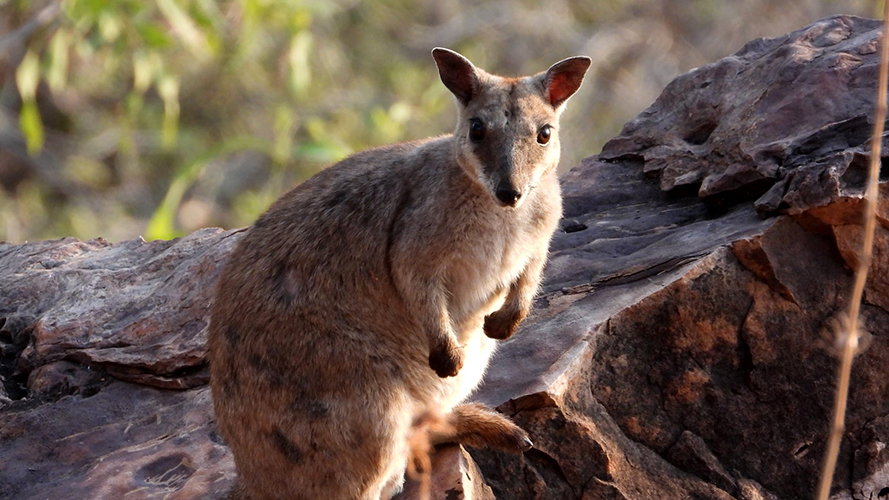
It usually has grey-brown to reddish-brown fur, often blending closely with the colour of surrounding rock. The underparts are paler, and the face is fine and alert, with large dark eyes suited to low light. Its hind legs are powerful, its feet are adapted for gripping uneven surfaces, and its long tail acts as a balancing aid when moving across cliffs, boulders and narrow ledges.
This species may vary in colour and pattern across different regions, which is one reason identification can sometimes be difficult in the northern rock-wallaby group.
What does the Short-eared Rock-wallaby sound like?
The Short-eared Rock-wallaby is generally a quiet animal. It is not known for loud or frequent calls, and many people never hear one in the wild.
Like other rock-wallabies, it may make soft grunts, huffs or gentle contact sounds, especially between a mother and her joey. When disturbed, it is more likely to flee quickly across rock than to vocalise. In most cases, the first sign of its presence is movement rather than sound.
Where does the Short-eared Rock-wallaby live?
The Short-eared Rock-wallaby lives in northern Australia, especially in rugged rocky landscapes where cliffs, caves, crevices and boulder piles provide protection from heat and predators.
Depending on the taxonomy used, its broader historical range has included rocky parts of the Kimberley and the Top End. Under more recent classification, the true Short-eared Rock-wallaby has a more restricted western distribution, while some eastern populations are treated as Wilkins’ Rock-wallaby.
Habitat
This species is strongly tied to rocky country and is rarely found far from sheltering rock formations. Its preferred habitat includes:
- sandstone escarpments
- rocky hills and cliff lines
- boulder fields
- caves, overhangs and crevices
- nearby savanna woodland, shrubland and grassy feeding areas
These rocky refuges are essential. They provide shade during the hottest part of the day, protection for joeys and adults, and quick escape routes from danger.
Diet
The Short-eared Rock-wallaby is a herbivore. It feeds on a range of plant material found in and around rocky habitats, including:
- grasses
- herbs
- leaves
- shoots
- other low-growing vegetation
It usually forages during the evening, at night and in the early morning, when temperatures are cooler and the risk of exposure is lower. Feeding close to rocky shelter allows it to retreat quickly if threatened.
Behaviour
The Short-eared Rock-wallaby is mostly crepuscular and nocturnal, meaning it is most active at dusk, during the night and around dawn. During the day it usually rests in sheltered rocky sites.
It is highly agile and can leap from ledge to ledge with precision. Its feet, hind limbs and tail work together to help it climb steep surfaces and negotiate broken ground. Individuals may be seen alone or in small loose groups, depending on food supply, shelter and local conditions.
Like many rock-wallabies, it relies on stillness, camouflage and quick escape rather than confrontation.
Lifespan
Exact lifespan data for the Short-eared Rock-wallaby is not widely published in easily available sources. Based on related rock-wallabies, it is likely to live around 7 to 10 years in the wild, with some individuals potentially living longer in protected conditions.
Survival depends heavily on food availability, shelter quality, fire patterns and predation pressure.
Breeding
Like other marsupials, the Short-eared Rock-wallaby gives birth to a tiny, underdeveloped young after a short gestation of about one month. The newborn then crawls into the mother’s pouch, where it continues developing for many months.
Females usually raise one joey at a time. Breeding may occur when seasonal conditions are favourable, especially when food is available. After leaving the pouch, the joey continues to stay close to its mother while it learns to move safely through rocky habitat and feed independently.
Conservation status
The Short-eared Rock-wallaby is generally regarded as Least Concern at the global level in the broader traditional sense of Petrogale brachyotis. It is not generally listed as nationally threatened under Australia’s EPBC Act.
However, conservation interpretation can vary because of taxonomic revision within the Short-eared Rock-wallaby complex. Even where the species is not officially listed as threatened, local populations may still be vulnerable to habitat pressure, altered fire regimes and introduced predators.
Threats
Although the Short-eared Rock-wallaby is not among Australia’s most critically threatened mammals, it still faces important pressures in parts of its range.
Main threats include:
- predation by feral cats
- predation by dogs in some areas
- habitat disturbance
- inappropriate fire regimes, especially frequent or intense late dry season fires
- grazing impacts from livestock and feral herbivores
- habitat degradation around rocky refuges
- local fragmentation from development or land-use change
For a species so dependent on rocky shelter and nearby feeding areas, even small habitat changes can have lasting effects.
How people can help
People can help protect the Short-eared Rock-wallaby by supporting practical conservation measures such as:
- protecting rocky escarpments and surrounding feeding habitat
- supporting feral cat control programs
- encouraging carefully managed fire regimes
- supporting Indigenous ranger programs and local land stewardship
- keeping domestic dogs away from sensitive wildlife habitat
- avoiding disturbance around rocky refuges and known wallaby sites
- learning more about northern Australian wildlife and sharing reliable information
Interesting facts about the Short-eared Rock-wallaby
The Short-eared Rock-wallaby is full of fascinating adaptations for life on stone.
- Its short rounded ears help distinguish it from some other wallaby species.
- It is an expert climber and can move across steep rock faces with surprising speed.
- Its tail works like a balancing pole when leaping between ledges.
- Its colouring helps it blend into rocky surroundings.
- Taxonomy in this group has changed over time, so older guides and modern scientific sources may not always agree on range or naming.
Why the Short-eared Rock-wallaby matters
The Short-eared Rock-wallaby is part of the rich and highly specialised mammal life of northern Australia. Species like this remind us that even harsh rocky landscapes are full of hidden wildlife, each animal shaped by its environment in extraordinary ways. Protecting rocky habitats, managing fire carefully and reducing pressure from introduced predators helps preserve not just one wallaby, but entire ecosystems.
Photo Gallery