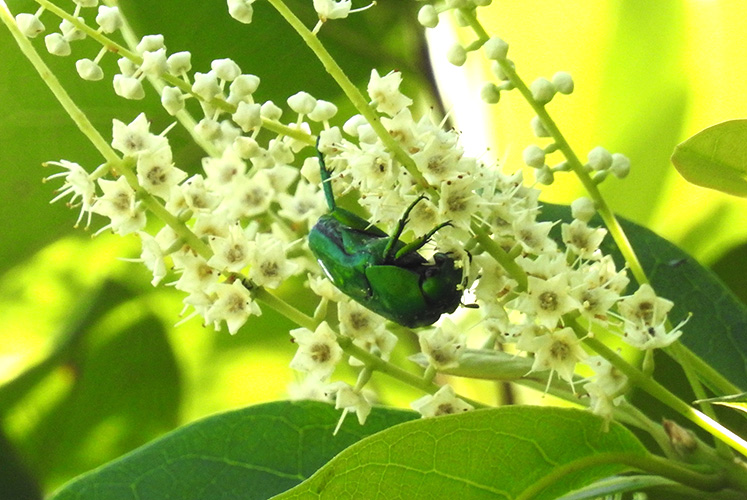
Flower Chafer Beetle
Wallace’s Flower Chafer: An Electric Green Gem of Cape York
Deep in the tropical woodlands and forests of Australia’s far north lives a beetle so brightly coloured it looks like a living jewel. Meet Wallace’s Flower Chafer (Ischiopsopha wallacei), a stunning member of the scarab beetle family found nowhere else on Earth but the Cape York Peninsula.
A Flash of Electric Green
The first thing that strikes you about this beetle is its incredible colour. It’s not just green; it’s a brilliant, metallic, “electric” green that seems to glow in the sunlight.
- Size: It’s an impressive beetle, growing up to 30 millimetres in length.
- Built for Flight: Like other flower chafers, it has a flattened body and is a powerful flyer. A special design feature allows them to fly with their hard outer wings (elytra) closed, popping them up just enough to let their transparent flight wings unfold from underneath. This makes them exceptionally fast and agile in the air.
- A Family Trait: It belongs to a group of beetles known as the Schizorhinini tribe. A characteristic feature of its genus, Ischiopsopha, is that the small triangular plate between the top of its wing cases (called the scutellum) is visible. In many other beetles, this is hidden.
Life in the Tropics
This dazzling beetle is a true tropical specialist. Its home is the Cape York Peninsula in far north Queensland. While many of the specific details of its private life remain a mystery to science, we can infer a lot from the behaviour of its close relatives in the Australian flower chafer family.
The Day-Shift Diner
Unlike many scarab beetles that are active at night, flower chafers are typically diurnal, meaning they are out and about during the day. You are most likely to spot an adult beetle buzzing around the canopies of flowering trees and shrubs in the bright sunshine.
As their name suggests, their primary food source is flowers. They are equipped with specialised mouthparts for feeding on nectar and pollen, making them important pollinators for various native plants. Some related species are also known to feed on sap flows from trees or even rotting fruit.
The Hidden Larval Life
The life of a Wallace’s Flower Chafer begins as an egg laid in soil or decaying organic matter. Upon hatching, a C-shaped, white grub emerges.
These larvae live a hidden life underground or deep inside rotting logs. They are nature’s recyclers, feeding on decaying wood and plant material, breaking it down and returning vital nutrients to the ecosystem. After feeding and growing for some time, the larva forms a chamber and pupates, eventually transforming into the magnificent electric-green adult that emerges to continue the cycle.
A Natural Wonder Waiting to be Understood
Despite its striking appearance, there is still so much we don’t know about Ischiopsopha wallacei. We don’t know exactly which native flowers it prefers, how long its life cycle takes, or the specific types of forest habitat it relies on.
It stands as a shining example of the incredible, and often under-studied, biodiversity of Australia’s tropical north. Spotting one of these electric-green jewels flashing through the sun-dappled forest is a special moment for any nature lover.
Photo Gallery