Four O'Clock Moth
Dysphania numana
Four O’Clock Moth
Family: Geometridae (The Geometers or Loopers) Distribution: Tropical North Queensland (Wet Tropics to Cape York)
If you are walking through the rainforests of North Queensland and spot a bright yellow and black insect fluttering through the canopy, do not be so quick to call it a butterfly. You might just be looking at one of Australia’s most deceptive moths.
The Four O’Clock Moth is a rebel among moths. While most of its cousins in the Geometridae family are cryptic, brown, and nocturnal, Dysphania numana is bold, colourful, and loves the sun.
Why is it called the “Four O’Clock” Moth?
The common name comes from a keen observation by early naturalists and locals. These moths are widely believed to become most active in the late afternoon, around 4:00 PM, just before the evening settles in.
However, nature rarely sticks to a strict timetable! You will often see them flying lazily around the rainforest canopy at various times during the day, particularly during the wet season.
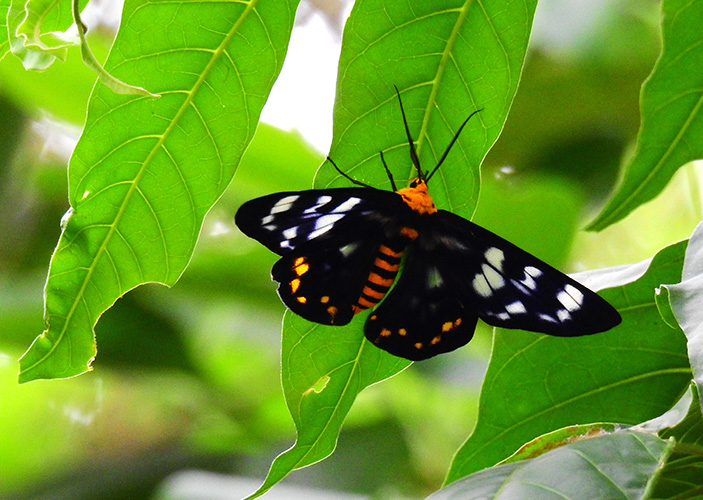
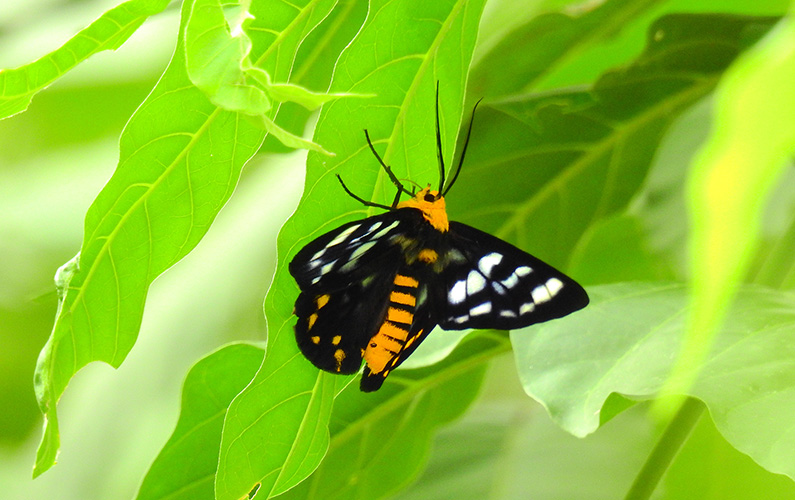
Identification: A Butterfly in Disguise?
At first glance, it mimics the appearance of the protected Birdwing butterflies or the Tiger moths.
- Wings: A striking deep yellow or orange distinctively patterned with black spots and bands.
- Body: Unlike the stout, furry bodies of many moths, it has a relatively slender body (though still “fuzzier” than your average butterfly).
- Flight: It has a slow, fluttering flight pattern, often gliding between trees, which reinforces the butterfly illusion.
The Life Cycle
The beauty of this species starts long before it grows wings.
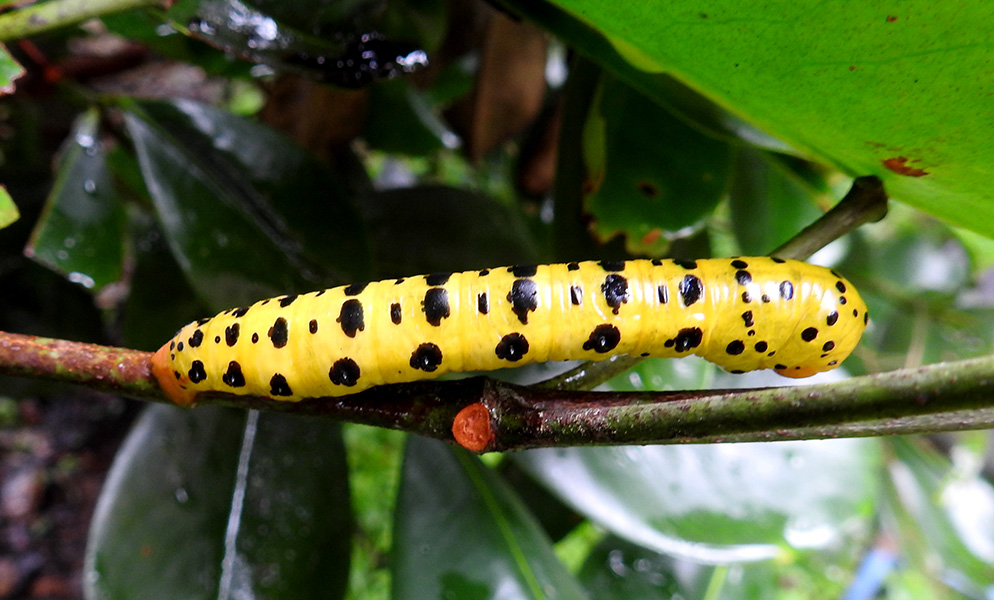
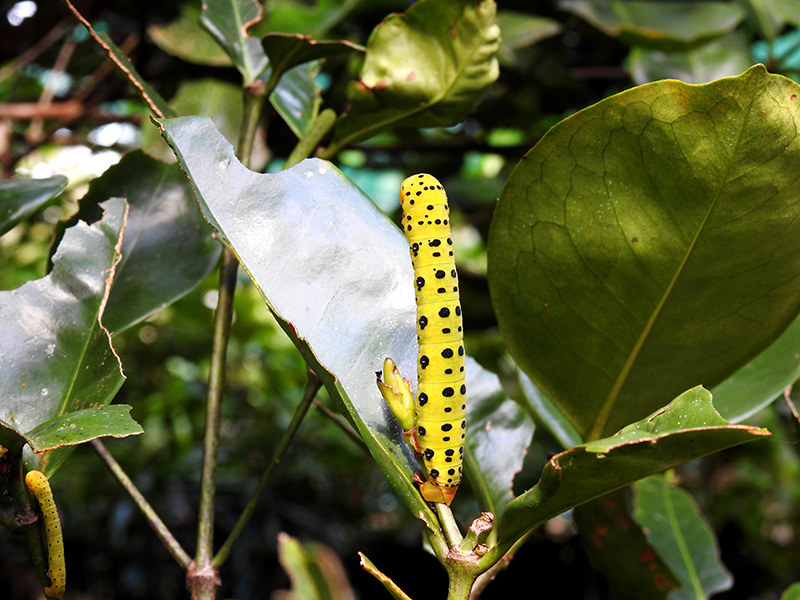
- The Caterpillar: The larvae are just as spectacular as the adults—bright orange-yellow with black spots and a shiny, almost “plastic” look. They are “loopers,” meaning they move by arching their backs in a loop.
- The Host Plant: This moth is highly selective. The caterpillars feed almost exclusively on Corkwood (Carallia brachiata), also known as the Freshwater Mangrove. If you have these trees near a watercourse in the tropics, keep an eye out for leaf damage and these bright caterpillars.
Survival Strategy
Why be so bright? In nature, bright colours are often a warning sign. The Four O’Clock Moth is aposematic—its vibrant contrast signals to predators (like birds) that it is distasteful. It is a slow flyer because it doesn’t need to rush; its reputation keeps it safe.
- Conservation Angle: It highlights the importance of preserving specific rainforest trees like the Carallia, showing that if we lose the tree, we lose this spectacular moth.
Photo Gallery