Fruit-Piercing Moth
Ischyja albata
Fruit‑Piercing Moth
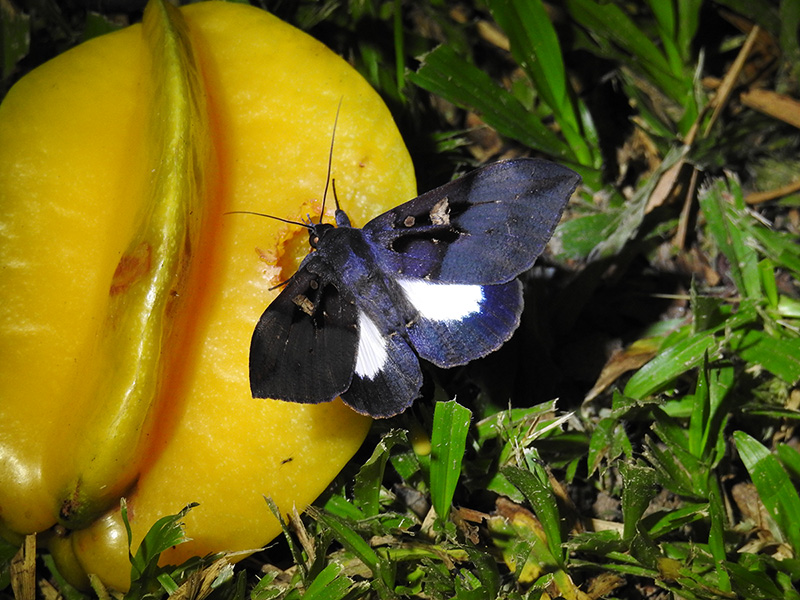
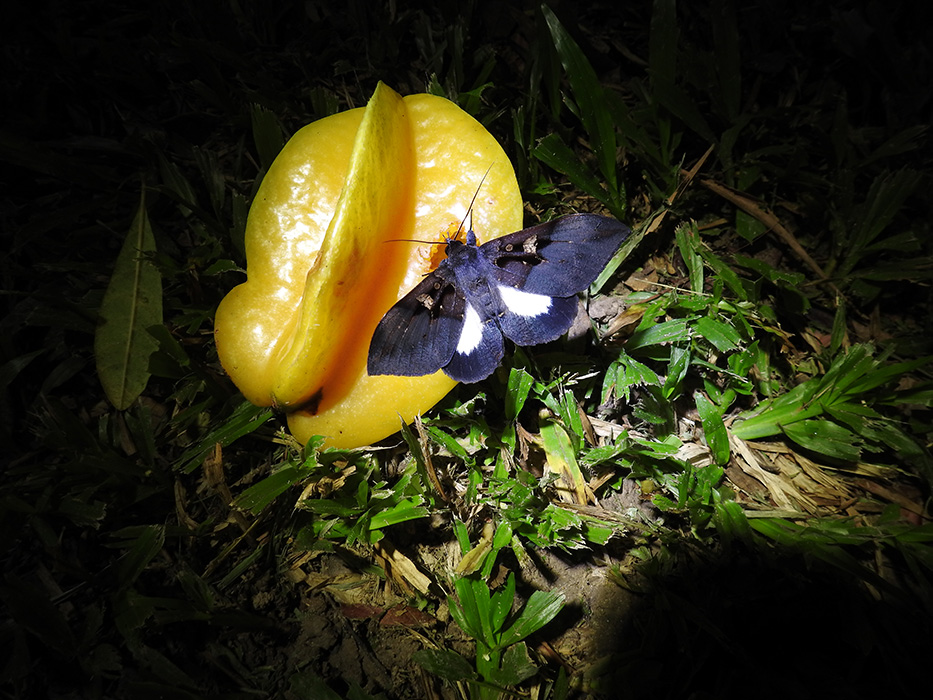
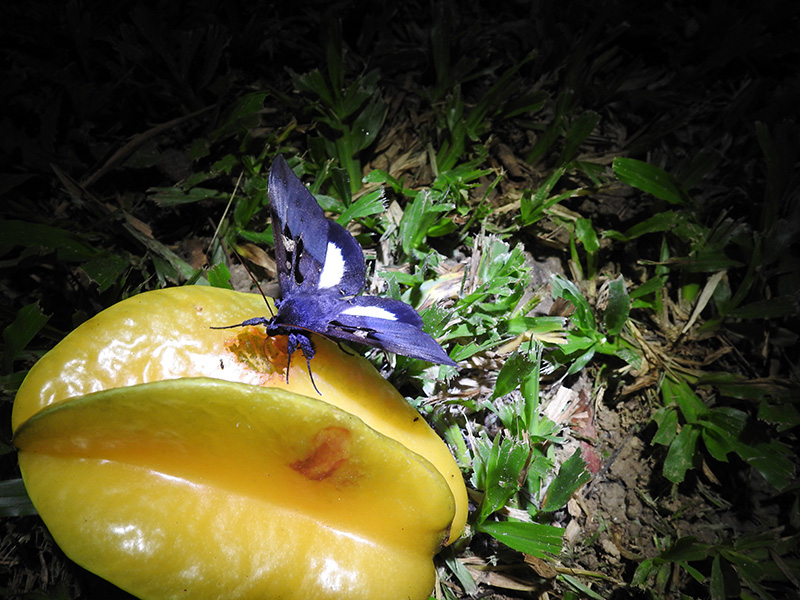
The Fruit‑piercing Moth (Ischyja albata) is a large and striking nocturnal moth found in tropical northern Australia, particularly in Queensland’s rainforest regions. Known for its ability to pierce the skin of ripe fruit and feed on the juice inside, this moth is both an important part of rainforest ecosystems and, at times, a pest in orchards and fruit‑growing areas.
Belonging to the Erebidae family, fruit‑piercing moths are a fascinating group of insects specially adapted for feeding on fruit. Their powerful mouthparts allow them to puncture the skins of soft fruits that most moths would be unable to access.
What Does the Fruit‑piercing Moth Look Like?
Ischyja albata is a large moth with a wingspan that can reach 80–100 millimetres.
Its appearance is bold and beautifully patterned:
- Forewings: dark brown to grey with subtle bands and mottled markings that help it blend with tree bark.
- Hindwings: bright orange with bold black borders, which become visible when the moth takes flight.
- Body: sturdy and covered with short hairs typical of large nocturnal moths.
- Eyes: large and well adapted for night vision.
When resting with wings folded, the moth is well camouflaged, but when disturbed its bright orange hindwings flash into view.
Habitat and Distribution
The Fruit‑piercing Moth occurs mainly in tropical northern Australia, particularly in rainforest and wet woodland environments.
It is commonly found in:
- tropical rainforests
- forest edges
- orchards and fruit‑growing areas
- woodland near rivers and creeks
Outside Australia, related species occur widely across Southeast Asia and the Pacific, where they inhabit similar warm, forested environments.
Feeding Habits
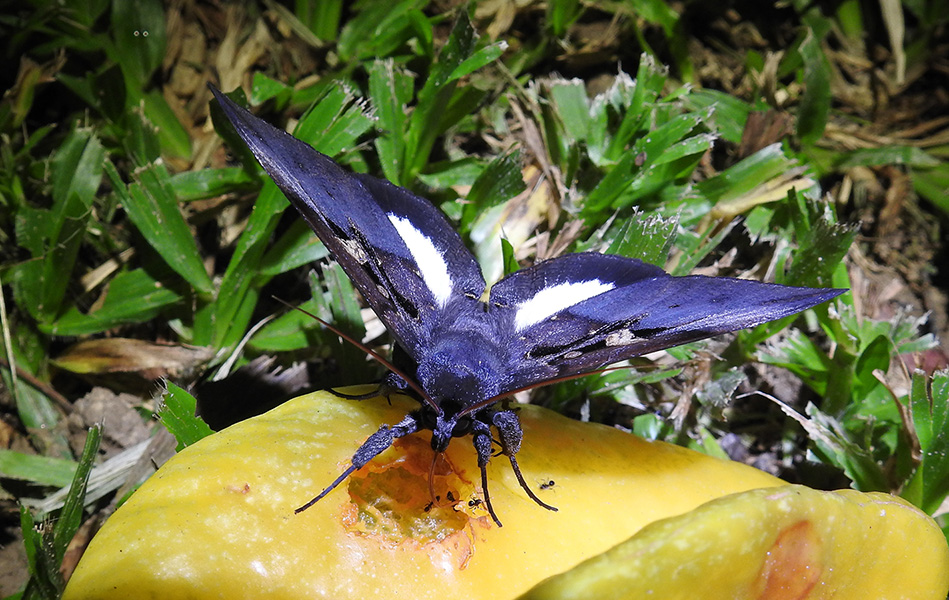
Unlike most moths that feed only on nectar, adult fruit‑piercing moths are equipped with strong, piercing proboscises that allow them to puncture fruit skins.
Their diet includes:
- ripe tropical fruits
- cultivated fruits in orchards
- juices from damaged fruit
They use their proboscis like a tiny drill, piercing the fruit and then sucking out the juice. This behaviour is the reason they are known as fruit‑piercing moths.
In natural ecosystems they feed on wild fruit in forests, but in agricultural areas they may occasionally feed on crops such as mangoes or citrus.
Breeding and Host Plants
The caterpillars of Ischyja albata feed on forest plants, particularly climbing vines and shrubs found in tropical habitats.
Life Cycle
- Egg: laid on host plant leaves.
- Caterpillar: feeds on foliage and grows through several stages.
- Pupa: forms a chrysalis within leaf litter or sheltered vegetation.
- Adult moth: emerges to feed and reproduce.
The caterpillars are usually well camouflaged, helping them avoid predators while feeding.
Longevity
The complete life cycle from egg to adult usually takes around six to eight weeks, depending on environmental conditions.
Adult moths typically live two to three weeks, during which they focus on feeding and reproduction.
Indigenous Connections
Moths and other night‑flying insects are part of the rich biodiversity of Australia’s tropical forests. In many Indigenous knowledge systems, insects are recognised as indicators of seasonal change and the health of forest environments.
The appearance of certain moths may coincide with fruiting seasons and changes in vegetation. Because Australia contains many Indigenous language groups, traditional names for specific moth species vary across regions and are not always widely recorded in public sources.
Conservation Status and Threats
The Fruit‑piercing Moth is not considered threatened, as it occurs widely in suitable tropical habitats.
However, like many forest insects, it can be affected by:
- loss of rainforest habitat
- pesticide use
- reduction of native host plants
Maintaining healthy forest ecosystems helps support these moths and the many animals that rely on the same habitats.
Why the Fruit‑piercing Moth Matters
Although sometimes regarded as a pest in orchards, the Fruit‑piercing Moth is a fascinating example of how insects adapt to their environment. Its specialised feeding habits and striking appearance make it an interesting member of Australia’s nocturnal wildlife.
By protecting tropical forests and supporting natural plant communities, we help ensure that species like Ischyja albata continue to play their role in the complex web of rainforest life.
Scientific References
Braby, M. F. Butterflies of Australia: Their Identification, Biology and Distribution
Atlas of Living Australia – Ischyja albata records
Australian Museum – moth species information
Queensland Museum – tropical insect biodiversity
Wikipedia – Ischyja albata (Fruit‑piercing moth)
Photo Gallery