Great Carpenter Bee – Australia’s Gentle Giant Pollinator
Deep in Australia’s forests, woodlands and even suburban gardens lives one of our most impressive native insects: the Great Carpenter Bee. Large, glossy and often mistaken for something dangerous, this bee is in fact a gentle, vital pollinator and a powerful symbol of Australia’s unique invertebrate life.
What Is the Great Carpenter Bee?
The Great Carpenter Bee is commonly known by its scientific name Xylocopa (several species occur in Australia, including Xylocopa aruana and Xylocopa aeratus). These bees belong to the family Apidae, the same family as honey bees and blue‑banded bees.
They are called carpenter bees because of their remarkable ability to excavate nests in wood, not because they eat it.
How to Recognise a Great Carpenter Bee
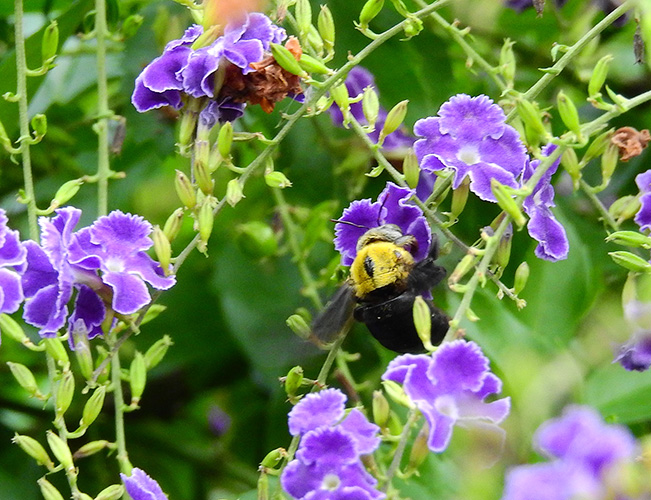
Great Carpenter Bees are the largest bees in Australia, and their size alone often causes confusion or alarm.
Key features include:
- Body length of 20–30 millimetres
- A robust, solid build
- Shiny black or metallic blue‑black colouring
- Deep, loud buzzing when flying
- Broad wings with a purplish or smoky sheen
Despite their intimidating appearance, they are calm insects that prefer to avoid conflict.
Male and Female Differences
Male and female Great Carpenter Bees look similar at first glance, but there are subtle differences:
- Females are slightly larger and can sting if handled
- Males cannot sting at all
- Males often have lighter facial markings
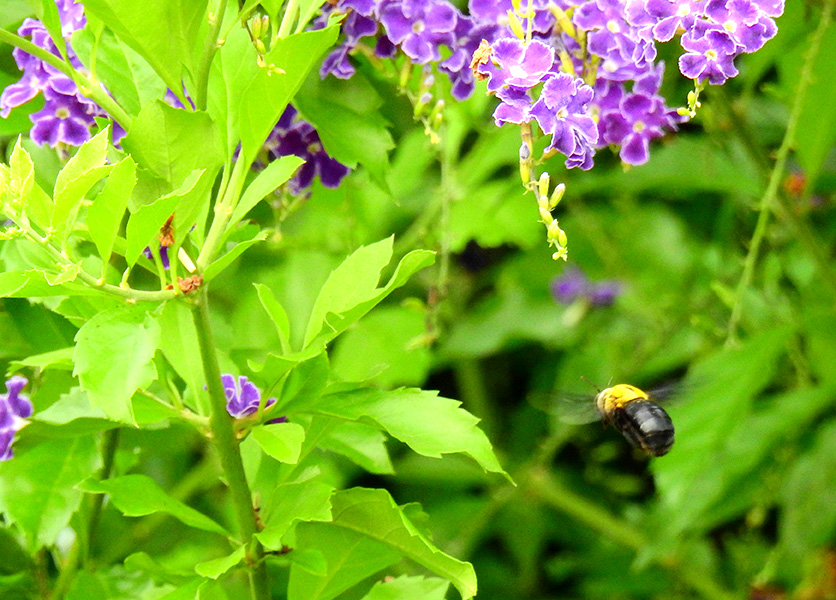
Both sexes are frequently seen hovering near flowers or nest sites.
Where Great Carpenter Bees Live
Great Carpenter Bees are found across much of mainland Australia, particularly in:
- Eastern Australia
- Northern Australia
- Coastal and inland woodlands
They inhabit forests, open woodland, bushland edges and increasingly urban gardens, especially where flowering plants and suitable nesting wood are available.
They are absent from Tasmania.
Nesting Behaviour – Nature’s Woodworkers
Female Great Carpenter Bees excavate tunnels in dead wood, tree trunks, branches, fence posts and timber structures. They do not attack living trees and usually choose weathered or softened wood.
Inside the tunnel, the female creates a series of brood chambers. Each chamber is stocked with pollen and nectar, and a single egg is laid inside. The tunnel is then sealed, and the larvae develop safely within the wood.
This nesting behaviour plays a small but important role in wood breakdown and nutrient cycling.
Feeding and Pollination
Great Carpenter Bees feed on nectar and pollen from a wide variety of plants. They are especially important pollinators for:
- Native trees and shrubs
- Large, open flowers
- Garden plants with deep or sturdy blossoms
Their large size allows them to pollinate flowers that smaller bees cannot access effectively.
As they move from flower to flower, pollen clings to their hairy bodies and is transferred between plants, supporting seed and fruit production.
Are Great Carpenter Bees Dangerous?
Despite their size and loud buzz, Great Carpenter Bees are not aggressive.
Important points:
- Females can sting, but only if handled or threatened
- Males cannot sting at all
- They do not defend hives or colonies
- They rarely sting humans
They are safe to observe and should be left undisturbed when nesting.
Ecological Importance
Great Carpenter Bees are important because they:
- Pollinate native and garden plants
- Support healthy ecosystems
- Contribute to plant diversity
- Demonstrate the value of large native pollinators
Their presence is often a sign of a healthy, flower‑rich environment.
Challenges They Face
Like many native insects, Great Carpenter Bees face increasing pressure from:
- Loss of old trees and dead wood
- Urban development
- Removal of fallen timber
- Pesticide use
- Reduced floral diversity
Leaving some dead wood in gardens and planting flowering natives can make a real difference.
Why the Great Carpenter Bee Matters
The Great Carpenter Bee reminds us that not all important pollinators are small or delicate. Powerful, persistent and perfectly adapted to their role, these bees have been shaping Australian landscapes long before people arrived.
By understanding and protecting the Great Carpenter Bee, we help ensure that Australia’s forests, gardens and wild places continue to buzz with life.
Photo Gallery