Green and Black Planthopper
Desudaba psittacus
Green and Black Planthopper
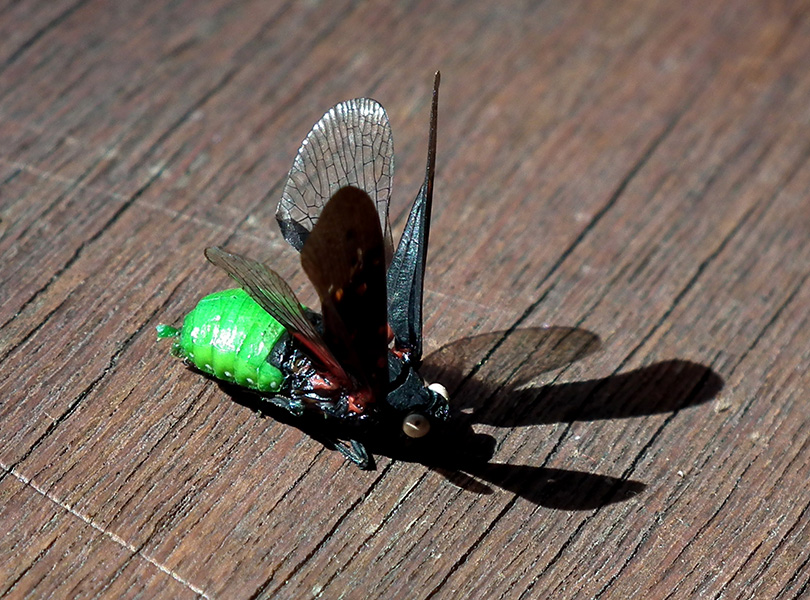
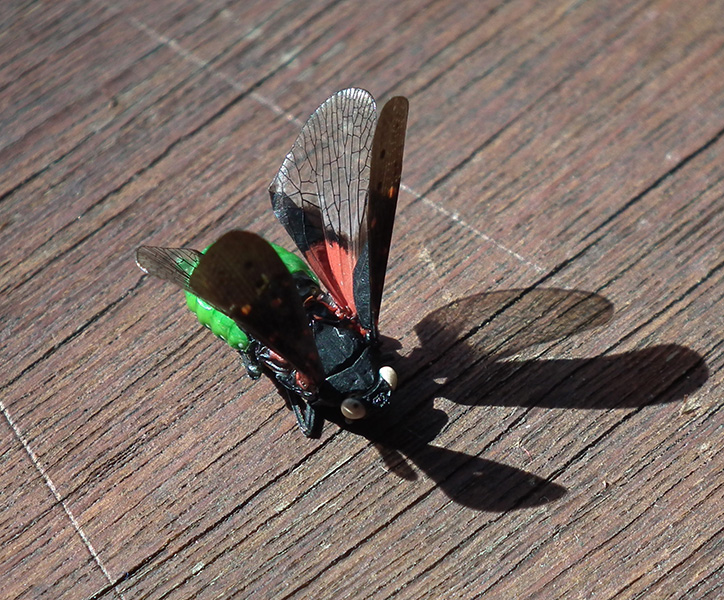
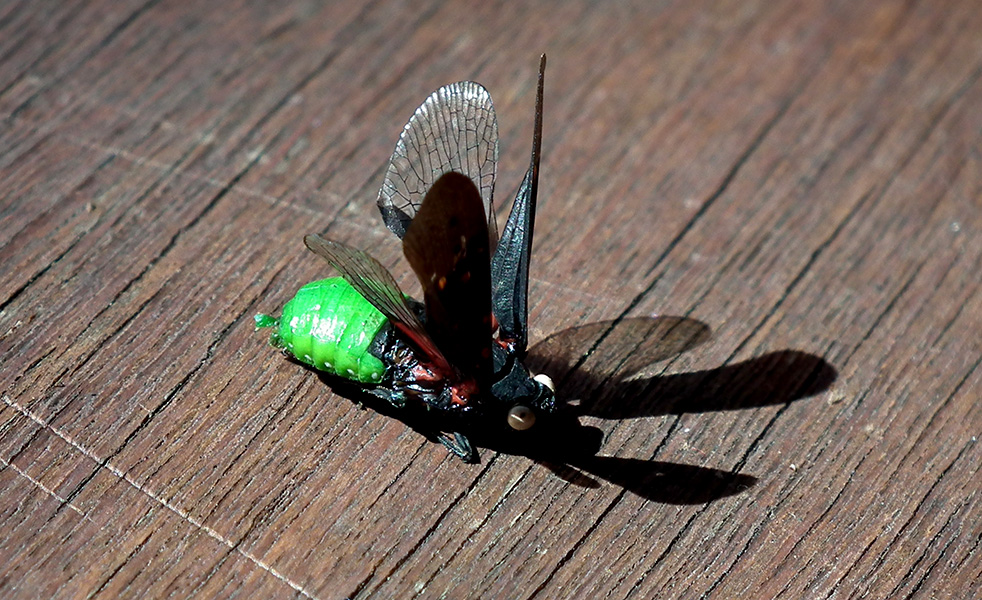
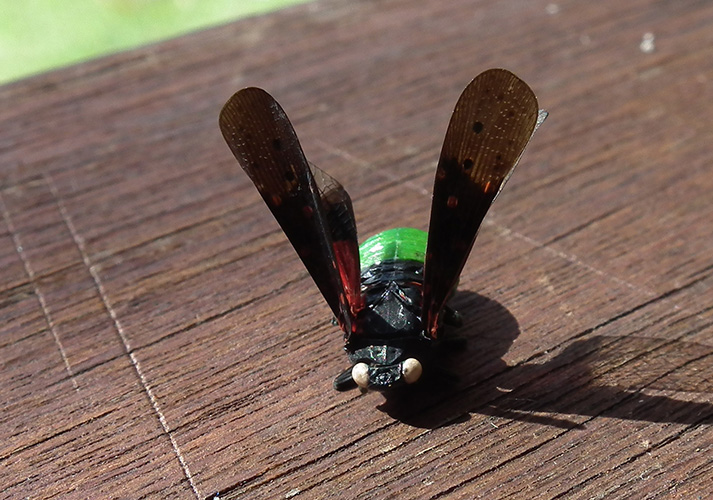
If you are inspecting a vine or a gum tree in your garden and spot a bug that looks like a tiny, walking stained-glass window, you have likely found the Green and Black Planthopper (Desudaba psittacus).
This is one of Australia’s most beautiful sap-sucking insects. Belonging to the family Fulgoridae, it is a true bug that combines camouflage with a spectacular flash of warning colour.
A Jewel in the Garden (The Adult)
The adult planthopper is a master of visual deception.
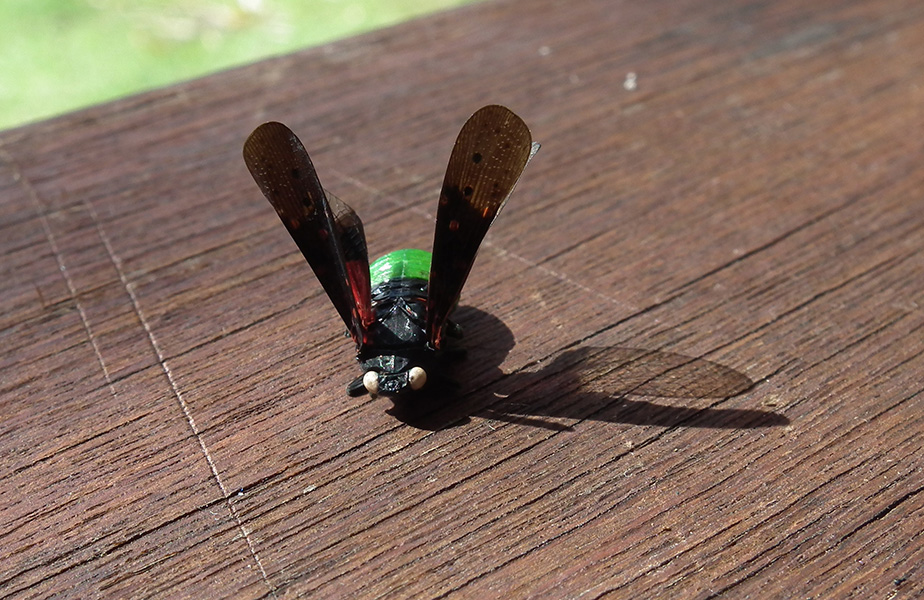
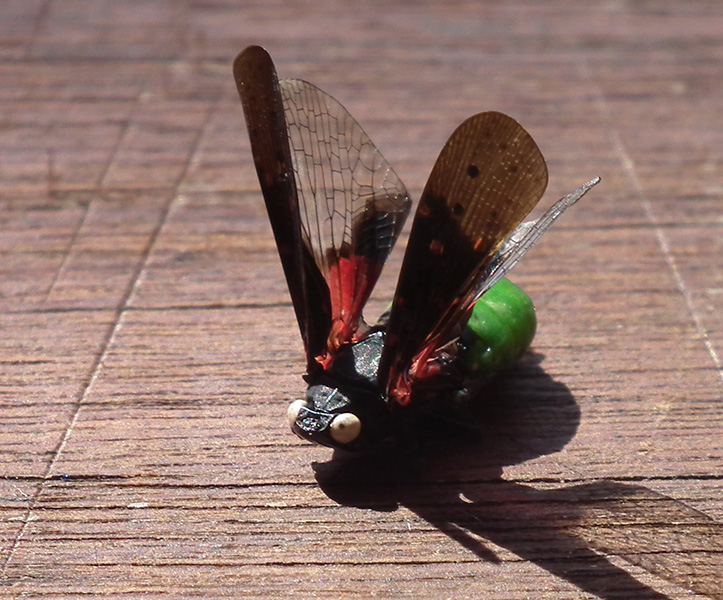
- The Wings: Its forewings (tegmina) are intricately patterned with black spots and veins. When resting against fresh green leaves, this acts as excellent camouflage.
- The Hidden Secret: If you disturb one, it will often flash its wings open or jump away. This reveals a shocking splash of bright orange or crimson red on its abdomen and hind wings. This “flash colouration” is designed to startle predators (like birds) just long enough for the hopper to make an escape.
- The Face: Like other lanternflies/planthoppers, it has a slightly upturned, odd-shaped head with eyes on the side, giving it a somewhat comical appearance.
The “Fluffy” Babies (Nymphs)
You are actually more likely to see the babies (nymphs) before you see the adults, though you might not recognise them!
The nymphs look like tiny balls of white cotton wool or fluff moving along the stems of plants. They produce a white, waxy substance from their abdomen that coats their bodies. This waxy “fluff” serves two purposes:
- Protection: It makes them unpalatable and sticky to predators.
- Disguise: It makes them look like bird droppings or a bit of fungus rather than a juicy insect.
If you touch them, they will snap-jump away with incredible speed!
The Ant Connection
Have you ever seen ants swarming around these hoppers? They aren’t attacking them; they are farming them!
Like many sap-suckers, the Green and Black Planthopper feeds on plant juices. They excrete the excess sugar as a sweet, sticky liquid called honeydew. Ants love this sugary treat and will often protect the planthoppers from predators in exchange for a drink.
Where to Find Them
These planthoppers are found along the east coast of Australia (Queensland and New South Wales).
They feed on a wide variety of native plants, particularly Eucalypts and native vines, but they have also adapted well to suburban gardens. You might find them on citrus trees, passionfruit vines, or ornamental shrubs.
Photo Gallery