Green-spotted Triangle Butterfly
Green-spotted Triangle Butterfly
Whether you are a seasoned entomologist or a backyard nature enthusiast, the Green Triangle Butterfly—also known globally as the Tailed Jay—is a captivating sight. A member of the swallowtail family (Papilionidae), this energetic insect brings a flash of tropical brilliance to gardens, rainforest edges, and woodlands from Southeast Asia right down into northern and eastern Australia.
What Does It Look Like?
To spot a Green Triangle Butterfly is to witness a masterpiece of nature’s design. They are a medium-to-large butterfly, boasting a wingspan of between 85 and 100 millimetres.
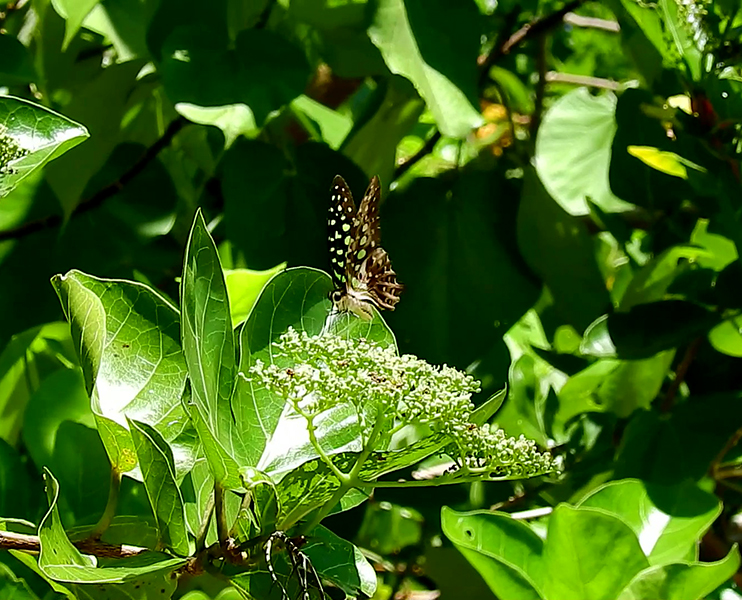
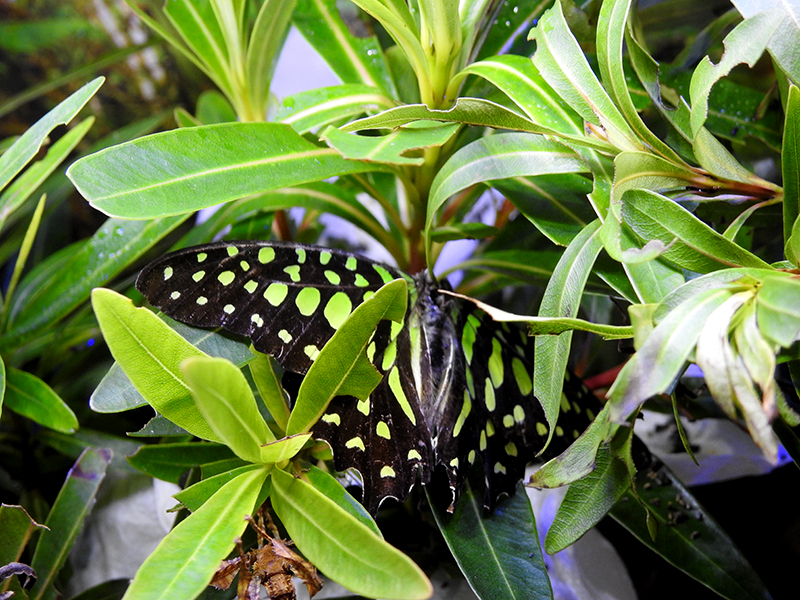
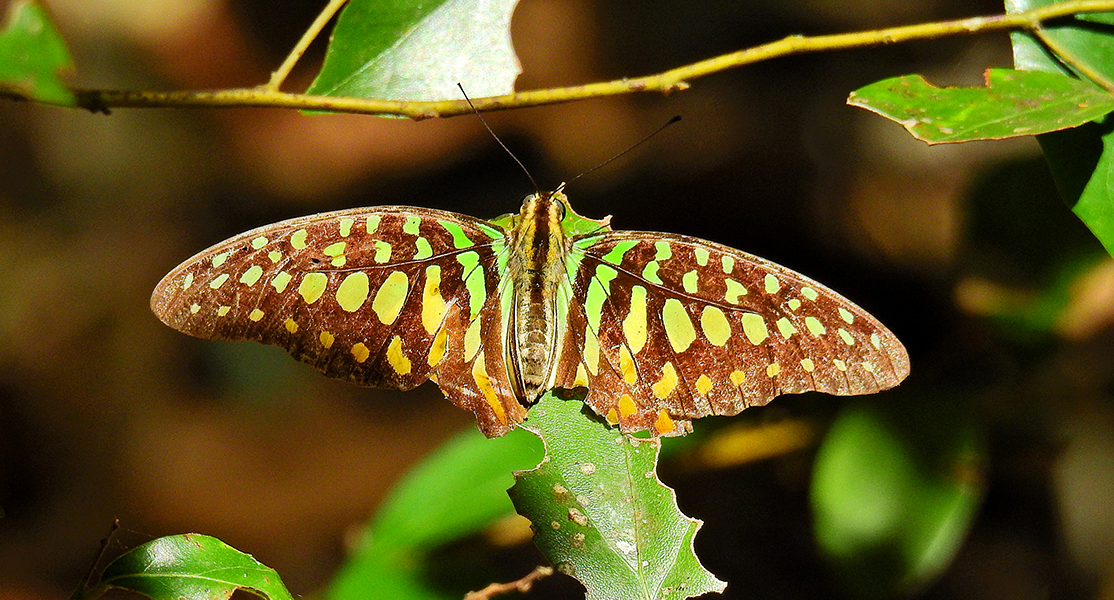
Visually, their upper wings are a velvety, smoky-black canvas, heavily peppered with striking, apple-green spots and streaks that look almost like glowing emeralds. If you catch a glimpse of their underside, you will notice it is a softer, sooty brown, delicately washed with pale green and subtle pink hues.
Like many swallowtails, they feature small, stumpy tails on their hindwings. However, in a fascinating twist of sexual dimorphism, the males actually have shorter tails than the females, though the males display much more vibrant green markings.
Breeding and Longevity
The Graphium agamemnon operates on a remarkably swift timeline. The entire life cycle, from a freshly laid egg to a fully formed adult, takes only 33 to 36 days. Because they develop so quickly, these butterflies are multivoltine, meaning they can produce an astonishing seven to eight generations (broods) in a single year.
- The Eggs: After an aerial courtship where males release pheromones to attract a mate, females lay large, pale yellow eggs singly on the undersides of young, tender leaves.
- The Caterpillars: Hatching after just a few days, the caterpillars start out smoky black but eventually moult into a light, clear green. They are wonderfully camouflaged to match their leafy diet, which largely consists of plants in the custard apple (Annonaceae) and magnolia (Magnoliaceae) families.
- Longevity: While their growth is highly efficient, their time in the sun is fleeting. Once they emerge from their pupa, the adult butterfly typically lives for only about 5 to 6 days in the wild.
Fascinating Facts About the Tailed Jay
- A Family Connection: The Green Triangle belongs to the order Lepidoptera, sharing its lineage with our incredibly diverse native moths. However, unlike many moths that are nocturnal and rest with their wings folded flat, the Green Triangle is an energetic daytime flier.
- Always in Motion: They are notoriously restless. Even when they land on a flower to drink nectar, they continue to rapidly flutter their wings, creating a soft, whirring sound that brings the garden to life.
- Suburban Adapters: While naturally found in wooded areas with heavy rainfall, they have adapted brilliantly to urban environments. This is largely because one of their favourite host plants, the False Ashoka or Mast Tree (Polyalthia longifolia), is widely planted as an ornamental street tree.
Conservation Status and Environmental Threats
From a global and Australian conservation standpoint, there is good news: the Green Triangle Butterfly is considered common and non-threatened. Their robust adaptability to urban gardens has kept their population numbers incredibly stable.
However, their swift life cycle isn’t without its hurdles. In their caterpillar stage, they are highly vulnerable to natural predators, particularly tiny parasitoid wasps that frequently attack the larvae. Additionally, broader human-led threats such as habitat clearing and the heavy use of synthetic pesticides in residential gardens pose a continuous risk to their local numbers.
What Can We Do to Help the Species?
We all have a role to play in ensuring these emerald fliers continue to grace our skies. Here are three simple ways to support them:
- Plant Native Nectar Sources: Adult Green Triangles are hungry for nectar. While they are known to love introduced species like Lantana, Lantana is an invasive noxious weed in Australia. Instead, opt for native nectar-rich alternatives like Australian Grevilleas, Bottlebrushes (Callistemon), or native Ixora species to provide a safe, eco-friendly food source.
- Provide Host Plants: If you live in a warmer, tropical, or subtropical region, planting native members of the Annonaceae family will give females a dedicated nursery to lay their eggs.
- Ditch the Pesticides: Because caterpillars are the crucial stepping stone to the adult butterfly, using broad-spectrum chemical sprays in the garden will wipe them out. Embrace a natural, chemical-free garden to protect the intricate web of life.
Scientific References
- Wikipedia Contributors. Graphium agamemnon. Wikipedia, The Free Encyclopedia.
- Reiman Gardens. Graphium agamemnon (Tailed Jay). Butterfly Information Database.
- Journal of the Entomological Research Society. Life Cycle Comparisons in Papilionidae.
- Animalia.bio. Graphium agamemnon – Facts, Diet, Habitat & Pictures.
- Sharma, V. et al. (2012). Record of Tailed Jay Butterfly Graphium agamemnon. Research Trend.
- Grokipedia. Graphium agamemnon: Taxonomy, Life Cycle, and Conservation.
Photo Gallery