GREY-CROWNED BABBLETR
Grey-crowned Babbler
The Grey-crowned Babbler is one of Australia’s most social and vocal woodland birds. Often moving through the bush in noisy family groups, these birds spend much of their day hopping along the ground while chattering constantly to one another. Their lively communication and cooperative family behaviour make them a fascinating species to observe.
Once widespread across eastern Australia, the Grey-crowned Babbler has declined in many regions due to habitat loss and fragmentation. Despite this, small groups can still be found in suitable woodland habitats where old trees and fallen timber remain.
What does the Grey-crowned Babbler look like?
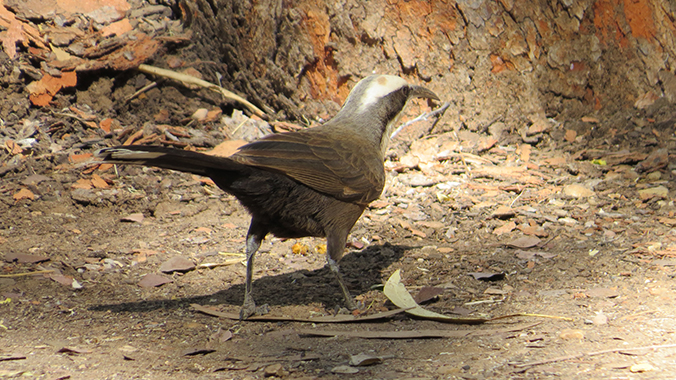
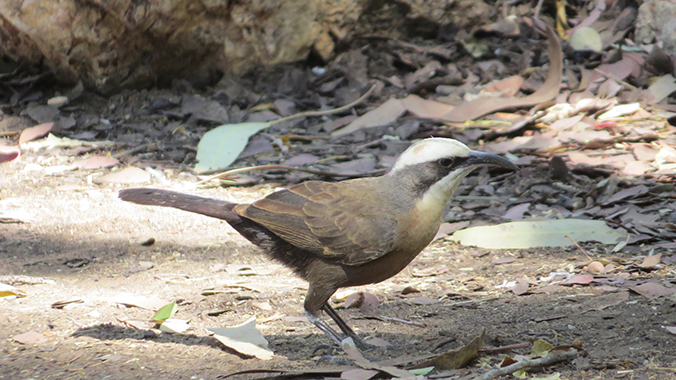
The Grey-crowned Babbler is a medium-sized bird about 25–30 cm long, with a distinctive appearance that makes it easy to recognise.
Key features include
- Grey crown and forehead
- White eyebrow stripe above the eye
- Dark line through the eye
- Brown back and wings
- Pale grey to whitish throat and chest
- Long dark tail often held upright
- Strong slightly curved bill
When seen in a group, they often appear restless and energetic, hopping through shrubs, along branches, or across the ground in search of food.
Sounds and calls
Grey-crowned Babblers are famous for their constant chatter.
Their calls often sound like a lively conversation within the flock.
Common vocalisations include
- Rapid “ya-hoo” or “yahoo-yahoo” calls
- Soft chattering and warbling sounds
- Harsh alarm calls when predators are nearby
Groups frequently call back and forth to each other, which helps keep the family together while foraging.
Habitat and distribution
Grey-crowned Babblers live mainly in woodlands and open forests across inland eastern Australia.
Their range includes
- Queensland
- New South Wales
- Victoria
- South Australia
Preferred habitats include
- Eucalypt woodlands
- Open forests
- Farming landscapes with scattered trees
- Areas with fallen timber and leaf litter
They are particularly dependent on large trees for nesting and roosting.
Diet
Grey-crowned Babblers feed mostly on small animals found on the ground or in tree bark.
Their diet includes
- Insects
- Beetles
- Ants
- Spiders
- Larvae
- Occasionally seeds and small fruits
They usually forage by hopping along the ground or probing bark, often working together as a group.
Longevity
Grey-crowned Babblers can live around 5–8 years in the wild, though some individuals may survive longer when conditions are favourable.
Because they live in cooperative groups, younger birds benefit from protection and shared care, which can improve survival.
Breeding and family groups
Grey-crowned Babblers are well known for their cooperative breeding system.
Rather than breeding as simple pairs, a group may contain up to 10 or more birds, often made up of parents and older offspring.
Nest
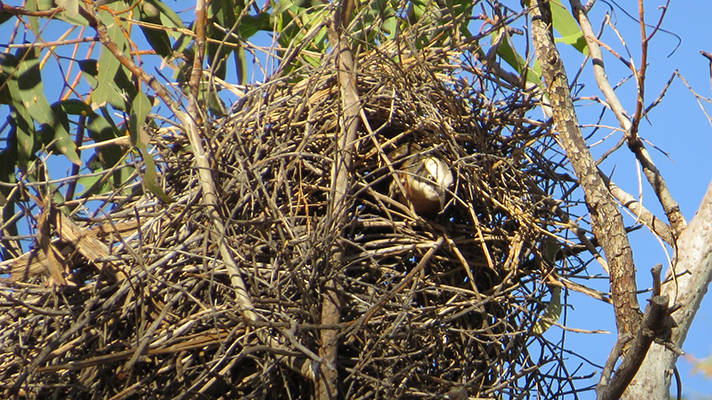
Their nest is large and distinctive.
It is
- Dome-shaped
- Built from sticks, grass and bark
- Usually placed in the fork of a tree or shrub
Babblers sometimes build extra nests used as roosting shelters outside the breeding season.
Eggs and chicks
- Clutch size: usually 2–5 eggs
- Egg colour: pale with brown markings
- Incubation: around 14–16 days
Multiple members of the group help with
- Feeding the chicks
- Defending the nest
- Teaching young birds to forage
Young birds may remain with the group for several years, helping raise future broods.
Interesting facts
- Grey-crowned Babblers live in tight family groups that rarely split up.
- Their constant calling helps maintain contact between group members while foraging.
- They often build several large stick nests within their territory.
- Groups defend their territory with loud calling and cooperative behaviour.
- These birds spend much of their time on the ground rather than high in trees.
Conservation status
The conservation status varies across Australia.
Globally the species is not currently considered threatened, but in parts of Australia the Grey-crowned Babbler is listed as Vulnerable or Endangered at a state level, particularly in southern regions.
Populations have declined significantly in areas where woodland habitat has been heavily cleared.
Threats
The main threats to the Grey-crowned Babbler include
- Clearing of native woodland
- Loss of large old trees needed for nesting
- Habitat fragmentation, which isolates family groups
- Predation by feral cats and foxes
- Loss of fallen timber and leaf litter used for foraging
Because these birds rely on stable family groups and large territories, fragmented landscapes can make survival difficult.
What can we do to help?
Helping Grey-crowned Babblers involves protecting and restoring woodland habitats.
Actions that can make a difference include
- Protecting existing woodland and mature trees
- Planting native trees and shrubs in rural landscapes
- Leaving fallen logs and leaf litter in place
- Supporting habitat corridors that connect woodland patches
- Controlling feral predators
These steps not only help babblers but also support many other Australian woodland birds.
A social storyteller of the woodlands
With their lively chatter and close family bonds, Grey-crowned Babblers bring energy and movement to Australia’s woodlands. Watching a group move through the bush is like witnessing a small community at work, each bird communicating, cooperating and contributing to the survival of the group.
Protecting woodland habitats ensures that these animated birds continue to fill the Australian landscape with their lively conversations.
References
BirdLife Australia
https://birdlife.org.au
IUCN Red List – Pomatostomus temporalis
https://www.iucnredlist.org
Australian Museum – Grey-crowned Babbler
https://australian.museum
NSW Government – Grey-crowned Babbler profile
https://www.environment.nsw.gov.au
Birds of the World – Cornell Lab of Ornithology
https://birdsoftheworld.org
Photo Gallery