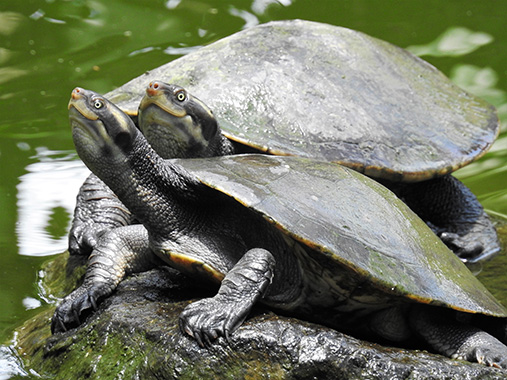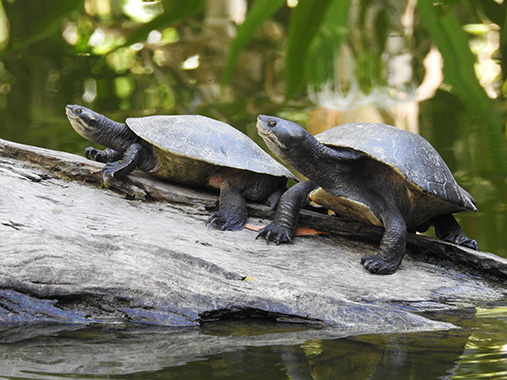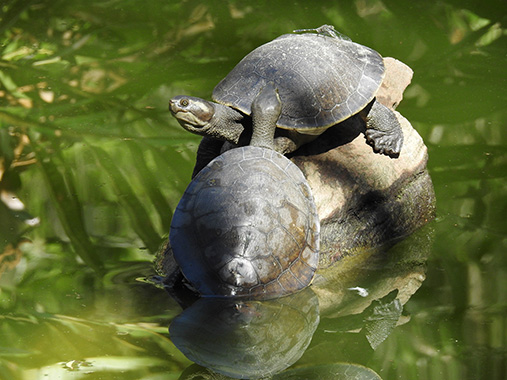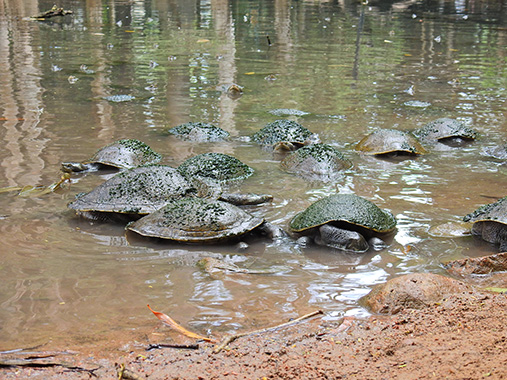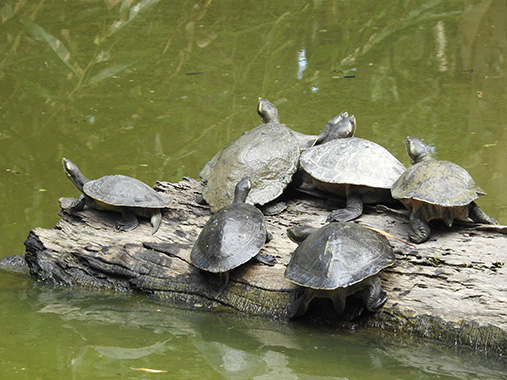
KREFFT'S TURTLE
Emydura macquarii krefftii
Krefft’s Turtle: The Little River Guardian
Krefft’s turtle is one of those quiet Australian river dwellers that most people never notice, yet it plays an important role in keeping freshwater ecosystems healthy.
1. Who is Krefft’s Turtle?
Scientific name: Emydura macquarii krefftii
Common names: Krefft’s turtle, Krefft’s river turtle
Type: Freshwater turtle
Family: Chelidae (side-necked turtles)
Krefft’s turtle is a subspecies of the Macquarie River turtle, found in eastern Australia. It is named after Gerard Krefft, a 19th-century zoologist and curator of the Australian Museum.
It is a side‑necked turtle, which means it bends its neck sideways under the shell instead of pulling its head straight back like many other turtles.
2. What Does It Look Like?
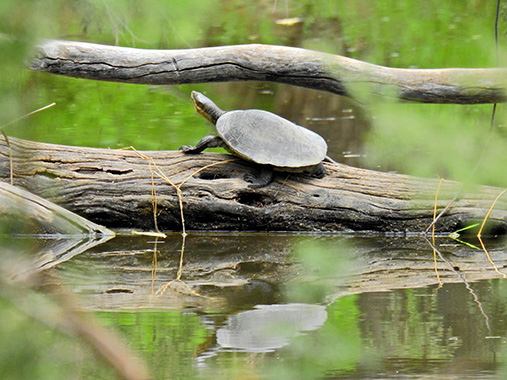
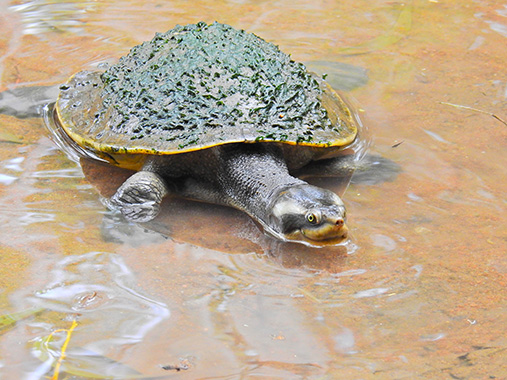
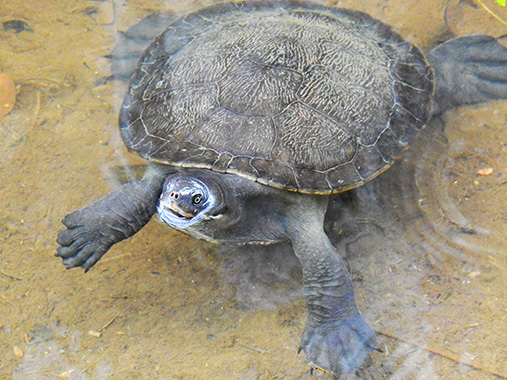
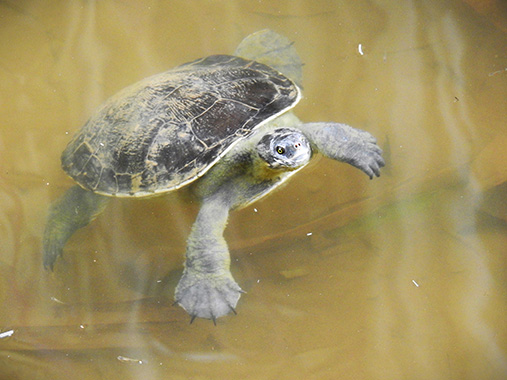
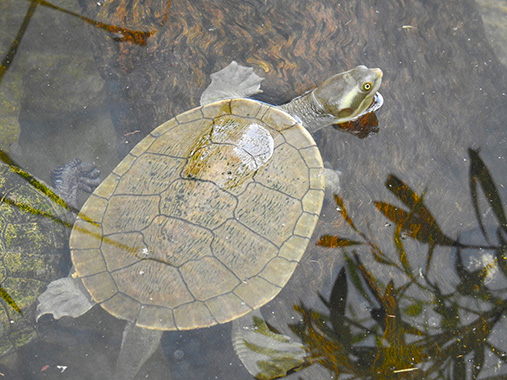
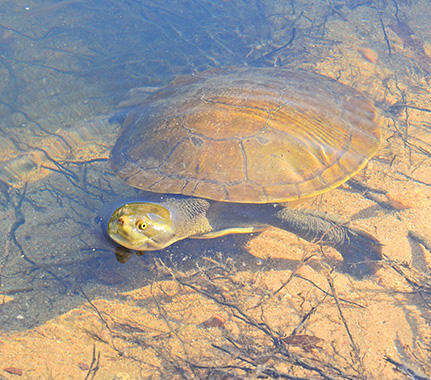
Imagine a medium-sized turtle resting in a slow river pool:
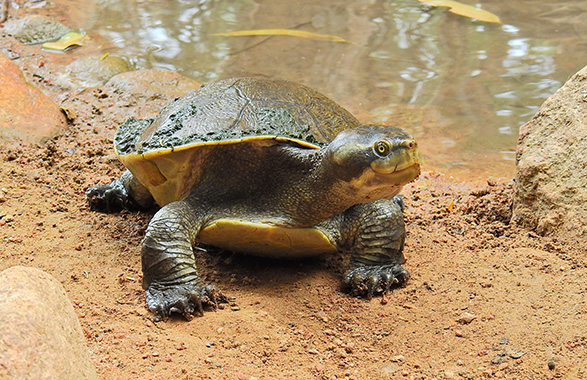
- Shell (carapace):
- Usually dark brown to black
- Smooth, slightly elongated and flattened
- Juveniles can have a lighter, almost olive tone
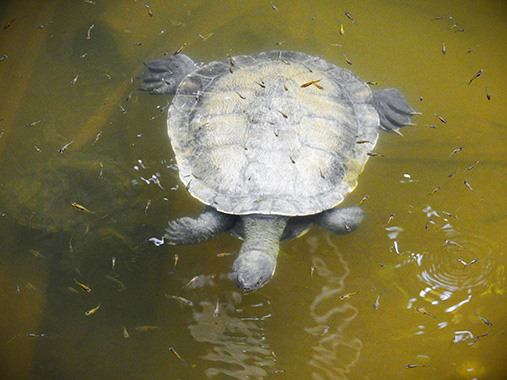
- Plastron (underside):
- Pale cream to yellowish
- Sometimes with darker smudges
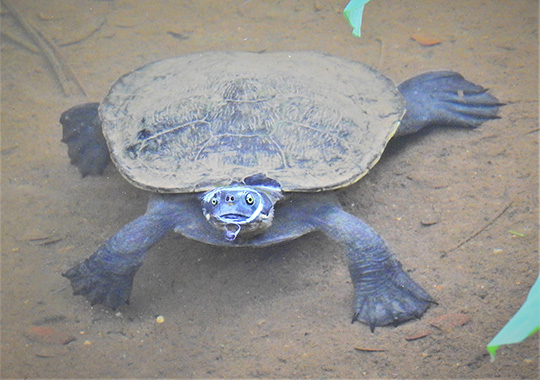
- Head and limbs:
- Grey to dark brown
- Often a paler stripe or smudge behind the eye
- Strong claws for gripping logs and riverbanks
- Size:
- Shell length usually around 20–25 cm in adults
- Females are generally larger than males
If you watch one surfacing, you might notice its nostrils poking out first, then its eyes, as it gently breaks the water’s surface to breathe.
3. Where Do They Live?
Krefft’s turtle is a northern form of the Macquarie turtle, mostly found in:
Geographic range (Australia):
- Coastal and inland rivers of central and northern Queensland
- Especially in systems like the Burnett, Fitzroy and Burdekin and some neighbouring catchments
Habitats:
- Slow‑flowing rivers
- Creeks and billabongs
- Waterholes that persist through the dry season
- Farm dams and modified waterways, if water quality is adequate
They like permanent water with:
- Submerged logs and branches
- Overhanging vegetation
- Mud or sand bottoms for resting and foraging
4. Daily Life: Behaviour and Diet
Activity
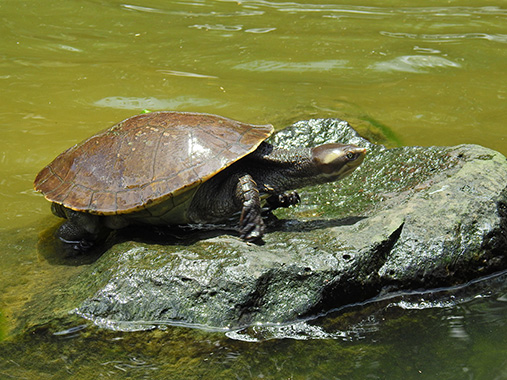
Krefft’s turtle spends almost all its time in water, coming to land mainly to bask and to nest.
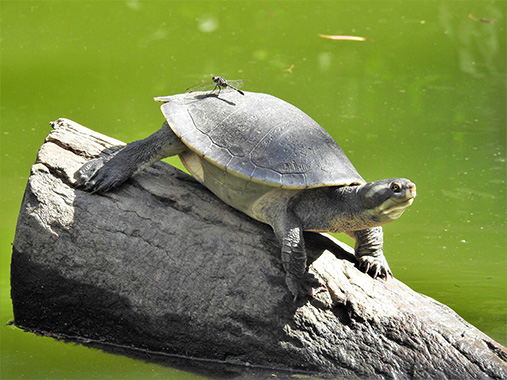
Basking:
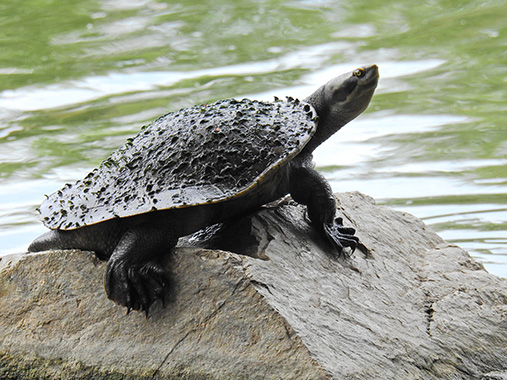
On warm days, you might see them:- Climbing onto logs, rocks or low banks
- Stretching their necks out, limbs splayed to soak up the sun
Basking helps: - Regulate body temperature
- Dry the shell and reduce parasites
Movement:
- Calm, deliberate swimmers
- Use their webbed feet like steady paddles
- They often rest on the bottom, then rise slowly for air, leaving tiny trails of bubbles
Diet: Nature’s Clean-Up Crew
Krefft’s turtle is an omnivore and scavenger, which means it eats a wide range of foods:
Animal matter:
- Insects and their larvae
- Crustaceans (like freshwater yabbies)
- Molluscs (snails, small mussels)
- Worms
- Carrion (dead fish and other animals)
Plant matter:
- Aquatic plants
- Algae
- Organic detritus
By feeding on dead material and algae, Krefft’s turtles help keep waterways cleaner and recycle nutrients. They are like quiet river janitors, constantly tidying up.
5. Life Cycle and Reproduction
Courtship and Mating
Most breeding activity occurs in the warmer months. Underwater, males may:
- Nudge and circle females
- Use tactile contact with their claws and head to court
Nesting
Nesting season: generally spring to early summer, but timing can shift with local rainfall and temperature.
Nesting site:
- Females leave the water, often at night or early evening
- They walk onto sandy or loamy banks
- They dig a flask‑shaped nest with their hind legs, just above typical flood levels
Eggs:
- Usually 10–25 eggs per clutch (numbers vary)
- Hard-shelled, white, ovoid eggs
- Eggs are buried and left to incubate in the warm earth
Hatchlings
After several weeks to a few months (depending on temperature):
- Tiny turtles, just a few centimetres long, break the shell using an egg tooth
- They dig upward and make their way to the water
- At this size, they are food for:
- Fish
- Birds
- Eels
- Larger turtles
- Introduced predators like foxes (if nesting sites are disturbed)
Survival is a matter of numbers—many eggs and hatchlings, but only a few make it to adulthood.
6. Role in the Ecosystem
Krefft’s turtles are important ecological players:
- Scavengers:
Remove decaying organisms from the water, improving water quality. - Predators of invertebrates:
Help control insect and snail populations. - Prey:
Eggs and young turtles feed a range of predators, contributing to the food web. - Nutrient cyclers:
Their feeding and waste products help move nutrients through the system, supporting plant growth and microscopic life.
When turtles decline, you can see more rotting material in waterways and increased algal growth, because one of nature’s “clean-up teams” is missing.
7. Conservation Status and Threats
Krefft’s turtle is not as critically threatened as some other Australian turtles, but it faces several ongoing pressures:
Main Threats
Habitat modification:
- Dams, weirs and channelisation changing natural flows
- Loss of natural riverbank vegetation
- Reduced nesting sites due to erosion and hard structures
Water quality issues:
- Agricultural runoff (fertilisers, pesticides)
- Sedimentation from land clearing
- Urban pollution
Predation on nests:
- Introduced predators like foxes and feral pigs
- Domestic dogs digging up nests near human settlements
Vehicle strikes:
- Females crossing roads to nest, or turtles moving between waterbodies
Climate change:
- Altered rainfall patterns changing river flows
- More extreme droughts drying out smaller waterholes
- Extreme heat affecting nest temperatures and hatchling survival
While the overall subspecies is not on the brink, local populations can be quite vulnerable, particularly in heavily modified catchments.
8. How to Help Krefft’s Turtles
Even small actions can contribute to their wellbeing:
Protect riverbanks:
- Support or participate in planting native vegetation along streams and rivers
- Avoid trampling or driving on sandy banks where turtles may nest
Reduce pollution:
- Keep chemicals and rubbish out of stormwater drains and waterways
- Use fewer garden chemicals, especially near creeks
Drive carefully near water:
- Slow down on roads near rivers, wetlands and dams, especially in spring–summer
- If it is safe, you can help a crossing turtle by moving it in the direction it was heading, without taking it far from the area
Responsible pets:
- Keep dogs from digging in sandy riverbanks
- Prevent cats from roaming near waterways
Support freshwater conservation:
- Engage with local catchment groups or landcare projects
- Encourage water management that maintains natural flows and healthy habitats
9. How to Recognise One in the Wild
Distinguishing Krefft’s turtle from other Australian freshwater turtles can be tricky, but some general features:
- Side‑necked (folds head sideways under shell)
- Dark, smooth carapace, medium-sized
- Pale underside, often without the bold patterns seen in some other species
- Found in central to northern Queensland waterways rather than far south
If you see a medium-sized turtle basking on a log in a Queensland river, quietly slipping into the water when disturbed, you may well be looking at a Krefft’s turtle or a close relative.
Photo Gallery