Lacewing Butterflies of Australia
Lacewing Butterflies of Australia
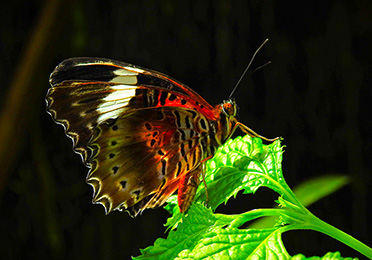
Among the most colourful butterflies found in tropical forests are the lacewing butterflies, members of the genus Cethosia. These butterflies are famous for their brilliant colours, scalloped wing edges, and the intricate “lace‑like” patterns that decorate the underside of their wings.
While lacewing butterflies occur widely throughout Southeast Asia and the Pacific, Australia is home to only a small number of species, found mainly in the tropical north. These butterflies inhabit warm rainforest environments where suitable host plants grow, and they add flashes of vibrant colour to forest clearings and edges.
This section introduces the remarkable lacewing butterflies of Australia and explores their unique biology, ecology, and conservation.
What Are Lacewing Butterflies?
Lacewing butterflies belong to the brush‑footed butterfly family (Nymphalidae), within a group known as the heliconiines. Many species in this group are brightly coloured and possess chemical defences that make them unpalatable to predators.
Typical characteristics of lacewing butterflies include:
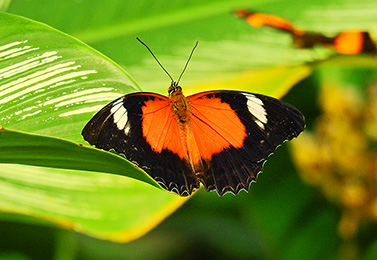
- Bright orange or red wings with bold black markings
- Deeply scalloped wing edges
- Intricate lace‑like patterns on the underside of the wings
- Slow, gliding flight through forest habitats
Their striking colours are not just decorative — they act as warning signals to predators that the butterflies may be toxic.
Australian Lacewing Species
Only a few lacewing butterflies occur naturally in Australia, mainly in the tropical rainforests of northern Queensland.
Species recorded in Australia include:
- Red Lacewing (Cethosia cydippe)
- Orange Lacewing (Cethosia penthesilea)
Both species are closely associated with tropical rainforest habitats and rely on specific host plants for their caterpillars.
These butterflies are most commonly seen in forest clearings, along rainforest paths, and in gardens near natural forest areas.
Differences from Asian Lacewing Species
Many people become familiar with lacewing butterflies through images of Asian species such as Cethosia biblis, sometimes called the Red Lacewing or Lacewing Biblis. While these butterflies look similar to Australian lacewings, there are important differences.
Distribution:
- Cethosia biblis occurs widely in South and Southeast Asia but is not native to Australia.
- Australian lacewings are mainly restricted to northern Queensland and nearby tropical regions.
Wing patterns:
- Asian species like Cethosia biblis typically have bold leopard‑like spots on the upper wings.
- Australian species such as Cethosia cydippe have larger red areas with contrasting black borders and patches.
Habitat:
- Asian lacewings inhabit a variety of tropical forests across Asia.
- Australian species are closely linked to the rainforests and coastal forests of northern Australia.
Despite these differences, all lacewing butterflies share similar behaviours and life cycles.
Life Cycle and Host Plants
Like all butterflies, lacewings undergo complete metamorphosis, passing through four life stages:
- Egg – laid on host plant leaves
- Caterpillar – a feeding stage where the larva grows rapidly
- Chrysalis – a suspended pupa stage where transformation occurs
- Adult butterfly
Lacewing caterpillars typically feed on passion vines (Passiflora species). These plants contain natural chemicals that the caterpillars absorb, making both the larvae and the adult butterflies unpalatable to predators.
Ecological Importance
Lacewing butterflies play an important role in rainforest ecosystems.
They act as:
- pollinators of flowering plants
- part of the food web for birds and reptiles
- indicators of healthy tropical habitats
Because they depend on particular host plants and stable rainforest environments, their presence often signals a healthy ecosystem.
Indigenous Connections
Butterflies have long been observed within the seasonal rhythms of Australia’s tropical landscapes by First Nations peoples. Their appearance often coincides with flowering seasons and the growth of certain plants, reflecting the close relationship between insects, vegetation, and climate.
Traditional ecological knowledge recognises butterflies as part of the broader web of life that connects plants, animals, and the changing conditions of Country. While traditional names for specific butterfly species vary between language groups and are not always widely recorded in public sources, their presence in rainforest environments reflects the health and vitality of these ecosystems.
Protecting Australia’s Lacewing Butterflies
Although Australian lacewing butterflies are not currently considered threatened, they depend heavily on intact rainforest habitats and the presence of their host plants.
Threats can include:
- rainforest clearing
- habitat fragmentation
- loss of native host plants
- climate change affecting tropical ecosystems
Protecting rainforest habitats and planting suitable host plants helps ensure these spectacular butterflies continue to thrive.
Scientific References
Braby, M. F. Butterflies of Australia: Their Identification, Biology and Distribution
Atlas of Living Australia – Cethosia species records
Australian Butterfly Conservation resources
Queensland Museum – Tropical butterfly information
Wikipedia – Cethosia genus overview