MAGPIE-LARK
Magpie-lark
The Magpie-lark, also known as the Peewee or Mudlark, is a distinctive bird native to Australia. Despite its name, it is not closely related to true magpies or larks and is actually a member of the family Monarchidae.
What Does the Magpie-lark Look Like?
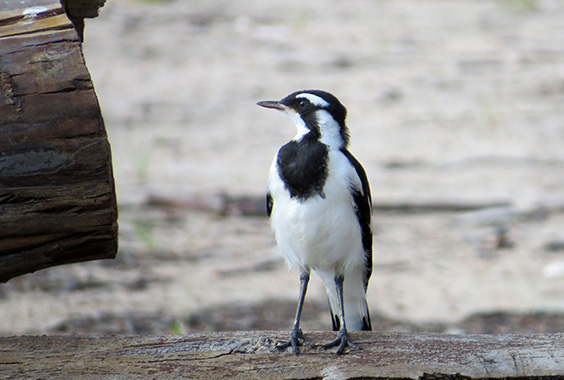
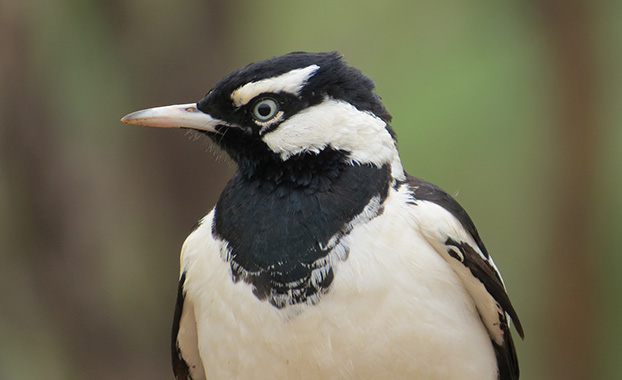
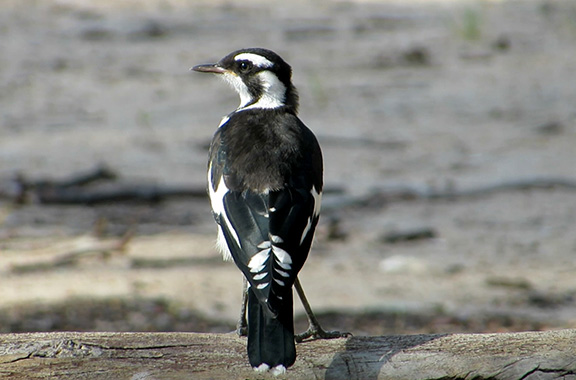
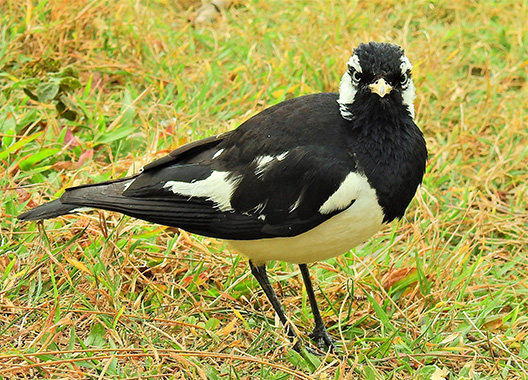
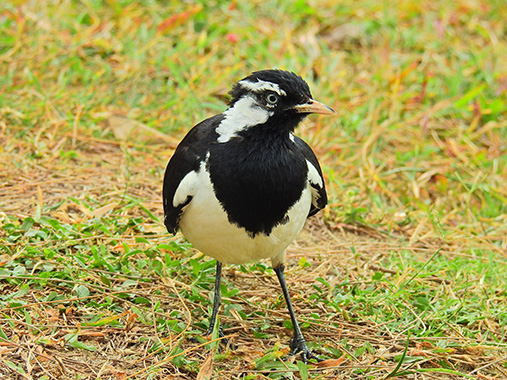
The Magpie-lark is a striking black-and-white bird commonly seen across much of Australia. It is often called a pee-wee, mudlark, or leak bird in some areas.
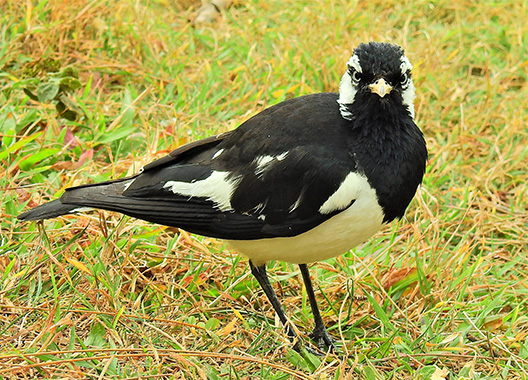
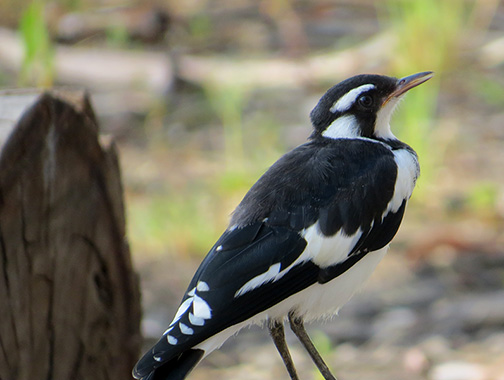
Adult Magpie-larks are about 25–30 cm long. They have:
- black and white plumage
- long legs
- a slim, pointed bill
- a fairly upright posture when standing
Males and females look a little different:
- Male: white eyebrow and throat, with a black face and chest
- Female: white forehead and eyebrow, with a black throat stripe running down the face
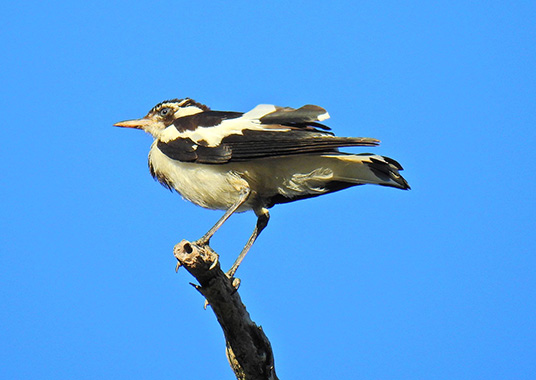
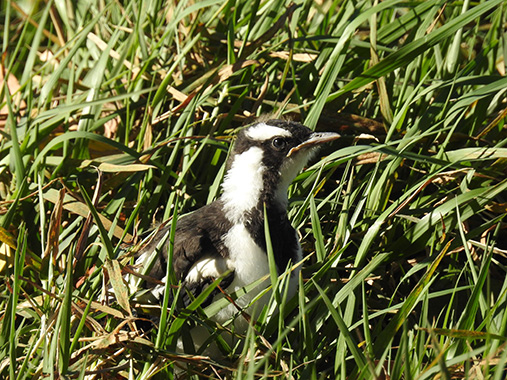
Young birds are browner and less sharply marked until they mature.
What Does the Magpie-lark Sound Like?
The Magpie-lark is famous for its clear, repeated “pee-wee” call. This is where one of its common names comes from.
Pairs often call in a duet, with the male and female taking turns or overlapping their calls. This duet helps strengthen the pair bond and defend territory.
Where Do Magpie-larks Live?
Magpie-larks are found across most of Australia, as well as in parts of New Guinea. They are highly adaptable birds and live in many different places, including:
- wetlands
- riverbanks
- farmland
- parks
- gardens
- open woodlands
- suburban lawns
- roadside verges
They usually prefer open country with access to mud and water, which they use for nesting and feeding.
What Do Magpie-larks Eat?
Magpie-larks mainly feed on small invertebrates, especially:
- insects
- beetles
- ants
- flies
- grasshoppers
- spiders
- worms
- small aquatic creatures
They forage by walking across the ground or shallow water, picking food from the surface with their bill.
How Do Magpie-larks Breed?
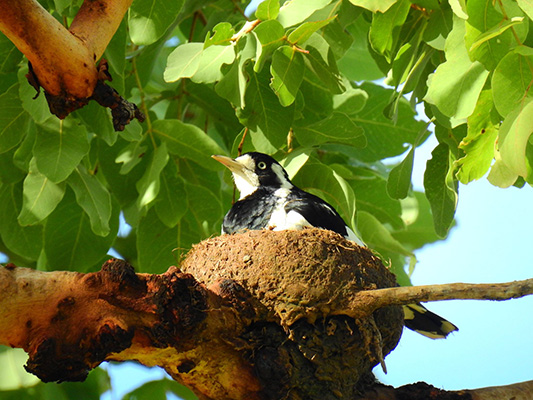
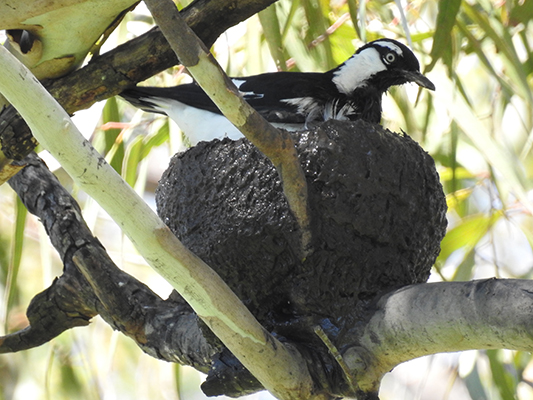
Magpie-larks build one of the most recognisable nests of any Australian bird.
Their nest is:
- made from mud mixed with grass and plant fibres
- shaped like a bowl or domed cup
- usually built on a branch, fence post, power pole or building ledge
Both parents help construct the nest, collect mud and care for the chicks.
Breeding usually occurs in the warmer months, often from August to January, though timing can vary with rainfall and location.
Typical breeding facts:
- Eggs: usually 3–5
- Incubation: about 14–17 days
- Chicks: fed by both parents
Magpie-larks are very defensive parents and may swoop or loudly scold intruders near the nest.
How Long Do Magpie-larks Live?
In the wild, Magpie-larks may live for several years, with some reaching around 10 years or more. As with many wild birds, lifespan depends on food supply, habitat quality and predation pressure.
Interesting Facts
- Magpie-larks are not closely related to magpies or larks.
- They belong to the monarch flycatcher family.
- Their mud nests can be very strong and long-lasting.
- Pairs often stay together and defend a territory year-round.
- They are one of the birds most likely to be seen walking across lawns after rain, searching for insects and worms.
Conservation Status
The Magpie-lark is listed as Least Concern on the IUCN Red List. It is still widespread and common across much of Australia.
Threats
Although they are common, Magpie-larks can still be affected by:
- loss of wetland and riverbank habitat
- removal of trees and nesting sites
- drought and climate extremes
- predation on eggs and chicks by cats, snakes and birds of prey
- disturbance near nesting areas
How People Can Help
You can help Magpie-larks by:
- protecting wetlands, creeks and riverbanks
- planting native vegetation in gardens and along waterways
- keeping cats indoors or supervised
- reducing pesticide use so insect food remains available
- leaving safe nesting sites such as mature trees and poles undisturbed
References
BirdLife Australia – Magpie-lark (Grallina cyanoleuca) https://birdlife.org.au
Australian Museum – Magpie-lark https://australian.museum
IUCN Red List – Grallina cyanoleuca https://www.iucnredlist.org
Cornell Lab of Ornithology – Birds of the World
Pizzey, G. & Knight, F. The Field Guide to the Birds of Australia
Photo Gallery