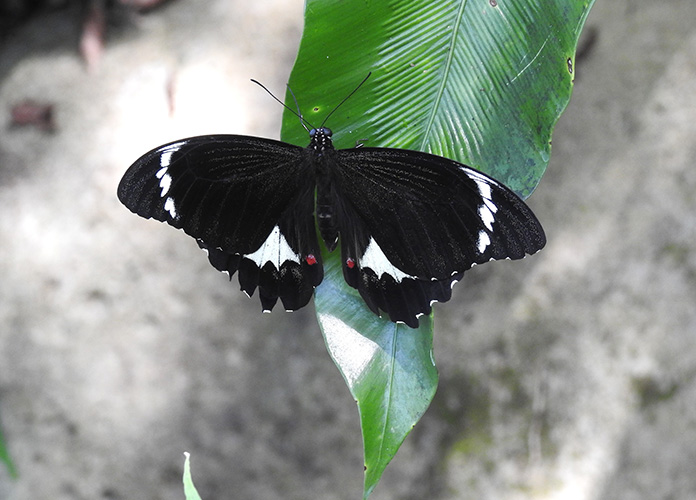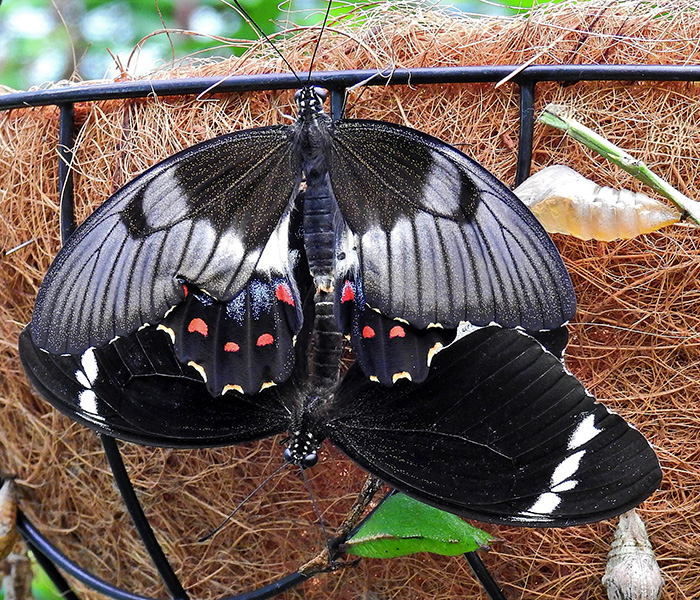
Orchard Swallowtail butterfly
Orchard Swallowtail
If you have a lemon or lime tree growing in your backyard, chances are you have already met one of Australia’s most spectacular insects. The Orchard Swallowtail (Papilio aegeus), sometimes known as the Large Citrus Butterfly, is a true giant of the suburban garden.
Found soaring gracefully through open woodlands, rainforest edges, and residential streets right down the eastern coast of Australia and across to South Australia, this magnificent insect brings a touch of tropical brilliance to our everyday lives.
A Tale of Two Designs: What Does It Look Like?
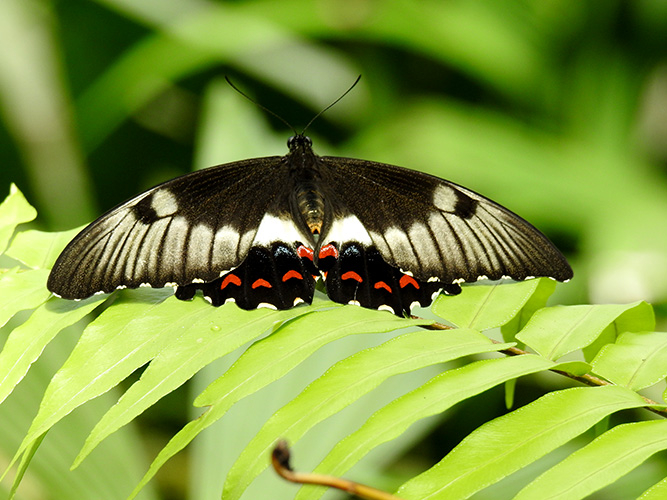
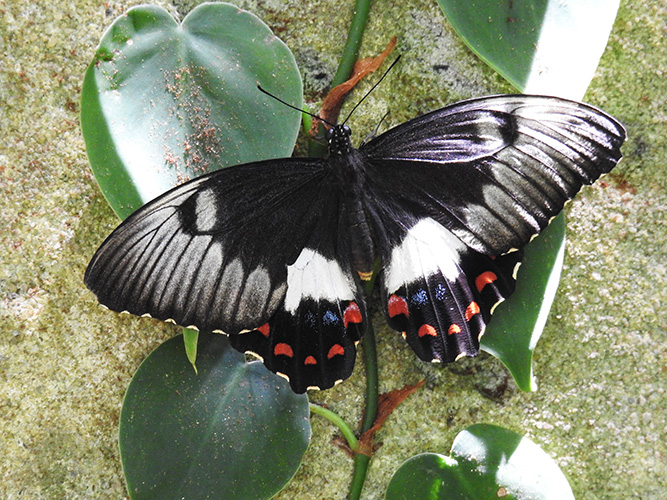
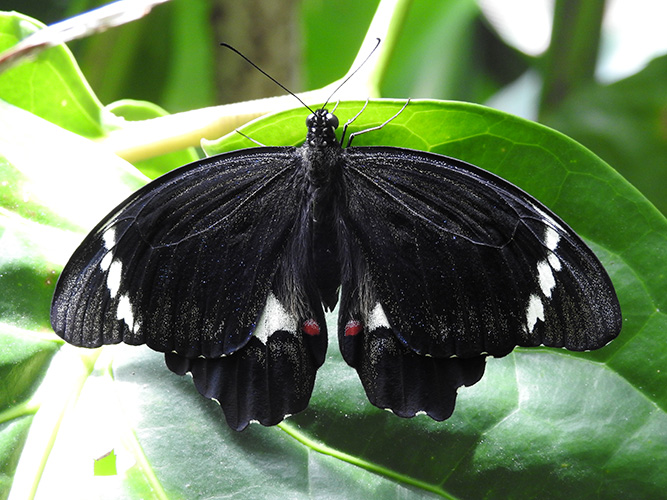
To spot an Orchard Swallowtail is to see a butterfly of impressive proportions—they boast a massive wingspan of up to 120 millimetres! Interestingly, they display extreme sexual dimorphism, meaning the males and females look so different that you might think they are two entirely separate species.
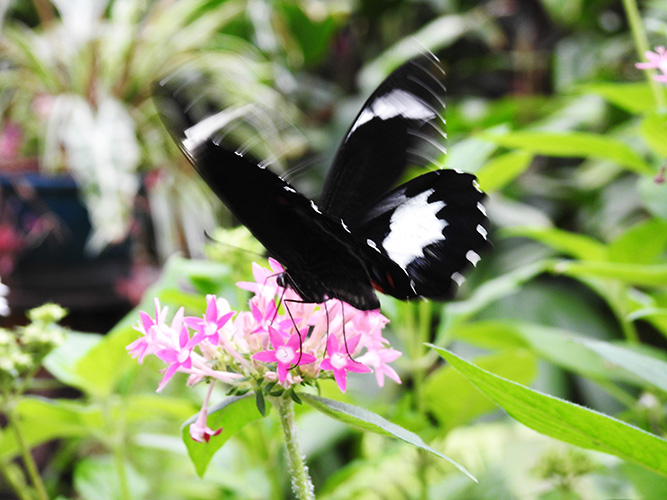
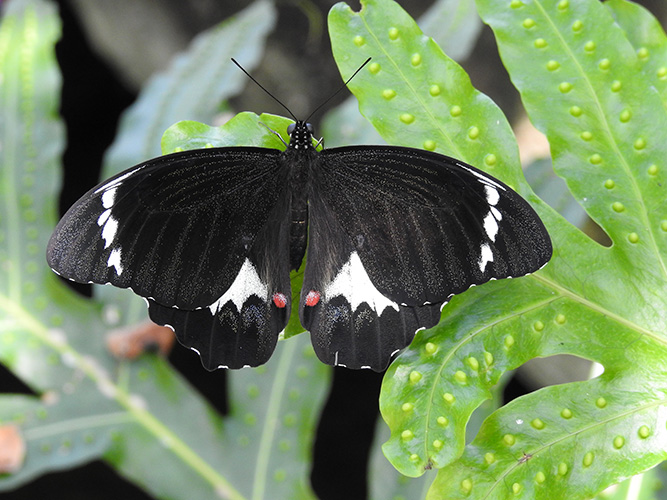
- The Male: The male is a striking study in high contrast. His wings are a deep, velvety black, interrupted by a bold, crisp white band stretching across his forewings. His hindwings feature a large white central patch, sharply decorated with a single, brilliant red spot at the lower edge.
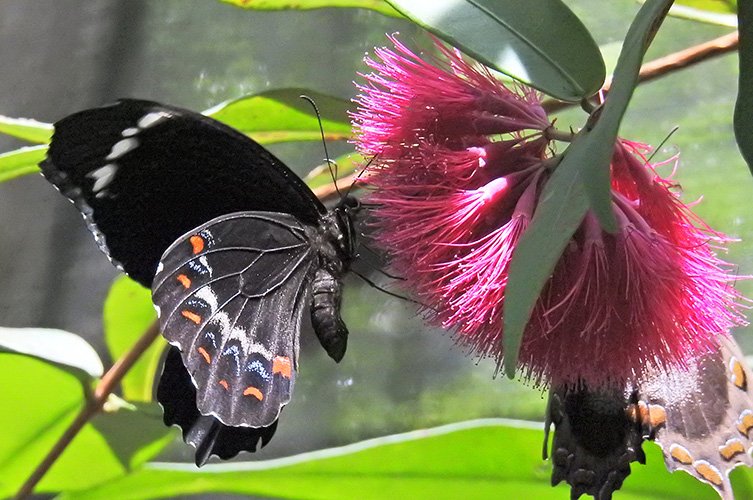
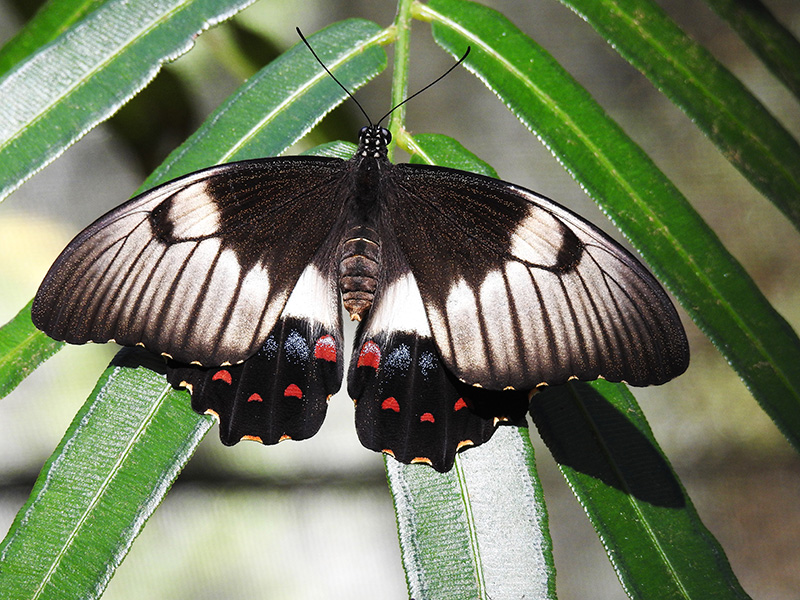
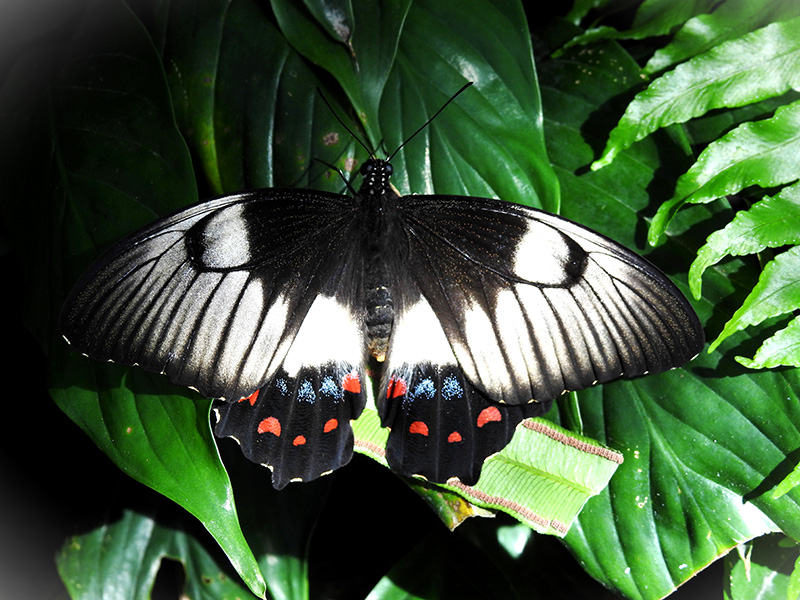
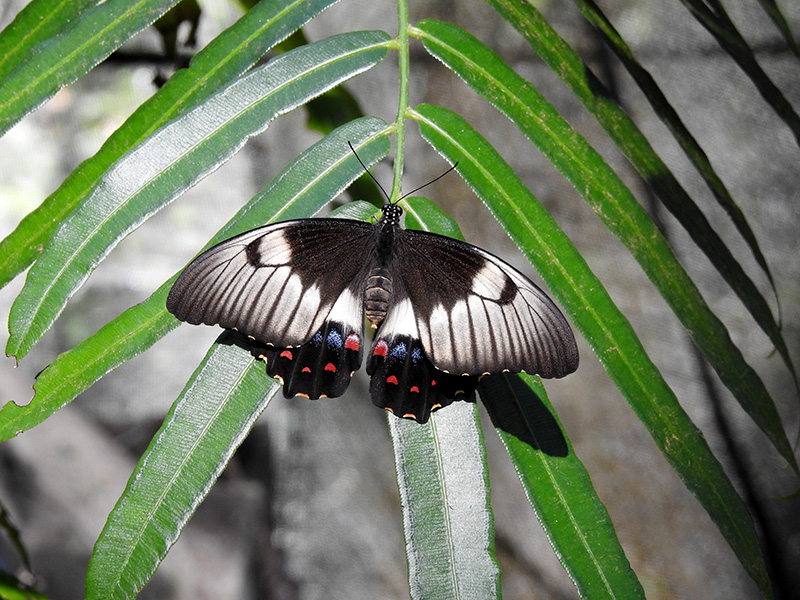
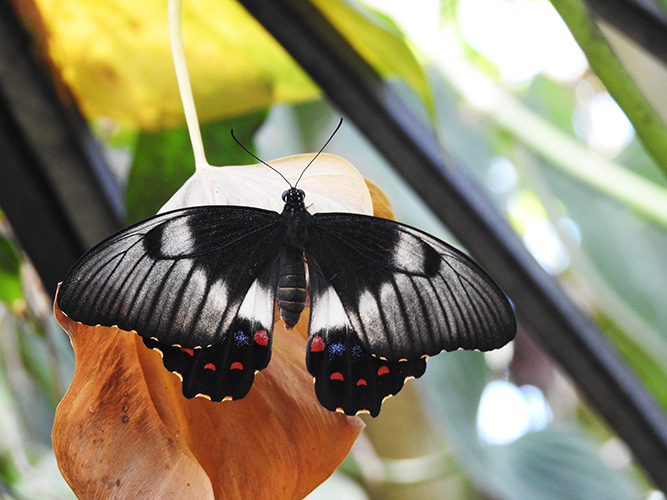
- The Female: The female is even larger than the male and trades the crisp white band for a softer, more intricate pattern. Her forewings are a smoky brown-black with a dusting of white toward the tips. Her hindwings are the real showstopper: a massive white central patch bordered by a spectacular, sweeping crescent of bright blue and glowing red spots.
The Citrus Cycle: Breeding and Longevity
The lifecycle of the Orchard Swallowtail is closely tied to the availability of lush, fragrant foliage, and they have mastered the art of camouflage at every stage.
- The Breeding Cycle: Females carefully select a host plant to lay their eggs, preferring the soft, new growth of native and introduced citrus trees. She lays large, perfectly spherical pale-yellow eggs singly on the undersides of the leaves.
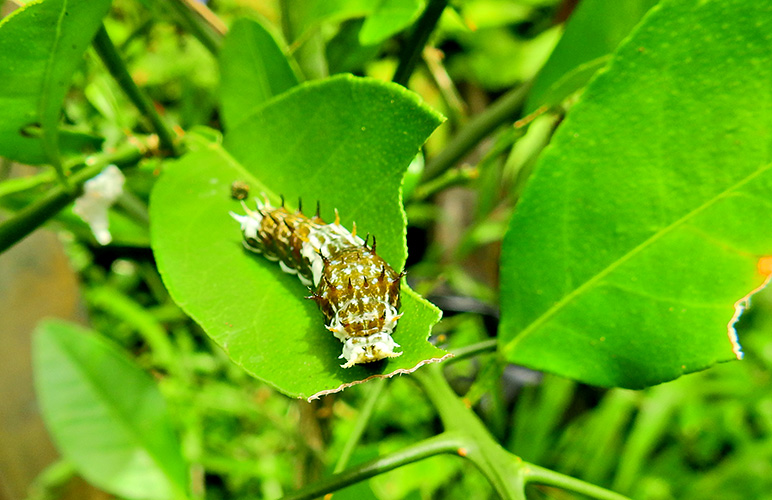
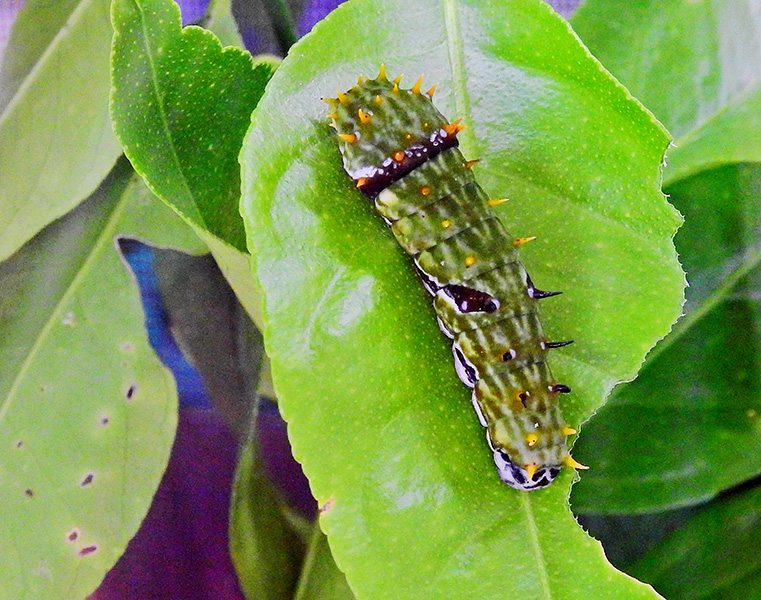
- The Masters of Disguise: When the caterpillars first hatch, they are dark brown with a stark white patch in the middle. Why? Because it makes them look exactly like an unappetising bird dropping resting on a leaf! As they grow and moult, they transform entirely, becoming a vibrant, leafy green adorned with diagonal brown and white bands that perfectly break up their outline among the foliage.
- The Pupa: When it is time to transform, the caterpillar secures itself to a sturdy stem with a silken girdle. It forms a mottled, grey-brown or greenish chrysalis that mimics a broken, dry twig leaning back from the branch.
- Longevity: Depending on the temperature, the journey from egg to adult takes about a month. Once they emerge as a magnificent, winged adult, their time is fleeting—they typically live for around two to four weeks in the wild, spending their days constantly flying in search of nectar and a mate.
Fascinating Facts: Foul Smells and Adaptability
- The Stink Horn: Like all swallowtail caterpillars, the Orchard Swallowtail possesses a hidden, chemical weapon. Tucked just behind its head is a bright reddish-orange, forked, fleshy organ called an osmeterium. If a bird or a curious gardener startles the caterpillar, it instantly shoots this bright organ out, releasing a pungent, foul-smelling chemical that smells like a mix of rotting citrus and rancid butter to drive the predator away!
- A Suburban Success Story: While many native insects struggle with urban development, the Orchard Swallowtail has thrived. Before European settlement, they relied purely on native rainforest plants in the citrus family (Rutaceae), such as native finger limes and Flindersia species. Today, they have happily adapted to the introduced lemon, lime, and orange trees planted in almost every Australian backyard.
- Energetic Drinkers: Unlike smaller butterflies that land and fold their wings to drink, the large Orchard Swallowtail rarely stops moving. Even while feeding on nectar from a flower, they continuously flutter their massive wings to keep their heavy bodies balanced.
Conservation Status and Environmental Threats
Nationally, the Orchard Swallowtail is classified as a species of Least Concern. Thanks to their brilliant adaptation to suburban fruit trees, their populations remain incredibly robust and widespread.
However, they still face daily backyard battles. Their plump caterpillars are heavily targeted by natural predators like paper wasps, praying mantises, and insectivorous birds. But their biggest threat is human intervention. Because they feed on the leaves of prized citrus trees, many well-meaning gardeners accidentally wipe out entire generations by heavily spraying their fruit trees with synthetic pesticides.
What Can We Do to Help the Species?
Welcoming these giant beauties into your garden is easy and incredibly rewarding. Here is how you can support their lifecycle:
- Share Your Citrus: The simplest way to help is to tolerate a few chewed leaves on your lemon or orange tree! A healthy, mature citrus tree can easily support a handful of hungry caterpillars without suffering any permanent damage to its fruit production.
- Ditch the Bug Sprays: Avoid using broad-spectrum chemical insecticides or systemic pest sprays on your fruit trees. These chemicals do not discriminate and will fatally poison the caterpillars. Embrace a chemical-free garden to protect the delicate web of life.
- Plant Native Hosts: If you want to draw them in without sacrificing your lemons, try planting beautiful native host plants like the Native Finger Lime (Citrus australasica) or the Scrub Wood (Halfordia kendack).
- Provide Nectar: Adult butterflies need constant fuel to keep those massive wings moving. Planting native, nectar-rich flowering shrubs like Bottlebrushes (Callistemon) or Grevilleas will give them a much-needed energy boost as they pass through your neighbourhood.
Scientific References
- Australian Museum. Orchard Swallowtail Butterfly (Papilio aegeus). Animal Species Profiles.
- Braby, M. F. (2000). Butterflies of Australia: Their Identification, Biology and Distribution. CSIRO Publishing.
- Brisbane Insects and Spiders. Orchard Swallowtail Butterfly – Papilio aegeus.
- Queensland Museum. Orchard Swallowtail. Fact Sheets.
- Wikipedia Contributors. Papilio aegeus. Wikipedia, The Free Encyclopedia.
Photo Gallery