PIED CORMORANT
Pied Cormorant
If you spend time near Australian coastlines, harbours, or large estuaries, you may notice a tall black‑and‑white seabird perched on a jetty post or gliding low across the water. This striking bird is the Pied Cormorant (Phalacrocorax varius), one of Australia’s most recognisable coastal waterbirds.
Elegant yet powerful, the Pied Cormorant is a skilled diver that spends much of its life hunting beneath the surface. Larger than many of its relatives, it is perfectly adapted for life around sheltered marine waters, where it patrols for fish in bays, rivers, and coastal lagoons.
What Does the Pied Cormorant Look Like?
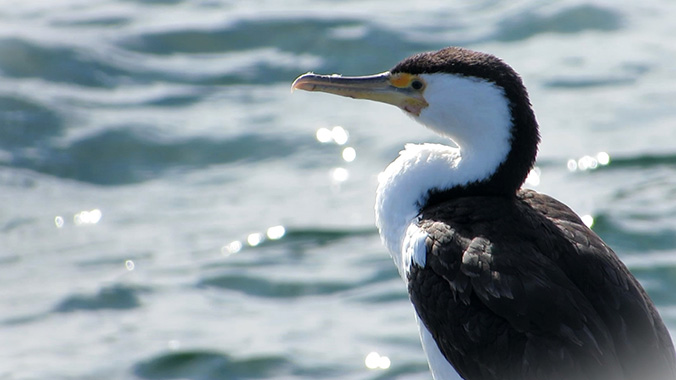
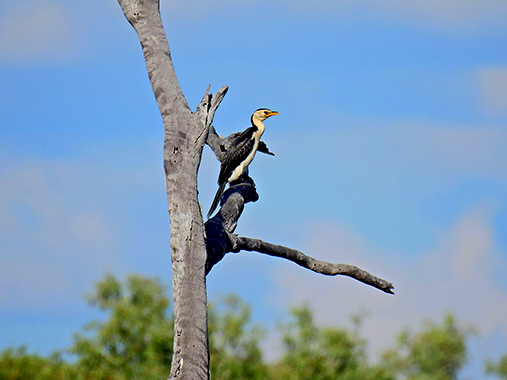
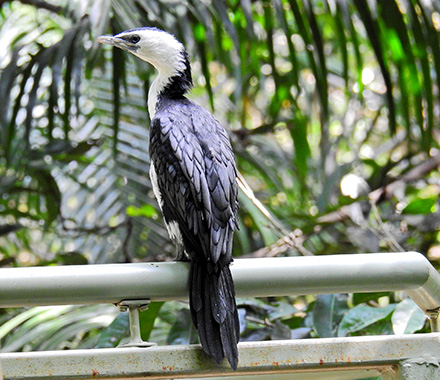
The Pied Cormorant is a large, impressive cormorant that is easily recognised by its bold colouring.
- Size: Around 70–85 centimetres long with a wingspan that can exceed 1.3 metres.
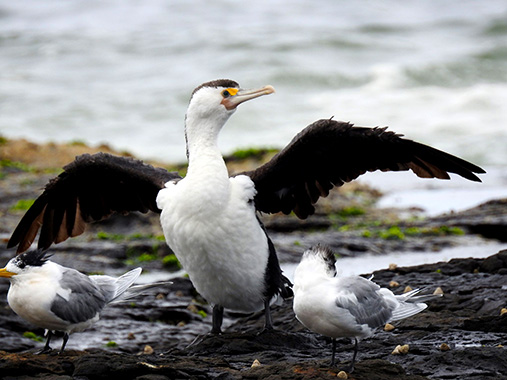
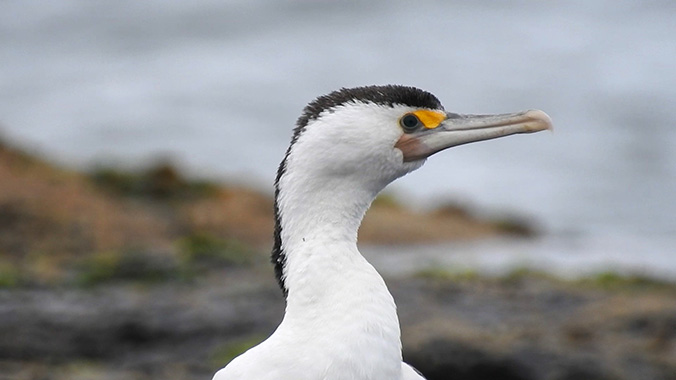
- Plumage: The upper body and wings are glossy black with a subtle greenish sheen, while the face, throat, chest, and belly are bright white.
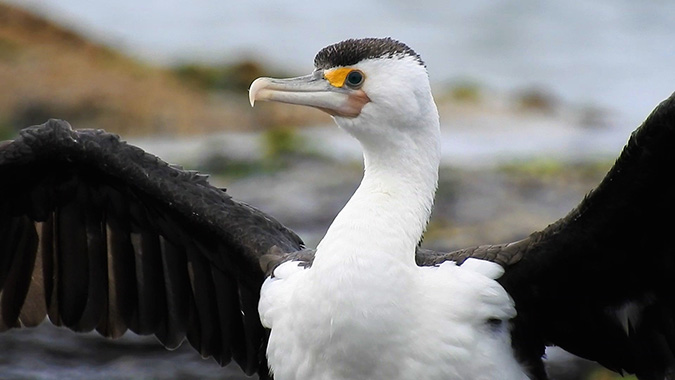
- Face patch: One of its most distinctive features is the bright yellow skin around the base of its bill and eyes.
- Eyes: The eyes are usually a vivid blue‑green.
In flight, the contrast between the black wings and white body makes them easy to identify as they move along coastlines and estuaries.
Habitat and Distribution
Pied Cormorants are primarily coastal birds and are commonly found around:
- bays and harbours
- estuaries and tidal rivers
- coastal lagoons
- offshore islands
- large inland lakes connected to river systems
They are widely distributed around the Australian coastline and also occur in New Zealand and parts of nearby island regions.
Although they are strongly associated with the sea, they may travel inland along rivers where fish are plentiful.
Feeding Habits
Like other cormorants, the Pied Cormorant is a highly skilled underwater hunter.
Their diet mainly consists of:
- fish
- squid
- crustaceans
- occasionally small aquatic animals
They dive beneath the surface and use their powerful webbed feet to swim after prey. Unlike birds such as pelicans that scoop fish from the surface, cormorants pursue their prey underwater, grasping it with their hooked bills before bringing it back to the surface.
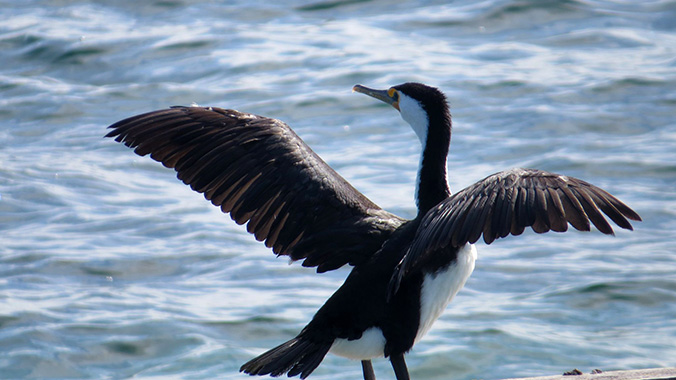
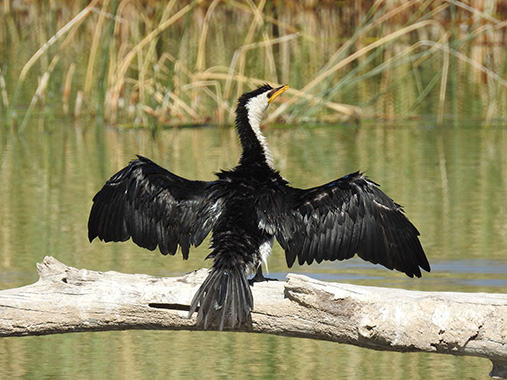
Because their feathers are not completely waterproof, they often perch afterward with wings spread to dry in the sun.
Breeding and Nesting
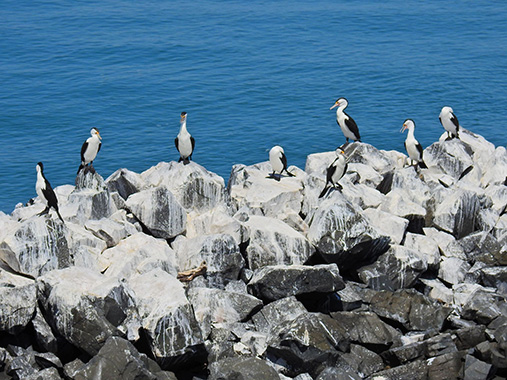
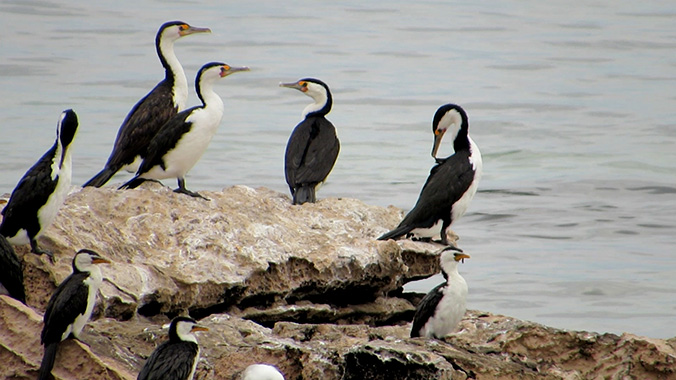
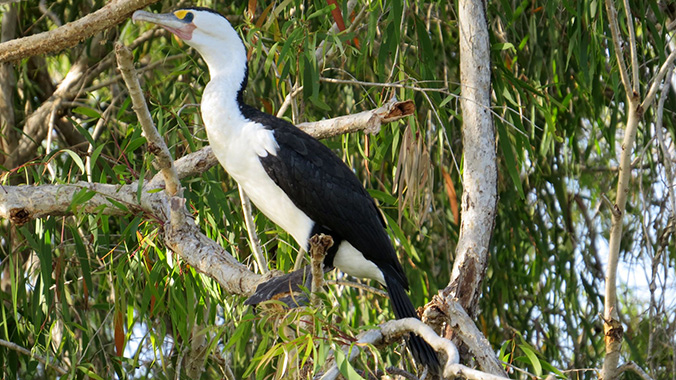
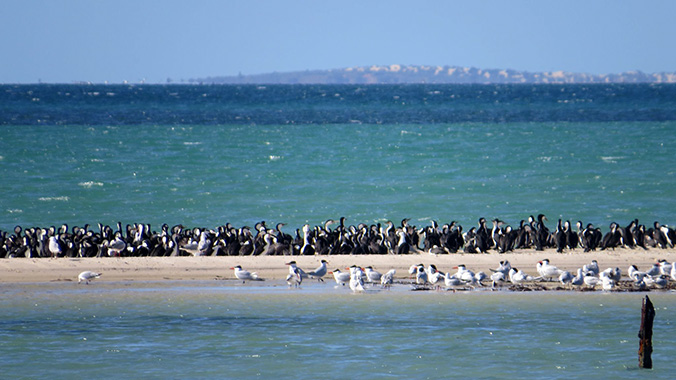
Pied Cormorants usually nest in colonies, particularly on offshore islands or in trees over water.
- Nesting sites: mangroves, coastal trees, rocky islands, or cliff ledges
- Nest structure: large stick nests lined with seaweed and vegetation
- Eggs: usually 2–4 pale blue eggs
- Incubation: about four weeks
- Parental care: both parents take turns incubating the eggs and feeding the chicks
Colonies can be noisy places during the breeding season, with many birds nesting close together for protection.
Longevity
Pied Cormorants can live around 10 to 15 years in the wild, although some banded birds have been recorded living over 20 years. Their lifespan depends on safe nesting sites, healthy fish populations, and clean coastal waters.
Indigenous Connections
Cormorants have long been recognised by First Nations peoples as highly skilled fishing birds. Their behaviour around waterways and their ability to dive deeply for fish has made them important indicators of productive marine and river environments.
In many coastal communities, birds that hunt fish are closely observed as part of traditional ecological knowledge. Their presence often reflects healthy waterways and abundant fish stocks.
Because Australia has hundreds of Indigenous languages, traditional names for the Pied Cormorant vary across regions and are not always widely recorded in public sources. Recognising their connection to Country highlights the long history of observation and stewardship of Australia’s coastal ecosystems.
Conservation Status and Threats
The Pied Cormorant is currently classified as a species of Least Concern and remains common across much of its range.
However, they face several ongoing challenges, including:
- disturbance of breeding colonies
- loss of coastal nesting habitat
- entanglement in fishing gear
- marine pollution
- declining fish stocks in some regions
Because they depend heavily on healthy coastal waters, they are sensitive indicators of environmental change.
How You Can Help
You can help protect Pied Cormorants and other waterbirds by:
- disposing of fishing line and tackle safely
- avoiding disturbance of nesting colonies on islands or mangroves
- supporting the protection of coastal wetlands and marine habitats
- keeping waterways free of rubbish and pollution.
Why the Pied Cormorant Matters
The Pied Cormorant is one of Australia’s most striking coastal hunters. With its bold colours, powerful diving ability, and strong connection to the sea, it represents the richness of Australia’s marine and estuarine ecosystems.
Where these birds continue to thrive, it usually means the waters below them are still full of life.
Scientific References
- Australian Museum – Pied Cormorant species profile
- BirdLife Australia – Pied Cormorant information
- Pizzey, G. & Knight, F. The Field Guide to the Birds of Australia
- Department of Climate Change, Energy, the Environment and Water – Waterbird species information
- Wikipedia – Phalacrocorax varius (Pied Cormorant)
Photo Gallery