PURPLE-CROWNED FAIRYWREN
Purple-crowned Fairywren
The Purple-crowned Fairywren is one of Australia’s most beautiful and specialised small birds. Found in the tropical north, it lives almost entirely in dense vegetation along rivers, creeks and freshwater channels. Unlike some fairywrens that use a wider range of habitats, this species is closely tied to healthy riparian vegetation, making it especially vulnerable when streamside habitat is damaged.
This fairywren belongs to the family Maluridae, the same family as Australia’s other fairywrens, grasswrens and emu-wrens. It is a small, long-tailed bird with an elegant shape, quick movements and a strong attachment to family groups and territory.
What does the Purple-crowned Fairywren look like?
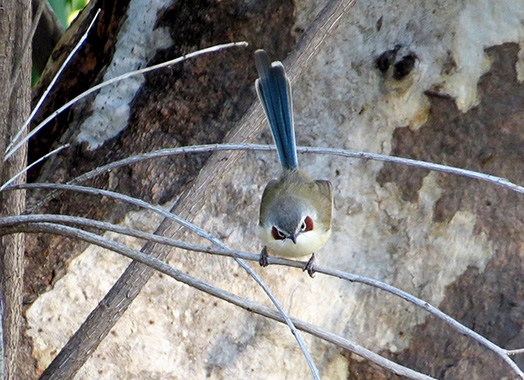
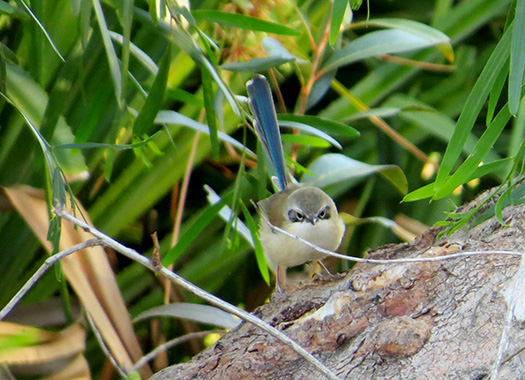
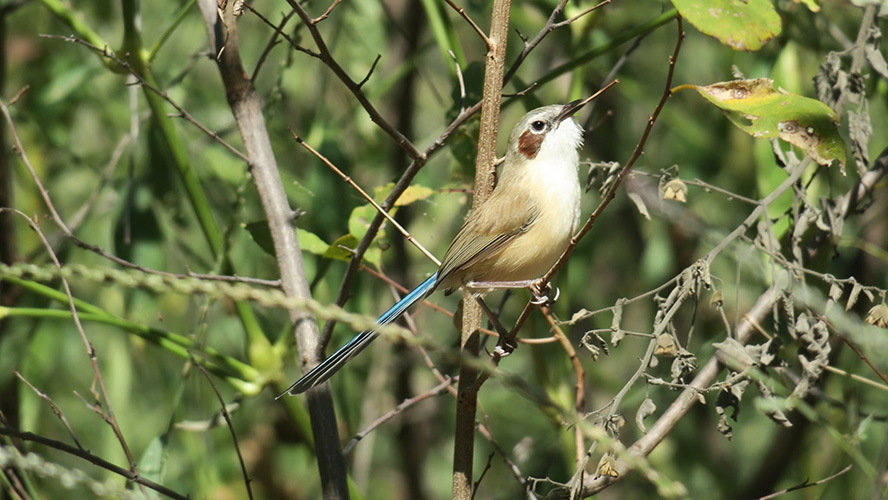
The Purple-crowned Fairywren is a small bird, about 14 centimetres long, with a slender bill, rounded wings and a long tail.
Adult male
In breeding plumage, the adult male is striking and unmistakable, with:
- a vivid purple to lilac crown
- bold black markings around the face and head
- warm brown upperparts
- pale underparts
- a long tail, often appearing bluish
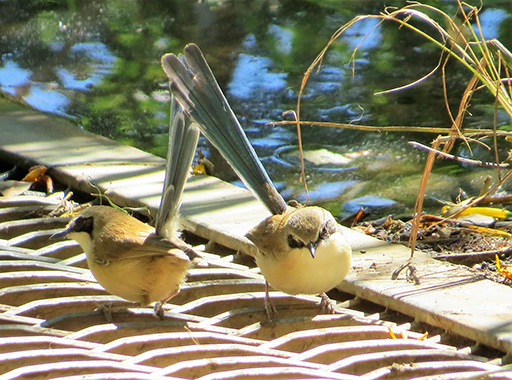
Female and young birds
Females and immature birds are more subdued, with:
- mostly brown upperparts
- paler underparts
- less dramatic head markings
- no bright purple crown
Their softer colouring helps them blend into streamside grasses, shrubs and tangled vegetation.
What does the Purple-crowned Fairywren sound like?
The Purple-crowned Fairywren has a voice that is usually soft, fine and high-pitched rather than loud. It gives:
- thin contact calls
- short trills
- sharp, quiet alarm notes
- gentle calls between members of a family group
These birds are often easier to hear than to see, especially when they are moving low through thick creekside cover.
Where does the Purple-crowned Fairywren live?
The Purple-crowned Fairywren occurs in northern Australia, especially in parts of:
- the Kimberley in Western Australia
- the Top End and nearby regions of the Northern Territory
- some other suitable riparian areas in the tropical north
Its habitat is highly specialised. It prefers:
- dense riparian vegetation
- freshwater creeklines and rivers
- paperbark-lined channels
- pandanus-fringed waterways
- grassy or shrubby stream edges with thick cover
This is one of Australia’s most riparian-dependent fairywrens. If streamside vegetation disappears, the birds usually disappear too.
What does the Purple-crowned Fairywren eat?
The Purple-crowned Fairywren feeds mainly on small insects and other invertebrates.
Its diet includes:
- beetles
- ants
- bugs
- flies
- caterpillars
- spiders
- other tiny invertebrates picked from foliage, bark and leaf litter
It usually forages low in vegetation or on the ground, moving quickly and carefully through dense cover near water.
How long does the Purple-crowned Fairywren live?
Precise maximum lifespan figures vary between studies, but long-term banding work has shown that Purple-crowned Fairywrens can live for several years in the wild, with some birds surviving more than five years.
As with many small birds, survival depends on:
- habitat quality
- predation pressure
- food availability
- fire
- flood events
- seasonal conditions
Because this species occupies narrow strips of habitat, a single severe disturbance can affect survival locally.
Purple-crowned Fairywren behaviour
Purple-crowned Fairywrens are social birds that usually live in pairs or small family groups. They defend a territory along a creek or riverbank, and these territories can be quite narrow because they follow the shape of the watercourse.
Important behaviour traits include:
- staying close to dense cover
- moving quickly through low vegetation
- living in family groups
- strong attachment to a territory
- cooperative behaviour, with extra birds sometimes helping to raise young
Their lives are closely linked to the condition of the vegetation beside the water.
Purple-crowned Fairywren breeding and nest
The Purple-crowned Fairywren is a cooperative breeder, which means that, in some groups, additional birds may help feed and protect the young.
Nest
The nest is usually:
- domed
- made of grasses and fine plant material
- built low in dense vegetation
- carefully hidden near water
- entered through a side opening
Eggs and breeding
- Clutch size is usually 2 to 4 eggs
- breeding timing can vary with rainfall and local seasonal conditions
- nesting often occurs when food and cover are favourable
- both parents, and sometimes helpers, may feed the chicks
Because nests are placed low in streamside vegetation, they can be vulnerable to flood damage and disturbance.
Interesting facts about the Purple-crowned Fairywren
- It is one of the most habitat-specialised of all Australian fairywrens.
- It is strongly associated with riparian vegetation, more than most of its relatives.
- The species belongs to the family Maluridae, so it is related to fairywrens, grasswrens and emu-wrens.
- Although it carries the name “wren”, it is not a true wren. True wrens belong to a different family.
- Family groups may remain in the same stretch of creekline for long periods if habitat remains healthy.
- The bright purple crown of the male makes this one of Australia’s most distinctive tropical small birds.
Purple-crowned Fairywren conservation status
The Purple-crowned Fairywren is not always considered globally threatened at the full species level, but that broad view can hide how vulnerable it is in parts of its range. Because it depends so heavily on narrow ribbons of streamside habitat, local declines can be serious.
In Australia:
- conservation status can vary by subspecies, state or territory
- some populations are of significant conservation concern. This is a bird that may appear secure in a broad sense, while still being highly vulnerable where habitat quality declines.
Threats to the Purple-crowned Fairywren
The main threats to the Purple-crowned Fairywren include:
- altered fire regimes, especially hot fires that burn into riparian vegetation
- degradation of creekside habitat by cattle and other large grazing animals
- trampling of stream banks and nesting areas
- loss or fragmentation of dense riparian cover
- severe flooding, which can destroy nests and strip vegetation
- feral predators, particularly cats
- climate change, which may intensify drought, heat, flood and fire patterns
Because the species depends on such a narrow habitat zone, even local damage can have a major effect.
How people can help the Purple-crowned Fairywren
People can help protect the Purple-crowned Fairywren by:
- supporting the protection and restoration of riparian vegetation
- encouraging careful fire management that protects creeklines
- reducing stock access to fragile stream banks where possible
- supporting Indigenous ranger programs and local conservation work
- controlling feral animals where science-based programs are in place
- avoiding disturbance in sensitive nesting habitat
- recording sightings through citizen science projects such as eBird or Birdata
- supporting conservation of northern Australia’s river and creek ecosystems
Why the Purple-crowned Fairywren matters
The Purple-crowned Fairywren is more than a beautiful little bird. It is a sign of the health of northern Australia’s creeks and rivers. Where streamside vegetation remains thick, shaded and connected, this fairywren can still thrive. Where those green ribbons are broken by fire, grazing or erosion, the species quickly becomes vulnerable.
Protecting the Purple-crowned Fairywren means protecting the living edges of northern waterways — places that shelter not only birds, but frogs, reptiles, insects and countless other forms of life.
Reference links
Australian Faunal Directory: Malurus coronatus
https://biodiversity.org.au/afd/taxa/Malurus_coronatusAtlas of Living Australia: Malurus coronatus
https://bie.ala.org.au/search?q=Malurus%20coronatusIUCN Red List search: Malurus coronatus
https://www.iucnredlist.org/search?query=Malurus%20coronatus&searchType=specieseBird species search: Purple-crowned Fairywren
https://ebird.org/speciesBirdLife International species factsheet search
https://datazone.birdlife.org/species/search
Photo Gallery