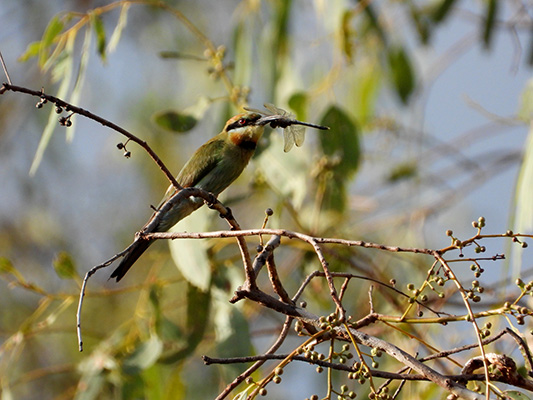
RAINBOW BEE-EATER
Merops ornatus
The Rainbow Bee-eater
The Rainbow Bee-eater is one of Australia’s most striking birds – a bright, fast-flying insect hunter that seems painted with every colour of the sky and forest. Let’s walk through its world: what it looks like, how it lives, where it travels, and why it matters.
What it Looks Like
Imagine a small bird painted with sunlight and rainforest.
Size & shape
- Length: about 19–24 cm (including the long tail streamers)
- Build: slim, elegant, with pointed wings and a slightly downcurved bill
- Flight: fast, agile, with quick flicks of the wings and glides between perches
Colours
Adults are beautifully patterned:
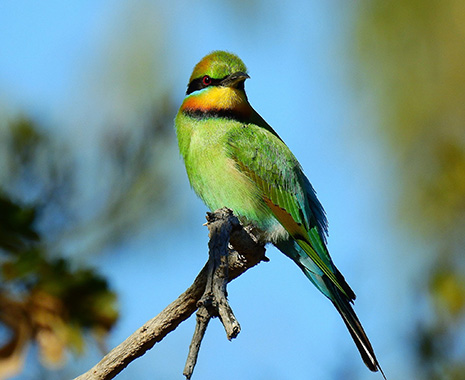
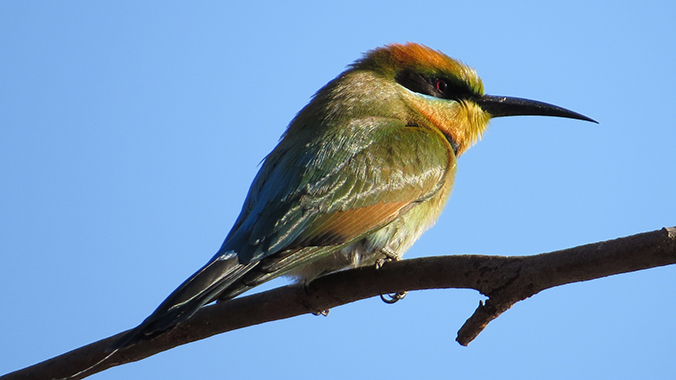
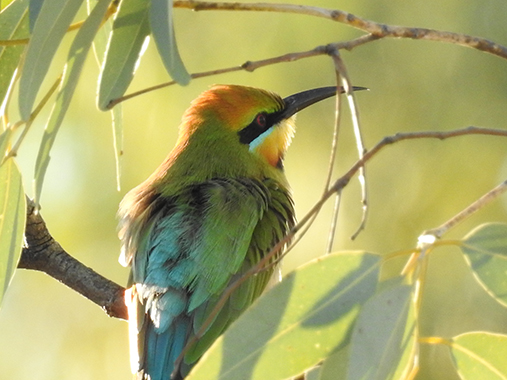
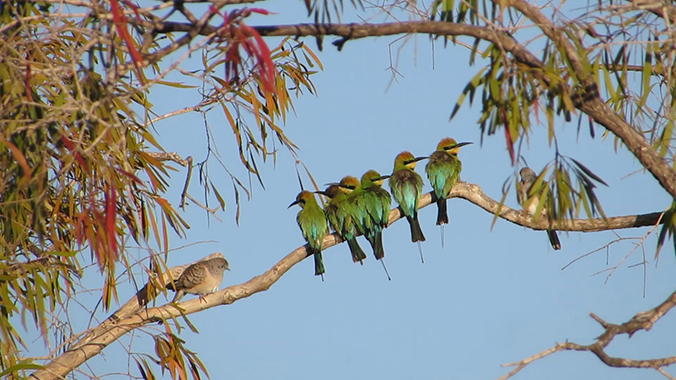
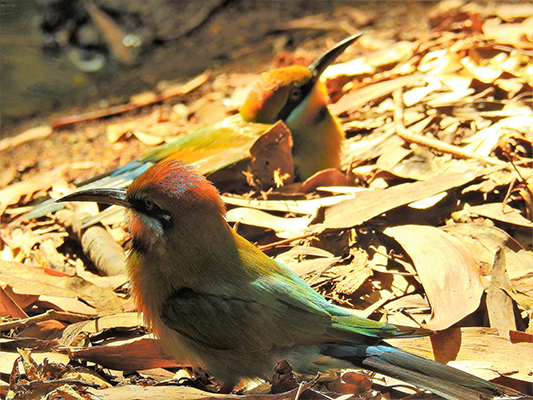
- Head: golden-brown crown and nape
- Eyes: a bold black mask through the eye with a fine blue line above it
- Back & wings: bright green to greenish-bronze
- Throat: glowing golden-yellow
- Chest & underparts: green to bluish-green
- Rump & tail: blue-green, with two long central tail streamers in adults
- Bill: long, thin and black – perfect for catching flying insects
In good light they look almost iridescent, like a shard of rainbow flashing across the sky.
Males vs females
- Males: usually have longer central tail streamers and slightly more orange on the throat.
- Females: shorter tail streamers and sometimes a little more green below.
Young birds (immature)
- Duller overall colour
- Much shorter or no tail streamers
- Softer, more washed-out yellow on the throat.
Longevity – How Long Do They Live?
In the wild, Rainbow Bee-eaters are relatively short-lived but active:
- Average wild lifespan: often around 4–6 years
- Some banding (ringing) records: individuals reaching 7–10 years in the wild
- In captivity (rare and not typical for this species): potentially longer, but they are protected native birds and not kept as pets in Australia
Because they migrate long distances and catch prey on the wing, they face constant natural risks – storms, predators, and habitat change – so a bird living beyond 7 years has done very well.
Where They Are Found
Distribution
Rainbow Bee-eaters are native to Australia but also occur in nearby regions.
- Across most of Australia, especially:
- Northern Australia (Top End, Kimberley, Cape York)
- Eastern and south-eastern Australia
- South-western Western Australia
- Also found in:
- New Guinea
- Parts of eastern Indonesia
- Some birds reach nearby islands and occasionally wander further
Habitat
They like open, sunny places with perches for hunting and suitable ground for nesting:
- Open woodlands and forest edges
- Riverbanks and creek lines
- Farmland, orchards, and pasture with scattered trees
- Coastal dunes, heath and scrubby areas
- Towns and outer suburbs, especially near sandy or loamy banks
They are often seen:
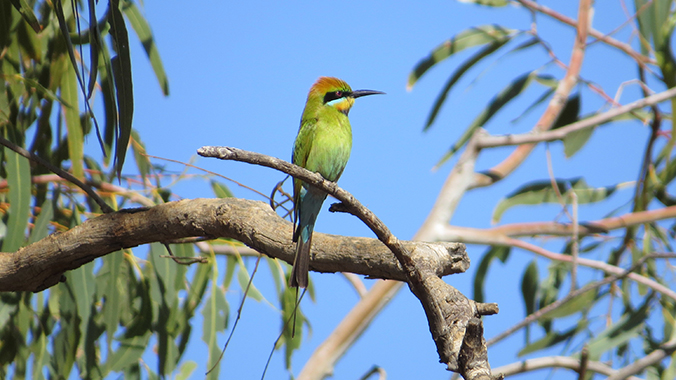
- Perched on fence lines, dead branches, powerlines
- Flying out in short, looping flights to catch insects, then returning to the same perch
Migration
Rainbow Bee-eaters are highly migratory in many parts of Australia.
- Northern Australia: many birds are present all year
- Southern Australia:
- Arrive in spring (around September–October) to breed
- Leave in late summer–autumn (around February–April)
- In the non-breeding season, many travel north, some crossing Torres Strait to New Guinea and nearby islands.
Their seasonal arrival is often one of the first signs that the warmer months are settling in.
Diet – What They Eat (Yes, Including Bees)
As their name suggests, they do eat bees – but that is only part of their diet.
Main foods
- Bees (honeybees and native bees)
- Wasps and hornets
- Dragonflies and damselflies
- Beetles
- Butterflies and moths
- Flying ants and other flying insects
They are classic “sit-and-sally” hunters:
- Perch on a branch, wire or small tree.
- Spot a flying insect.
- Swoop out, snatch it in mid-air with a snap of the bill.
- Return to the same or nearby perch to eat it.
Handling venomous prey
They have a clever method for dealing with stinging insects:
- Take the bee or wasp back to a perch.
- Bash it repeatedly against the branch.
- Squeeze the body to remove most of the venom from the sting and venom sac.
- Toss it up and swallow it head first.
This technique lets them safely eat large numbers of wasps and bees.
Breeding – Life in a Tunnel
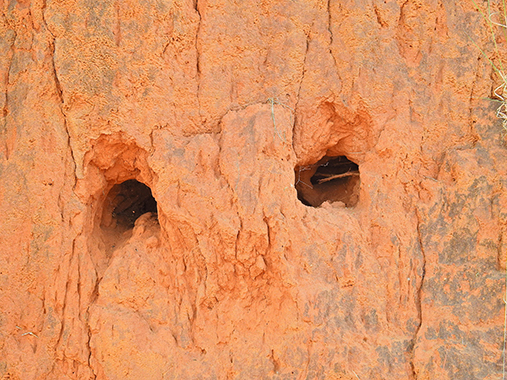
Rainbow Bee-eaters are unusual among small perching birds: they nest in tunnels in the ground.
Nest site
- Excavated in:
- Sandy or loamy banks
- Slight slopes in open ground
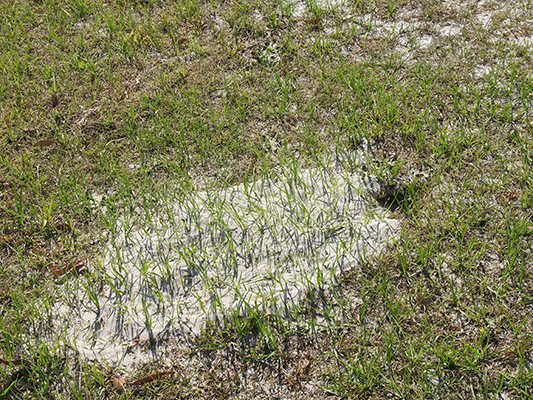
- Sometimes flat ground in open, sparsely vegetated areas
- Can be near:
- Riverbanks, roadsides, tracks, dunes, paddocks, or open bush
Nest tunnel and chamber
- Tunnel length: usually 50–100 cm, sometimes up to 1–2 metres
- At the end is a roundish nest chamber, slightly enlarged
- The tunnel slopes gently downwards or is fairly level
Breeding season (Australia)
- Mainly spring to summer:
- Southern Australia: roughly October to January
- Northern Australia: timing varies but often early to mid Wet season
Eggs and chicks
- Clutch size: usually 4–7 white eggs
- Both sexes:
- Take turns incubating
- Share feeding the chicks
- Incubation: about 20–24 days
- Chicks stay in the burrow for roughly 3–4 weeks before fledging
Cooperative breeding
Rainbow Bee-eaters sometimes use helpers at the nest:
- Often young from previous years or close relatives
- Help with:
- Feeding chicks
- Defending the nest area
- This can significantly improve the survival of the young, especially in challenging seasons.
Behaviour and Daily Life
Social behaviour
- Often seen in pairs during breeding
- Outside breeding, they may gather in:
- Loose flocks
- Communal roosts in trees at night
Voice
Their call is:
- A high, musical “prrp-prrp” or “trrrrt”
- Given in flight or while perched
- Light, rolling and almost tinkling, often heard before you see them
On a warm summer day, you might hear a soft chorus of their calls drifting across open fields and river flats.
Flight
- Light, graceful, with:
- Quick wingbeats
- Short glides
- They often:
- Circle around a favoured feeding area
- Return to the same perch repeatedly
Interesting Facts
Here are some particularly striking aspects of Rainbow Bee-eaters:
True burrow-nesting perching bird
- They are one of the very few Australian perching birds (passerines) that regularly dig tunnels to nest in, instead of using trees or shrubs.
High-speed acrobatic hunters
- They catch prey almost entirely on the wing, often turning rapidly and changing direction mid-air like tiny aerial acrobats.
Venom-handling experts
- Their method of disarming bees and wasps is so effective that they can safely consume many venomous insects each day.
Important insect-control partners
- By eating large numbers of wasps, flies and other insects, they help keep insect populations in balance around farms and natural habitats.
Sun-bathing and dust-bathing
- They are sometimes seen:
- Spreading their wings and tail out on warm ground or branches (sun-bathing)
- Tossing dust through their feathers
- These behaviours may help control parasites and maintain plumage.
- They are sometimes seen:
Colour that holds up close
- Even at very close range, their colours remain bright and clean – they look almost as if they have just stepped out of a painting.
Conservation Status
At present, the Rainbow Bee-eater is classified as:
- Least Concern (globally and in Australia)
However, they still face pressures:
- Habitat loss: removal of:
- Sandy banks and ground suitable for nesting
- Trees and shrubs for perching and feeding
- Human disturbance:
- Nest burrows can be accidentally trampled, driven over, or eroded
- Chemicals:
- Heavy pesticide use can reduce the insects they depend on and may poison them indirectly
How people can help
- Protect sandy banks and gentle slopes where they may nest.
- Avoid disturbing areas where birds are repeatedly flying in and out of the ground.
- Reduce or avoid insecticides where possible.
- Keep or plant scattered trees and shrubs that offer perches and food sources.
How to Recognise and Watch Them
If you want to see Rainbow Bee-eaters:
- Look for habitat
- Open areas with:
- A few trees
- Fencelines or powerlines
- Nearby sandy or soft ground
- Open areas with:
- Listen for calls
- A rolling, slightly trilling “prrp-prrp” on warm, insect-rich days.
- Watch their hunting style
- Perching, sallying out after insects, then returning to the same spot.
- In breeding season (spring–summer)
- Carefully watch from a distance:
- Birds repeatedly flying to the same point on a bank or slope
- This may be the entrance to a nest tunnel. Keep well back to avoid disturbance.
- Carefully watch from a distance:
In Summary
The Rainbow Bee-eater is:
- Visually stunning – a slender bird painted in greens, blues and golds, with long tail streamers and a black mask.
- Skilled and specialised – a flying insect hunter that can safely eat bees and wasps after carefully disarming their stings.
- Family-oriented – nesting in underground tunnels, with both parents (and sometimes helpers) working together to raise the young.
- Wide-ranging and migratory – travelling across much of Australia and beyond according to the seasons.
- Ecologically important – helping control insect populations and adding colour and sound to Australia’s open landscapes.
Photo Gallery