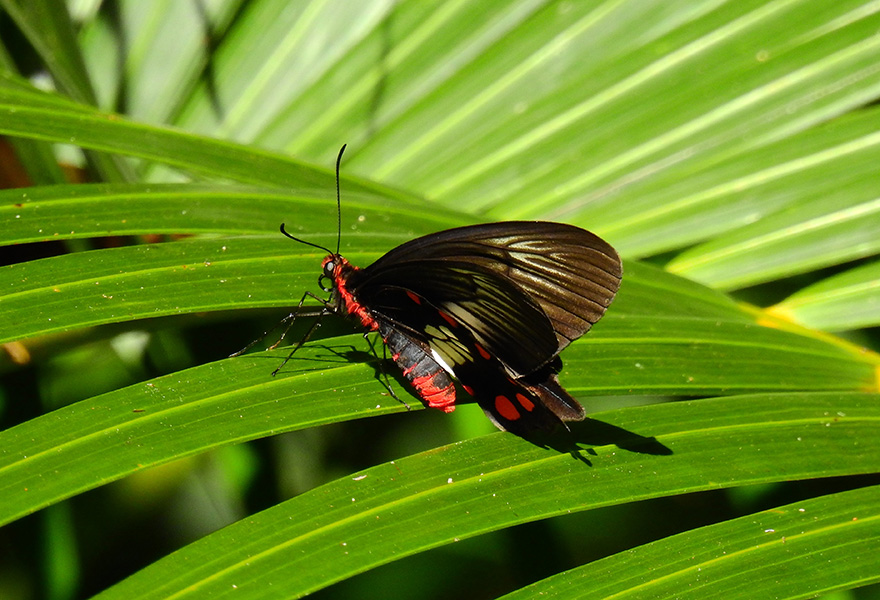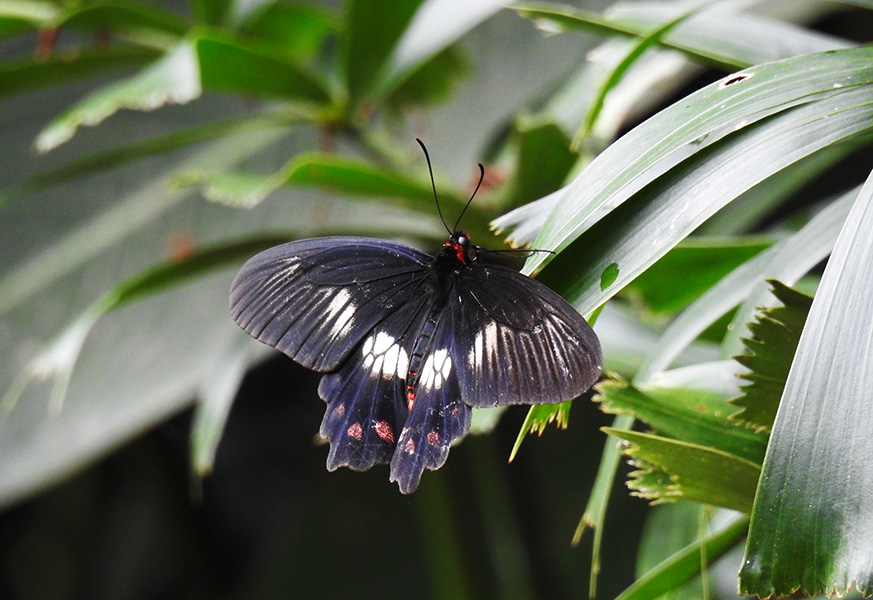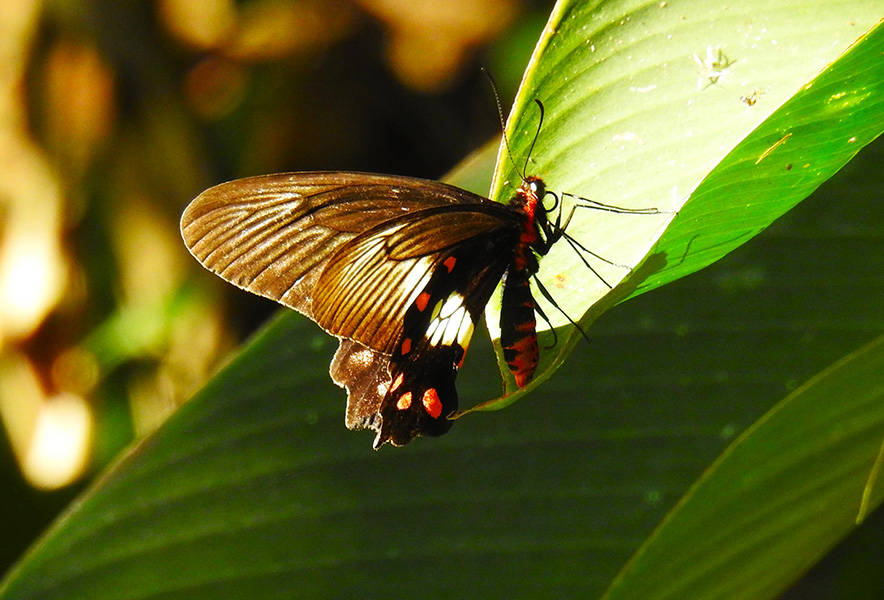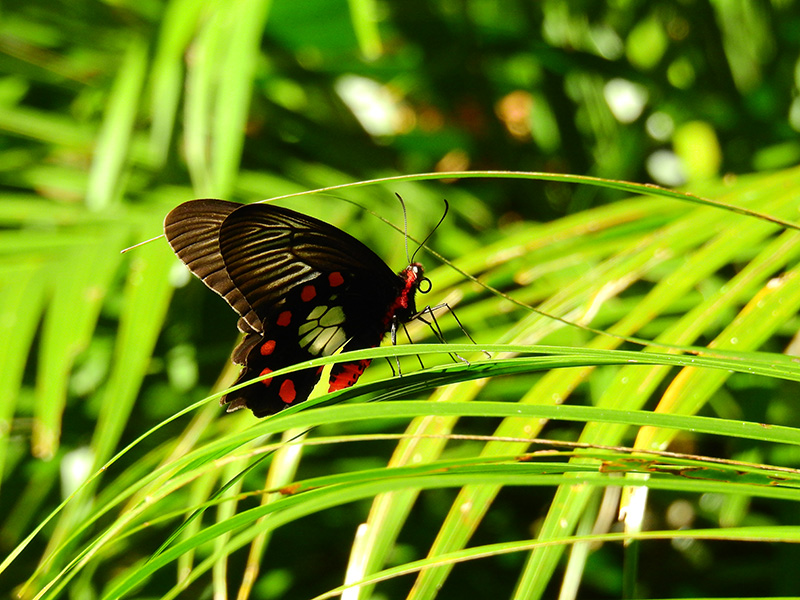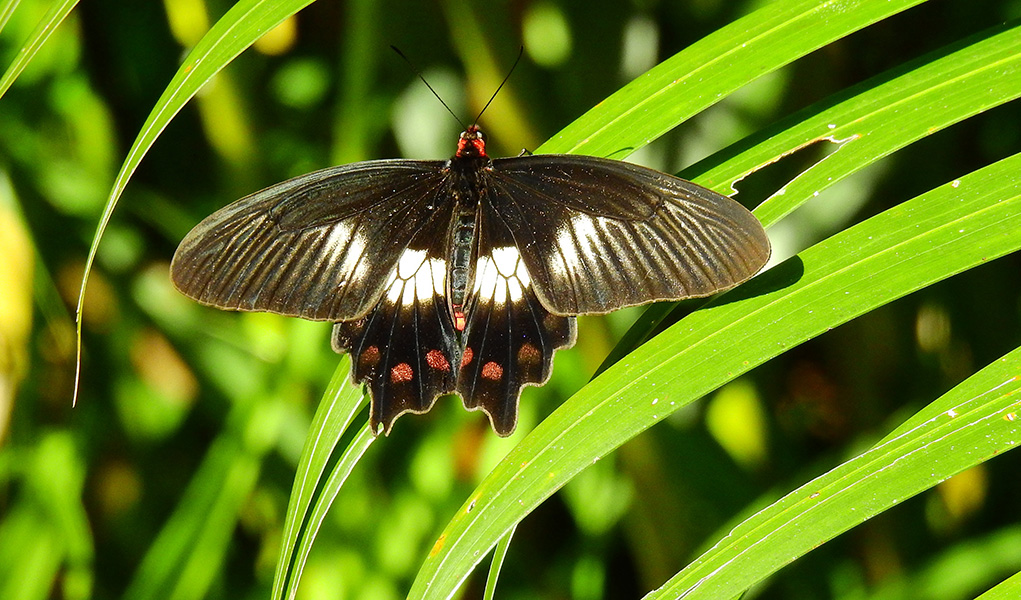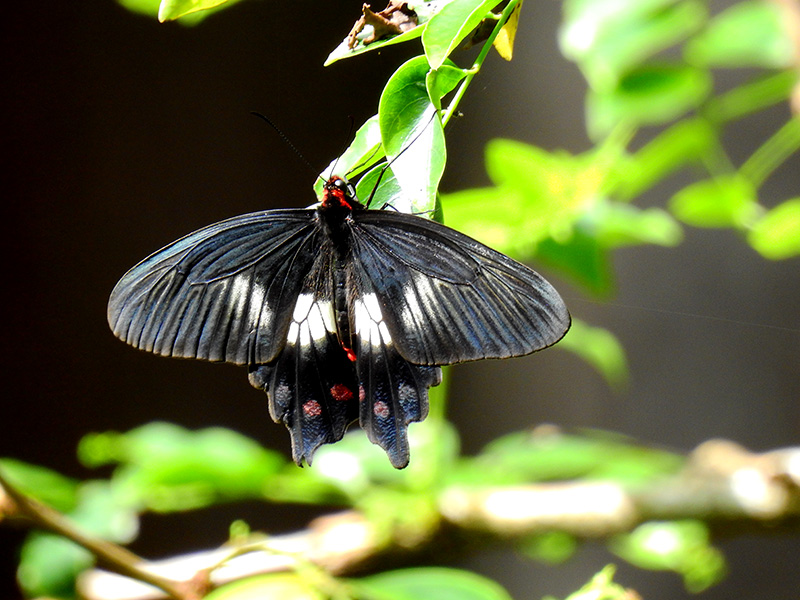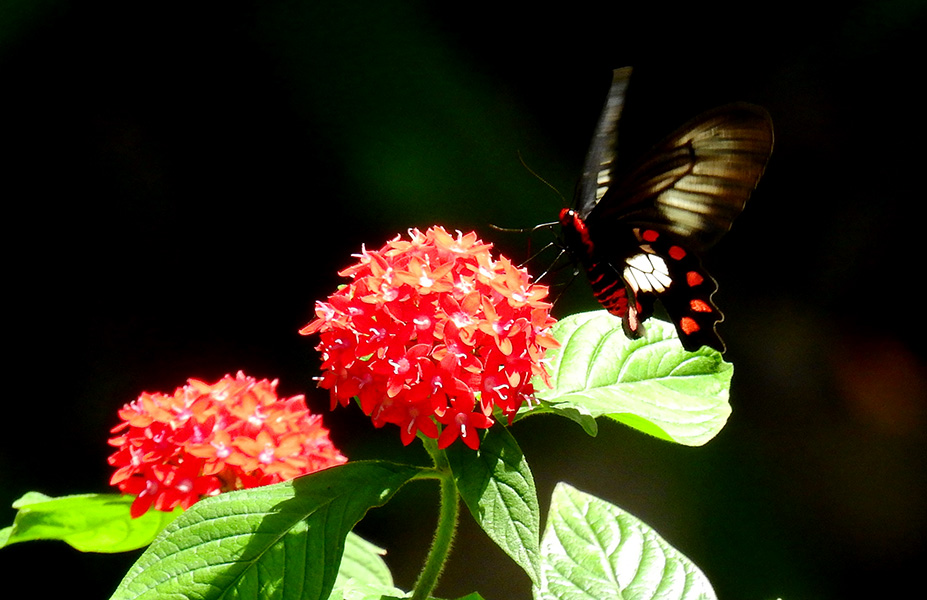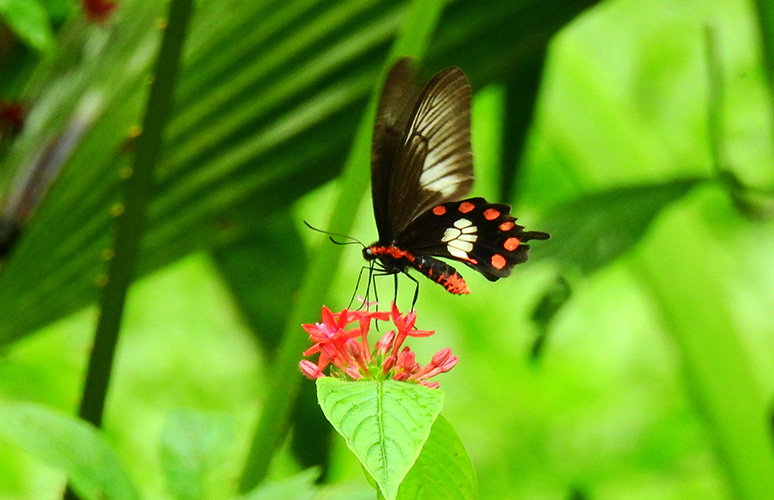
Red-Bodied Swallowtail butterfly
The Rainforest Jewel: Red‑bodied Swallowtail
Among the lush forests and river valleys of northern Australia lives one of the most striking butterflies in the region — the Red‑bodied Swallowtail (Atrophaneura polyeuctes). With its velvety black wings and brilliant crimson body, this butterfly is a spectacular sight gliding through the canopy of tropical woodlands.
Although not as well known as the famous Australian birdwing butterflies, the Red‑bodied Swallowtail is equally fascinating. Its dramatic colours warn predators of its toxicity, while its slow, graceful flight makes it one of the most elegant butterflies of the tropical north.
What Does the Red‑bodied Swallowtail Look Like?
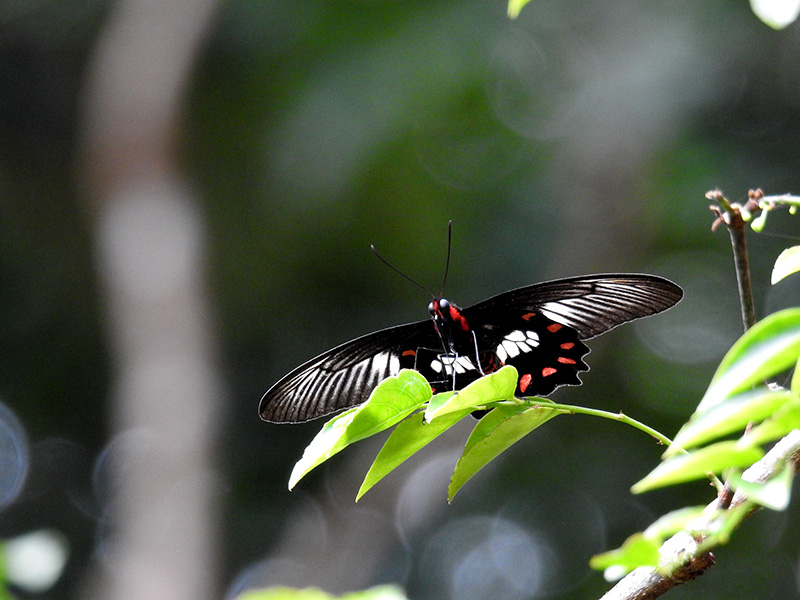
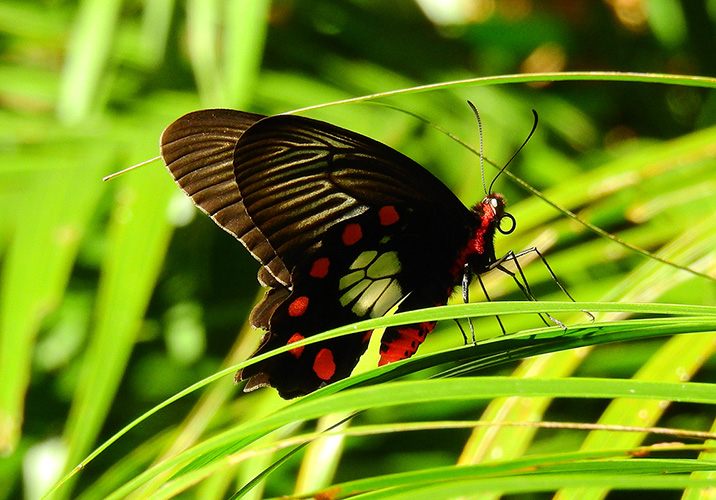
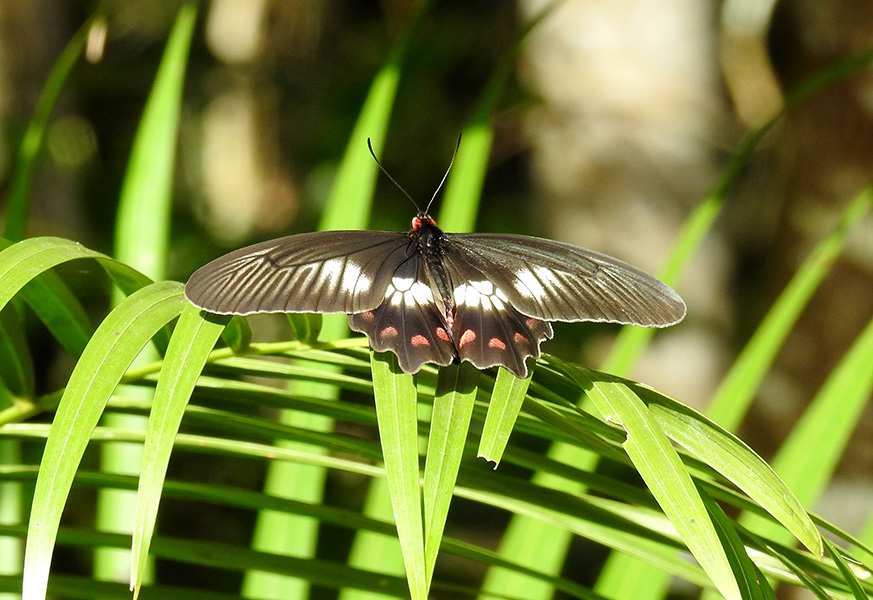
The Red‑bodied Swallowtail is a medium‑to‑large butterfly with a wingspan of roughly 80–100 millimetres.
Its appearance is both bold and unmistakable:
- Wings: Deep black with subtle pale markings and a satin‑like sheen.
- Body: Bright red or crimson, which gives the species its common name.
- Hindwings: Often feature red spots and the classic swallowtail tail extensions.
- Flight style: Slow, gliding, and graceful, usually high among trees or along forest edges.
These vivid colours act as a warning to predators that the butterfly is toxic and unpalatable.
Habitat and Distribution
In Australia the Red‑bodied Swallowtail is mostly found in the tropical regions of northern Queensland, particularly in rainforest environments and moist forest edges.
It prefers habitats such as:
- tropical rainforests
- riverine forests and creek lines
- forest margins and clearings
- areas where native host vines grow
The species is more widespread across Southeast Asia, but in Australia it occurs mainly in the far north.
Feeding Habits
Adult Red‑bodied Swallowtails feed on flower nectar, visiting a variety of blossoms in the rainforest and surrounding vegetation.
Favourite nectar sources often include:
- flowering shrubs
- forest vines
- native rainforest flowers
- garden plants near forest edges
Like many large swallowtails, they are strong flyers and may travel between forest patches in search of food.
Breeding and Host Plants
The life cycle of the Red‑bodied Swallowtail depends heavily on specific rainforest vines.
- Eggs: Laid on the leaves of host plants belonging to the Aristolochia (Dutchman’s pipe) family.
- Caterpillars: Usually dark in colour with rows of soft spines along the body.
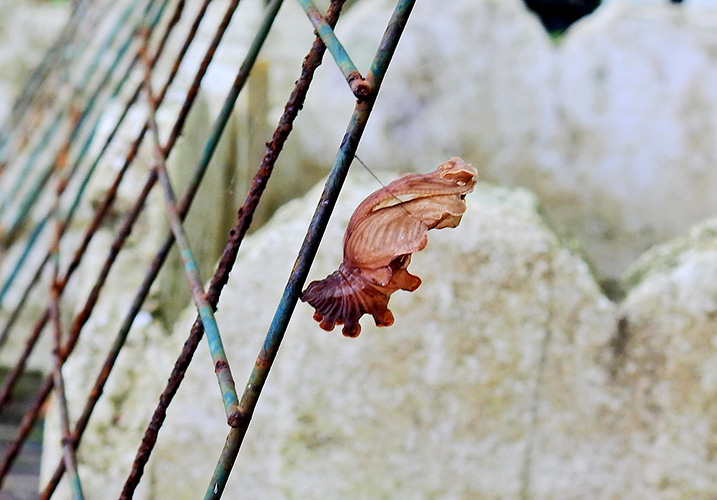
- Pupa: The chrysalis is attached to vegetation and camouflaged to resemble a twig.
The caterpillars absorb toxic compounds from their host plants. These chemicals remain in their bodies through adulthood, making both the caterpillar and butterfly distasteful to predators.
Longevity
The entire life cycle from egg to adult usually takes around four to six weeks, depending on temperature and food availability.
Adult butterflies generally live two to four weeks, spending that time feeding, mating, and searching for suitable plants on which to lay their eggs.
Indigenous Connections
Butterflies and the plants they depend on are part of the rich biodiversity of northern Australian rainforests that First Nations peoples have observed and managed for thousands of years.
Traditional ecological knowledge recognises the close relationships between insects, plants, and seasonal changes within rainforest ecosystems. While specific traditional names for this species vary between language groups and are not widely documented in publicly available sources, butterflies are often understood as indicators of flowering seasons and healthy forest environments.
Acknowledging these relationships highlights the deep cultural understanding of Australia’s landscapes and the interconnected web of life within them.
Conservation Status and Threats
The Red‑bodied Swallowtail is not currently considered globally threatened, but like many rainforest species it depends heavily on intact habitat.
Potential threats include:
- rainforest clearing and habitat fragmentation
- loss of native host plants
- climate change affecting tropical ecosystems
Protecting rainforest environments helps ensure the continued survival of this beautiful butterfly.
Why the Red‑bodied Swallowtail Matters
The Red‑bodied Swallowtail is a reminder of the incredible diversity found within Australia’s tropical forests. Its vivid colours, graceful flight, and unique life cycle make it one of the hidden gems of the rainforest.
By protecting native vegetation and supporting healthy ecosystems, we help ensure that future generations can continue to see these brilliant red‑and‑black butterflies drifting through the northern forests.
Scientific References
Braby, M. F. Butterflies of Australia: Their Identification, Biology and Distribution
Atlas of Living Australia – Species records
Australian Butterfly Conservation resources
Queensland Museum – Tropical butterfly information
Wikipedia – Atrophaneura polyeuctes
Photo Gallery